Review · BOSTON TOURS
Boston: Mapparium® globe + How Do You See the World?™
Boston has an unusual way to show you the world: inside a three-story stained glass globe. The Mapparium presents the planet as it was labeled in 1935, so borders, place names, and political geography offer a striking snapshot from before World War II.
I like the short, focused format and the chance to pair a beautiful architectural object with thoughtful exhibits about human progress. I also like the price: $6 per person buys the timed Mapparium entry and access to the connected displays. The main limitation is time. The globe visit lasts about 20 minutes, and the surrounding exhibits deserve more attention if you want to read and interact with everything.
Key points at a glance
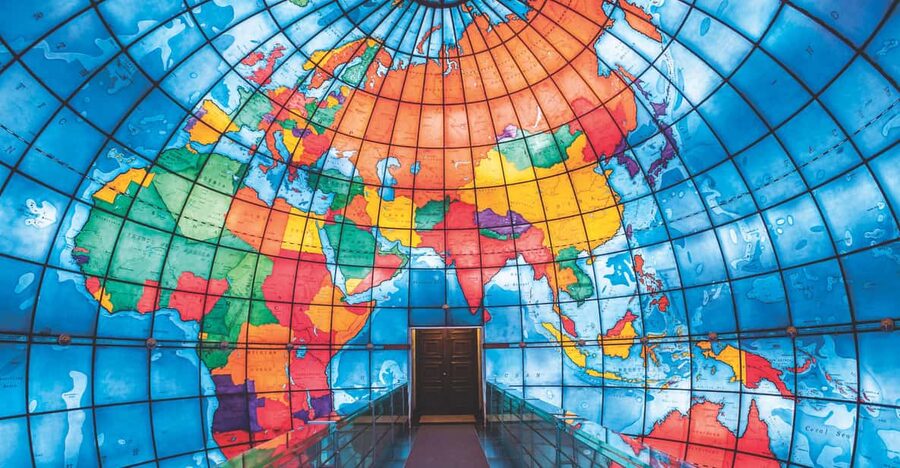
- Walk inside a 1935 world map: The Mapparium is a three-story stained glass globe that gives you a rare inside-out view of the planet.
- Hear the globe itself: A narration accompanies the timed visit and adds historical context to the map around you.
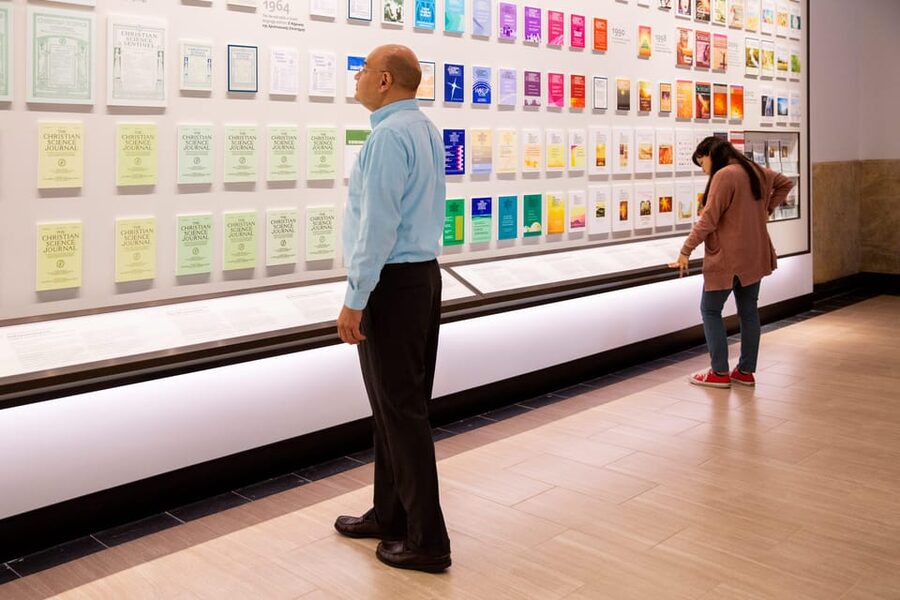
- Track progress since 1935: Our World: Mapping Progress looks at advances made after the Mapparium’s frozen date.
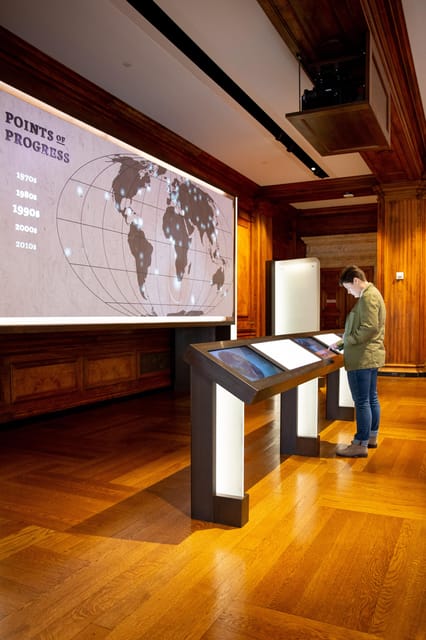
- Explore human rights and science: Points of Progress presents major developments from the post-war era.
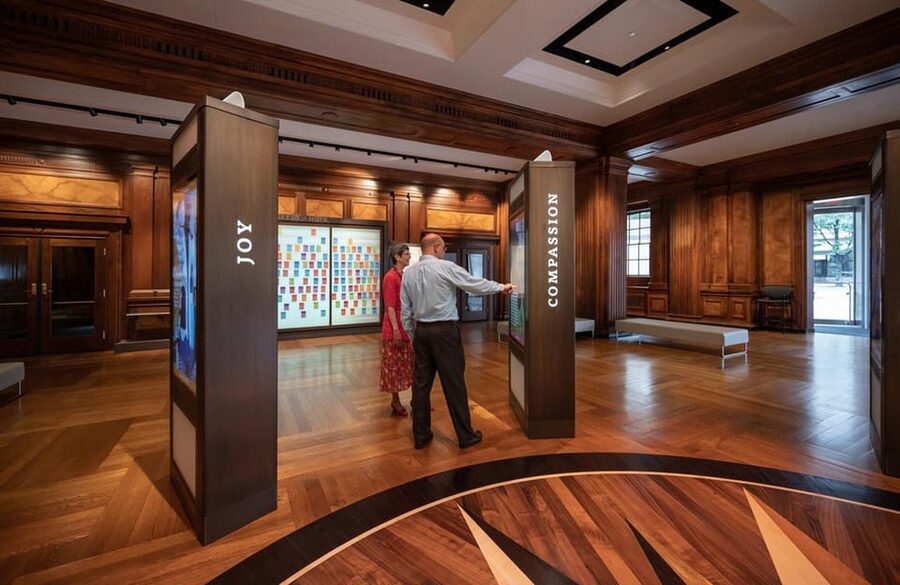
- Meet stories from around the world: Eight sets of interactive stories come from The Christian Science Monitor.
- Add Mary Baker Eddy and Christian Science: Free exhibits explain the founder’s life, ideas, and connection to the Bible.
Entering Boston’s inside-out globe
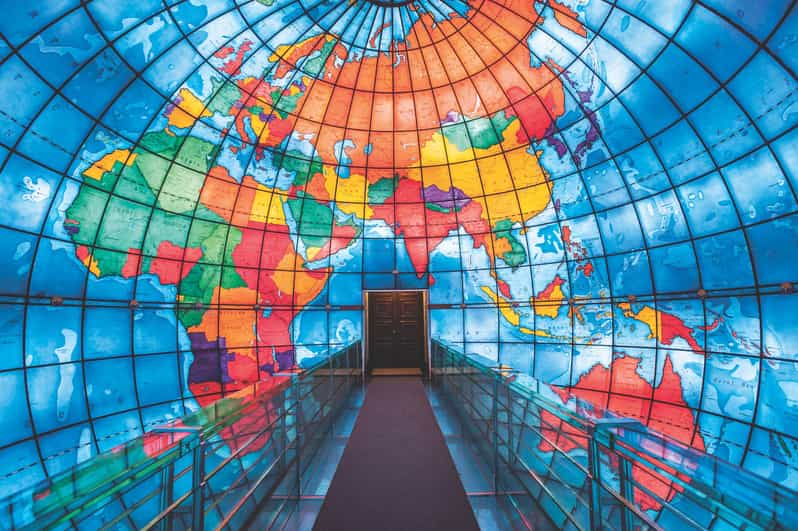
The Mapparium is the star of this experience. Rather than looking at a globe from the outside, you walk into the middle of one. Stained glass panels surround you on every side, turning the map into a room-sized object.
At three stories high, the globe has an impressive scale without requiring a long tour. You do not simply admire it from a doorway. You enter the structure and look across its curved interior, where the world appears arranged around you.
The map is frozen in 1935. That date gives the visit its strongest sense of place. Political borders and names reflect a world before the upheaval of World War II, so the globe is both a work of art and a historical record.
I find that combination more useful than a standard map display. You are not only looking at geography. You are seeing how a particular moment in history represented the countries and regions of the world.
A narration plays from within the globe during the timed visit. It helps turn the room from a visual curiosity into a short historical presentation. Since the entire Mapparium portion lasts about 20 minutes, you get a clear introduction without committing half a day.
The design also changes your sense of direction. On an ordinary globe, you stand outside and spin the world in your hands. Here, the world surrounds you. That inside-out perspective is the reason this visit feels different from a museum map or a conventional city attraction.
A few more Boston tours and tickets worth a look
- Boston Duck Boat Sightseeing City Tour with Cruise Along Charles River
★ 4.5 · 9,378 reviews - Boston: Freedom Trail History Small Group Walking Tour
★ 5.0 · 6,450 reviews - Boston Hop-On Hop-Off Trolley Tour with 13 Stops
★ 4.5 · 5,576 reviews
What the 20-minute visit is really like
Your ticket is timed for the Mapparium. That matters because the globe is the only part of the experience that requires a scheduled entry, while the other exhibits are free and do not need a timed ticket.
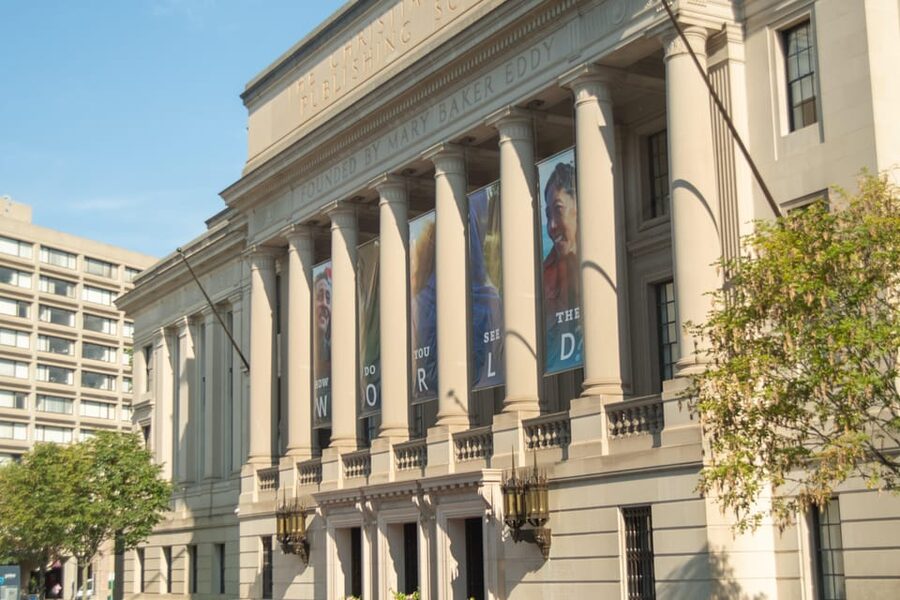
I would plan to arrive with enough time to find the building. Look for the large How Do You See the World? banners on the building next to the church. The meeting point is not described as a separate street attraction, so the banners are the practical landmark to use.
Once inside the Mapparium, expect a compact presentation rather than a long guided walk. The main event is the room itself, supported by narration from within the globe. No guide names are provided for this experience, and the host or greeter service is in English.
The short duration works well for a busy Boston day. You can fit it between other stops without giving up an entire morning. Families, first-time visitors, and anyone with a strong interest in maps can all get something from it.
The tradeoff is that 20 minutes can feel brief if you want to study every panel or pause over the historical details. I would treat the Mapparium as the anchor of a larger visit, not the whole visit. Afterward, give yourself time for the free displays.
From 1935 to the modern world
Outside the globe, Our World: Mapping Progress picks up where the Mapparium’s date leaves off. Its purpose is to show how humanity has advanced since 1935 while keeping an eye on what may still be possible.
That framing gives the experience a hopeful tone. It does not ask you to look only at conflict or loss. Instead, it presents progress as a long series of changes in human life, knowledge, and cooperation.
I like this as a companion to the Mapparium because it prevents the 1935 map from becoming a static antique. First, you see the world represented at one moment. Then you move into a presentation about what happened afterward.
The exhibit may suit you best if you enjoy connecting history with current questions. It is less about memorizing dates than about considering how the world has changed and what those changes mean.
Since the exhibit is always free, you can return to it after the timed globe presentation or spend only a few minutes there if your schedule is tight. That flexibility helps balance the fixed 20-minute ticket with your own pace.
Points of Progress and the post-war era
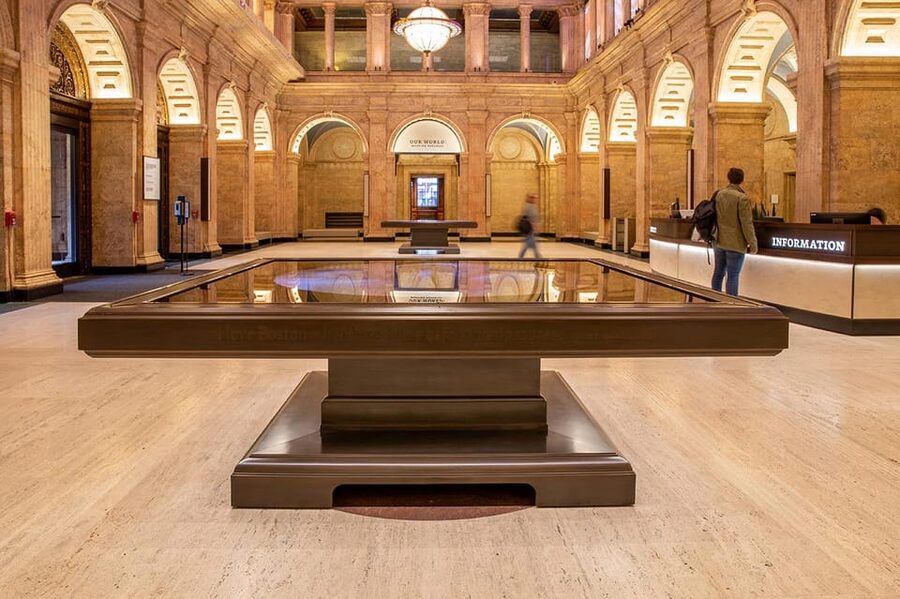
Points of Progress shifts attention to major developments after the war. Its subjects include human rights, scientific breakthroughs, exploration, and other major steps in modern history.
This section adds variety to the visit. The Mapparium is primarily a place of geography and historical perspective. This display broadens the focus to the people and discoveries that changed how societies work and how people understand the world.
I would give this section more time if you are interested in social change or science. It gives the experience a stronger human element, showing progress through key events and achievements rather than through borders alone.
The wording is important here. The exhibit celebrates advances, but the experience does not make the world seem finished or perfect. Its purpose is also to encourage hope for the future. You can read that as an invitation to think about what remains to be done.
Because all these displays are in the same overall experience, you can choose the depth that suits you. A quick visit might focus on the Mapparium and one or two displays. A slower visit can make the exhibits the main event.
Same city, a completely different afternoon:
- Boston: City Cruises Whale Watching Cruise
★ 4.5 · 4,710 reviews - Boston Duck Tour: The Original and World-Famous
★ 4.6 · 3,935 reviews - Harvard University Campus Guided Walking Tour
★ 4.5 · 3,632 reviews - Boston Fenway Park: Guided Ballpark Tour with Options
★ 4.8 · 3,606 reviews
The Christian Science Monitor stories
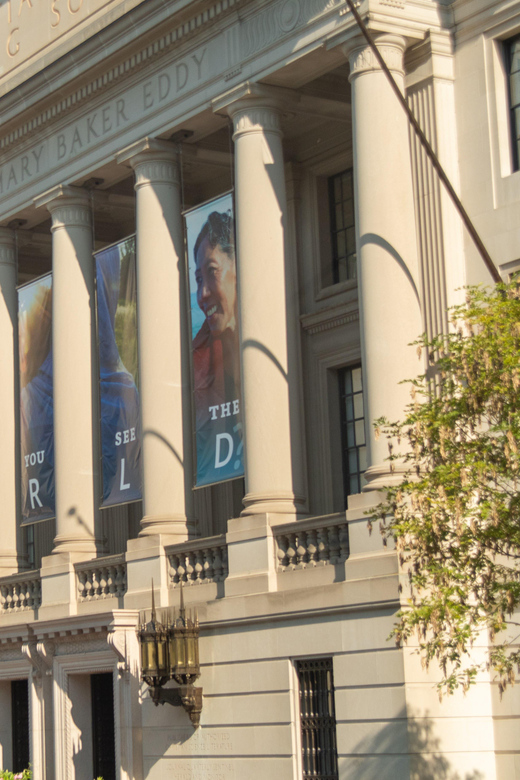
Eight sets of interactive stories from The Christian Science Monitor give the experience a more personal focus. These stories present individuals shaping their communities around the world and connect broad ideas about progress with everyday human action.
That is a useful change of scale. A display about human rights or scientific progress can feel abstract. Personal stories help you see how large changes affect real communities and how individuals contribute to them.
The Christian Science Monitor was founded in 1908 by Mary Baker Eddy. Its stated mission is to injure no man, but to bless all mankind, and its daily and weekly editions report on global stories of resilience and progress.
You do not need to know the newspaper before arriving. The interactive sets provide a way to learn about its approach through selected stories rather than through a long institutional history.
I would allow extra time here if you prefer exhibits that ask you to interact rather than simply look. The supplied information does not specify the exact format of each interactive set, so you should expect a multimedia presentation without assuming that every station works the same way.
Mary Baker Eddy and the Christian Science exhibits
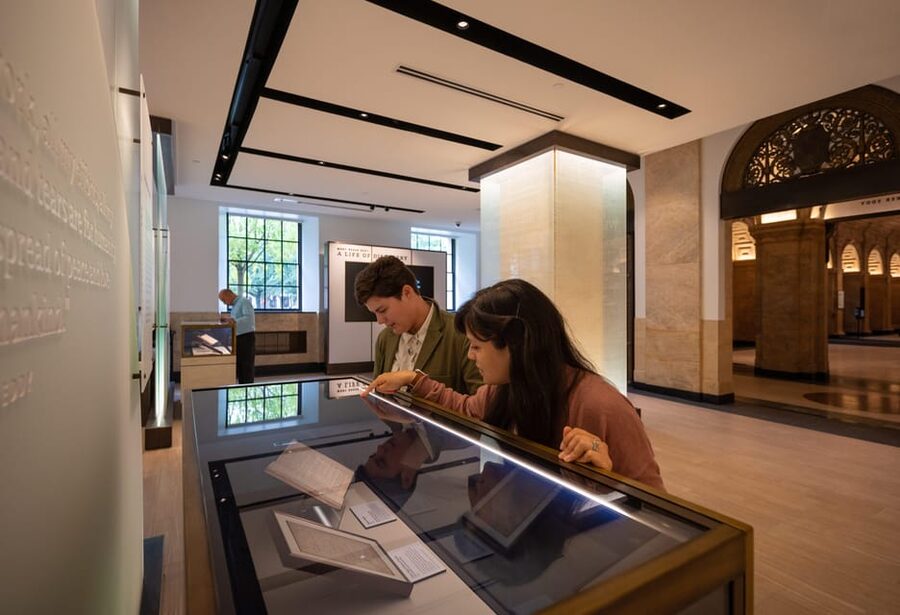
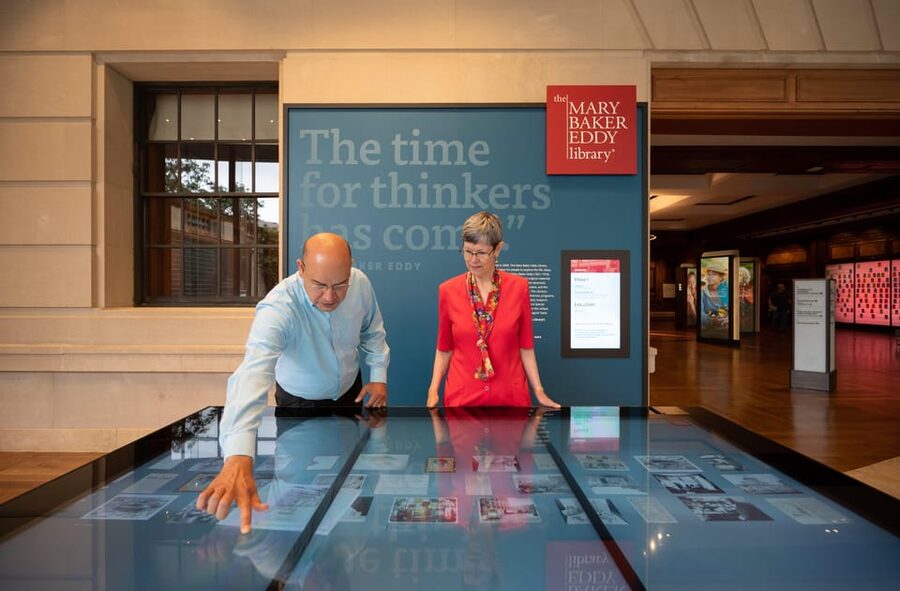
Two additional areas focus on Mary Baker Eddy and Christian Science. Christian Science and Mary Baker Eddy introduces her life, ideas, and achievements, while The Mary Baker Eddy Library and Exhibit offers more space to consider her work and her lasting influence.
Mary Baker Eddy founded The Christian Science Monitor in 1908 and founded the Christian Science church. These displays place the Mapparium and the newspaper exhibits within the larger setting of her life and religious thought.
The library and exhibit also explore her lifelong love of the Bible. They connect that interest with questions that remain relevant to people today, including how religious ideas are understood and applied.
This part will appeal most to readers interested in religion, publishing, biography, or the history of ideas. If your only goal is to see the Mapparium, you may find the additional material more than you need. Since these exhibits are free and do not require a timed ticket, you can decide on the spot.
I appreciate that the experience does not force every visitor into the same route. You can see the globe, sample the progress exhibits, and skip the religious material if that is not your interest. Or you can spend much longer learning about Eddy and the institutions she founded.
How much value do you get for $6?
At $6 per person, this is an easy attraction to justify if you are already in central Boston and have an interest in maps, architecture, history, or unusual museums. The price includes timed entry to the Mapparium and access to How Do You See the World?, plus the Christian Science and Mary Baker Eddy displays.
The strongest value comes from the amount of material beyond the 20-minute globe visit. If you rush out after the Mapparium, you are paying mostly for a short architectural experience. If you stay for the free exhibits, the visit becomes a broader look at geography, science, human rights, publishing, religion, and social progress.
The price also makes this a low-risk choice for a mixed group. One person can focus on the map, another can read about Mary Baker Eddy, and someone else can spend time with the interactive Monitor stories. You do not need everyone to share the same interest.
The attraction has earned a 4.8 rating from 32 reviews, and the praise centers on the unusual globe, the quality of the experience, and the fact that even a long-time Boston resident may not know it is there. One recent rating simply called it an amazing experience after 15 years of living in Boston without discovering the site.
That local-surprise factor matters. This is not the kind of attraction you understand from a quick walk past the building. The banners next to the church point you toward a place many people could easily overlook.
Practical planning for your visit
The experience is in Massachusetts, United States, and the meeting point is the building next to the church with large How Do You See the World? banners. Use those signs rather than relying only on the name of the globe.
The Mapparium visit is timed. The surrounding exhibits are always free and do not require a timed ticket, so plan your day around the scheduled globe entry and use the rest of your time as you wish.
The stated duration is 20 minutes, but that applies to the timed experience. If you want to read the displays on progress, explore the Monitor stories, or visit the Mary Baker Eddy material, allow additional time beyond that figure.
The host or greeter service is in English, and the exhibits are listed in English. No other language option is provided in the supplied information.
The space is wheelchair accessible. Food and drinks are not allowed, so finish snacks before entering and plan accordingly.
Booking can remain flexible because you can reserve now and pay later. Free cancellation is available up to 24 hours in advance for a full refund. Those terms are useful if your Boston schedule may change, but you should still check the availability of the time you want before building your day around it.
Who will enjoy the Mapparium most?
I would recommend this to anyone who likes maps, geography, stained glass, architecture, or compact museum experiences with a clear idea behind them. The globe is also a good choice for families because its scale makes the map feel physical rather than merely printed on a wall.
It works well for repeat Boston visitors. The experience offers something more unusual than another standard historical site, and the low price makes it easy to add to a familiar city itinerary.
You may also like it if you want a thoughtful indoor stop. The attraction combines art, history, multimedia material, and religious and publishing history without requiring a long tour.
I would be more cautious if you want a large, traditional museum with many hours of collections. The Mapparium itself is short, and the surrounding exhibits are focused on specific themes. You should not expect a full survey of Boston history or a broad art museum.
The biggest decision is simple: do you want a quick visual experience, or are you willing to spend time with the exhibits around it? The first option is worthwhile for the globe alone. The second gives you the better value.
Should you book this Boston experience?
I would book it if you want something distinctive, affordable, and easy to fit into a city day. The inside of the 1935 Mapparium is the clear reason to go, while the free exhibits give you useful context and more time if the subject catches your interest.
Book with realistic expectations. This is a 20-minute timed globe presentation followed by optional exhibits, not a full-day attraction. If you enjoy maps, modern history, human rights, scientific progress, publishing, or Mary Baker Eddy’s story, the $6 price is strong value. If you only want a quick photograph or a conventional museum visit, the short format may feel limited.
FAQ
How long does the Mapparium experience last?
The timed Mapparium portion lasts 20 minutes. The additional exhibits can be visited separately and may require more time if you want to read and interact with them.
What does the $6 ticket include?
The price includes timed entry to the Mapparium Globe and entry to the How Do You See the World? experience. It also includes access to the Christian Science and Mary Baker Eddy exhibits.
Do the other exhibits require timed tickets?
No. The exhibits outside the Mapparium are always free and do not require a timed ticket.
Where is the meeting point?
Look for the large banners reading How Do You See the World? on the building next to the church.
Is the experience available in languages other than English?
The host or greeter service and the experience language are listed as English. No other language is specified.
Is the Mapparium wheelchair accessible?
Yes. The experience is listed as wheelchair accessible.
Can I bring food or drinks inside?
No. Food and drinks are not allowed.
What is the cancellation policy?
You can cancel up to 24 hours in advance for a full refund. You can also reserve now and pay later.
Newest Boston tours we have written up
- Boston’s Freedom Trail: A Self-Guided Audio Tour★ 4.0 · 18 reviews
- Boston’s Freedom Trail: A Self-Guided Tour of All 16 Sites★ 5.0 · 14 reviews
- Washington D.C. Cherry Blossom,Baltimore 3-Day Tour from Boston★ 4.5 · 7 reviews
- Boston Self-Guided Audio Tour Bundle: Freedom Trail & More★ 4.5 · 5 reviews
- True Crime Tour of Boston★ 4.0 · 17 reviews
- Family Friendly Guided Bike Tour of Boston★ 4.5 · 22 reviews
- Freedom Trail Experience★ 5.0 · 8 reviews
- Self-Guided Audio Tour of Boston North End★ 4.5 · 3 reviews
Boston Tours, compared.

Boston Duck Boat Sightseeing City Tour with Cruise Along Charles River
Read our review →
Freedom Trail History Small Group Walking Tour
Read our review →
Boston Hop-On Hop-Off Trolley Tour with 13 Stops
Read our review →

Boston Duck Tour: The Original and World-Famous
Read our review →
Harvard University Campus Guided Walking Tour
Read our review →
Boston Fenway Park: Guided Ballpark Tour with Options
Read our review →