
Review · TOURS
True Crime Tour of Boston
Boston’s polished parks and grand civic buildings hide some unsettling stories. This two-hour walk links them together, from the Ether monument and the tale of Jolly Jane to the site where Charles Ponzi began the fraud that made his name famous. You get crime, history, and a useful tour of central Boston in one outing.
I like the easygoing pace and the way the route uses real places rather than a dark attraction built for tourists. I also like the variety: serial killers are only part of the program, which includes grave robbing, political persecution, family scandal, and financial fraud. The main caution is that the subject matter may not match your idea of a classic true crime tour, and guide style can vary.
Key points to know before booking
- Ten central Boston stops: The route runs from the Boston Public Garden to the Massachusetts State House.
- A gentle two-hour walk: Several stops last about 12 minutes, and the pace is not meant to be strenuous.
- More than murder cases: Expect stories about the Boston Marathon bombing, Ponzi fraud, grave robbing, and anti-Quaker laws.
- Guide quality matters: Kai, Andrew, and Kyle have been singled out for humor, energy, and clear storytelling.
- Small group size: The tour accepts a maximum of 20 people.
- Good value at $32: You pay for a researched, guided look at sites you could otherwise pass without noticing.
Why this Boston walk feels different
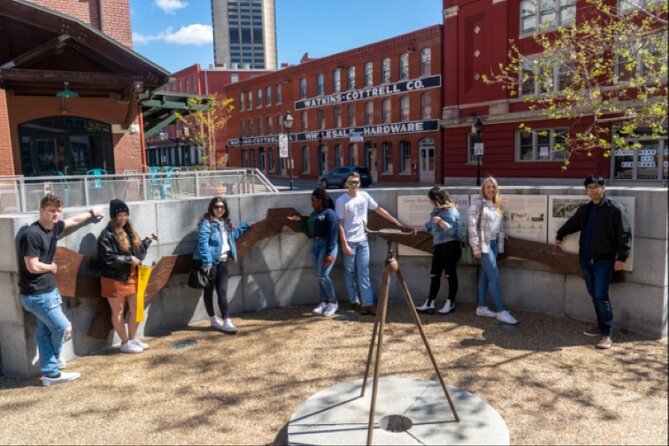
The appeal here is not a collection of haunted props or theatrical actors. The guide uses ordinary Boston landmarks as story settings. A park bandstand, a courthouse, a burying ground, and a statue near the State House take on new meaning once you know what happened there.
That approach suits you if you like history with an edge. You are not simply hearing a list of crimes. The stories also show how Boston’s laws, social rules, newspapers, courts, and public spaces shaped events.
The route covers ten stops, with about 12 minutes at each one. That gives the guide enough time to explain the main case without keeping you in one place for too long. It also means you should expect a steady stream of stories rather than a long, detailed lecture on one famous criminal.
The tone should be structured and respectful. Some subjects are painful, especially the Boston Marathon bombing and suicide. This is not light entertainment from beginning to end, even though some guides use humor to keep the walk lively.
A few more Boston tours and tickets worth a look
- Boston Duck Boat Sightseeing City Tour with Cruise Along Charles River
★ 4.5 · 9,378 reviews - Boston: Freedom Trail History Small Group Walking Tour
★ 5.0 · 6,450 reviews - Boston Hop-On Hop-Off Trolley Tour with 13 Stops
★ 4.5 · 5,576 reviews
Starting with Jolly Jane in the Public Garden
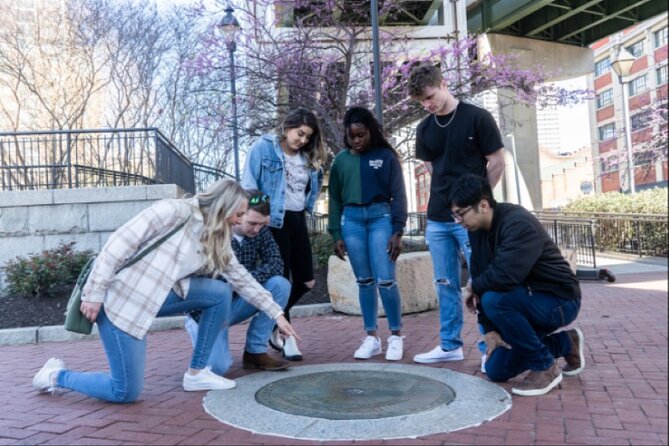
The tour begins at the George Washington Statue at 3:00 p.m. From there, the first stop is the Boston Public Garden, where the Ether monument provides the setting for the story of the first female serial killer.
This is a strong opening because the garden is one of Boston’s prettiest public spaces. You begin among formal paths and greenery, then hear about a figure whose story is anything but tranquil. The contrast gives the tour its basic rhythm: familiar places, disturbing events, and details you might otherwise miss.
The story is also connected with the nickname Jolly Jane, a detail that will appeal to true crime fans. If you want a minute to take in the garden, this stop gives you some of it, but the 12-minute format keeps the group moving.
Remembering the Boston Marathon bombing
The second stop is the Boston Marathon Survivor Memorial. Here, the guide discusses the terror surrounding the Boston Marathon bombing and the courage that followed.
This section changes the mood. The earlier story belongs to a distant past, while this event is part of living memory. You should be prepared for a more serious presentation and for the guide to focus on the people affected, not just the dramatic facts of the case.
That shift is valuable. It keeps the tour from treating every subject as a spooky tale. You get a reminder that true crime can involve public trauma, recovery, and bravery as much as mystery and violence.
Copley Square and the Craigslist Killer
At Copley Square, the guide explains the story of the Craigslist Killer at one of his Boston haunts. This is likely to be one of the more recognizable modern cases on the route, especially for anyone who follows American crime stories.
The setting matters because you are not hearing about an abstract case in a meeting room. You are standing in the part of the city connected with it. That sense of place can make the timeline easier to follow and gives you a stronger feel for how an event fits into Boston’s streets and neighborhoods.
Do keep your expectations in check. The stop lasts about 12 minutes, so the guide will focus on the key facts and local connection rather than every detail of the investigation.
Same city, a completely different afternoon:
- Boston: City Cruises Whale Watching Cruise
★ 4.5 · 4,710 reviews - Boston Duck Tour: The Original and World-Famous
★ 4.6 · 3,935 reviews - Harvard University Campus Guided Walking Tour
★ 4.5 · 3,632 reviews - Boston Fenway Park: Guided Ballpark Tour with Options
★ 4.8 · 3,606 reviews
Central Burying Ground and the Resurrection Men
The Central Burying Ground brings a different kind of darkness. The subject is grave robbing, including the work of so-called Resurrection Men in the 18th and 19th centuries.
This is one of the tour’s most unusual topics. Many people expect a true crime walk to concentrate on murders. Here, the guide also explores the practical and sometimes less sinister reasons cemeteries were raided. The story can touch on medicine, bodies, burial customs, and the uneasy relationship between science and the dead.
I like this stop because it broadens the tour beyond sensational crime. You learn about an old social problem that grew from the needs and limits of its time. The cemetery also provides a fitting setting without requiring a separate attraction ticket.
Emerson College and the Hitchhiker Killer
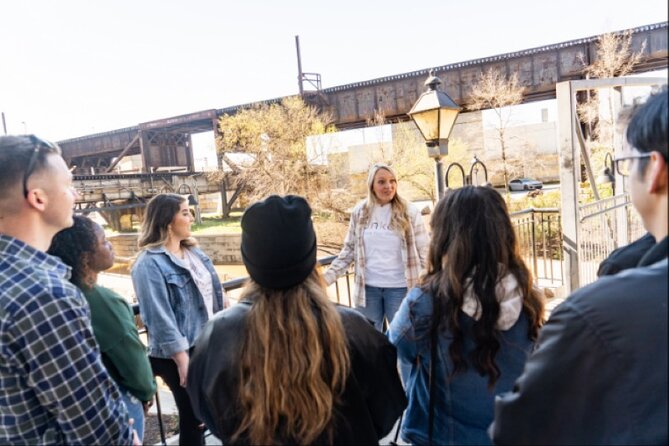
The next stop is Emerson College, connected with the Hitchhiker Killer, a serial killer who terrorized Boston for eight months in the 1970s.
This story gives the walk a clear local focus. You are not simply hearing about a case from another state and then being shown a random landmark. The stop ties a period of fear to a recognizable Boston institution.
The subject is grim, so your enjoyment will depend on your comfort with violent crime. The guide’s delivery matters here. A well-prepared storyteller can provide context and keep the case from becoming a string of lurid details. A flat, memorized delivery could make this section feel less effective.
Parkman Bandstand and a family tragedy
At Parkman Bandstand, the story turns to the Parkman family and its tangled tale of debt and death. The bandstand’s name gives the guide an immediate way into the case.
This is a good example of how the tour reads the city through names and memorials. You might pass the structure without asking why it is called Parkman. The guide supplies that missing piece and connects a public feature to private conflict.
The story appears to be more about family trouble, money, and consequence than a standard serial killer case. That variety helps the two-hour walk avoid repetition. It also gives you a chance to hear how wealth and reputation could shape a Boston scandal.
The Frog Pond and a desperate act
At Boston Common’s Frog Pond, the guide examines a suicide attempt tied to intrigue, forgeries, and family strife.
This is one of the most sensitive stops, and it deserves a serious tone. The story is not simply about the act itself. The surrounding details, including deception and family conflict, show how a chain of pressure can build around one person.
You may find this section less suitable if you want only solved murders and criminal investigations. If you prefer stories about motives, social pressure, and human consequences, it adds another useful layer to the tour.
The location also helps you understand Boston Common as more than a sightseeing lawn. The Common has been part of daily city life for centuries, and the tour uses that public setting to reveal less comfortable chapters.
Charles Ponzi at 27 School Street
At 27 School Street, you see the building connected with the beginning of Charles Ponzi’s famous fraud. The word Ponzi is now part of everyday language, but this stop brings the scheme back to a specific Boston address.
This is a welcome break from violent crime. Financial deception can sound dry, yet Ponzi’s story is easy to grasp when presented at the place where it began. You can see how a local fraud grew into a term used around the world.
For me, this is one of the strongest stops for history-minded visitors. It explains how a crime can outlive its perpetrator by becoming part of the language. It also shows that the tour is about unusual Boston cases, not just murder stories.
The John Adams Courthouse and a child on trial
The John Adams Courthouse is tied to the trial of the youngest serial killer in American history. This is another disturbing subject, and it is likely to prompt questions about age, responsibility, and the way the court handled the case.
The courthouse gives the story a natural setting. Instead of hearing about a trial in a generic square, you are standing outside a building associated with Boston’s legal system.
The short stop means the guide will not recreate an entire trial. Still, the location adds weight. You see the courthouse as part of the city’s working civic life, not only as an impressive building to photograph.
Mary Dyer and the final stop at the State House
The tour ends at the Mary Dyer statue near the Massachusetts State House. Her story concerns religious persecution and the unfair anti-Quaker laws that led to the execution of Dyer and three other women.
This final stop broadens the meaning of crime once again. The law itself can be unjust, and people in power can use it to punish belief and dissent. That makes a fitting ending for a tour that has moved from individual criminals to institutions, public fear, and social rules.
The State House is also a practical finishing point. You end near 24 Beacon Street, with central Boston around you and public transportation nearby. Because the route finishes at a major landmark, you can continue sightseeing or make your way to dinner without needing a complicated transfer.
What the $32 price buys you
At $32 per person, this is a fair price for a two-hour guided city walk. You are paying for the guide’s research, storytelling, route planning, and ability to connect ten locations into one clear narrative.
The value is strongest if you would not normally stop at these sites or research their backstories yourself. All stops are free to enter, so the guide is the main product. A strong guide can turn an ordinary walk into a memorable history lesson.
The guide roster includes Kai, Andrew, and Kyle, among others. Kai has been praised for mixing humor with solid information and for keeping a relaxed pace. Andrew is associated with clear explanations of Boston Common stories and with the Jolly Jane and Resurrection Men material. Kyle is noted for a good sense of humor and engaging delivery.
That said, this is a people-dependent experience. One guide may tell the stories with warmth and energy, while another may sound as if he is reciting a prepared script. The overall rating is 4.2 from 17 ratings, with a mix of excellent and poor experiences. One serious operational problem has also been reported: a canceled tour where the host did not appear or notify the group. I would confirm the booking details before setting out, especially if the walk is central to your day.
Pace, group size, and practical comfort
The tour lasts about two hours and accepts up to 20 people. That is small enough for a more personal feel, though the group may still spread out when the guide is speaking on a busy sidewalk.
You need a moderate level of physical fitness. The walk is described as easygoing rather than vigorous, but you will be on your feet and moving between ten stops. Wear comfortable shoes and leave room in your schedule for a steady city walk.
The tour is offered in English and uses a mobile ticket. Service animals are allowed, and the route is near public transportation. Food and drinks are not included, so plan those separately.
The experience is often booked about 24 days ahead. That is a useful sign that you should not wait until the last day if your Boston schedule is fixed. Free cancellation is available up to 24 hours before the 3:00 p.m. start time. Inside that window, refunds and changes are not accepted.
Who should book this walk
I would recommend it to true crime fans who also want a proper look at central Boston. It suits you especially well if you enjoy stories about fraud, court cases, old burial customs, and political injustice as much as serial killers.
It also works for families with older children and teenagers who can handle serious subjects. The material includes murder, suicide, terrorism, and executions, so it is not a carefree sightseeing stroll for young children.
You may want to skip it if you expect every stop to involve a famous modern case. The route includes several lesser-known stories and historical subjects. You may also be disappointed if you want a heavily theatrical ghost tour with costumes, jump scares, or special effects.
Should you book the True Crime Tour of Boston?
Book it if you want a relaxed city walk with real Boston locations, a broad mix of crimes, and a guide who can make history feel local. At $32, it offers solid value when the storytelling is lively, especially with guides such as Kai, Andrew, or Kyle.
Think twice if your interest is limited to headline serial killers, or if sensitive topics such as terrorism and suicide are not right for your group. Also confirm the tour before heading to the George Washington Statue, since guide reliability has not been perfect.
For the right audience, this is a smart way to see Boston’s Public Garden, Common, civic buildings, and courthouses through a darker lens without losing sight of the city’s wider past.
FAQ
Where does the True Crime Tour of Boston begin?
It begins at the George Washington Statue in Boston, Massachusetts.
Where does the tour end?
It ends at the Mary Dyer statue near the Massachusetts State House at 24 Beacon Street.
What time does the tour start?
The scheduled start time is 3:00 p.m.
How long does the tour last?
The walk lasts approximately two hours.
How much does the tour cost?
The price is $32 per person.
How many people can join the tour?
The maximum group size is 20 people.
What language is the tour offered in?
The tour is offered in English.
Are food and drinks included?
No. Food and drinks are not included in the tour price.
Is the walk physically demanding?
You should have a moderate level of physical fitness. The pace is described as easygoing rather than especially strenuous.
Can I cancel for a refund?
Yes. You can cancel at least 24 hours before the start time for a full refund. Cancellations and changes made less than 24 hours before the tour are not accepted.
Newest Boston tours we have written up
- Boston’s Freedom Trail: A Self-Guided Audio Tour★ 4.0 · 18 reviews
- Boston’s Freedom Trail: A Self-Guided Tour of All 16 Sites★ 5.0 · 14 reviews
- Washington D.C. Cherry Blossom,Baltimore 3-Day Tour from Boston★ 4.5 · 7 reviews
- Boston Self-Guided Audio Tour Bundle: Freedom Trail & More★ 4.5 · 5 reviews
- Family Friendly Guided Bike Tour of Boston★ 4.5 · 22 reviews
- Freedom Trail Experience★ 5.0 · 8 reviews
- The Ghosts of Boston’s Past Haunted Self-guided Tour★ 3.5 · 4 reviews
- Self-Guided Audio Tour of Boston North End★ 4.5 · 3 reviews
Tours, compared.
History and Hauntings of Salem Guided Walking Tour
Read our review →
Boston Duck Boat Sightseeing City Tour with Cruise Along Charles River
Read our review →
Freedom Trail History Small Group Walking Tour
Read our review →
Boston Hop-On Hop-Off Trolley Tour with 13 Stops
Read our review →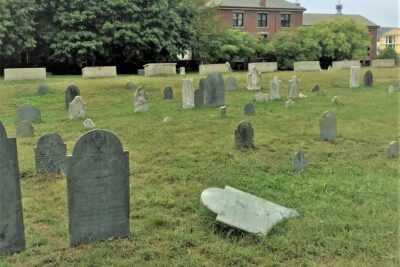

Boston Duck Tour: The Original and World-Famous
Read our review →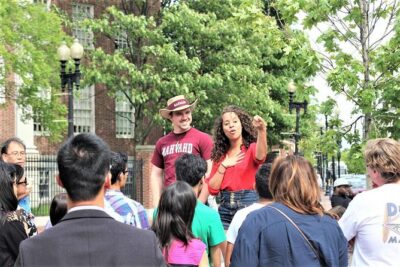
Harvard University Campus Guided Walking Tour
Read our review →