
Review · HARVARD AND MIT CAMPUS TOURS
Public Innovation Trail Tour in Cambridge
Cambridge’s Kendall Square is a place where tomorrow’s big idea may be taking shape behind an ordinary office door. This 90-minute walking tour connects today’s work in gene editing, robotics, biotech, and software with older Cambridge inventions such as the microwave oven, woven fire hoses, and the Fig Newton.
I like the mix of working science and surprising local stories, especially the links to Margaret Hamilton’s Apollo software and the candy factories that once filled Cambridge. I also like the small group limit of 25 and the lively guides, including Julia, who brings warmth and humor to technical subjects. The main drawback is simple: you usually stay outside, since many stops are active labs or private offices, and some public lobby exhibits may be closed on Sundays.
Key points
- Kendall Square to MIT: Follow a compact route through one of America’s strongest centers for science and technology.
- Real stories behind famous names: Learn how Google, Akamai, Biogen, Moderna, iRobot, and Draper Labs grew from Cambridge research and business culture.
- A human side of science: Hear about Margaret Hamilton, Hugh Herr, Danny Lewin, and the researchers behind the Human Genome Project.
- More than modern technology: The route includes Polaroid, old candy factories, the Fig Newton, and the Apollo moon program.
- Good value at $20: You receive a live guide and roughly an hour and a half of context for a modest price.
- Mostly an outdoor walk: Expect building exteriors, courtyards, and selected public areas rather than laboratory access.
Why Cambridge’s future is part of its history
Many city tours point backward. This one asks you to look at active research and guess what will appear in future history books.
The setting helps. Kendall Square has laboratories, start-up offices, university buildings, and large technology companies close together. The walk makes those names easier to understand. Google is not just a logo on an office building. Akamai is not just a company you may have encountered while browsing the internet. Moderna is part of the story of modified RNA, while Draper Labs links Cambridge research to the moon landings.
You also get reminders that innovation is not limited to laboratories. Cambridge once had 66 candy companies. The last operating candy factory in the city now makes 26 million pieces of candy a day. That odd turn in the route gives the tour a welcome sense of place.
The guide does much of the work. Julia, one of the guides, is praised for her enthusiasm and clear storytelling. The route covers technical subjects, but it is designed for a general audience rather than people with scientific training. You can ask questions, follow the stories, and let the guide explain why each location matters.
More Campus Tours in Cambridge
- MIT Campus Guided Walking Tour
★ 4.5 · 175 reviews - Illustrious Schools: Group Tour of MIT And Harvard
★ 5.0 · 107 reviews - Delicious Donuts of Harvard Square: A Historical Walking Tour
★ 5.0 · 31 reviews
Starting at the Entrepreneur Walk of Fame
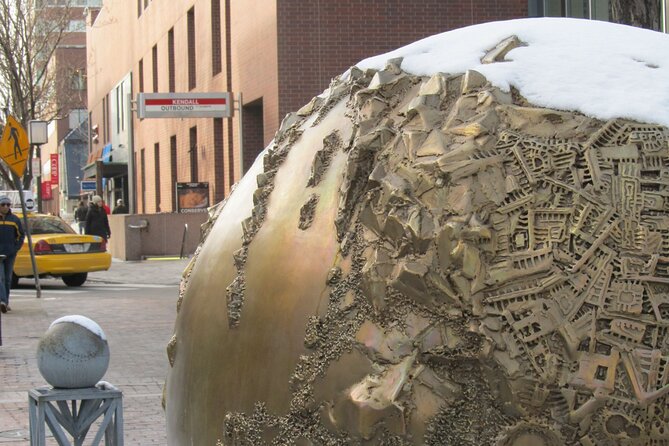
The tour begins at 50 Broadway at 2:00 pm, near Kendall Square. The first stop is the Entrepreneur Walk of Fame, a short introduction to the names and ideas that will appear along the route.
This opening works as a quick orientation. You start seeing Cambridge not as a collection of offices, but as a network of people, companies, and inventions. The stop lasts about five minutes, so do not expect a long lecture here. It is a useful way to get your bearings before the route moves toward more specific examples.
Next comes CIC Cambridge at 245 Main Street. CIC, once called the Cambridge Incubator, was founded by MIT Business School graduate Tim Rowe. The important idea is the role of shared start-up space. New companies do not always begin with large campuses or polished headquarters. They often need a place to work, meet, and build connections.
You will not receive a private tour of the facility. The value comes from understanding how Cambridge supports young companies before they become familiar names.
MIT Museum and the Stata Center
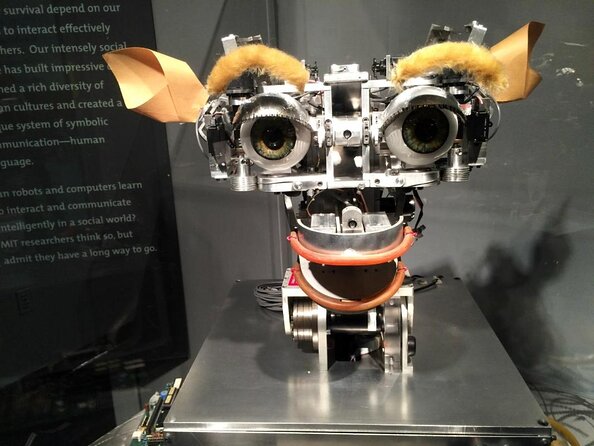
The MIT Museum reopened in October 2022 and gives the tour an important cultural anchor. Its exhibits show how the Institute connects research with real-world technology.
The tour allows about 10 minutes here, so you should treat this as an introduction rather than a full museum visit. If the museum interests you, plan a separate visit. The walk gives you a reason to return and a better sense of what to look for.
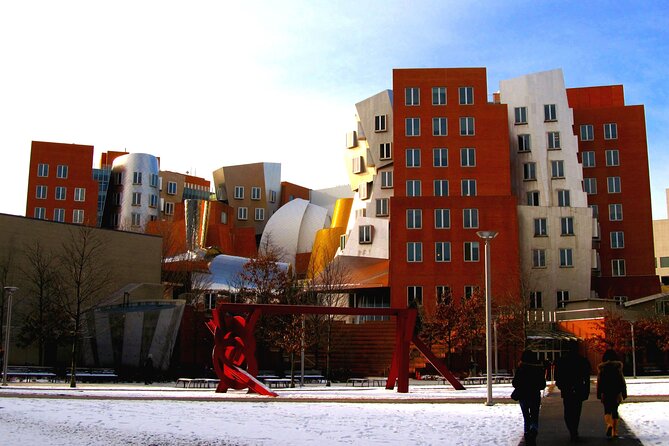
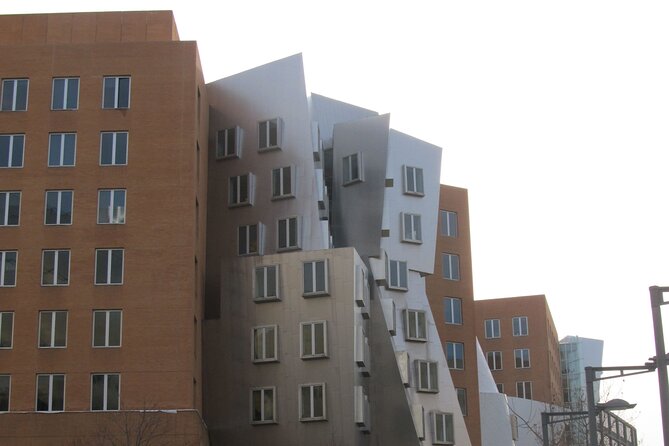
At the Stata Center, the focus shifts to computer science, artificial intelligence, and robotics. The building is connected to laboratories that helped give rise to iRobot, the company behind the Roomba robotic vacuum cleaner. That is a useful reminder that research can move from academic work into an object you use at home.
There is also a small ground-floor display about MIT student hacks, the school’s long tradition of elaborate pranks. This gives the stop some personality. MIT is not presented only as a serious machine for producing patents and companies. It is also a place where play, mischief, and curiosity have a role.
The tour also touches on Hugh Herr, whose robotics work has an especially human focus. That story is one of the strongest parts for anyone interested in the way engineering can improve mobility and daily life.
Google, the Broad Institute, and the human genome
At 355 Main Street, you learn about Google’s Cambridge office and the city’s connection to major technology companies. Android is one example of creative work associated with the Cambridge operation.
This stop is brief, about five minutes, and you should not expect to enter private work areas. Its purpose is to show that Cambridge’s technology scene is not limited to small academic projects. Large companies also use the city’s research talent and inventive culture.
The Broad Institute of MIT and Harvard brings the subject into medicine. Its work aims to understand the roots of disease and turn biological discoveries into practical benefits for patients. In plain terms, the institute tries to reduce the distance between learning how disease works and helping someone who has it.
The Whitehead Institute adds another layer. Founded in 1982 by philanthropist Jack Whitehead and MIT professor and Nobel Prize winner David Baltimore, it was built around the idea of gathering leading biomedical researchers under one roof. The Human Genome Project is part of this story.
The stop is short, but the subject is large. You will not learn the full scientific history in five minutes. You will get the context needed to understand why Cambridge became such an important place for biomedical research.
More Harvard and MIT campus tours
- Harvard University Campus Guided Walking Tour
★ 4.5 · 3,632 reviews - Cambridge, Massachusetts: MIT and Harvard Walking Tour
★ 4.7 · 486 reviews - Tour de Cambridge Guided Bicycle Tour
★ 5.0 · 34 reviews - Private City Tour of Boston and Cambridge
★ 5.0 · 33 reviews
Biogen, Akamai, and the Internet’s hidden machinery
At 225 Binney Street, the guide introduces Biogen, founded by two Nobel Prize winners. The company’s story adds another example of research becoming a major force in biotechnology.
This section of the walk is useful because it shows that innovation takes time. A company may begin with a narrow scientific aim, then grow as researchers find new ways to apply its work. The guide keeps the story connected to the buildings around you rather than treating biotech as an abstract subject.
At 145 Broadway, Akamai explains a part of the internet most people use without seeing. The company’s original idea was to place servers around the world and store content closer to the people requesting it. That made web pages and other online material appear faster.
The examples make the idea memorable. Akamai demonstrated its system with the trailer for Star Wars: The Phantom Menace and ESPN’s March Madness coverage in 1999. You get a clear picture of the problem: huge bursts of public interest could slow down the internet, so content needed to be distributed more intelligently.
This is one of the route’s best stops for people who enjoy everyday technology. You do not need to understand the engineering in detail. You only need to recognize that a smoother online experience depends on a great deal of infrastructure working out of sight.
Draper Labs and the people behind Apollo
At 555 Technology Square, Draper Labs brings the route back to the space program. A large moon in the lobby points to the company’s work on the guidance computers that helped Apollo spacecraft travel to and land on the moon.
Margaret Hamilton gives this story a strong human focus. She helped write the software that ran the Apollo guidance computers and later founded two companies. She is also credited with helping define software engineering as a field.
This is a particularly good stop if you think of Apollo as a triumph of rockets alone. The tour makes clear that the mission depended on software, navigation, testing, and countless people solving problems under pressure.
You may be able to see a lobby display, but building access is not guaranteed. Much of the route stays in public areas, and the tour should not be confused with an inside visit to Draper or any other research center.
Moderna, LabCentral, and Cambridge’s start-up engine
Moderna was founded in 2010 to explore modified RNA molecules. The name itself comes from mod-RNA. The company’s place on the route helps explain why Cambridge continues to draw researchers and entrepreneurs working on new medical treatments and vaccines.
The stop is only about five minutes, but it fits the tour’s main question: which discoveries being developed now will future generations consider historic?
LabCentral provides another view of how new science gets started. The building has been home to Davenport Car Works, Walworth Manufacturing Company, Polaroid, and now LabCentral. Few places can show so many different kinds of invention under one roof.
That history matters because it gives Kendall Square a physical memory. The area is not only a collection of new glass buildings. Older industrial spaces have been reused for new kinds of work, with each generation adding another chapter.
You should expect the guide to explain the site from outside or in publicly available areas. LabCentral is an active science facility, not a tourist attraction with open laboratory access.
Candy, cookies, and an unexpected final stop
At 810 Main Street, the tour takes a deliciously strange turn. Cambridge once had 66 candy companies, producing items such as candy hearts, lemon drops, and Squirrel Nut Zippers. The Fig Newton was invented in Cambridge in 1891, even though it was named after nearby Newton.
The building is now home to the last operating candy factory in Cambridge, owned by Tootsie Brands. The company does not offer tours, partly because candy makers closely protect their machinery and production methods. Inside, about 26 million pieces of candy are made each day.
You will not go in to watch the candy being produced. Still, this stop is valuable because it broadens the meaning of innovation. Food production, industrial equipment, packaging, and manufacturing can be just as inventive as software or medical research.
It also gives the walk a memorable finish. After hearing about genomes, artificial intelligence, and moon-bound computers, you end up thinking about the machinery behind a lemon drop.
How the 90-minute route feels on foot
The official duration is about an hour and a half. The listed stops add up to roughly 85 minutes, with the remaining time used for walking, transitions, and conversation.
The start is at 50 Broadway, and the tour ends at the MIT Media Lab at 75 Amherst Street. No private transportation is included, so you move between locations on foot. Public transportation is nearby, which makes the tour easy to add to a Cambridge day without arranging a car.
You should have a moderate level of physical fitness. Wear comfortable shoes, since the route includes several blocks and outdoor stops. The tour requires good weather, so a cancellation can occur if conditions are poor.
The group limit is 25 people. That is large enough for a social walk but small enough that the guide can usually keep the storytelling personal. One especially large group still allowed everyone to hear the stories, but a smaller group will generally feel easier for questions and conversation.
Sunday timing can affect what you see. Some lobby exhibitions may be closed, even when the outdoor route continues. If seeing public interior displays is important to you, ask the provider about the day’s access before booking.
Is $20 a fair price?
At $20 per person, the tour offers good value if you want a guided introduction to Cambridge’s technology corridor. You receive an in-person guide, a carefully connected route, and about 90 minutes of explanation for less than the cost of many museum admissions.
The value is not in entering laboratories. You are paying for the links between places. A building tied to Google means more when you understand its connection to Android. Draper Labs becomes more interesting when you know about Apollo software and Margaret Hamilton. LabCentral makes more sense when you hear about the building’s earlier lives.
If you want long museum visits, private access, or demonstrations, this is not the right purchase. You will get more from it if you enjoy stories, questions, and seeing the outside of places that are normally closed to the public.
Free cancellation is available up to 24 hours before the 2:00 pm start time. The provider may also offer another date or a full refund if poor weather or low enrollment cancels the tour.
Who should book this Cambridge walk?
I would choose this tour for adults and older children who enjoy science, business, medicine, or unusual local history. It also suits visitors who want to understand why Kendall Square matters without spending an entire day inside a museum.
It is especially useful early in a Cambridge visit. The route can help you decide which places deserve a separate visit, such as the MIT Museum or publicly accessible building lobbies.
You may want another activity if you prefer quiet sightseeing, indoor attractions, or a slow architectural walk. The subject changes quickly, and some stops last only five minutes. You need to listen closely to catch the connections.
Should you book the Innovation Trail?
Book it if you like the idea of walking through active history, with one foot in the past and the other in biotech, robotics, and software. The best moments come from the unexpected links: candy factories beside medical start-ups, Apollo guidance computers beside modern coding, and a student prank display near serious artificial intelligence research.
Skip it if your main goal is to enter laboratories or spend extended time at exhibits. The tour remains mostly outdoors and depends on public access to a few lobbies.
For $20, I think it is a smart choice for curious visitors who want a clear, entertaining introduction to Cambridge’s science and business culture. Just wear good shoes, allow for changing weather, and consider booking a separate museum visit if you want more time with the displays.
FAQ
Where does the Public Innovation Trail Tour begin?
The tour begins at 50 Broadway, Cambridge, Massachusetts 02142.
Where does the tour end?
The tour ends at the MIT Media Lab, 75 Amherst Street, Cambridge, Massachusetts 02139.
What time does the tour start?
The stated start time is 2:00 pm.
How long does the tour last?
The tour lasts approximately 1 hour and 30 minutes.
How much does the tour cost?
The price is $20 per person.
Is transportation included?
No. Private transportation is not included. The experience is a walking tour, and the area is near public transportation.
Can you enter the laboratories and company offices?
No. Most locations are active laboratories or private workspaces, so the tour does not provide general access inside them.
What companies and institutions are included?
Stops include CIC Cambridge, the MIT Museum, Google, the Stata Center, the Broad Institute, the Whitehead Institute, Biogen, Akamai, Draper Labs, Moderna, LabCentral, and a Tootsie Brands candy factory.
Is the tour suitable for someone with limited mobility?
The information provided says participants should have a moderate level of physical fitness. The route is a walking experience, so you should consider your own ability to walk between stops.
Can you cancel for a refund?
Yes. You can cancel at least 24 hours before the start time for a full refund. Changes or cancellations made less than 24 hours before the start time are not accepted for a refund.
Newest Boston tours we have written up
- Boston’s Freedom Trail: A Self-Guided Audio Tour★ 4.0 · 18 reviews
- Boston’s Freedom Trail: A Self-Guided Tour of All 16 Sites★ 5.0 · 14 reviews
- Washington D.C. Cherry Blossom,Baltimore 3-Day Tour from Boston★ 4.5 · 7 reviews
- Boston Self-Guided Audio Tour Bundle: Freedom Trail & More★ 4.5 · 5 reviews
- True Crime Tour of Boston★ 4.0 · 17 reviews
- Family Friendly Guided Bike Tour of Boston★ 4.5 · 22 reviews
- Freedom Trail Experience★ 5.0 · 8 reviews
- Self-Guided Audio Tour of Boston North End★ 4.5 · 3 reviews
Harvard and MIT Campus Tours, compared.
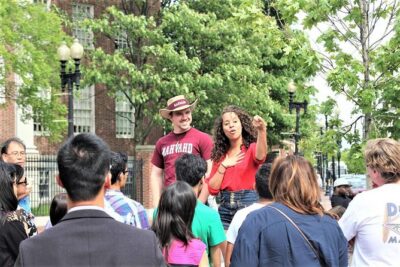
Harvard University Campus Guided Walking Tour
Read our review →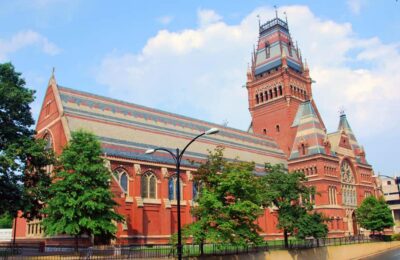
Cambridge, Massachusetts: MIT and Harvard Walking Tour
Read our review →
Illustrious Schools: Group Tour of MIT And Harvard
Read our review →


Delicious Donuts of Harvard Square: A Historical Walking Tour
Read our review →
Browse the lists this tour appears in