
Review · SALEM WITCH TRIALS TOURS
Salem Witch Tour
Salem’s witch-trial story becomes easier to follow when you walk from the Witch Trials Memorial to the old jail site, stopping at homes, cemeteries, and civic buildings along the way. This tour adds useful context to places you could visit on your own, including Pickman House, the Witch House, and the property linked to Bridget Bishop, the first person executed in 1692.
I like the small group limit of 10 people, which gives the guide room to answer questions and adjust the pace. I also like the language choice: tours are offered in English, Spanish, French, and Italian. The main drawback is the short format. At roughly one to two hours, several stops are brief, and admission to the Witch House or any museum is not included.
Key points to know before you book
- Pickman House adds an unusual opening stop: You hear stories at one of Salem’s oldest houses before reaching the memorial.
- The memorial is the tour’s emotional center: Granite walls, victim names, execution dates, and carved protests of innocence make the 1692 events personal.
- You see both serious history and pop culture: The route includes the Witch Trials Memorial and the Elizabeth Montgomery statue from Bewitched.
- Cynthia is a useful guide to look for: She has led tours in more than one language and can slow the walk for families with small children.
- The tour ends where it begins: Meet at the Peabody Essex Museum and return there after the walking route.
- Optional readings cost extra: Tarot or palm reading is available for $40 for 15 minutes and is not part of the tour price.
Why this Salem walk works
Salem can feel like several different towns at once. There is the serious colonial city tied to the 1692 witch trials, the active port town reflected in its old buildings, and the playful modern Salem built around witches, broomsticks, and Halloween culture.
This walking tour connects those parts without asking you to spend a full day inside one museum. You move through a compact section of central Salem and hear how individual people, buildings, and public memories fit together. That matters because the witch trials were not just a dramatic episode. They involved accusations, imprisonment, court proceedings, and executions that affected real families and neighborhoods.
The group size is capped at 10 people. That is a good arrangement for a walking tour, especially at the Witch Trials Memorial, where you may want to pause and ask how the memorial presents the victims. Cynthia has also been praised for explaining the story clearly, offering local tips, and stopping often when children needed a break.
The route is not a private tour, and the supplied details do not promise entry into every building. You should think of it as a guided orientation walk with selected outside views and historical explanations. At some stops, the guide may be able to take you inside attractions, but that is not guaranteed.
More Salem witch trials tours
- The Salem Witch Walk
★ 4.5 · 1,301 reviews - Wicked Awesome Tours: Witch Trial History and Salem Haunts!
★ 5.0 · 1,032 reviews - Best Salem Witch Trials Historical Walking Tour
★ 4.0 · 743 reviews
Starting at Pickman House and the Witch Trials Memorial
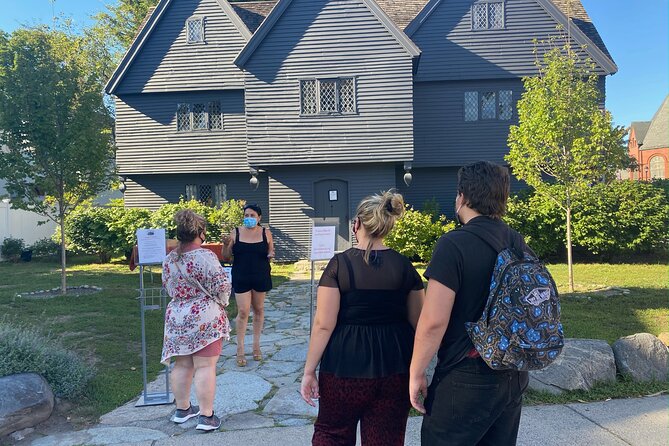
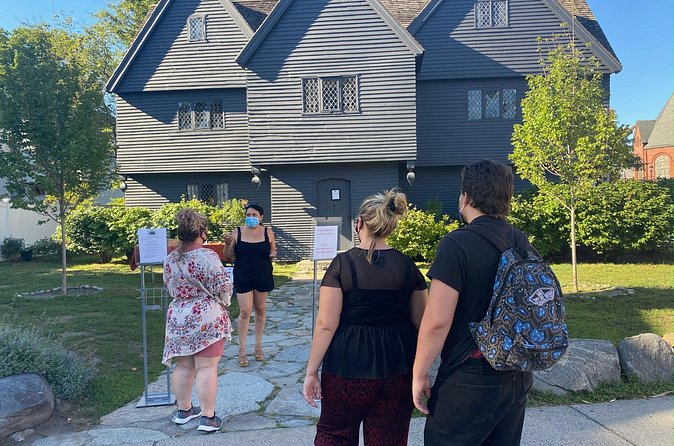
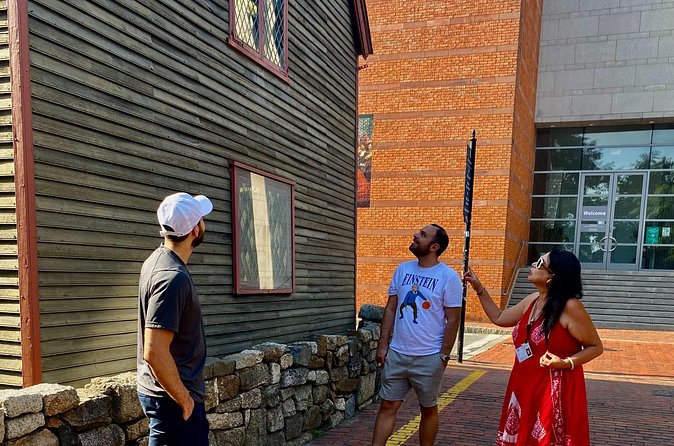
The meeting point is the Peabody Essex Museum at 161 Essex Street. From there, the tour first pauses at Pickman House, one of Salem’s oldest houses. This is a smart opening because the house gives the story a physical setting before you reach the formal memorial.
You do not need to know every name or date before arriving. Listen for the way the guide uses the house and nearby streets to explain Salem’s past. Details like these can make the later memorial stop easier to understand, since you are no longer treating the trials as an isolated attraction.
The Witch Trials Memorial follows, with about 15 minutes scheduled there. The memorial is surrounded on three sides by a handcrafted granite wall. The entrance includes stone thresholds inscribed with the victims’ protests of innocence, while benches inside carry the names and execution dates of the 20 people who were killed.
I consider this the most important stop on the tour. The design is spare and direct. You enter through the wall, read the words cut into stone, and see the names placed where people can sit. That arrangement keeps the focus on the victims rather than on theatrical stories about witchcraft.
The stop is suitable for all ages, though younger children may need help understanding the difference between accusation and proof. If you have a strong interest in the subject, 15 minutes may feel brief. You can return later on your own for a quieter look.
Old Burying Point Cemetery and Salem’s early civic life
The Old Burying Point Cemetery, also called the Charter Street Cemetery, is the oldest maintained cemetery in Salem. It opened in 1637 and contains the graves of several notable Salem residents.
The scheduled visit is about five minutes, so expect a quick orientation rather than a long cemetery study. The cemetery gives you another way to see Salem’s age. Instead of reading about the city only through court records, you are looking at a preserved burial ground that has been part of the town for centuries.
Your guide can help connect the cemetery to the wider story, but the tour information does not identify individual graves that will be visited. If you want time to examine markers closely, plan to return after the tour. The cemetery is near other central sights, so it is easy to include in your own Salem walk.
Old Town Hall is the next short stop, with about five minutes scheduled. Built in 1816, it is a Federal-style brick building with Palladian windows, carved wood details, antique chandeliers, decorative columns, and hardwood floors.
The building is no longer used for city government. It now serves as a cultural and rental space. That change gives you a glimpse of how Salem has kept older civic buildings in public use, even as their original jobs have changed.
This is a photo stop and a quick piece of architectural context, not a full interior tour. If you care more about colonial-era sites than 19th-century architecture, you may find the stop less important than the memorial or Witch House.
The Bewitched statue and Salem’s modern witch image
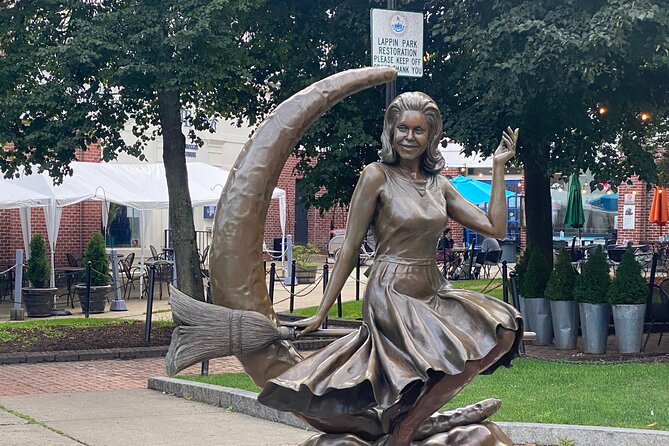
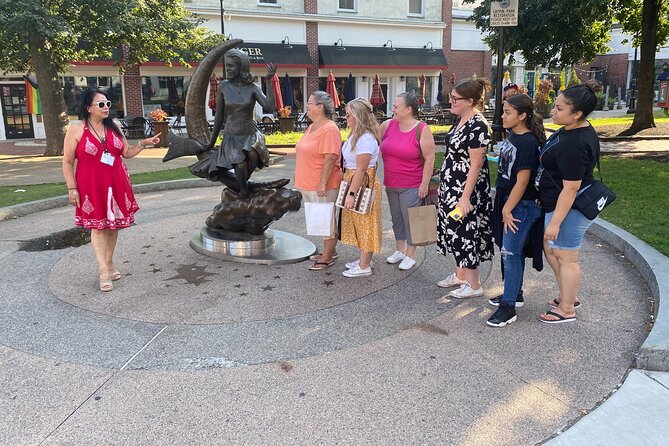
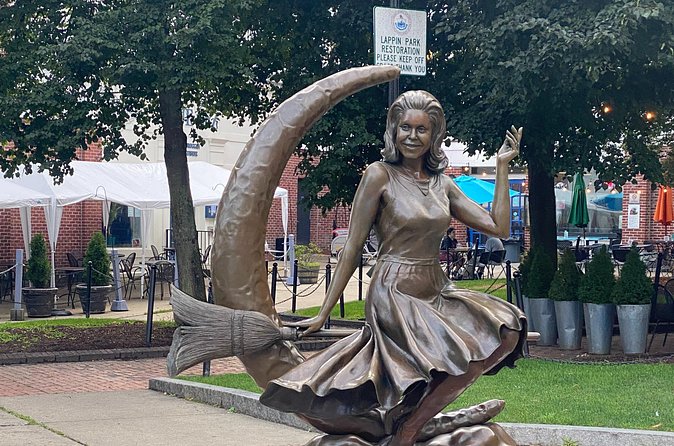
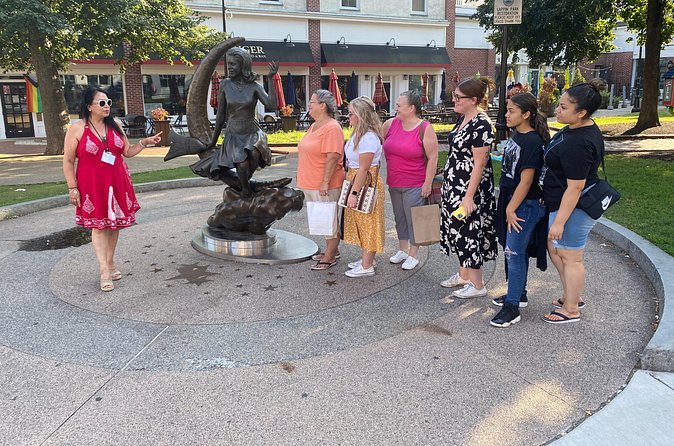
The bronze statue of Elizabeth Montgomery offers a sharp change of tone. Montgomery played Samantha Stephens in the 1960s television series Bewitched. The statue shows the character sitting sidesaddle on a broom beside a crescent moon.
The sculpture is six feet tall and links Salem to the television show’s 1970 filming in the city. Salem has embraced that connection, even though the sitcom’s playful magic is far removed from the real suffering of the 1692 trials.
The tour allows about 10 minutes here, mainly for photographs. I like this stop because it helps you separate fact from popular culture. Salem’s public image now includes witches as entertainment, but the memorial and cemetery remind you that the original events were not entertainment for the people caught in them.
Families may enjoy this pause, especially after the more serious memorial. It also gives you a good chance to take a group photo. If you prefer a tour focused only on documented trial sites, this is the easiest stop to treat as optional.
More things to do in Salem
- History and Hauntings of Salem Guided Walking Tour
★ 5.0 · 14,564 reviews - Salem’s Best Ghost Tour
★ 4.5 · 4,186 reviews - Salem Voodoo, Vampires, and Ghosts Guided Walking Tour
★ 5.0 · 1,931 reviews - Bewitched Walking Tour of Salem
★ 5.0 · 1,895 reviews
The Witch House and Jonathan Corwin’s role
The Witch House is one of the strongest historical stops on the route. It was the home of Jonathan Corwin, who served on the Court of Oyer and Terminer, the court that convicted people accused of witchcraft during the Salem trials.
Corwin was also the uncle of High Sheriff George Corwin. The house is the only surviving building in Salem with direct ties to the witch trials. That makes it more significant than a house simply styled to look old or associated with Salem by tradition.
The property has another connection to Roger Williams, who lived there before founding Providence Plantation in Rhode Island. The house was moved 11 meters from its earlier location in the 1940s to make room for road widening.
About 10 minutes are scheduled at the Witch House. Admission is not included, so check the separate entry cost if you want to go inside. The short timing suggests that many people will see the exterior and hear the story rather than take a full house visit during the walking tour.
I would treat the Witch House as the stop most worth extending. The outside explanation gives you the essentials, but an interior visit can add detail about the building and Jonathan Corwin’s place in Salem’s legal history. If your schedule allows, return after the tour rather than trying to rush through it.
Bridget Bishop’s property and the old jail site
The tour then reaches the site associated with Bridget Bishop, now connected with Turner’s Seafood at Lyceum Hall. Bishop was the first person executed for witchcraft during the 1692 trials. Her execution took place on June 10, 1692.
This stop is a useful reminder that the accusations affected people from different parts of Salem society. You are looking at a present-day property linked to a person whose name is tied to the first execution, not at a preserved house belonging to her.
The guide continues to the location of the infamous Salem Jail. Many people accused of witchcraft were arrested and held there before their executions. The jail itself is not presented as a surviving prison to explore, so expect a historical site explanation rather than a building visit.
About 15 minutes are set aside for this part of the route. I like the sequence because it follows the movement from accusation to imprisonment. The memorial tells you who died, while the Bishop and jail stops help explain the process that led people there.
The Roger Conant statue and the final stretch
The final listed stop is the Roger Conant statue. Roger Conant was an early figure in Salem’s colonial story, and the statue adds context from before the 1692 trials.
The supplied tour details also connect this stop with the Old Burying Point Cemetery, so the route description is not perfectly clear about how the statue and cemetery are arranged. Ask your guide to clarify the exact location and how much time is planned there.
The schedule gives about five minutes. That is enough for a brief explanation and photographs, but not for a long discussion of early colonial Salem. The tour then returns to the Peabody Essex Museum meeting point.
Because the route includes seven stops and lasts roughly one to two hours, timing can vary. Small groups and family needs may slow the walk. Cynthia has been willing to stop more often for families with small children, which is helpful, but you should not expect every stop to receive equal attention.
Languages, group size, and walking demands
The tour is available in English, Spanish, French, and Italian. That is one of its best practical features, especially if you want historical explanations in a language you understand comfortably.
The group maximum is 10 people. A smaller group usually makes it easier to hear the guide on city streets and ask about details that interest you. It also helps if you need the pace adjusted, though this remains a walking tour and requires a moderate level of physical fitness.
The route is near public transportation. The start and end point at the Peabody Essex Museum makes planning simple, since you do not need to arrange a separate pickup at the end.
Service animals are allowed. The supplied details do not provide a full route assessment for wheelchairs, strollers, or other mobility needs, so ask the provider before booking if that matters for you.
What the price does and does not cover
No tour price is provided in the available details, so I cannot judge the exact cost against similar Salem walks. The value depends on how much you want a guide to connect the sites for you rather than simply visit them independently.
Several stops are free, including the memorial, cemetery, Old Town Hall, Elizabeth Montgomery statue, Bridget Bishop site, and Roger Conant statue. The Witch House admission is extra, and no museum entry is included.
That can make the tour a good first step for a short Salem visit. You pay for the guide’s route, explanations, language options, and local orientation, then decide which paid attractions deserve more of your time. It is less useful if you want a long interior visit at the Witch House or a museum-focused day.
Coffee and tea are not included. Tarot or palm reading costs $40 for 15 minutes. Treat that as a separate entertainment choice, not part of the historical tour. The readings have been offered after the walk, but the supplied details do not say that a reading is required.
Who should book this Salem tour?
I would choose this tour if you have one to two hours, want the main witch-trial locations explained in context, or prefer a guide who can speak Spanish, French, or Italian. It also fits families, since the group is small and the pace can be adjusted.
It is a good match for first-time visitors who want to get their bearings before choosing museums and paid sites. The walk gives you enough background to decide if the Witch House, Peabody Essex Museum, or other Salem attractions deserve a longer visit.
I would look elsewhere if you want a full historical lecture, long museum visits, or detailed time at every cemetery marker. The tour moves quickly. Several stops last only five minutes, and admission to the Witch House is not built in.
Cancellation is free if you cancel at least 24 hours before the start time. Cancellations made within 24 hours are not refunded, and changes during that period are not accepted.
Should you book it?
Book this Salem Witch Tour if you want a compact guided walk that brings together the memorial, cemetery, Witch House, jail site, and the city’s Bewitched connection. Cynthia is a particularly good choice for families and for anyone who wants clear explanations, frequent stops, or practical tips for getting around Salem.
Skip it if you already know the city well or plan to spend most of your time inside museums. For most first-time visitors, though, the route offers a useful balance: serious memorial sites, colonial buildings, a famous television statue, and enough local context to make the rest of Salem easier to explore.
FAQ
How long does the Salem Witch Tour last?
The tour lasts approximately one to two hours. The listed stop times add up to about one hour, but the total duration can vary with walking time, questions, and the group’s pace.
Where does the tour start?
The meeting point is the Peabody Essex Museum at 161 Essex Street, Salem, Massachusetts 01970.
Where does the tour end?
The activity ends back at the Peabody Essex Museum meeting point.
What languages are available?
The tour is available in English, Spanish, French, and Italian.
Is admission to the Witch House included?
No. Admission to the Witch House is not included in the tour.
Are museum tickets included?
No. Entrance to a museum is not included.
How large is the tour group?
The tour has a maximum of 10 travelers.
Is tarot or palm reading included?
No. Tarot or palm reading is an optional extra costing $40 for 15 minutes.
What is the cancellation policy?
You can receive a full refund if you cancel at least 24 hours before the experience start time. Cancellations or changes made less than 24 hours before the start time are not accepted and are not refunded.
Newest Salem tours we have written up
- [ESP] History of Salem Witch Trials★ 4.0 · 5 reviews
- Tales of Salem Candyland Tour★ 4.0 · 8 reviews
- Private Walking Salem Legends Tour Professional Guide★ 5.0 · 3 reviews
- Salem Vintage Postcard Tours★ 5.0 · 8 reviews
- Spooky Ramen Tours★ 5.0 · 5 reviews
- Experience Authentic Salem Séance with Entry Pass★ 3.5 · 13 reviews
- Salem Bewitched Tour With Tarot Reading★ 5.0 · 7 reviews
- Pirates and Privateers Walking Tour with Real Pirates Admission★ 4.5 · 3 reviews
Salem Witch Trials Tours, compared.
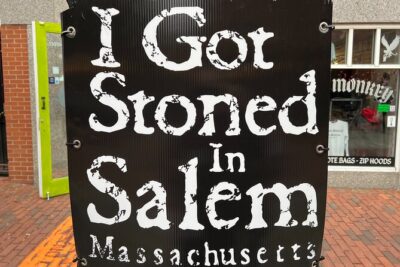
Wicked Awesome Tours: Witch Trial History and Salem Haunts!
Read our review →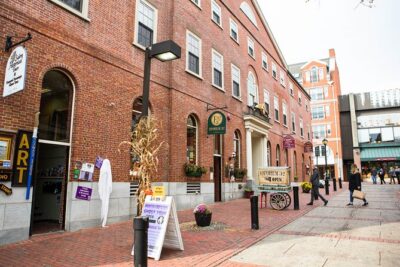
Best Salem Witch Trials Historical Walking Tour
Read our review →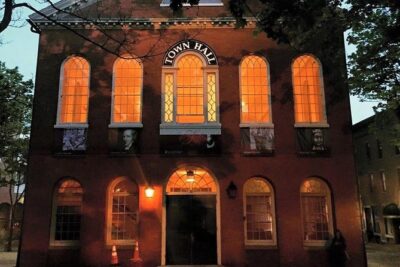
Salem “Hocus Pocus” Movie Locations Tour (31st Anniversary)
Read our review →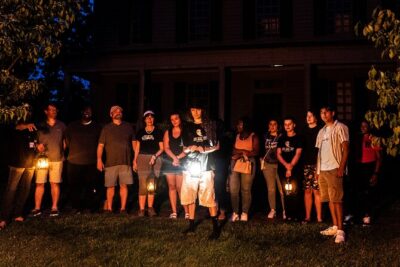
Browse the lists this tour appears in