
Review · SALEM WITCH TRIALS TOURS
Salem and The Witch Trials
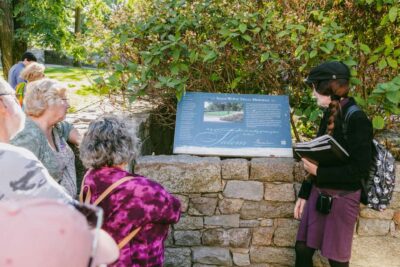
Salem’s witch-trials story is often wrapped in spooky costumes and Hocus Pocus jokes. This 75-minute walk takes a different route. With local guide Jobian, you move through the city’s key sites while looking at the religious conflict, power struggles, and human cost behind the events of 1692. The focus is serious history with lively storytelling, not a haunted attraction.
I like two things right away: the tour keeps its route compact, and it treats the accused and convicted people as real individuals rather than props in a ghost story. I also like that Jobian connects Salem’s past to the city you see today, adding the perspective of someone from the area.
The main consideration is simple: this is a history lesson first and a spooky walking tour second. If you want theatrical scares, paranormal claims, or a tour built around film locations, this may feel too factual. The roughly 40-person maximum also means the experience can be larger than the small groups some people have enjoyed.
Key points at a glance

- A fact-based Salem walk: The tour concentrates on the events, beliefs, and conflicts behind the 1692 witch trials.
- A local guide named Jobian: His presentation combines local perspective, energetic delivery, and empathy for the people caught in the crisis.
- Five central stops: You visit the Salem Witch Trials Memorial, Old Town Hall, First Church, the Bewitched statue, and Howard Street Cemetery.
- A short, efficient route: The tour lasts about 1 hour and 15 minutes and returns to its starting point.
- A respectful look at difficult history: The story includes the old jail, Giles Cory’s death, and the impact of religious conflict.
- Good value for history-minded visitors: At $29 per person, you receive a guided city walk with a licensed local guide rather than admission to a separate museum.
Salem’s witch trials without the spooky sales pitch
Salem is a place where the past can be presented in many ways. Some tours lean into ghosts, costumes, and dramatic folklore. This one aims to explain how a real community reached the point of accusing neighbors, conducting trials, and causing deaths.
That difference matters. You will hear about the witch trials, but the goal is not simply to make them sound eerie. The tour places them within Salem’s religious tensions and broader civic history. You get a better sense of the forces that shaped the crisis, instead of leaving with only a list of famous names and scary anecdotes.
I particularly like the emphasis on empathy. The best historical tour does not excuse the events, but it helps you understand how fear, belief, authority, and personal conflict affected ordinary families. Jobian’s approach, based on the information provided, is energetic without treating the suffering as entertainment.
The presentation can still be theatrical. One review describes Jobian’s acting experience as part of his delivery, and that is useful here. A dry lecture would make a walking tour drag. A lively guide can help the dates, places, and people stay in your mind.
More Salem witch trials tours
- The Salem Witch Walk
★ 4.5 · 1,301 reviews - Wicked Awesome Tours: Witch Trial History and Salem Haunts!
★ 5.0 · 1,032 reviews - Best Salem Witch Trials Historical Walking Tour
★ 4.0 · 743 reviews
Starting on Essex Street

The tour begins at 158 Essex Street and ends back at the same meeting point. The stated address has caused some confusion, so I would pay close attention to your confirmation details and allow a little extra time to get oriented before the start.
The meeting point is near public transportation, which makes the tour practical if you arrive in Salem without a car. The route itself is on foot, with several stops close enough to fit into a compact 75-minute visit. Wear comfortable shoes. This is not a ride-by tour where you remain seated.
The maximum group size is 40 people. That is still manageable for a city walk, though it is worth knowing that the tour may not always feel like a private outing. Some bookings have been much smaller, including tours with only two people, but you should plan for the published group limit rather than count on that.
The Salem Witch Trials Memorial
The first stop is the Salem Witch Trials Memorial, a natural place to begin a tour about the crisis. It is a memorial and final resting place connected with the people who died during the trials.
This stop gives the walk its moral center. Before the tour moves into stories about accusations and court proceedings, you are reminded that these were not fictional characters. They were people whose lives ended or were permanently damaged by the events.
The visit is listed as about 10 minutes, with no separate admission fee. That short time works well at the beginning because it sets the tone without turning the tour into a long museum visit. Listen for how Jobian frames the individuals involved and how he connects their experience to the wider community.
The memorial is also useful for visitors who have already heard the popular version of Salem’s story. You may know the names of a few famous figures, but a respectful site visit can shift your attention from folklore to consequences.
Old Town Hall and Salem’s civic past

The next stop is Salem Old Town Hall, another 10-minute visit. The building has served a government role and now functions as a museum and attraction.
This stop broadens the tour beyond the witch trials themselves. Salem’s story is not only about accusations in 1692. It is also about how the city governed itself, preserved its buildings, and turned its past into part of its present identity.
I like this kind of stop because it gives the tour some physical variety. You are not standing in a cemetery for the entire walk. You are looking at a civic building and considering how public institutions shaped the town.
The tradeoff is that the stop is brief. You should not expect an extended building tour or a long museum visit as part of the $29 price. The value comes from the guide’s explanation and the way the building fits into the overall story.
More things to do in Salem
- History and Hauntings of Salem Guided Walking Tour
★ 5.0 · 14,564 reviews - Salem’s Best Ghost Tour
★ 4.5 · 4,186 reviews - Salem Voodoo, Vampires, and Ghosts Guided Walking Tour
★ 5.0 · 1,931 reviews - Bewitched Walking Tour of Salem
★ 5.0 · 1,895 reviews
First Church and the religious conflict
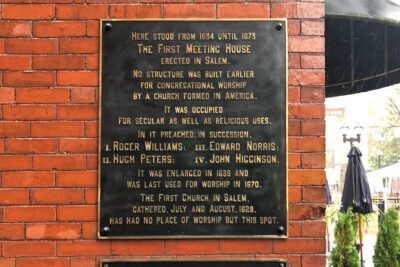
The First Church in Salem Unitarian Universalist is the third stop, also scheduled for about 10 minutes. Here the tour turns toward religion and the tensions that helped shape Salem during the period of the trials.
This is one of the most useful parts for anyone who wants more than the usual spooky version. Religious belief was not a side note in Salem. It influenced public life, family relationships, ideas about sin, and judgments about who posed a threat to the community.
The church stop can help explain why the trials developed in such an intense setting. You will not simply hear that people believed in witchcraft. You will examine the religious conflict of the time and how that conflict formed part of the pressure around the accusations.
The stop is outside the church route described here, so do not assume you are getting a full interior visit or a worship service. Its role is historical and interpretive. Jobian’s ability to explain the religious setting is important, particularly for families and students who want the events placed in context.
The Bewitched statue and Salem’s modern image

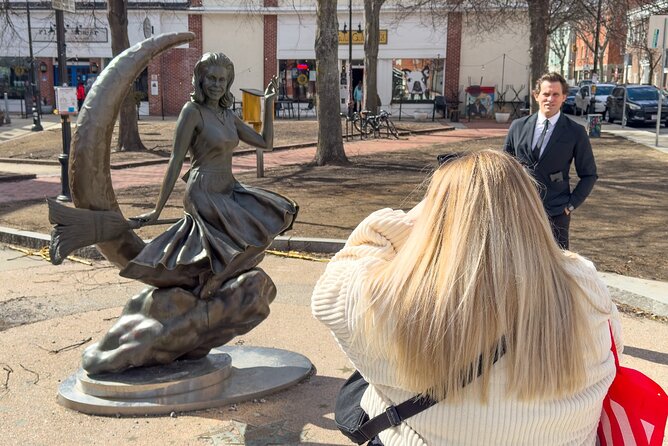
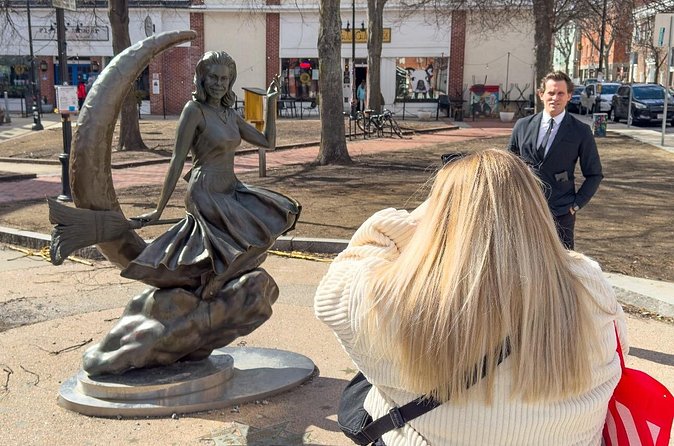
The fourth stop changes the mood. At the Bewitched statue of Elizabeth Montgomery, you say hello to Samantha, the character from the television series Bewitched.
This statue represents the way Salem’s identity has expanded beyond the 1692 trials. The city is linked not only with colonial history and religious conflict, but also with popular culture and tourism. Including the statue keeps the tour from presenting Salem as a town frozen in one dark chapter.
I find this contrast useful. You move from real victims and civic history to a fictional television character. That shift lets you consider how modern Salem uses the witch image, and how entertainment has shaped the way outsiders picture the city.
The stop takes about 10 minutes and is free to visit. It is a quick photo opportunity, but it also gives the guide a chance to explain the statue’s place in Salem. Do not book this tour expecting a full Bewitched tour. The statue is one part of a broader historical route.
Howard Street Cemetery and the old witch jail
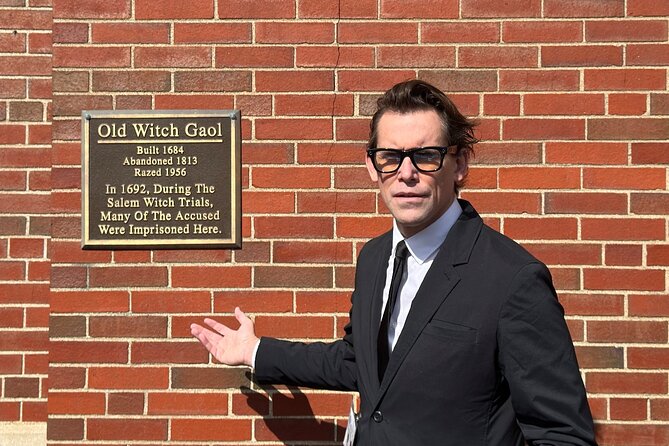
The final stop is Howard Street Cemetery, where the tour spends about 20 minutes. This is the longest stop, and it focuses on the old witch jail and the story of Giles Cory.
The cemetery gives the tour a strong closing scene. You hear about where victims were held and about Cory’s fate, one of the most chilling parts of the Salem trials. The setting adds weight to the story, but the value comes from the explanation rather than from a manufactured scare.
A longer stop here makes sense. There is more to discuss, and the cemetery allows the guide to pull together the issues raised earlier: authority, accusation, punishment, and the way the community handled people who were seen as dangerous.
The subject matter may be difficult for younger children, especially when the tour discusses imprisonment and Cory’s death. The activity information says most people can participate, and service animals are allowed, but the route is still a walking tour with outdoor stops. Think about footwear, weather, and your group’s comfort with serious historical material.
What Jobian brings to the walk

The guide can make or break a short history tour. Jobian is presented as a licensed, experienced local guide from the Salem area, and his role is central to the experience.
His strongest quality appears to be the blend of local perspective and strong storytelling. He does not simply recite dates. The supplied details describe a guide who answers questions at length, gives modern context, and uses energy and acting ability to keep the walk moving.
That is especially helpful in a 75-minute tour. There is not enough time for every detail, so the guide must choose what matters and explain why. Jobian’s approach appears to favor connections: Salem before the trials, the religious setting, the people involved, and the city’s current identity.
I also like the apparent willingness to give the full tour even when the group is tiny. That does not guarantee a private booking, but it suggests that a small group can still receive a complete experience rather than a shortened version.
The guide’s style may not suit everyone. If you prefer a quiet, academic lecture with little performance, the energy and theatrical delivery could feel like a lot. Most of the available feedback points in the other direction, but the one lower score is a useful warning: this is still a history-focused experience, not a general fun city tour.
Is $29 a fair price?
At $29 per person, the tour is reasonably priced for a guided walk lasting about 1 hour and 15 minutes. There are no separate admission charges for the five listed stops, and the price includes a licensed local guide.
The main value is interpretation. You could walk past the memorial, Old Town Hall, church, statue, and cemetery on your own, but you would not automatically understand how they connect. A guide supplies the structure, background, and local viewpoint.
The price is strongest for first-time visitors who want an introduction before choosing other Salem attractions. It is also useful for families, since the route is short and the presentation is designed to hold attention. A 14-year-old was specifically described as wishing history classes used the same energy, which suggests the format can work well for teenagers.
You may find less value here if you already know Salem’s history in detail or want access to interiors and exhibits. This is a walking lesson, not a museum admission package. You are paying for the guide’s time and presentation.
Weather, group size, and practical planning
The tour runs outdoors, and winter conditions can affect your comfort. The experience has been completed in freezing weather, with the guide still delivering the full walk, but you should dress for the forecast rather than assume the 75-minute duration will pass quickly.
Comfortable shoes are essential. The route includes several stops, and the experience ends where it begins, so you can plan a meal, museum visit, or other Salem activity afterward without arranging a separate pickup.
The activity is offered in English and uses a mobile ticket. Most people can participate, and service animals are allowed. The listing also notes that it is near public transportation, making it a practical option for a day trip without a car.
Free cancellation is available if you cancel at least 24 hours before the start time. Within 24 hours, refunds are not available and changes are not accepted. The cutoff follows Salem’s local time.
Who should book this Salem tour?
I would choose this tour if you want the real events behind the famous story, especially if you are tired of tours that treat the witch trials as a Halloween prop. It suits first-time visitors, families with older children, history students, and anyone who wants a short orientation to Salem.
It is also a good fit if you value a local guide who can connect the 1692 crisis with the city’s modern tourist identity. The route covers the most important themes without taking up half a day.
I would choose something else if your priority is ghost hunting, jump scares, a Hocus Pocus theme, or a broad city tour with many unrelated sights. The one lower rating makes the key distinction clear: this experience is a history lesson with personality.
Should you book it?
Book it if you want an efficient, fact-focused introduction to Salem and appreciate a guide who treats the victims with care. The combination of Jobian’s local viewpoint, a compact route, and five free-to-enter stops gives the $29 price solid value.
Skip it if you want a spooky attraction or a detailed museum experience. For everyone else, this is a sensible first walk through Salem, especially when you want the witch trials explained as a human and civic crisis, not just a scary tale.
FAQ
How long does the Salem and The Witch Trials tour last?
The tour lasts approximately 1 hour and 15 minutes.
How much does the tour cost?
The price is $29 per person.
Where does the tour begin?
The tour begins at 158 Essex St, Salem, Massachusetts 01970, USA.
Where does the tour end?
The tour ends back at the meeting point.
Which sites are included?
The route includes the Salem Witch Trials Memorial, Salem Old Town Hall, First Church in Salem Unitarian Universalist, the Bewitched statue of Elizabeth Montgomery, and Howard Street Cemetery.
Is the tour offered in English?
Yes. The tour is offered in English.
How large can the group be?
The maximum group size is 40 people.
Can I cancel for a full refund?
Yes, if you cancel at least 24 hours before the experience start time. Cancellations made within 24 hours are not refunded, and changes within that period are not accepted.
Newest Salem tours we have written up
- [ESP] History of Salem Witch Trials★ 4.0 · 5 reviews
- Tales of Salem Candyland Tour★ 4.0 · 8 reviews
- Private Walking Salem Legends Tour Professional Guide★ 5.0 · 3 reviews
- Salem Vintage Postcard Tours★ 5.0 · 8 reviews
- Spooky Ramen Tours★ 5.0 · 5 reviews
- Experience Authentic Salem Séance with Entry Pass★ 3.5 · 13 reviews
- Salem Witch Tour★ 5.0 · 6 reviews
- Salem Bewitched Tour With Tarot Reading★ 5.0 · 7 reviews
Salem Witch Trials Tours, compared.

Wicked Awesome Tours: Witch Trial History and Salem Haunts!
Read our review →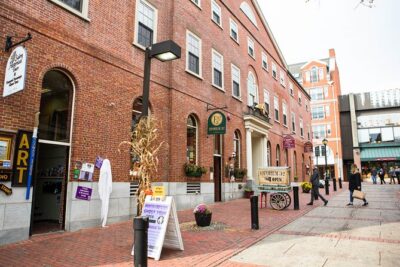
Best Salem Witch Trials Historical Walking Tour
Read our review →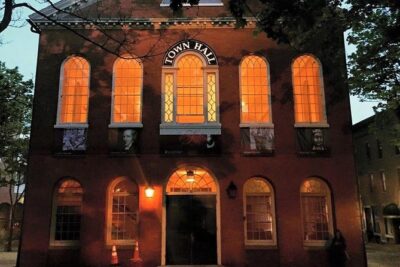
Salem “Hocus Pocus” Movie Locations Tour (31st Anniversary)
Read our review →
Browse the lists this tour appears in