Review · TOURS
Boch Center Wang Theatre Tour & Folk Americana Roots Hall of Fame
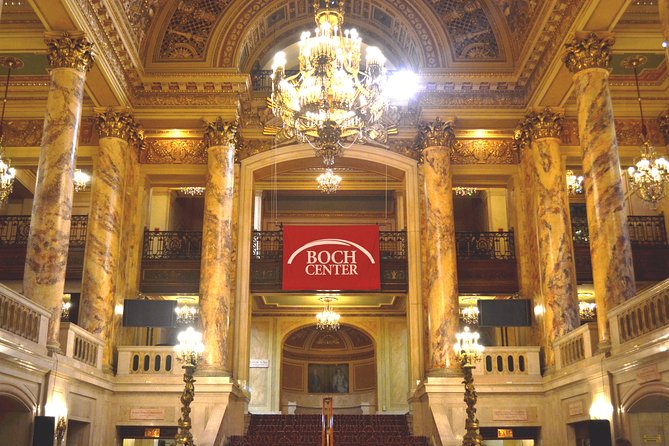
Boston’s Wang Theatre was built as a movie cathedral, and this tour lets you see the grand space from the working side of the curtain. You’ll step backstage, look across the huge stage, and hear how the building moved from silent-film palace to modern concert hall. The Folk Americana Roots Hall of Fame adds a music-history stop inside the theater.
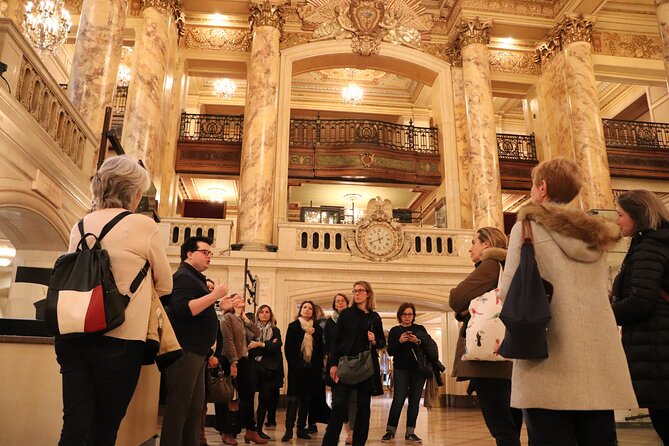
I like the small group limit of 10, which gives the guide room to explain details instead of shouting over a crowd. I also like the chance to see dressing-room autograph walls, theater machinery, and hard-to-reach working areas that a concert ticket won’t show you.
The main caution is that backstage access can change when a performance is being prepared. Some areas may be closed, and one person expected more backstage access than the schedule allowed. The theater is beautiful even when you stay in public areas, but book this for the full story rather than a guarantee of every corridor.
Key points to know before you go
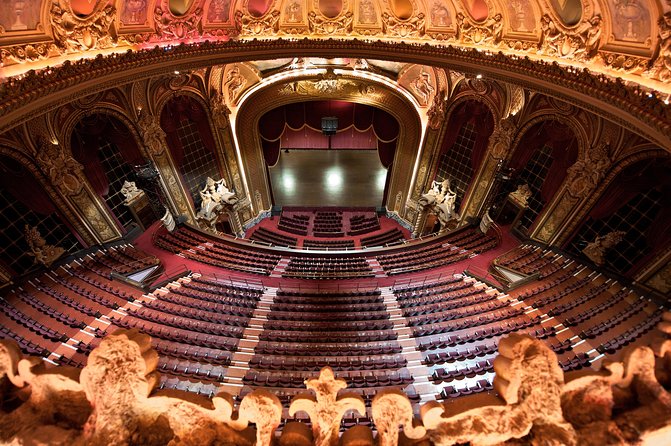
- The 1925 theater is the main attraction: Expect grand architecture, ceiling sculpture, historic details, and a stage built for major productions.
- Backstage access depends on theater operations: Areas can close when a show is in town, so the route is not always identical.
- The Folk Americana Roots Hall of Fame is included: You’ll see music exhibits and learn about Boston’s place in American music.
- The tour lasts about 1 hour and 15 minutes: The main guided portion is described as one hour, with a little extra time useful for exhibits and movement through the building.
- The group is capped at 10 people: That is a practical advantage in a theater where details can be easy to miss.
- Parking is not available at the theater: Use public transportation or make a separate parking plan before arriving.
Why the Wang Theatre is worth seeing without a concert ticket
The Boch Center Wang Theatre gives you something a normal performance cannot: a look at the building as a machine, museum, and working arts center. When you attend a concert, your attention belongs to the stage. On this tour, you can look up at the architecture, inspect the backstage areas, and hear how the venue operates day to day.
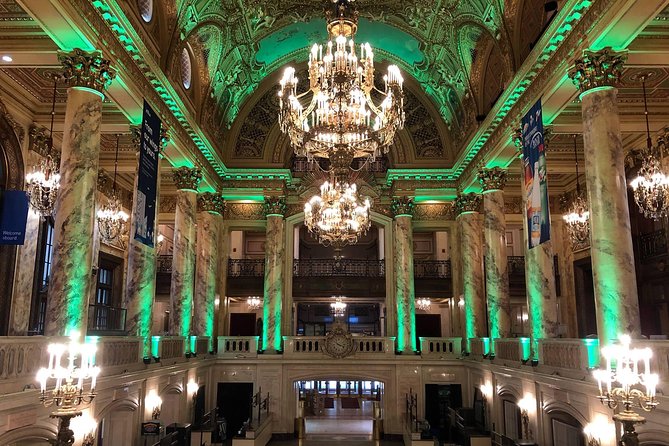
The theater opened in 1925, when grand movie palaces were designed to make going to the cinema feel like a major civic event. That idea explains the building’s scale. This was not meant to be a plain room with seats and a screen. It was built as a grand setting, and the tour helps connect that design to its changing role today.
I especially like the contrast between the polished public spaces and the practical working areas behind the stage. One moment you may be studying ornate theater details, and the next you are thinking about cooling systems, dressing rooms, stage access, and the work needed to prepare a performing arts center for an event.
The result is more useful than simply walking through a beautiful hall. You get a sense of how the building has survived by changing jobs. It began as a movie theater and now welcomes music icons and other live performances.
A few more Boston tours and tickets worth a look
- Boston Duck Boat Sightseeing City Tour with Cruise Along Charles River
★ 4.5 · 9,378 reviews - Boston: Freedom Trail History Small Group Walking Tour
★ 5.0 · 6,450 reviews - Boston Hop-On Hop-Off Trolley Tour with 13 Stops
★ 4.5 · 5,576 reviews
Entering at 270 Tremont Street
The meeting point is the Boch Center Wang Theatre at 270 Tremont Street in Boston. The theater is near public transportation, which matters because parking is not available at the venue. Build in a little arrival time, especially if you are unfamiliar with the Theater District.
One practical warning comes from the entrance itself. The building may be locked when you arrive before the tour begins, and the exterior can leave you wondering if you are in the right place. Have your mobile ticket ready and use the contact number supplied with your booking if the entrance is not open at the expected time.
Your ticket is delivered as a mobile ticket, so you do not need to print anything. Confirmation arrives when you book, and the tour returns to the same meeting point at the end.
The group maximum is 10 people. That is small enough for a guide to keep the group together in narrow or working areas, and it should make it easier to ask questions about architecture, stage operations, or the theater’s past.
The grand hall and its movie-palace past
The first part of the visit centers on the Wang Theatre itself. Your guide explains the building’s days as a movie cathedral, when film palaces were designed to offer far more than a screen and a seat.
Look up as you move through the theater. Sculpted figures and decorative artwork appear high above eye level, and this is one place where the building’s scale can work against you. Some ceiling details are difficult to see clearly from the floor, especially if you are hoping to study the art rather than simply appreciate the overall effect.
That is a fair limitation, but it does not make the architecture unimportant. The high ceilings, ornament, and restored interior give the theater a strong sense of occasion. You are seeing a room designed to impress before the performance even began.
The tour also puts the restoration into context. Much of the theater has been carefully brought back, but not every part feels equally finished. Some areas remain more observational than polished, which gives you a more honest look at an old performing arts building than a perfectly staged museum visit would.
I would bring your attention upward early, then take a few moments to study the space from different parts of the theater. The guide’s explanation helps you notice details that are easy to miss when you are focused only on the stage.
Standing on the stage and going backstage
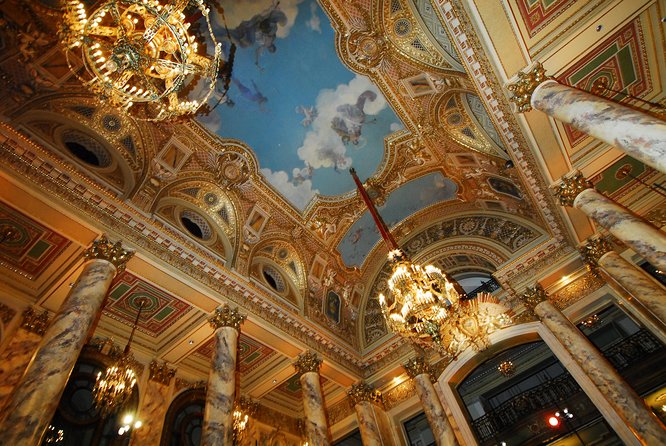
For many people, the best moment is stepping onto the massive stage. You see the theater from the performer’s side, looking out toward the room rather than sitting in the audience. That shift in perspective makes the building feel larger and gives the tour its most memorable physical moment.
Backstage, the route may include parts of the building that are normally closed during a performance. The tour is designed to show you how a performing arts center works behind the scenes, not just how it looks from the seats.
You may see dressing-room areas and autograph walls connected with performers who have appeared there. These walls provide a personal touch that the formal architecture cannot. They suggest the steady stream of musicians and performers who have passed through the building over the years.
The exact backstage route is not fixed. When a performance is in town, certain areas may be unavailable for safety or operational reasons. The company notes that all theater areas are subject to availability, and some parts may not be accessible to everyone.
That condition is important when you decide how to spend your $25. If you want a guaranteed walk through every backstage passage, this may leave you disappointed. If you are happy to see the theater, hear its story, and visit whichever working areas are open that day, the tour offers better value.
Same city, a completely different afternoon:
- Boston: City Cruises Whale Watching Cruise
★ 4.5 · 4,710 reviews - Boston Duck Tour: The Original and World-Famous
★ 4.6 · 3,935 reviews - Harvard University Campus Guided Walking Tour
★ 4.5 · 3,632 reviews - Boston Fenway Park: Guided Ballpark Tour with Options
★ 4.8 · 3,606 reviews
The cooling system and the working theater
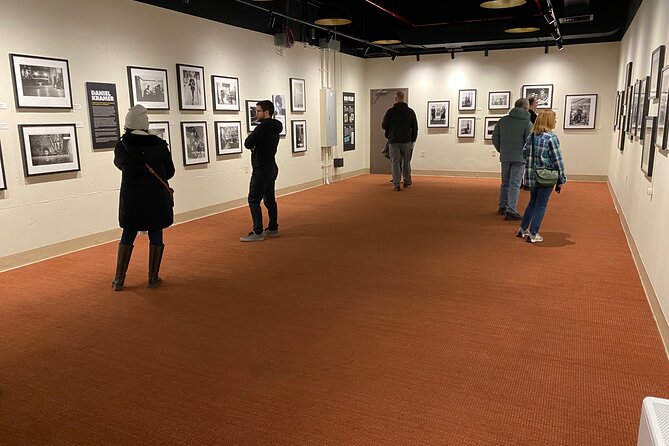
One unusual detail mentioned about the visit is the theater’s cooling system. It may not sound as exciting as the stage or the ornate hall, but this is exactly the sort of practical feature that helps you understand an old performance building.
A venue built in 1925 has to handle modern audiences, lighting, sound, and performances while working within an older structure. Heating and cooling are part of that challenge. The cooling system gives the tour a useful reminder that preservation is not only about decoration. It is also about keeping a century-old building functional.
The behind-the-scenes portion can feel observational in places, particularly where renovation is still ongoing or where performance preparations limit access. I see that as both a strength and a weakness. You get a candid look at the work involved in running the center, but the route may not deliver constant spectacle.
Your guide is an important part of this section. The guide leads the group through the building and explains the theater’s past and present. The tour is strongest when those explanations connect the physical details to daily operations, so ask questions if you want more context about what you are seeing.
Finding Boston’s music story in the Folk Americana Roots Hall of Fame
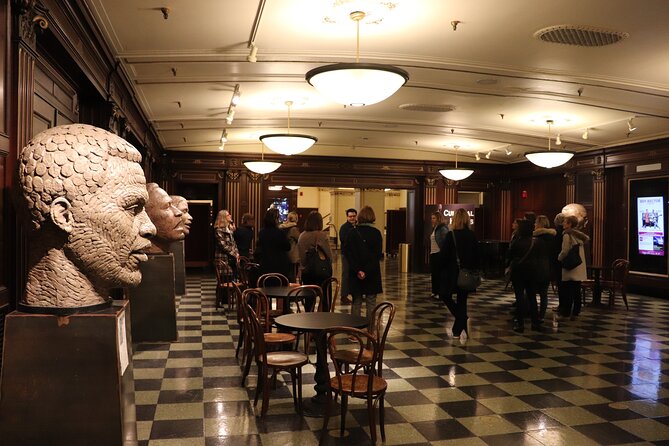
The Folk Americana Roots Hall of Fame is included in the visit and adds a different mood from the theater tour. Instead of focusing mainly on architecture and operations, the exhibits celebrate music history and Boston’s place as a music city.
The collection is located inside the theater, with The Music Hall presented as part of the developing Hall of Fame. You can expect memorabilia and exhibits tied to folk, Americana, roots, and related music traditions.
This section is valuable because it broadens the visit. The Wang Theatre is not only a grand old building. It is also part of Boston’s continuing music life. Seeing the exhibits after learning about the theater’s movie-house past helps you follow the venue’s change from film palace to live-performance center.
I would allow time to look at the displays rather than treating them as a quick add-on. The music collection is one of the tour’s main differences from a standard architecture walk. If you already enjoy music history, it may be the part that makes the $25 price feel especially worthwhile.
The collection is still developing, and some areas may feel more like an evolving exhibition than a finished museum. That is worth keeping in mind. You are visiting a working theater with a music-history project inside it, not a large standalone museum.
What $25 buys you
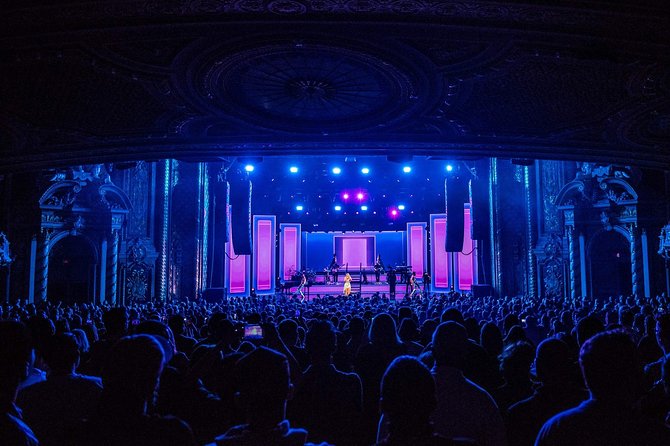
At $25 per person, this tour sits in a reasonable range for a one-hour guided visit in central Boston. You are paying for access to a major historic theater, a guide’s explanation, backstage viewing when available, and entry to the Folk Americana Roots Hall of Fame.
The value is strongest if you care about at least two of those elements. A theater fan can focus on the stage and backstage areas. An architecture fan can study the restored hall and ceiling details. A music fan can spend more time with the Hall of Fame exhibits and performer memorabilia.
The price is less compelling if you only want to peek inside the main auditorium. You may be able to appreciate the public spaces without a guided visit, though the tour supplies the background and access that a quick look cannot.
The tour takes roughly 1 hour and 15 minutes, with the guided portion listed at about one hour. That makes it easy to fit into a Boston day, especially before dinner or another Theater District activity. It is long enough to provide useful context without taking up half a day.
The average booking point is about eight days ahead, so I would not leave it until the last minute if your schedule is tight. Free cancellation is available up to 24 hours before the start time. Canceling or changing the booking inside that window does not qualify for a refund.
Who will enjoy this tour most
I would recommend the Wang Theatre tour to anyone who likes old theaters, music history, or the practical side of live performance. It also works well for visitors who want a short cultural activity in central Boston rather than another long museum visit.
Families can take part, since most people can participate and service animals are allowed. The small group is helpful if you are bringing children who may have questions or need to stay close to the guide.
Architecture fans should keep expectations measured. The theater is the star, but some decorative artwork is high above the floor, and not every area has been fully renovated. You will get a better sense of the whole interior than a close study of every artistic detail.
The tour is also a good fit for people who have attended a performance at the Wang and want to see what happens outside the audience area. Returning visitors may recognize the hall but gain a new perspective from the stage, dressing-room areas, and operational spaces.
I would hesitate to book it if your only goal is guaranteed backstage access. Availability changes with performances, and some areas may be closed. In that case, think of backstage viewing as an important possibility within a broader theater and music-history tour.
Final verdict: book it for the building and the story
Book this tour if you want to understand why the Wang Theatre matters, not just take a quick look at an ornate room. The stage, autograph walls, movie-palace background, cooling system, and Folk Americana Roots Hall of Fame give the visit several angles.
The biggest strength is the mix of grandeur and working theater detail. The biggest weakness is the changing backstage route. At $25, I think it is a solid choice for architecture fans, music lovers, and anyone curious about how a major Boston venue functions when the audience is gone.
If you book, arrive with your mobile ticket ready, use public transportation if possible, and keep your plans flexible around performance schedules. That approach gives you the best chance of enjoying what is open rather than measuring the tour against one fixed backstage route.
FAQ
Where does the Boch Center Wang Theatre tour begin?
The tour begins at the Boch Center Wang Theatre, 270 Tremont Street, Boston, Massachusetts 02116.
How long does the tour last?
The experience lasts about 1 hour and 15 minutes. The guided backstage tour itself is listed as approximately one hour.
Is the Folk Americana Roots Hall of Fame included?
Yes. Access to the Folk Americana Roots Hall of Fame is included with the tour.
How much does the tour cost?
The listed price is $25 per person.
Is parking available at the Wang Theatre?
No. Parking is not available at the theater. The venue is near public transportation.
Can every backstage area be visited?
No. Theater areas are subject to availability, and some sections may be closed when a performance is in town or may not be accessible to all people.
What happens if I need to cancel?
You can cancel up to 24 hours before the experience for a full refund. Cancellations or changes made less than 24 hours before the start time are not refunded.
Newest Boston tours we have written up
- Boston’s Freedom Trail: A Self-Guided Audio Tour★ 4.0 · 18 reviews
- Boston’s Freedom Trail: A Self-Guided Tour of All 16 Sites★ 5.0 · 14 reviews
- Washington D.C. Cherry Blossom,Baltimore 3-Day Tour from Boston★ 4.5 · 7 reviews
- Boston Self-Guided Audio Tour Bundle: Freedom Trail & More★ 4.5 · 5 reviews
- True Crime Tour of Boston★ 4.0 · 17 reviews
- Family Friendly Guided Bike Tour of Boston★ 4.5 · 22 reviews
- Freedom Trail Experience★ 5.0 · 8 reviews
- The Ghosts of Boston’s Past Haunted Self-guided Tour★ 3.5 · 4 reviews
Tours, compared.
History and Hauntings of Salem Guided Walking Tour
Read our review →
Boston Duck Boat Sightseeing City Tour with Cruise Along Charles River
Read our review →
Freedom Trail History Small Group Walking Tour
Read our review →
Boston Hop-On Hop-Off Trolley Tour with 13 Stops
Read our review →

Boston Duck Tour: The Original and World-Famous
Read our review →
Harvard University Campus Guided Walking Tour
Read our review →