
Review · BACK BAY AND CHARLES RIVER TOURS
Boston: Votes for Women History Tour of Back Bay
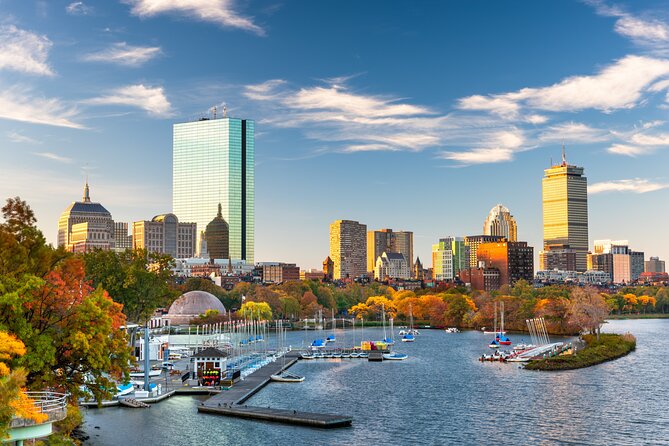
Boston’s Back Bay can look like a polished parade of brownstones, grand avenues, and expensive shops. This tour gives those streets a sharper purpose. You’ll follow the local fight for women’s voting rights from the Boston Public Garden to the Boston Women’s Memorial, meeting financiers, artists, writers, organizers, and even anti-suffragists along the way.
I like the small group of no more than 15, which gives you a better chance to hear the guide and ask questions. I also like the way the tour connects famous landmarks with less obvious places, including former offices, private homes, a Spiritualist Temple, and the site of an old MIT laboratory. The main drawback is that this is a 2.5-hour walking tour with plenty of standing, and most stops are viewed from outside.
Key points to know before you book
- Boston’s women’s suffrage story takes place in ordinary-looking buildings: You’ll see where Pauline A. Shaw, Julia Ward Howe, Blanche Ames, and Mary Shreve Ames lived and worked.
- Guide Maura brings strong subject knowledge and welcomes questions: Her storytelling helped one participant leave with a long list of books to read.
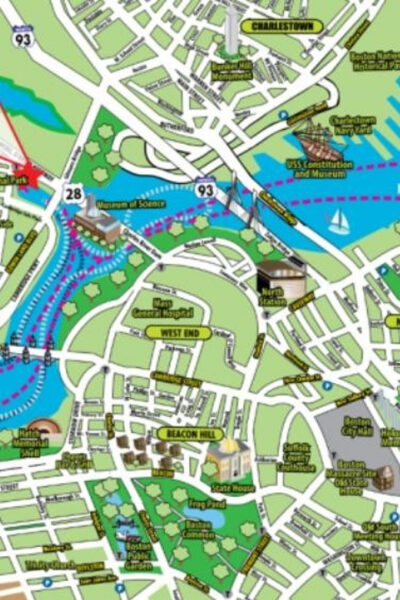
- The route covers about 0.8 miles: It begins by the Make Way for Ducklings sculpture and ends beside the Boston Women’s Memorial.
- You visit major Boston sights along the way: The Public Garden, Copley Square, Boston Public Library, Commonwealth Avenue Mall, and the Newbury Street area all form part of the walk.
- The $35 price is reasonable for a small-group history tour: You pay for the guide and outdoor experience, not museum entry or a costumed presentation.
- Plan for outdoor walking in good weather: The tour can be canceled for poor weather, and it is not suited to people who have trouble standing for long periods.
From Make Way for Ducklings to the first women’s stories
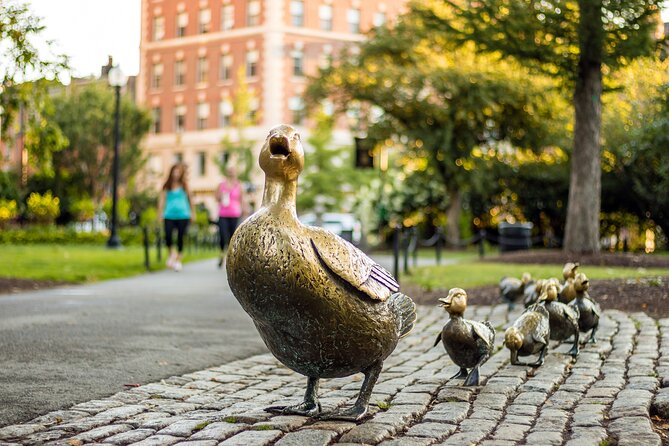
The tour begins at the Nancy Schön sculpture based on Robert McCloskey’s classic picture book, near 4 Charles Street. It is a cheerful starting point, but the subject quickly shifts from storybook ducks to the public role of women in Boston.
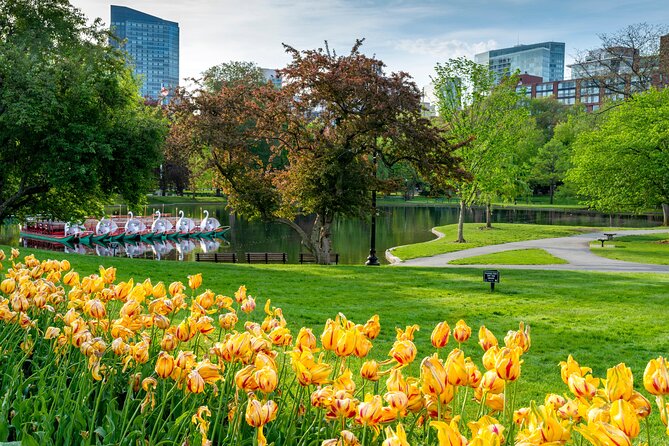
You’ll enter the Boston Public Garden, established in 1837 as the first public botanical garden in the United States. The garden gives you a pleasant opening walk, with greenery, paths, and familiar statues, including Thomas Ball’s equestrian statue of George Washington, commissioned in 1859.
This first stretch helps set the tone. You are not spending two hours inside a museum looking at labeled objects. Instead, you are walking through places Bostonians use every day and learning how those settings figured in a national political struggle.
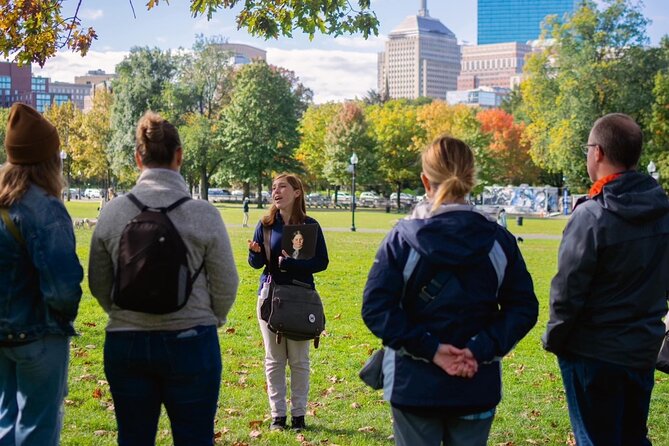
The guide’s job matters here. Names and dates can blur together on a history walk, but Maura’s lively storytelling and willingness to take questions help make the people feel distinct. One woman was a financier, another a writer, another an artist, and another a determined opponent of the vote for women. That mix keeps the story from becoming a simple parade of heroes.
More Back Bay and Charles River tours
- Boston Duck Boat Sightseeing City Tour with Cruise Along Charles River
★ 4.5 · 9,378 reviews - Downtown Freedom Trail, Beacon Hill & Back Bay Walking Tour
★ 4.5 · 473 reviews - Boston: Charles River Sightseeing Cruise
★ 4.7 · 109 reviews
Marlborough Street and the women behind the movement
At 6 Marlborough Street, you’ll learn about Pauline A. Shaw, who financed Boston’s suffrage work and founded the Boston Equal Suffrage Association for Good Government. The stop lasts only about five minutes, but it makes an important point: political change needs money, organization, meeting places, and sustained effort, not just famous speeches.
As you walk through the Back Bay, you’ll also pass the former home of Elizabeth Putnam. She was an anti-suffragist and the first woman to preside over a state electoral college. Her presence adds needed balance. The debate was not simply women against men. Women themselves held sharply different views about voting rights, government, family roles, and social change.
The route also includes the home of Julia Ward Howe, best known for her writing and public work, and the home of Blanche Ames. Ames was a pro-suffrage cartoonist and an early advocate for birth control. Her story broadens the tour beyond ballots. Women’s rights involved political representation, control over personal decisions, education, public speech, and access to civic life.
You’ll also hear about the Ames Mansion and the family’s political connections, including the opposing positions of Mary Shreve Ames and Blanche Ames. This is one of the more useful parts of the walk because it shows how one family could contain both support for suffrage and organized resistance to it.
Commonwealth Avenue and the social world of reform
Commonwealth Avenue gives the walk a change of pace. Its long tree-lined mall, grassy areas, benches, and statues make it easy to understand why Boston’s grand avenues became places for public memory and civic display.
Near here, you’ll learn about Mary Shreve Ames, president of the Massachusetts Anti-Suffrage Association. Her story is worth hearing because it prevents the past from being flattened into a modern point of view. The anti-suffrage movement had organized leaders, public arguments, and political influence of its own.
The College Club of Boston is another important stop. Founded as the first women’s college club in the United States, it points to the link between education and public life. College-educated women were building networks, sharing ideas, and creating institutions that gave them more room to work outside the home.
The stop is listed at about ten minutes, though the exact pace can vary with the group and the guide. Take advantage of this part of the tour to ask how education, clubs, newspapers, and political associations supported the movement. The small group makes those questions more practical than they would be on a crowded walk.
From the old natural history museum to Copley Square
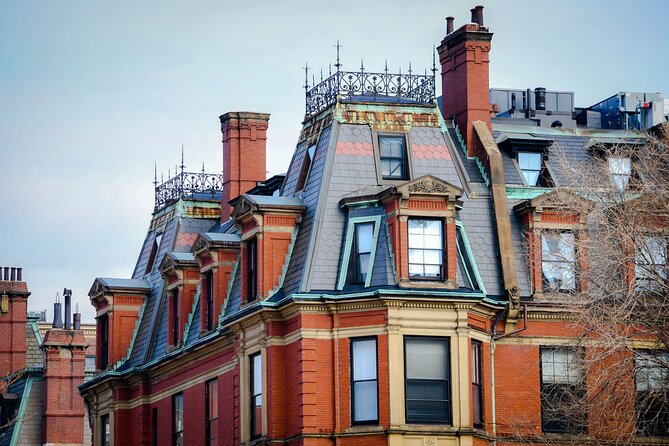
The next section brings you to RH Boston, The Gallery at the Historic Museum of Natural History. The building was home to the Museum of Natural History from 1864 to 1951, and its architecture gives the tour a visual pause from residential Back Bay.
You will not receive museum admission as part of the tour, so think of this as an exterior history stop rather than a visit inside a collection. That distinction matters if you are planning your day around indoor attractions. The walk uses buildings as evidence and setting, not as a substitute for a museum tour.
You’ll then hear about a former MIT laboratory where Katherine McCormick protested popular fashion as part of the suffrage movement. It is an unexpected detail, and it shows how protest could take forms beyond a formal speech or march. The tour also points out a building completed in 1877 and considered by members of the American Association of Architects one of the ten best buildings in the country.
Copley Square follows, with about ten minutes devoted to this major public space. It was created as a cultural center for Boston, and its scale helps explain why public squares mattered to reform movements. They offered places where ideas could be presented to a broad audience, even when women had limited formal power.
The square also gives you one of the route’s best opportunities to connect the city’s cultural institutions with political change. Art, architecture, education, public meetings, and reform were not separate worlds. In Boston, they often overlapped on the same few blocks.
More history tours in Boston
- Boston: Freedom Trail History Small Group Walking Tour
★ 5.0 · 6,450 reviews - Tour of Historic Fenway Park, America’s Most Beloved Ballpark
★ 4.5 · 3,013 reviews - Boston Food & History: Pizza, North End & Freedom Trail
★ 5.0 · 1,772 reviews - Boston: City Cruises Historical Sightseeing Cruise
★ 4.6 · 1,771 reviews
The Boston Public Library and the paper side of politics
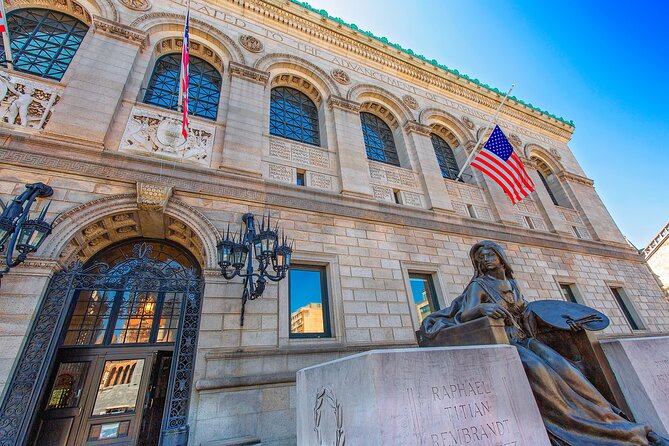
The Boston Public Library is one of the walk’s strongest stops. Founded in 1848, it is now the third-largest public library in the United States. Even if you only view it as part of the walking route, the building provides a natural place to discuss access to information and the role of print in organized reform.
The tour then points out the former Chauncy Hall site, where offices for several pro-suffrage organizations were located. These included the Massachusetts Woman Suffrage Association and The Women’s Journal.
That detail adds practical depth to the story. A movement is not built only by charismatic speakers. It needs offices, editors, writers, fundraisers, mailing lists, meeting schedules, and newspapers. The old location of those organizations helps you picture the daily work behind petitions and public campaigns.
You’ll also learn about the former Kensington Building, which housed the offices of the Massachusetts Association Opposed to Further Extension of Suffrage to Women. The building was demolished in 1967, so this is a stop about a place that no longer exists. That can be frustrating if you prefer visible historic structures, but it also shows why a guide is useful. Without someone explaining the lost addresses, much of this political geography would disappear.
The route passes the finish line of the Boston Marathon as well. This is not a suffrage landmark in the same direct way, but it helps orient you within the modern city and links the walk to one of Boston’s best-known public events.
Newbury Street, a former Spiritualist Temple, and public speech
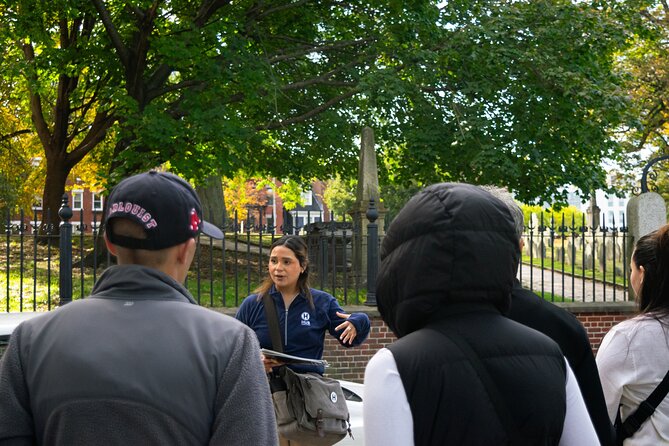
The tour continues toward a popular shopping and dining street lined with luxury brands. Today, this part of Back Bay is associated with retail and restaurants, but the guide uses it to point out earlier political and social layers.
You’ll also hear about a former Spiritualist Temple where women were allowed to lead public meetings. That is a revealing stop. In an era when many public platforms were closed or restricted to women, alternative religious and social settings could offer a place to speak, organize, and develop confidence in front of an audience.
This is one of the tour’s more unusual details. It shows that women’s public lives were not shaped only in legislatures or formal political clubs. Meeting halls, religious groups, newspapers, homes, and cultural organizations could all become training grounds for civic action.
The walk does not present Back Bay as a frozen historic district. You’ll see fashionable businesses, busy streets, and people going about modern city life. That contrast is useful. It reminds you that the buildings once linked to political arguments are still part of an active neighborhood.
Ending at the Boston Women’s Memorial
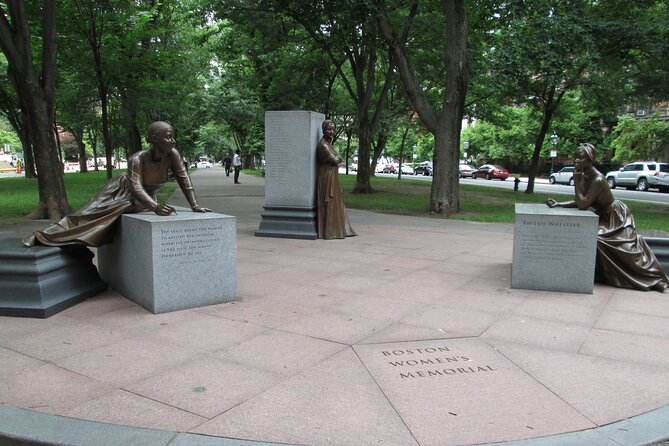
The tour ends at the Boston Women’s Memorial on Commonwealth Avenue Mall, about 0.8 miles from the starting point. The memorial depicts Abigail Adams, Phillis Wheatley, and Lucy Stone.
This is a fitting final stop because the three women represent different parts of Boston’s wider story. Abigail Adams is linked to early American political thought, Phillis Wheatley to literature and the experience of an enslaved poet, and Lucy Stone to the organized fight for women’s rights.
You finish with a clear visual reminder that public memory has changed. For many years, women who shaped American civic life received less public recognition than male political leaders. A memorial in the center of Boston cannot tell the whole story, but it gives the walk a strong closing image.
The ending is also convenient for continuing your day. The memorial sits in central Back Bay, within a short walk of Downtown Boston to the east and the Fenway area to the west. Since the tour does not return to the starting point, plan your next stop from the finish rather than assuming you will be back near Charles Street.
What the $35 price gets you
At $35 per person, this is a fair price for a 2.5-hour small-group walk. You are paying for a focused subject, a guide who can explain the connections between scattered addresses, and a group capped at 15 people.
The value is strongest if you want more than a general city orientation. A standard Boston walk may mention famous revolutionary figures and the Freedom Trail. This tour looks at a less familiar part of local and national history, including women who financed campaigns, edited publications, made political cartoons, organized opposition, and created places for public discussion.
All of the listed stops are free to view from outside. Museum admissions are not included, and the tour does not provide guides in period costume. That keeps the experience centered on interpretation and walking rather than theatrical presentation.
The tour is often reserved about 30 days ahead, so I would not leave it until the last morning of your Boston stay if the date matters to you. Confirmation arrives when you book, and the experience is offered in English with a mobile ticket.
How demanding is the walk?
The distance is modest, but the time is not. You should expect about 2.5 hours of walking, listening, and standing at stops. The operator recommends a moderate level of physical fitness and does not recommend the tour for people who have trouble standing for extended periods.
Wear comfortable shoes and check the weather. This is an outdoor experience, and poor weather can lead to a new date or a full refund. Service animals are allowed, and the route is near public transportation.
You can cancel for a full refund up to 24 hours before the start time. Changes or cancellations made less than 24 hours before the tour are not refunded. A minimum number of participants is required, so the operator may offer another date or a full refund if that minimum is not reached.
Who will get the most from this Boston walk?
I would choose this tour if you enjoy social history, women’s history, architecture, or city walks that connect famous sights with overlooked addresses. It is also a good choice if you have already seen Boston’s main revolutionary landmarks and want a different angle on the city.
The tour suits older children and young people who can manage a long walk and follow a detailed story. One participant specifically suggested it for young people, and I agree that the subject makes a useful companion to school lessons about voting rights and American democracy.
It may be less suitable if you want to go inside museums, move quickly, or avoid standing. It is also not the right pick for a costumed theatrical show. The appeal is the guide’s explanation of real places, real organizations, and competing political views.
Should you book the Votes for Women History Tour?
Book it if you want to see Boston’s Back Bay through the people who fought over women’s place in public life. The strongest reasons are the small group, the focused subject, and Maura’s ability to turn regular-looking homes and office sites into meaningful stops.
Skip it if you need an indoor activity, have difficulty standing, or prefer a broad overview of Boston rather than a close look at suffrage. For everyone else, $35 buys a thoughtful walk through a part of Boston that is easy to miss. You’ll leave with more than a list of famous names. You’ll understand how a political movement took shape block by block.
FAQ
Where does the tour begin?
It begins at the Make Way for Ducklings sculpture by Nancy Schön, at 4 Charles Street in Boston.
Where does the tour end?
It ends at the Boston Women’s Memorial at 256 Commonwealth Avenue, beside the Commonwealth Avenue Mall.
How long is the tour?
The tour lasts approximately 2 hours and 30 minutes.
How much does the tour cost?
The price is $35 per person.
How large is the group?
The group is limited to a maximum of 15 participants.
What language is the tour offered in?
The tour is offered in English.
Are museum admissions included?
No. Admission inside museums is not included. The experience focuses on outdoor landmarks, buildings, homes, and public spaces.
Is the tour suitable for someone who has trouble standing?
No. The tour is not recommended for people who have trouble standing for extended periods. A moderate level of physical fitness is recommended.
What happens if the weather is poor?
The tour requires good weather. If it is canceled because of poor weather, you will be offered another date or a full refund.
Newest Boston tours we have written up
- Boston’s Freedom Trail: A Self-Guided Audio Tour★ 4.0 · 18 reviews
- Boston’s Freedom Trail: A Self-Guided Tour of All 16 Sites★ 5.0 · 14 reviews
- Washington D.C. Cherry Blossom,Baltimore 3-Day Tour from Boston★ 4.5 · 7 reviews
- Boston Self-Guided Audio Tour Bundle: Freedom Trail & More★ 4.5 · 5 reviews
- True Crime Tour of Boston★ 4.0 · 17 reviews
- Family Friendly Guided Bike Tour of Boston★ 4.5 · 22 reviews
- Freedom Trail Experience★ 5.0 · 8 reviews
- The Ghosts of Boston’s Past Haunted Self-guided Tour★ 3.5 · 4 reviews
Back Bay and Charles River Tours, compared.
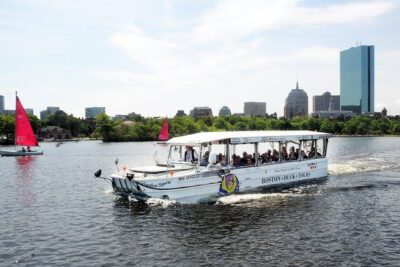
Boston Duck Boat Sightseeing City Tour with Cruise Along Charles River
Read our review →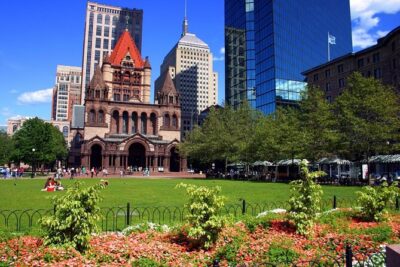
Downtown Freedom Trail, Beacon Hill & Back Bay Walking Tour
Read our review →
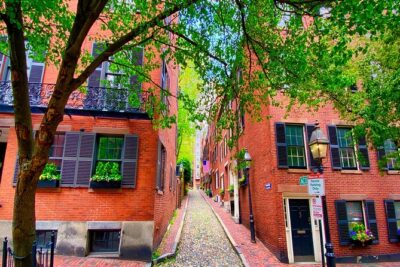
Beacon Hill + Back Bay History + Photo Walking Tour(SMALL Group)
Read our review →

Browse the lists this tour appears in