
Review · WALKING TOURS IN SALEM
Salem Merchants and Mansions Guided Architecture Walking Tour
Salem’s architecture tells a fuller story than its witch-trial reputation. This walking tour follows that story from the waterfront’s spice trade and shipyards to merchant homes, churches, public parks, and the grand buildings around Salem Common. The Witch House is only one chapter, not the whole book.
I like the way the tour connects architecture with money and power, showing how simple Georgian houses reflect Salem’s rise as a port. I also like the balance between serious history and familiar pop culture, including the Hocus Pocus school location and the Bewitched statue at the end.
The main drawback is practical: you stay outdoors for 90 minutes to two hours, with no building interiors or cemetery visits. The group can reach 40 people, and there are no public restrooms along the route, so wear good shoes and plan ahead.
Key points to know before you book
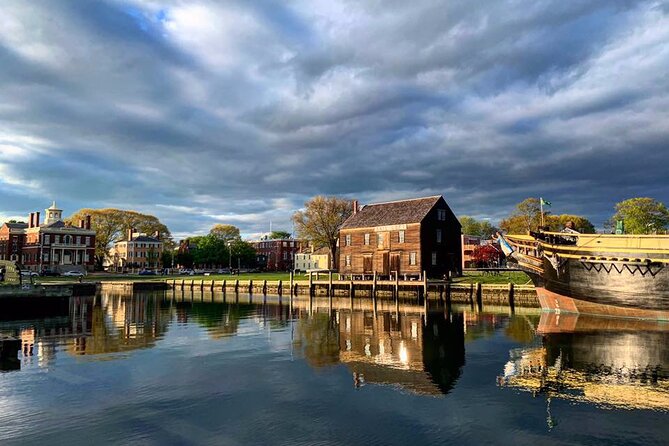
- The waterfront sets the historical scene: The Custom House and Derby House explain Salem’s spice trade, shipbuilding, and merchant wealth.
- Architecture is the main subject: You’ll look at Georgian, First Period, Greek Revival, and Second Empire buildings.
- The route links old and modern Salem: It moves from Derby Square and colonial houses to Salem Common, the Hawthorne Hotel, and the Witch City Mall.
- Pop culture gets a sensible role: You’ll hear about a Hocus Pocus filming location without losing sight of Salem’s broader past.
- The walk ends at the Bewitched statue: The final stop gives you an easy downtown landmark for continuing your day.
- It is an outdoor tour in all weather: The tour runs rain or shine, and admission to interiors is not included.
Why this Salem walk is different from a witch-themed tour
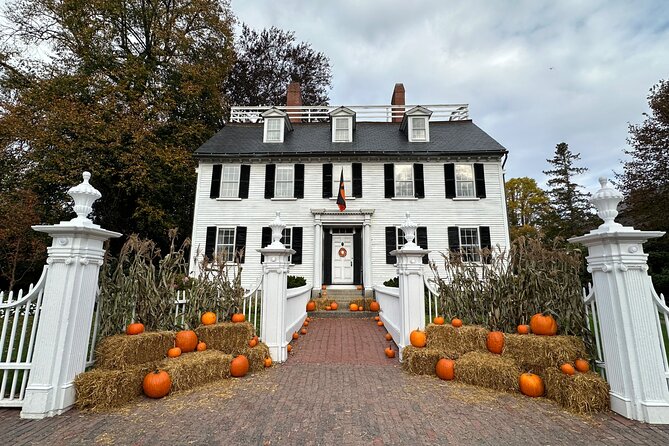
If you want Salem’s witch-trial story alone, this is not the most direct choice. The tour gives that subject some room, especially around the Witch House, but its real focus is the city’s buildings and the people who paid for them.
That shift matters. Salem was shaped not only by fear and folklore, but also by ships, trade, religion, homebuilding, and civic ambition. As you walk, you see how a merchant port grew more prosperous, how wealthy families displayed that success, and how later residents reshaped older houses.
The guides are licensed, and names associated with this experience include Topher, Seán, and Henry. You may get a different guide on your date, but the best version of the tour depends on someone who can explain style in plain language rather than simply point at façades. The strongest guide will help you see why a roofline, doorway, or later addition matters.
At $36 per person, this is not the cheapest way to spend an hour and a half in Salem. Still, it can be good value if you want an organized introduction before visiting museums or exploring on your own. Since the tour does not include building admission, you are paying for the guide’s interpretation and the route, not for entry tickets.
More Walking Tours in Salem
- History and Hauntings of Salem Guided Walking Tour
★ 5.0 · 14,564 reviews - Salem Voodoo, Vampires, and Ghosts Guided Walking Tour
★ 5.0 · 1,931 reviews - Bewitched Walking Tour of Salem
★ 5.0 · 1,895 reviews
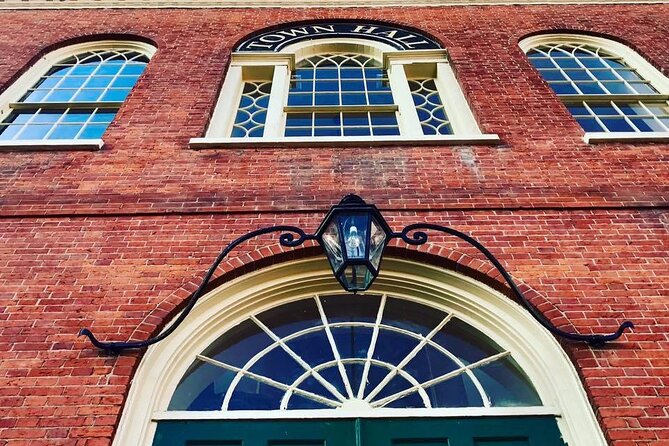
Starting at Old Town Hall and Derby Square
The meeting point is 32 Derby Square, beside Salem Old Town Hall. The tour begins at 11:00 a.m., a useful time if you want to arrive by public transportation or have breakfast before setting out.
Old Town Hall provides a fitting opening. It places you in Salem’s civic center and gives the guide a way to introduce the city through its public buildings and streets. The first stop is brief, about five minutes, so do not expect a long interior visit. Admission is not included, and the tour remains outside.
From there, the walk continues through Salem for another short orientation stop. This early part helps you get your bearings before the route reaches the waterfront. If this is your first visit, pay attention to the direction of the streets and the relationship between the old commercial center and the harbor.
The Custom House and Salem’s merchant economy
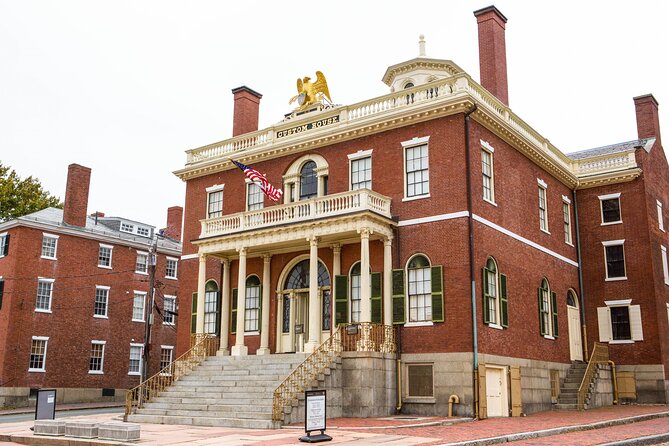
At the Custom House, the guide explains Salem’s spice trade, the city motto, and the former shipbuilding yard. The old yard was near the far end of the open space, close to the Adirondack chairs. This is the point where the tour connects handsome buildings with the practical business that financed them.
The Custom House stop lasts about ten minutes. From near Derby Wharf, you can also discuss the mansions visible in the area. That view helps you understand a basic Salem lesson: the grand homes did not appear by magic. They grew from maritime commerce and the fortunes of merchants and ship captains.
You do not enter the Custom House on this walk, and admission is not included. That is worth knowing if you want to see interiors. This tour is about reading the city from the street, then deciding which buildings deserve a separate visit.
Derby House and the look of new wealth
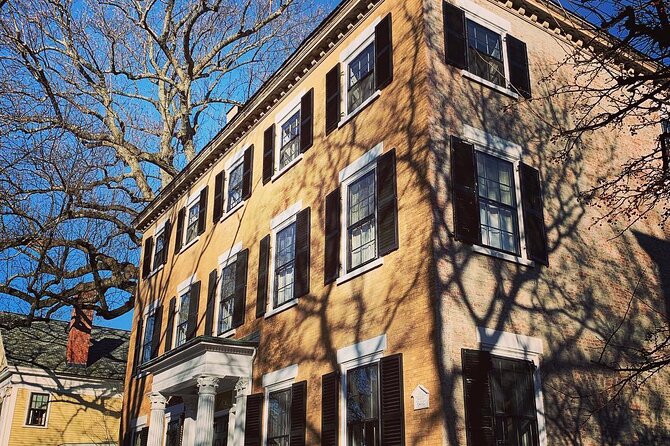
The Derby House is used to explain Georgian architecture. Its clean proportions and orderly design reflect a period when Salem merchants were gaining money, influence, and confidence.
The stop lasts around ten minutes. Rather than treating architecture as a list of labels, the guide shows how a relatively simple house can reveal the ambitions of its owner and the wider prosperity of New England’s port towns.
This is one of the tour’s most useful ideas. A mansion is not just a pretty object. Its scale, symmetry, materials, and position tell you something about the family inside and the society around it. You do not enter the Derby House, and admission is not included, but the exterior discussion gives you a framework you can use throughout Salem.
Same city, a completely different afternoon:
- Salem’s Best Ghost Tour
★ 4.5 · 4,186 reviews - Satanic Salem Walking Tour
★ 5.0 · 1,635 reviews - Mysteries and Murders of Salem Guided Night-Time Walking Tour
★ 5.0 · 1,488 reviews - The Salem Witch Walk
★ 4.5 · 1,301 reviews
Narbonne House and the way old houses changed
Narbonne House offers a different lesson. It shows how a 17th-century First Period house could be expanded and modified over time.
That detail is easy to miss when you walk alone. You may see an old building and assume it was planned in one piece. Here, the guide points out how changing needs led families to enlarge or alter the structure. The result is a building that records several periods of domestic life.
The stop takes about ten minutes. It is especially useful if you enjoy the practical side of old architecture: how people lived, how homes adapted, and how later changes can be read in the exterior.
Again, this is an outside discussion, with no admission included. If you have limited mobility, note that the tour involves standing and walking rather than a short series of seated talks.
Daniels House and Salem’s early homes
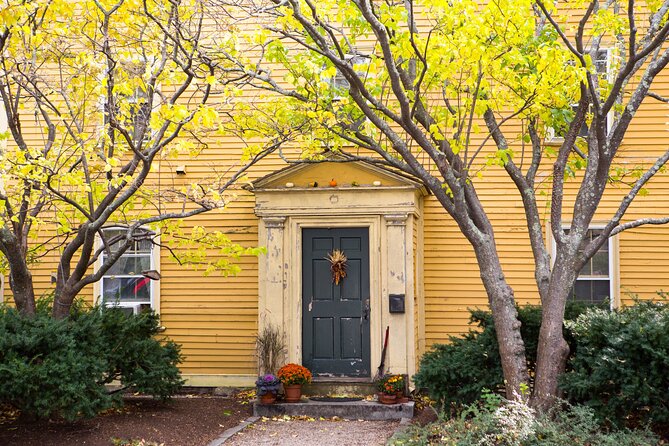
The Daniels House is another brief architectural discussion, lasting about five minutes. Along with Narbonne House, it adds texture to the tour’s treatment of early Salem.
You will not get an extended visit inside the historic site. Instead, the guide uses the building to place Salem’s early domestic architecture into the larger story of the town. This is a short stop, but it helps keep the route from focusing only on grand merchant houses.
The contrast is valuable. Wealthy homes receive much attention later, but Salem’s story also depends on smaller, older buildings and the ways ordinary structures survived beside newer construction.
Salem Common, Hocus Pocus, and the changing city
Salem Common is one of the longest stops, at about ten minutes, and one of the most revealing. The guide explains how the area changed from marshy pools and unusable ground in the 17th and early 18th centuries into a manicured pleasure park in the 19th century.
That change mirrors Salem’s fortunes. As the Common became more attractive, the surrounding area turned into a fashionable district. By the mid-to-late 19th century, Salem’s last major wave of wealth was producing Greek Revival and Second Empire buildings.
The guide also points out the old school used as a Hocus Pocus location. This is a smart pop-culture stop because it gives you a familiar reference without making the entire walk a movie-location hunt. If you are visiting with teenagers, this may be the moment that gets their full attention.
Salem Common is also the only listed stop with admission included, though the tour’s broader format remains outdoors. You may want to pause here after the tour if you need a break, but the walk itself keeps moving.
Hawthorne Hotel and the Peabody Essex Museum area
The Hawthorne Hotel receives a short architecture stop of about five minutes. The tour uses it as another point in Salem’s changing built environment, linking the Common district with later civic and commercial development.
Next comes the Peabody Essex Museum area, where the guide discusses the variety of collection homes associated with the museum. This stop lasts about ten minutes. You do not enter the museum on the walking tour, so treat it as an introduction rather than a substitute for a museum visit.
That distinction is important when planning your day. If you want interiors, art, or a longer look at historic houses, you will need to buy separate admission. The walking tour helps you choose what to see next by explaining how these homes fit into Salem’s architectural story.
Church Street and Salem’s religious mix
Church Street provides another brief architecture stop. The walk then reaches Saint Peter’s Episcopal Church, where the guide discusses Salem’s distinctive religious heritage.
The church stop lasts about ten minutes, though the tour does not include admission. Religion shaped Salem’s buildings and neighborhoods, and this portion keeps the tour from reducing the city to merchants and mansions alone.
I like this part because it broadens the question from who had money to who belonged, worshipped, and built institutions. The tour does not ask you to study one church in depth, but it gives you a useful reminder that Salem’s identity was formed by more than trade and wealthy homes.
Witch City Mall and the Bewitched ending
Near the Witch City Mall, the guide continues the architecture discussion before moving to the Bewitched statue of Elizabeth Montgomery. These short stops bring the tour back into present-day Salem, where historic buildings share space with shopping, television nostalgia, and witch-themed branding.
The Bewitched statue is the endpoint at Salem, Massachusetts. It is a practical place to finish because you can continue exploring downtown from there, take photographs, or use it as a meeting landmark.
The ending also neatly ties together the tour’s two sides. You have spent most of the walk looking at actual buildings and long-term civic change, then finish with a popular culture symbol. The balance works best if you want Salem to feel like a real city, not a theme park.
How the pace, group size, and weather affect the experience
The advertised duration is about one hour and 30 minutes to two hours. The route includes many short talks, with several stops lasting five minutes and others about ten. That format keeps the walk moving, but it also means you may be standing in one place while listening several times.
Groups can contain up to 40 people. A large group may make it harder to hear or see the guide, especially on busy streets. Arrive a little early, stay near the guide, and avoid drifting to the back if you want every architectural detail.
The tour runs rain or shine. Wear comfortable shoes and dress for the forecast. There are no public restrooms along the route, so use one before meeting at Derby Square.
Dogs are welcome, and service animals are allowed. Children must be accompanied by a ticketed adult. Most people can take part, but the tour is not recommended if you cannot stand for long periods.
You receive booking confirmation at the time of purchase. Free cancellation is available up to 24 hours before the 11:00 a.m. start time. Changes or cancellations inside that window are not accepted for a refund.
Who will get the most from this tour
I would choose this walk for a first Salem visit, especially if you want a clear sense of the city before deciding which buildings and museums deserve more of your time.
It suits:
- People who enjoy architecture but do not want a technical lecture
- Families who need a little Hocus Pocus and television history mixed into the day
- History fans who want Salem’s trade, religion, and urban growth alongside witch-trial stories
- Visitors who prefer an outdoor activity with no long museum visit
- Anyone who wants a guide to connect scattered buildings into one story
I would think twice if you want to enter historic houses, spend time in cemeteries, or avoid standing outdoors. This is also not the right choice if your main goal is a specialized witch-trial tour. The price makes more sense when you value explanation and orientation rather than admission tickets.
Should you book the Salem Merchants and Mansions tour?
Book it if you want Salem explained through buildings, not just legends. The walk gives you a useful sequence: waterfront trade, merchant wealth, early homes, public space, later mansions, religious life, and modern pop culture.
At $36, the value comes from the licensed guide and the connections between places you could otherwise pass without understanding. Choose a dry, mild day if possible, arrive prepared for a large group, and use the restroom before you start.
Skip it if you need indoor access or cannot comfortably walk and stand for up to two hours. For most first-time visitors who want the broader Salem behind the witchy surface, this is a thoughtful and practical introduction.
FAQ
How long does the Salem Merchants and Mansions tour last?
The tour lasts approximately one hour and 30 minutes to two hours.
Where does the tour begin?
It begins at Salem Old Town Hall, at 32 Derby Square, Salem, Massachusetts 01970.
What time does the tour start?
The scheduled start time is 11:00 a.m.
Where does the tour end?
The tour ends at the Bewitched Sculpture of Elizabeth Montgomery in Salem.
Is admission to historic buildings included?
No. The tour is an outdoor activity, and admission to most named buildings is not included. The tour does not enter buildings or cemeteries.
Does the tour run in bad weather?
Yes. Tours run rain or shine, so wear comfortable shoes and dress for the weather.
Are children and dogs allowed?
Children are allowed but must be accompanied by a ticketed adult. The tour is dog friendly, and service animals are allowed.
How large can the tour group be?
The maximum group size is 40 people.
Can I cancel for a full refund?
Yes, if you cancel at least 24 hours before the experience start time. Cancellations or changes made less than 24 hours in advance are not accepted for a refund.
Newest Salem tours we have written up
- [ESP] History of Salem Witch Trials★ 4.0 · 5 reviews
- Tales of Salem Candyland Tour★ 4.0 · 8 reviews
- Private Walking Salem Legends Tour Professional Guide★ 5.0 · 3 reviews
- Spooky Ramen Tours★ 5.0 · 5 reviews
- Salem Vintage Postcard Tours★ 5.0 · 8 reviews
- Experience Authentic Salem Séance with Entry Pass★ 3.5 · 13 reviews
- Salem Witch Tour★ 5.0 · 6 reviews
- Salem Bewitched Tour With Tarot Reading★ 5.0 · 7 reviews
Walking Tours in Salem, compared.
History and Hauntings of Salem Guided Walking Tour
Read our review →


Mysteries and Murders of Salem Guided Night-Time Walking Tour
Read our review →
2.5-Hour Salem History & Sightseeing Guided Walking Tour
Read our review →
Best Salem Witch Trials Historical Walking Tour
Read our review →Browse the lists this tour appears in