
Review · BOSTON PUB CRAWLS AND BREWERY TOURS
Sushi Making Class at a Local Brewery in Boston
The best part of this Boston class is the setting: you learn to make sushi inside Long Live Roxbury, a local brewery where craft beer and a relaxed neighborhood mood replace the usual formal cooking-school feel. Chef Harold leads you through miso soup, hand rolls and an inside-out spicy tuna roll, so you leave with a meal and a few useful kitchen tricks.
I like the fresh, gluten-free, nut-free and dairy-free ingredients, and I like that the class includes enough food to count as lunch. The main caution is the teaching setup: Chef Harold does not use a microphone, so I’d try to sit close to him, especially if you have trouble hearing in a busy room. The menu is fun and approachable, but not especially large.
Key points to know before booking
- Chef Harold brings more than 20 years of sushi experience, with practical tips you can use at home.
- The two-hour class includes a full meal, starting with miso soup and ending with several handmade rolls.
- Long Live Roxbury provides the brewery setting, with craft beer available for separate purchase.
- The menu includes both cooked and raw options, from shrimp tempura and sweet potato to spicy tuna.
- The class is capped at 25 people, so seating may affect how easily you hear the chef.
- The $75 price includes ingredients, tools and instruction, but drinks cost extra, from $3 to $20.
Making sushi at Long Live Roxbury in Boston
At noon, you meet at Long Live Roxbury, located at 152 Hampden Street in Boston’s Roxbury neighborhood. The activity returns to this same spot after roughly two hours, which keeps the plan simple. You do not need to move between a brewery and a separate cooking school, and the bar gives you a chance to order a drink while you work.
I like this kind of setting because it makes the class feel social rather than formal. You are not only following a recipe in a quiet kitchen. You are handling food, listening to a chef, and enjoying the brewery atmosphere at the same time. If you are planning a date, a small friend gathering or an afternoon activity with a food-loving companion, the combination makes sense.
The group can include up to 25 people. That is large enough for a lively room, but it also explains why your seat matters. Chef Harold does not use a microphone, and hearing can be difficult from farther away. I would arrive ready to sit near the demonstration area, and I would ask questions when the chef pauses rather than waiting until the end.
More pub crawls and brewery tours in Boston
- Boston Freedom Trail History Pub Crawl Small-Group Tour
★ 5.0 · 996 reviews - Boston: History Pub Crawl Tour Along the Freedom Trail
★ 4.9 · 279 reviews - Signature Boston Guided Brewery Tour with snack
★ 5.0 · 271 reviews
Chef Harold’s approach to sushi
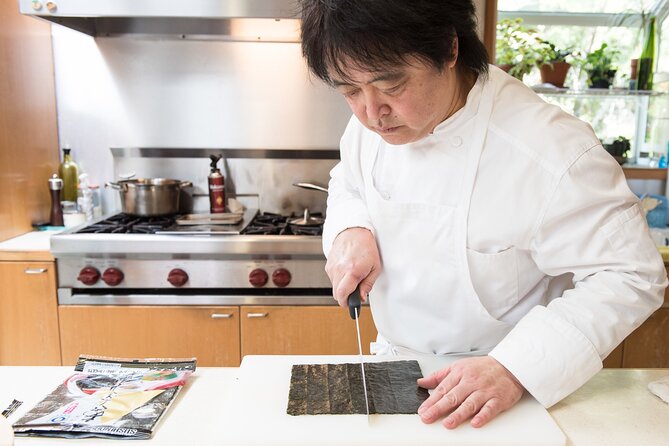
Chef Harold has more than 20 years of experience in sushi and the food industry. That background matters here because this class is designed around doing the work yourself, not simply watching a chef prepare a finished plate. You get instruction, practical tips and kitchen secrets that can help you repeat the recipes later.
The exact pace will depend on the group, but the structure is clear. You begin with miso soup, then prepare hand rolls and an inside-out roll. The class is intended to be approachable, so you do not need to arrive with professional knife skills or previous sushi experience.
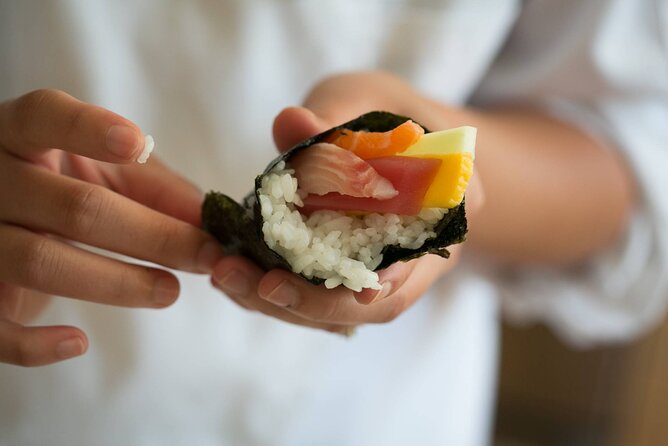
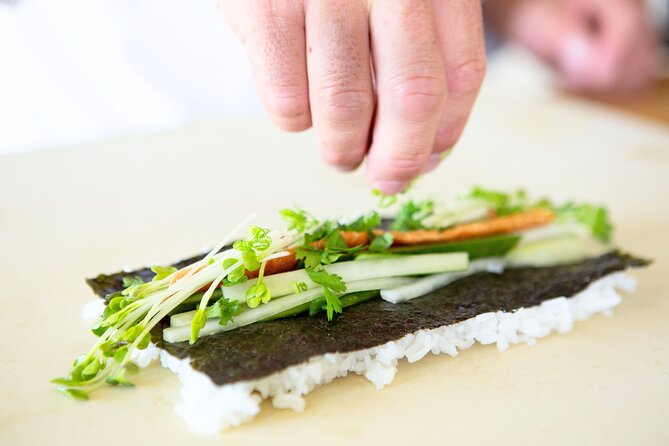
I appreciate that the menu gives you different kinds of sushi to practice. Hand rolls let you focus on shaping nori and filling it without worrying about a perfectly even sliced roll. The inside-out spicy tuna roll adds another skill, since the rice sits on the outside of the seaweed.
Chef Harold also explains his food background as he teaches. That personal context gives the class more character than a simple recipe demonstration. You get food instruction, but you also hear from someone who has spent decades working with it.
Starting with warm miso soup
The first course is miso soup made with miso paste, dashi and wakame seaweed. It is a modest beginning, but a useful one. Before working with sushi rice and nori, you get familiar with several ingredients that are central to Japanese cooking.
Miso brings a savory, fermented flavor. Dashi supplies the broth base, while wakame adds a soft seaweed texture. Because you prepare the soup yourself, you can pay attention to how these ingredients work together rather than treating miso soup as an automatic side dish.
I also like the warm soup as a change of pace from the chilled or room-temperature sushi that follows. It gives the class a proper first course and helps turn the session into a complete meal.
Do not expect a large appetizer. The soup is a simple starter, not a full lesson in Japanese broth-making. Its value is in giving you one more dish to prepare and eat, while setting up the flavors used later.
Shrimp tempura hand roll
The first hand roll features shrimp tempura, nori and sushi rice. This is a good choice for a class because it combines familiar ingredients with a few basic sushi techniques. You learn how to handle the seaweed, add the filling and form the roll by hand.
The tempura shrimp also gives the menu a cooked option. That matters if you are cautious about raw fish or simply prefer a crisp, warm filling. The contrast between the shrimp and the rice makes this roll different from the spicy tuna option later.
Hand rolls are shaped like cones rather than cut into neat rounds. That makes them less fussy for a first attempt, though you still need to avoid overfilling the nori. Too much rice or filling makes the roll difficult to close and eat.
I would pay close attention to how Chef Harold places the rice and shrimp. That small detail can make the difference between a roll that holds together and one that spills across your plate. Since you eat the finished roll yourself, perfection is not the goal. Learning the method is.
A few more Boston tours and tickets worth a look
- Boston: Freedom Trail History Tour and Brewery Taste
★ 5.0 · 38 reviews - Boston: Guided Craft Brewery Tour with a Snack
★ 4.9 · 27 reviews
Sweet potato hand roll for a vegetarian option
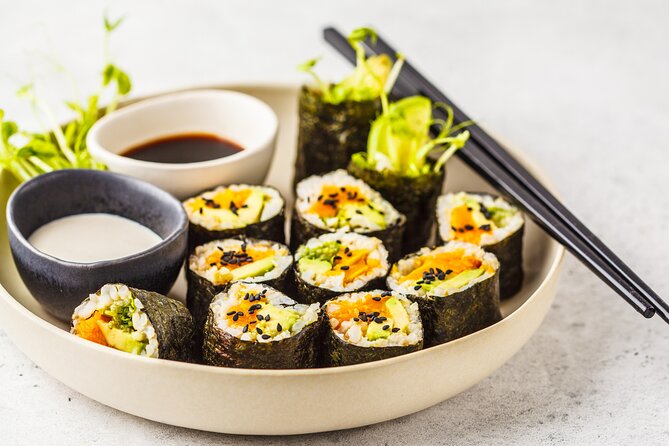
The sweet potato hand roll uses sweet potato, nori and sushi rice. It adds a vegetarian choice to the meal and gives you a different texture from the shrimp. Sweet potato also brings natural sweetness, which creates a clear contrast with salty nori and savory miso soup.
This roll is useful for mixed groups. Not everyone at the table needs to choose the same filling, and the menu does not rely entirely on seafood. If you are booking with friends who have different tastes, this option makes the class easier to share.
The sweet potato roll may also be the most comfortable place to practice. The filling is straightforward, and you can focus on the shape and rice without worrying about handling raw fish. Once you feel comfortable, you can use the same hand-roll technique for the shrimp.
The menu remains fairly simple. That can be a strength if you want a clear introduction, but it may feel limited if you already make sushi at home or hope to learn a wide range of advanced preparations.
Spicy tuna inside-out roll
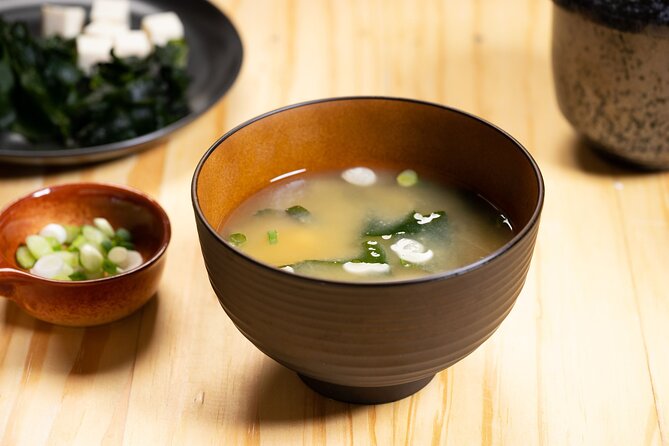
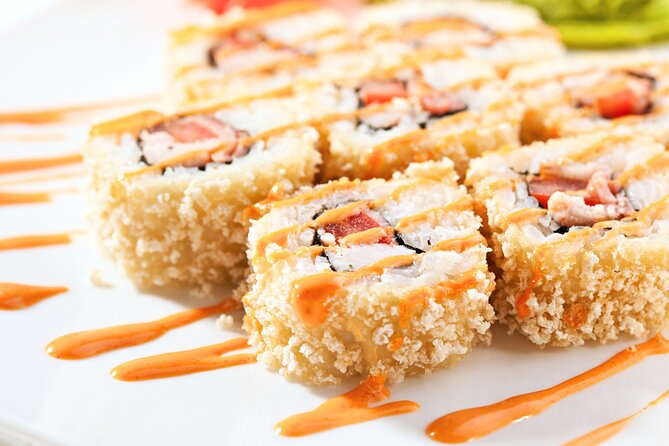
The spicy tuna roll gives the class its main raw fish preparation. It uses tuna, sushi rice and nori, with the rice on the outside of the roll. This is the most technical item on the listed menu because the roll must be assembled in a way that keeps the rice in place while the nori and tuna stay inside.
An inside-out roll also looks more like the sushi many people order at restaurants. You get practice with a different format from the hand rolls, and you can see how small changes in assembly affect the final result.
The menu does not list extra sauces or toppings, so I would expect the lesson to focus on the core ingredients and rolling method. That keeps the recipe manageable, though it also means you should not book this expecting an elaborate sushi spread.
If you avoid raw fish, check your needs with the provider before booking. The class is designed to accommodate a variety of dietary restrictions when told in advance, but the listed menu does include tuna. Asking early gives the chef a chance to plan a suitable adjustment.
Craft beer with your handmade meal
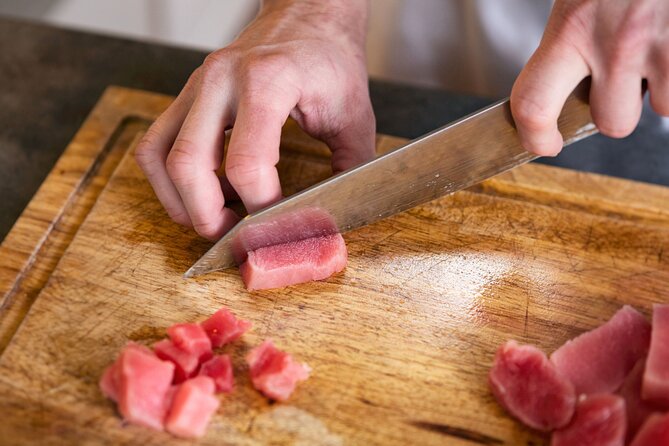
Drinks are not included, but you can buy them at the brewery bar. Prices range from $3 to $20, so you can keep the add-on modest or choose something more expensive. The craft beer is part of the appeal of holding this class at a brewery, but it is also the main extra cost to remember.
I like the freedom of ordering separately. You are not forced to pay for a drink if you do not want one, and the class still works as a complete food experience without alcohol. If you do order beer, keep your pace sensible. Rolling sushi takes attention, and the class is hands-on from start to finish.
Long Live Roxbury is described as a local brewery with a relaxed, community-focused feel. That makes the class less stiff than a traditional cooking studio. It also means the room may have normal brewery activity around you, which connects to the hearing issue. Sit close to Chef Harold if instruction matters more to you than the best view of the bar.
What the $75 price really covers
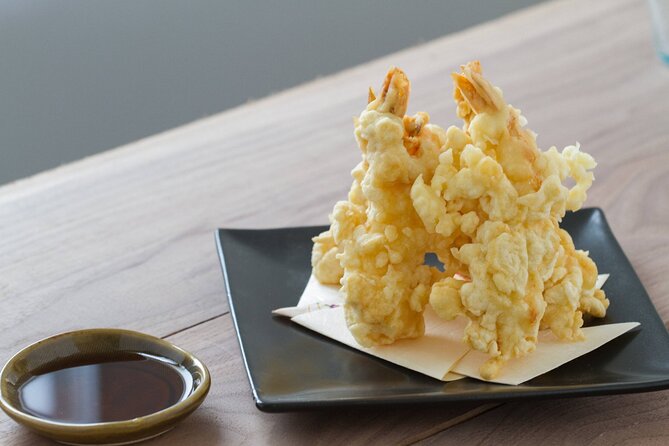
The class costs $75 per person. That price includes the two-hour lesson, all ingredients, cooking tools, instruction and the food you prepare. Drinks are extra, but you are not paying a separate restaurant bill for the meal itself.
I consider that a fair value if you want both an activity and lunch. You are not only eating sushi. You are paying for direct instruction from Chef Harold, the chance to practice several roll styles and a casual brewery setting. The class also supplies the equipment, which keeps you from needing to buy a bamboo mat, ingredients or specialty items for a one-time attempt.
The value is weaker if your main goal is a large or highly varied menu. The listed food is miso soup, two hand rolls and one spicy tuna roll. One direct assessment of the experience found the food simple even while considering the overall value good. I agree with that tradeoff: the class offers a clear introduction, not a long tasting menu.
At $75, I would book it for the hands-on lesson and social setting. I would not book it solely for the quantity of sushi.
Dietary needs and practical planning
The ingredients are gluten-free, nut-free and dairy-free. The class can also accommodate a variety of dietary needs if you provide advance notice. That is helpful, but you should still contact the provider before the class rather than assume every substitution will be available on the day.
The listed menu includes shrimp, tuna, sweet potato, miso, dashi and seaweed. If you have seafood, soy or other restrictions, explain them clearly when booking. The provider says it will do its best to tailor the experience, but the information does not guarantee every possible substitution.
The class is offered in English. Mobile tickets are accepted, and confirmation arrives within 48 hours, subject to availability. Service animals are allowed. These details are small, but they make the planning easier, especially if you are fitting the class into a Boston afternoon.
You can cancel for a full refund up to 24 hours before the noon start time. Changes made less than 24 hours ahead are not accepted, and a late cancellation is not refunded. The class also needs a minimum number of participants, so a cancellation by the provider could result in another date or a full refund.
Who will enjoy this Boston cooking class
I would recommend this class to a first-time sushi maker who wants clear instruction without a formal restaurant setting. The two hand rolls provide an easy entry point, while the inside-out roll gives you a modest technical challenge.
It also suits couples and friends who want an activity that keeps everyone involved. You prepare food together, eat what you make and can add a craft beer from the bar. That is more engaging than simply sitting down for a meal, and less demanding than a full-day cooking course.
Families should check the participant details and dietary needs before booking, since the available information does not specify a minimum age. Anyone sensitive to noise should plan carefully because Chef Harold teaches without a microphone.
Experienced sushi makers may find the menu too basic. Still, the chef’s long food-industry background and the chance to ask questions could make the class useful if you want a relaxed social session rather than advanced technique training.
Should you book it?
Book this class if you want a friendly, hands-on introduction to sushi with a full meal and a brewery drink option. Chef Harold’s experience, the cooked and vegetarian fillings, and the simple two-hour format make it easy to join without much preparation.
Skip it if you want an advanced sushi curriculum, a large menu or drinks included in the price. The best practical tip is to sit near the chef, tell the provider about dietary needs in advance and judge the $75 cost as payment for instruction plus lunch, not just a plate of sushi.
FAQ
Where does the sushi-making class take place?
The class starts and ends at Long Live Roxbury, 152 Hampden Street, Boston, Massachusetts 02119.
What time does the class start?
The stated start time is 12:00 pm.
How long does the experience last?
The class lasts approximately two hours.
What food will I make?
You will make miso soup, a shrimp tempura hand roll, a sweet potato hand roll and a spicy tuna inside-out roll.
Are drinks included in the $75 price?
No. Drinks can be purchased at the brewery bar, with listed prices ranging from $3 to $20.
Is the class suitable for dietary restrictions?
The class uses gluten-free, nut-free and dairy-free ingredients and can accommodate a variety of dietary needs when you provide advance notice.
What is the cancellation policy?
You can cancel at least 24 hours before the start time for a full refund. Cancellations or changes made less than 24 hours before the class are not accepted for a refund.
More Workshops in Boston
- Sushi Making Class at a Local Distillery in Boston
★ 5.0 · 22 reviews - First Class Private Airport Transfer from Boston Logan
★ 5.0 · 6 reviews - Salem, MA: Witch City Broom Making Workshop
★ 4.9 · 142 reviews - Witch City Broom Making Workshop in Salem
★ 5.0 · 105 reviews
More bar and brewery outings in Boston
- Boston: Haunted Pub Crawl of Historic Pubs and Taverns
★ 4.6 · 127 reviews - Boston Ghosts Boos and Brews Haunted Pub Crawl
★ 4.5 · 95 reviews - Boston: Boos and Brews Haunted Pub Crawl
★ 4.2 · 73 reviews - Boston Haunted Pub Crawl
★ 4.0 · 62 reviews
Newest Boston tours we have written up
- Boston’s Freedom Trail: A Self-Guided Audio Tour★ 4.0 · 18 reviews
- Boston’s Freedom Trail: A Self-Guided Tour of All 16 Sites★ 5.0 · 14 reviews
- Washington D.C. Cherry Blossom,Baltimore 3-Day Tour from Boston★ 4.5 · 7 reviews
- Boston Self-Guided Audio Tour Bundle: Freedom Trail & More★ 4.5 · 5 reviews
- True Crime Tour of Boston★ 4.0 · 17 reviews
- Family Friendly Guided Bike Tour of Boston★ 4.5 · 22 reviews
- Freedom Trail Experience★ 5.0 · 8 reviews
- The Ghosts of Boston’s Past Haunted Self-guided Tour★ 3.5 · 4 reviews
Boston Pub Crawls and Brewery Tours, compared.

Boston Freedom Trail History Pub Crawl Small-Group Tour
Read our review →
Salem Booze and Brews Haunted Pub Crawl by US Ghost Adventures
Read our review →


Signature Boston Guided Brewery Tour with snack
Read our review →


Browse the lists this tour appears in