
Review · HISTORICAL TOURS
Relive 1776: See Boston’s History in Augmented Reality (AR)
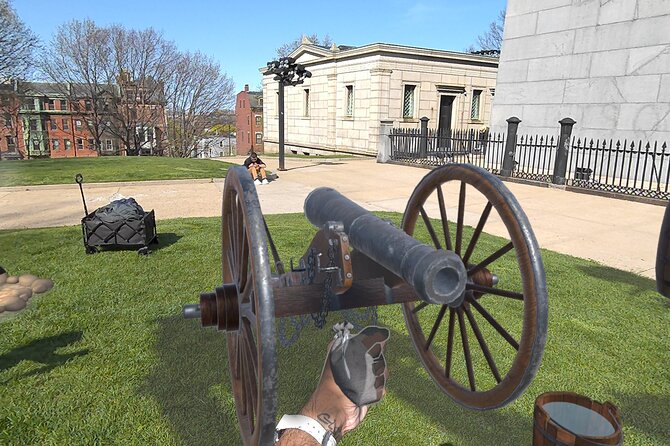
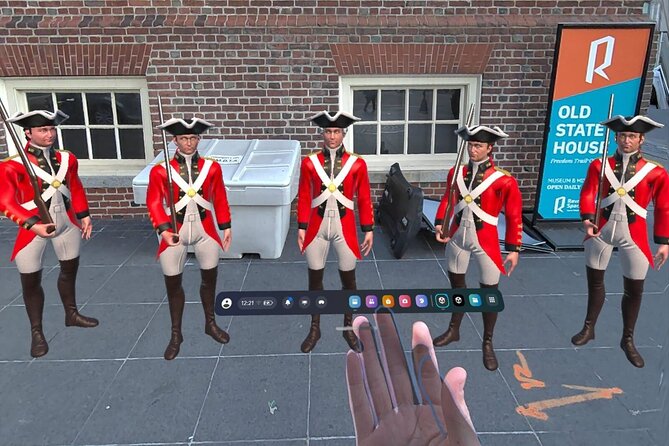
Boston’s Freedom Trail is already a fine walk. This tour adds a playful twist: colonial scenes appear around you while you remain aware of the real streets, buildings, and people nearby. You may find yourself wearing period clothing, riding in a cart, meeting Paul Revere, or helping operate a field cannon.
I like the small groups of eight or fewer, which makes the technology easier to manage and gives you room to ask questions. I also like the choice of headsets or tablets, since AR lets you see the street around you without the queasy feeling some people get from VR. The main caution is that the historical teaching can depend heavily on your guide and on how much of the audio and video material you choose to use.
Key points at a glance
- Five AR scenes along the Freedom Trail: Each experience lasts about 5 to 15 minutes and includes a short video.
- Real streets remain visible: This uses augmented reality, not a sealed-off virtual world, so you can keep track of your surroundings.
- Hands-on colonial moments: Try period clothing, take part in an illegal tea scene, and help with a historically accurate field cannon.
- A guide leads the history: Guides including Tommy, Tomme, and Dylan have been praised for making the equipment easy and the tour fun.
- A full two-hour walk: The route begins at Boston Common and covers major Freedom Trail sights before the final activity connected with Bunker Hill.
- A practical souvenir: Your reusable Illegal Tea bag includes a discount card.
How the AR changes Boston’s Freedom Trail
The clever idea here is not to replace Boston with a digital world. Instead, the tour places short historical scenes directly onto the places where the story unfolded. You still see the brick sidewalks, old churches, graveyards, and busy streets. The past simply pops up in front of you for a few minutes at a time.
That difference matters. A standard walking tour asks you to picture colonial Boston from a guide’s description. This one gives you moving images and interactive tasks to help make the setting concrete. You might see a horse and cart pass through your body, a strange but memorable effect that one participant found both quick and wonderfully odd.
The five scenes cover events from 1765 through 1775, the years when tension between Britain and the colonies grew toward open conflict. The tone is educational and playful rather than grim. There is no gore, and the technology is designed so that you can still see the real world.
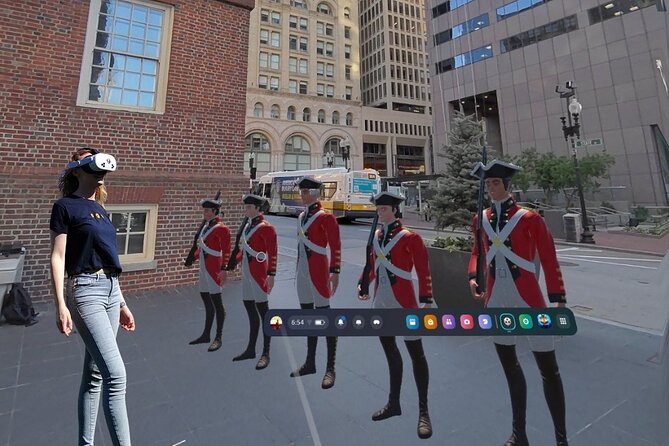
You can use a Meta Quest AR headset or a tablet. The headset should offer the more striking visual effect, while the tablet gives you a simpler way to take part. Either way, you are not shut off from your surroundings as you would be in a full VR program.
The format also helps families and mixed-age groups. Children get something to do with their hands and eyes, while adults can follow the political story and the places themselves. One detailed account found the tour especially good for middle-school children, but also enjoyable for adults. I would see it as a shared activity rather than a lecture with a few digital effects added on.
More history tours in Boston
- Boston: Freedom Trail History Small Group Walking Tour
★ 5.0 · 6,450 reviews - Tour of Historic Fenway Park, America’s Most Beloved Ballpark
★ 4.5 · 3,013 reviews - Boston Food & History: Pizza, North End & Freedom Trail
★ 5.0 · 1,772 reviews
Boston Common: meeting the people behind the rebellion
You meet at the Boston Common Visitors Center at 139 Tremont Street. This is a sensible starting place because the Common gives your guide room to explain the city’s layout and prepare everyone for the equipment before the walk gets crowded.
The first major scene takes place under the Great Elm Tree, where you meet Paul Revere, John Hancock, and Samuel Adams in digital form. The encounter sets up the story of resistance to British rule and gives you familiar names to follow as the tour continues.
This is also where your guide can make the difference between a smooth start and a clumsy one. The group is small, and guides such as Tommy, Tomme, and Dylan have been praised for helping people understand the AR controls. Pay attention during the setup. The scenes are short, so fumbling with the headset can eat into your time.
Boston Common is open and easier for orientation than some later stops. Still, give your guide room to work and avoid wandering while wearing the headset. The point of AR is that you can see the real world, not that you should stop noticing it.
Granary Burying Ground: names become people
Granary Burying Ground brings the tour into a more serious setting. The cemetery holds the graves of important figures from Boston’s revolutionary period, including names tied to the story you are following. Here, the digital scenes can help connect famous people with an actual place rather than leaving them as flat names from a textbook.
You should expect a short AR segment, not a long cemetery lecture. The format favors a few focused moments followed by walking and explanation. If you want detailed information about every grave, you may find a traditional specialist-led cemetery tour more satisfying.
The advantage here is emotional and visual. Seeing historical figures appear near the place where their era is remembered can make the story easier to hold in your mind. It also gives the walking route some breathing room between the more theatrical activities.
The Benjamin Franklin statue and colonial daily life
At the statue of Benjamin Franklin, the tour continues its move from famous political figures to the practical world of colonial Boston. Franklin connects Boston to print, public debate, and the spread of ideas, all important parts of the years before independence.
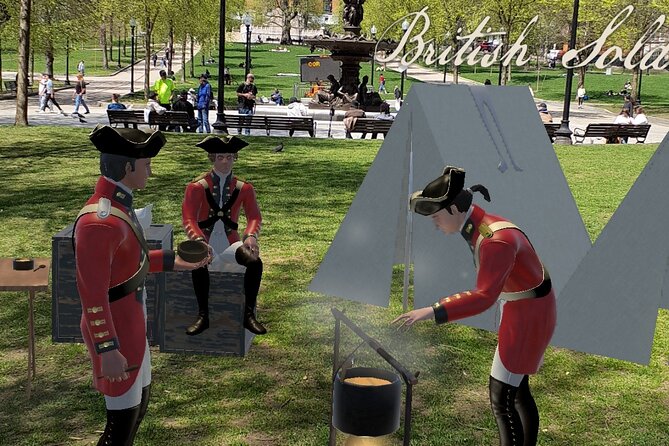
One of the tour’s more unusual activities involves trying on colonial fashion. This is not a museum costume session with a rack of clothing. It is a brief interactive scene, designed to help you picture how people presented themselves and moved through daily life.
That kind of activity will appeal most to children and to adults who enjoy learning by doing. If you prefer a quiet explanation of Franklin’s life, the AR portion may feel lightweight. The tour is aiming for memory and participation, not a detailed biography.
A few more Boston tours and tickets worth a look
- Boston Duck Boat Sightseeing City Tour with Cruise Along Charles River
★ 4.5 · 9,378 reviews - Boston Hop-On Hop-Off Trolley Tour with 13 Stops
★ 4.5 · 5,576 reviews - Boston: City Cruises Whale Watching Cruise
★ 4.5 · 4,710 reviews - Boston Duck Tour: The Original and World-Famous
★ 4.6 · 3,935 reviews
Old Corner Bookstore: Boston’s old street life
The Old Corner Bookstore is one of the route’s notable historic buildings and a useful place to think about how Boston’s streets changed over time. The tour uses stops like this to keep the history tied to buildings rather than floating free of the city.
At this point, the walk has a steady rhythm. You move to a landmark, hear context from the guide, take part in a short digital scene, and continue. Each experience lasts between about five and fifteen minutes, with a one-minute video included.
That timing is a strength for families and first-time visitors. You are not locked into one long performance. It is also a limitation if you want every stop to receive a full historical treatment. The tour has a lot of ground to cover, so the guide must keep things moving.
Old State House: the Boston Massacre made visible
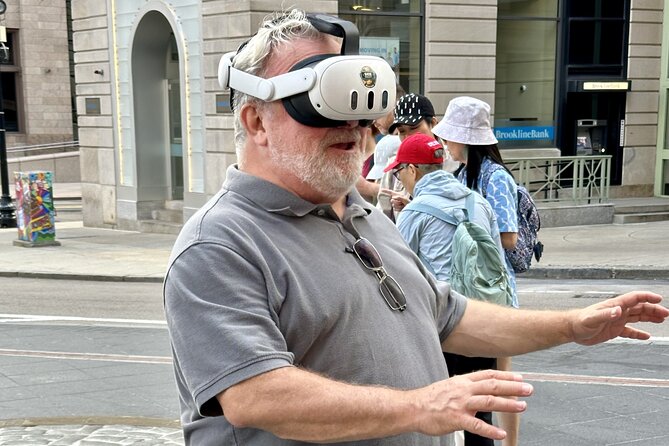
The Old State House is one of the most powerful stops because it connects the digital presentation with the Boston Massacre. One memorable AR scene places the event right at the location where it happened.
This is where the tour’s visual method makes the most sense. A written explanation can tell you that the Boston Massacre became a major piece of colonial propaganda and political memory. Seeing a short scene at the actual building can make the connection between place and event much easier to understand.
The presentation remains suitable for children because it avoids gore. Even so, the subject is serious, and parents should be ready to explain that the playful technology is being used to tell a painful part of Boston’s story.
You should also listen to the guide’s explanation rather than relying only on the digital figures. One participant felt the AR itself needed more historical detail. That criticism points to an important practical rule: the headset is an aid, not the whole lesson.
Faneuil Hall Marketplace and the illegal tea
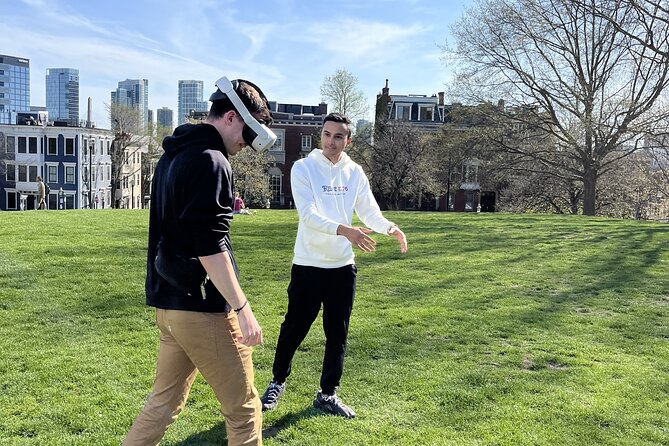
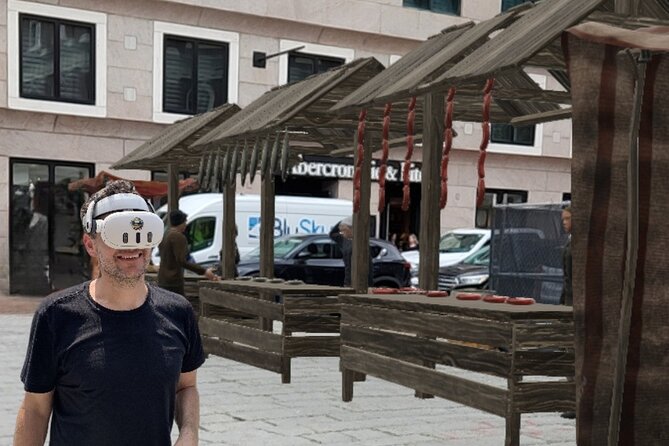
Faneuil Hall Marketplace adds a lively public setting to the route. This is a busy part of central Boston, so the tour’s small size and the ability to see your surroundings are useful here.
The illegal tea theme gives you a hands-on link to colonial protest. You also receive a reusable tea bag with a discount card as part of the tour. It is a small souvenir, but it fits the story better than a generic branded item.
The tea activity works because it turns an abstract political dispute into something physical and easy to remember. You are not simply told that colonial resistance grew through boycotts and protests. You get a small role in the story.
Expect the marketplace to feel less quiet than Boston Common or the burial ground. The guide has to balance the AR scene with people moving through the area. Keep the headset or tablet secure, follow directions, and stay close to the group.
The Paul Revere House and the road to open conflict
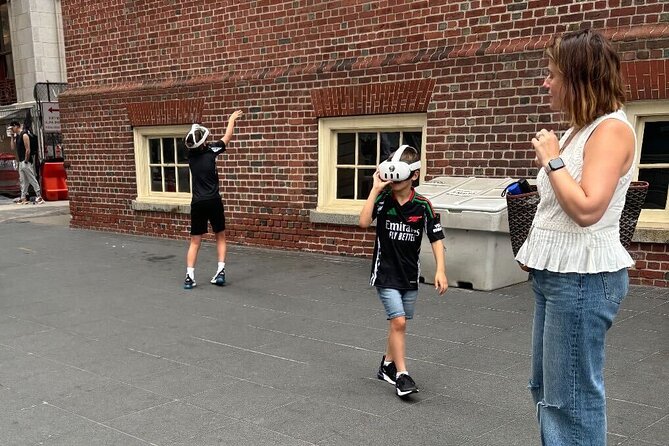
The Paul Revere House brings the tour closer to the events that led to the American Revolution. Revere is one of the best-known figures in the story, but the stop is most useful when it places his famous ride within the wider chain of decisions and warnings that came before it.
The full experience moves toward the planning and execution of Paul Revere’s Midnight Ride and the Battle of Lexington and Concord. This material comes late in the route, so heat and fatigue can matter. On one very hot day, a participant stopped before the final third of the tour and missed this section.
That is a useful warning for your own planning. The tour lasts about two hours, and it is a walking activity. Choose a comfortable time slot, bring what you need for the weather, and avoid treating the final section as optional if the ride and opening battles are the part that interest you most.
The advertised route includes the full Freedom Trail, with the final experience at Bunker Hill. The activity information also says the tour ends back at the meeting point, so confirm the day’s exact walking arrangement with your guide if the endpoint matters to your plans.
Bunker Hill: finishing with action
The final experience is at Bunker Hill, where the walking portion is described as ending. This gives the tour a natural climax, since Bunker Hill represents the move from protest and street politics to armed conflict.
Here you help operate a historically accurate field cannon. It is a theatrical task, but it gives you a clear sense of the machinery and teamwork involved in eighteenth-century warfare. The scene is designed for participation, not violence, and the presentation contains no gore.
The cannon activity also explains why this tour can work well for children old enough to follow instructions. It gives them a role in the story without asking them to sit still for a long speech. Adults who enjoy military history may want more detail than the scene provides, but the activity makes the battle period memorable.
What the $30 price really covers
At $30 per person, this is priced above a basic self-guided walk but below many private sightseeing experiences. The value depends on how much use you make of the digital scenes and how much you want a guide to connect the stops.
You are paying for about two hours of guided walking, a small group capped at eight people, Meta Quest AR headsets, tablets for the AR activities, and the short videos and interactive scenes. You also get the reusable tea souvenir.
I think the price is fair for families and first-time visitors who want something more active than a standard history walk. It is less compelling if you plan to skip the AR scenes or if your main goal is a long, detailed lecture about Boston’s past.
The format also offers something difficult to get on your own. You can walk the Freedom Trail for free, but you cannot easily recreate the timed scenes, period activities, and guide-led sequence without the equipment.
Guides, pacing, and the limits of the format
The guide is not just there to hand out headsets. A good guide gives the historical frame, keeps the group together, and helps you get the most from each short scene. Tommy and Tomme have been singled out for making the experience enjoyable and easy to use, while Dylan has been praised for guiding children and adults through the AR.
There is some unevenness in the experience. One participant felt the history was not explained in enough detail and that the digital material needed more development. That concern is worth taking seriously, especially if you already know Boston’s revolutionary story and want new facts rather than a visual introduction.
The best approach is to ask questions during the walk. If you want more historical explanation, say so early. The guide may otherwise assume you prefer the faster, more playful pace.
The small group helps, but the tour still has to keep to a schedule. A scene may last only a few minutes, and the group must then move to the next landmark. You will get the strongest experience if you stay engaged during the videos and audio narration rather than treating the headset as a quick novelty.
Who should book this Boston experience
I would recommend it most strongly to families with school-age children, first-time visitors to Boston, and adults who like history presented through action and visual effects. It is also a good choice if a normal walking tour sounds too passive.
The tour has received a 4.9 rating from 88 reviews, with 97 percent of customers recommending it. Those numbers suggest strong overall satisfaction, but they should not obscure the main condition: you need to enjoy interactive technology to get the full value.
You may prefer another type of tour if you want deep architectural detail, long discussions of political history, or the freedom to stop at each Freedom Trail site for as long as you wish. This is a guided production with a set rhythm, not a slow research walk.
The English-only format is clear, and confirmation is provided when you book. Service animals are allowed, public transportation is nearby, and most people can participate. Free cancellation is available up to 24 hours before the start time. Changes or cancellations inside that window are not accepted for a refund.
Should you book Relive 1776?
Book this tour if you want Boston’s revolutionary story to feel active and visible rather than purely verbal. The combination of real landmarks, AR scenes, colonial clothing, illegal tea, and a field cannon gives the Freedom Trail a memorable shape.
I would especially choose it for a family group or for adults who enjoy trying new tour technology. Go in expecting a lively introduction, not a scholarly seminar. Stay for the audio and video material, ask the guide for more context, and protect enough time and energy for the final Bunker Hill section.
Skip it if you dislike headsets, want complete control over your walking pace, or expect every stop to receive a detailed historical lecture. For the right audience, $30 buys more than a walk. It gives you a guided way to see Boston’s landmarks and briefly act inside the story they carry.
FAQ
How long does the Relive 1776 tour last?
The experience lasts about two hours. Each of the five AR scenes takes about 5 to 15 minutes and includes a one-minute video.
Where does the tour begin?
The tour begins at the Boston Common Visitors Center, 139 Tremont Street, Boston, Massachusetts 02111.
Where does the tour end?
The final experience is at Bunker Hill, and the activity information says the tour ends back at the meeting point. Ask your guide to confirm the day’s exact walking arrangement if you need a precise endpoint.
What technology is included?
The tour provides Meta Quest AR headsets and tablets for the AR experiences. You can see the real world during the activities because the program uses augmented reality rather than virtual reality.
Is the tour offered in languages other than English?
No. The tour is offered in English, and the included guide speaks English.
How large is the group?
The experience has a maximum of eight participants.
Can I cancel for a full refund?
Yes. You can cancel at least 24 hours before the start time for a full refund. Cancellations or changes made less than 24 hours before the start time are not accepted for a refund.
Newest Boston tours we have written up
- Boston’s Freedom Trail: A Self-Guided Audio Tour★ 4.0 · 18 reviews
- Boston’s Freedom Trail: A Self-Guided Tour of All 16 Sites★ 5.0 · 14 reviews
- Boston Self-Guided Audio Tour Bundle: Freedom Trail & More★ 4.5 · 5 reviews
- Washington D.C. Cherry Blossom,Baltimore 3-Day Tour from Boston★ 4.5 · 7 reviews
- True Crime Tour of Boston★ 4.0 · 17 reviews
- Family Friendly Guided Bike Tour of Boston★ 4.5 · 22 reviews
- Freedom Trail Experience★ 5.0 · 8 reviews
- Self-Guided Audio Tour of Boston North End★ 4.5 · 3 reviews
Historical Tours, compared.

History and Hauntings of Salem Guided Walking Tour
Read our review →
Freedom Trail History Small Group Walking Tour
Read our review →
Tour of Historic Fenway Park, America’s Most Beloved Ballpark
Read our review →
Boston Food & History: Pizza, North End & Freedom Trail
Read our review →Freedom Trail History Small Group Walking Tour
Read our review →
City Cruises Boston Historic Sightseeing Harbor Cruise
Read our review →
Boston’s North End Food Tour: Italian Flavors & Heritage Walk
Read our review →
Boston Pizza Lovers Food and History Walking Food Tour
Read our review →Browse the lists this tour appears in