
Review · BOSTON FOOD TOURS
Boston: Chinatown Food Tasting & Cultural History Tour
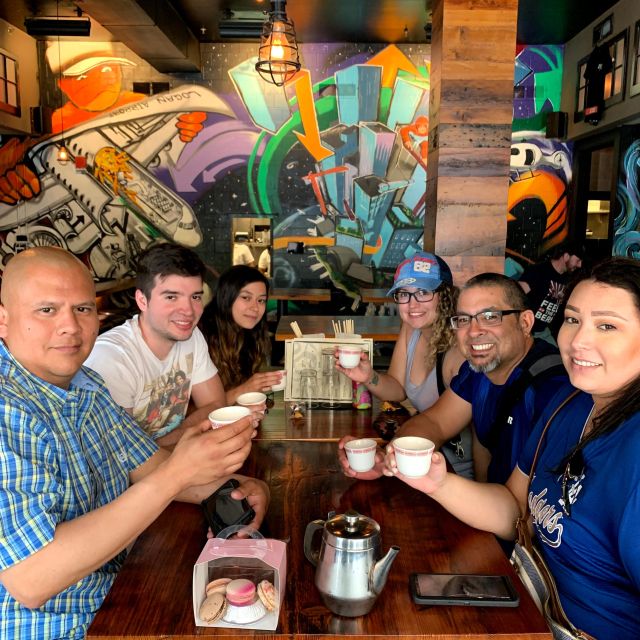
Boston’s Chinatown is best understood one bite at a time. This three-hour walk connects the neighborhood’s first street and early restaurant history with food from six local eateries and bakeries, ranging from traditional Chinese dishes to modern creations and Boston-specific Chinese-American cooking.
I like the mix of solid history and plenty of lunch. I also like the final cocktail or mocktail, which gives the tour a pleasant finish instead of ending abruptly at the last food stop. The main catch is practical: you need comfortable shoes, must manage stairs at one restaurant, and the tour cannot provide substitute tastings for allergies or dietary restrictions.
Key points to know before you book
- Six food stops: Tastings include sweet and savory items from traditional Chinese, modern Chinese, and Chinese-American kitchens.
- Boston-specific history: You learn how migration, local events, and changing restaurant culture shaped Chinese food in the city.
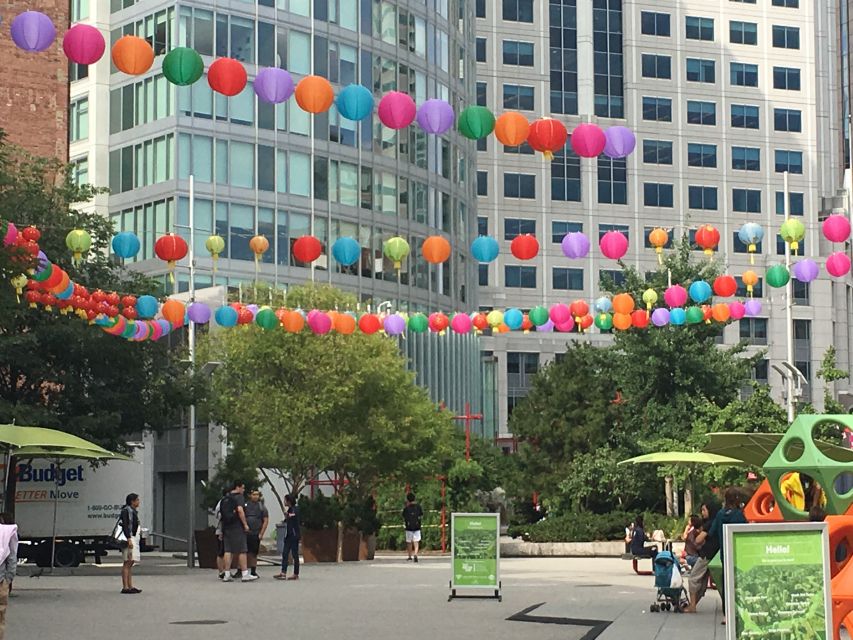
- A useful starting point: The tour meets at Chinatown Gate, then visits the neighborhood’s first street and the site of its first restaurant.
- Old and new together: You visit the oldest restaurant and enjoy a sweet from the oldest bakery, along with newer businesses run by second-generation owners.
- A drink is included: Finish with one cocktail or mocktail, included in the $125 price.
- Plan for walking: The tour runs rain or shine, includes one staircase with no elevator, and is not suited to children under 12, vegetarians, or people with food allergies.
Why this Chinatown tour works as a first introduction
Boston’s Chinatown can look compact on a map, but its story is not simple. A good food walk helps you connect storefronts, streets, restaurants, and family businesses to the neighborhood’s past. This experience does that while giving you enough food to count as lunch.
The three-hour length is well judged. You have time to walk, listen, eat, and look around without turning the outing into a full-day commitment. The walking also matters because the history is tied to specific places. You are not hearing a general lecture in a dining room. You are standing near the first street, visiting sites of cultural and architectural interest, and seeing how the district developed around its restaurants and businesses.
I especially like the balance between old and new. The oldest restaurant and oldest bakery give the neighborhood a sense of continuity. Newer establishments run by second-generation owners show how Chinatown keeps changing without cutting ties to earlier generations.
This is also a useful tour for anyone who knows Chinese food mainly through familiar American restaurant menus. The tastings cover traditional Chinese, modern Chinese, and Chinese-American food, so you get a wider look at how recipes and dining styles changed in Boston.
More food tours in Boston
- Boston Food & History: Pizza, North End & Freedom Trail
★ 5.0 · 1,772 reviews - Boston North End Food Tour of 6+ Tastings, Cannoli, Lobster Roll
★ 5.0 · 1,404 reviews - Boston’s North End Food Tour: Italian Flavors & Heritage Walk
★ 5.0 · 1,322 reviews
Starting at Chinatown Gate and finding the first stories
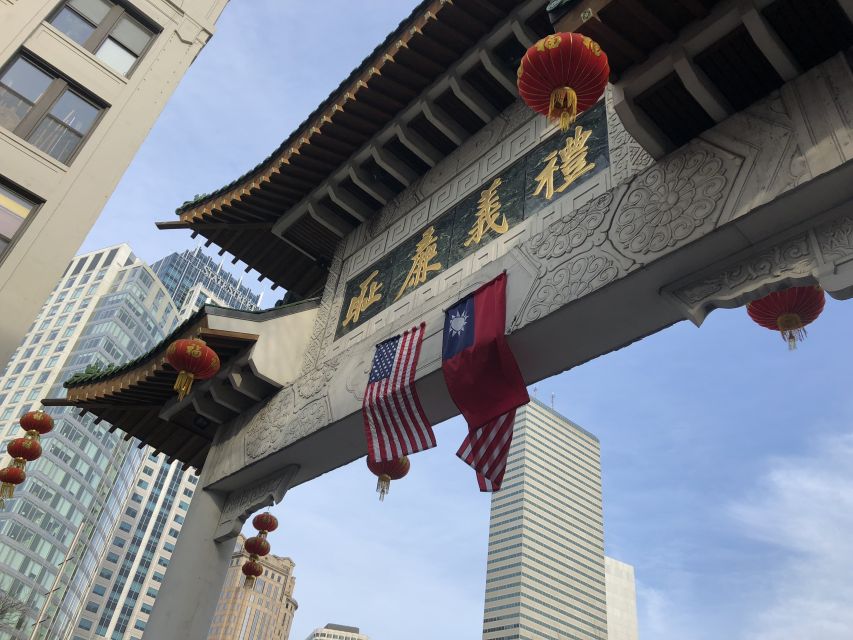
Your guide meets you at Chinatown Gate, an easy landmark and a sensible place to begin. From there, the walk moves into the neighborhood rather than treating the gate as a photo stop and nothing more.
The early part of the tour focuses on how Boston’s Chinatown began. You visit the first street and the site of the first restaurant, places that give the neighborhood’s origins a physical setting. That is valuable because the story feels less abstract when you can connect it to the actual blocks beneath your feet.
The guide also explains how historic events shaped Chinese-American culture and cuisine in Boston. The food is not presented as a collection of unrelated samples. Each stop has a story about the establishment and its owners, helping you understand why a particular restaurant belongs in the neighborhood’s larger story.
The tour is offered in English, and the guide is an important part of the experience. Feedback specifically praised guides Andrew and Katie, with Andrew receiving strong marks for his first time leading this particular tour and Katie also making a positive impression. You should expect a friendly, personable approach rather than a formal academic lecture.
Six eateries, with traditional and modern flavors
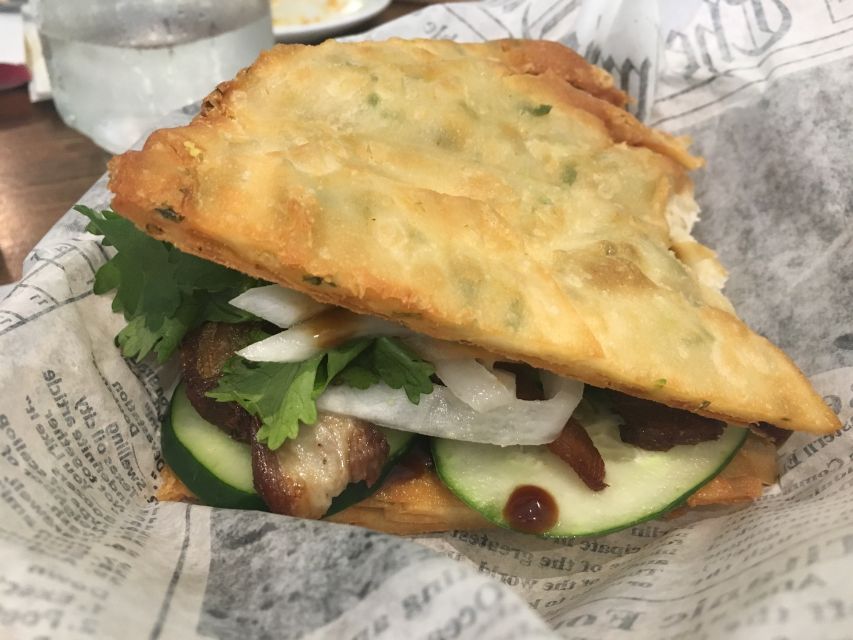
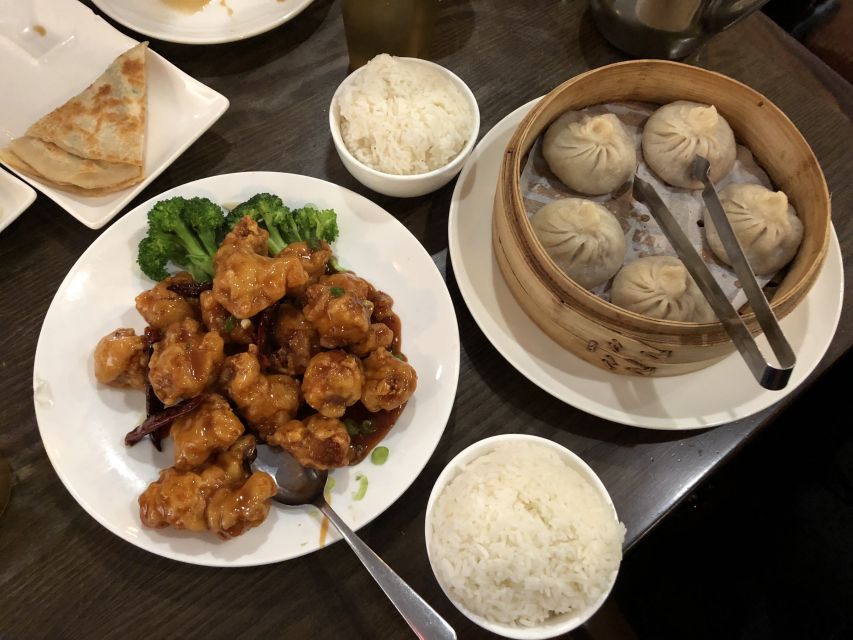
The food is the main reason to book this tour, and the format gives you more variety than a meal at one restaurant. Tastings come from six local restaurants and bakeries, with both sweet and savory examples.
You will try food from three broad parts of the Chinese-American story:
- Traditional Chinese dishes that connect with older culinary customs
- Modern Chinese food from newer businesses and second-generation owners
- Chinese-American dishes shaped by local tastes and Boston’s restaurant culture
The exact tasting menu can change, so you should not book with one particular dish in mind. The strength is the range. You get a guided sample of how the neighborhood eats rather than a single restaurant’s point of view.
There is also enough food for a satisfying lunch. That makes the $125 price easier to assess. You are paying not only for six tastings, but also for a three-hour guided walk, local history, visits to notable sites, and a cocktail or mocktail. For someone who would otherwise pay for lunch and a separate neighborhood tour, the package offers fair value.
Still, it is not a budget food crawl. If your main goal is simply to eat as much as possible for the lowest price, you can likely spend less on your own. The better value comes from the explanation, the access to several businesses in one outing, and the way the tastings fit into Boston’s Chinese-American story.
The oldest restaurant and bakery add useful context
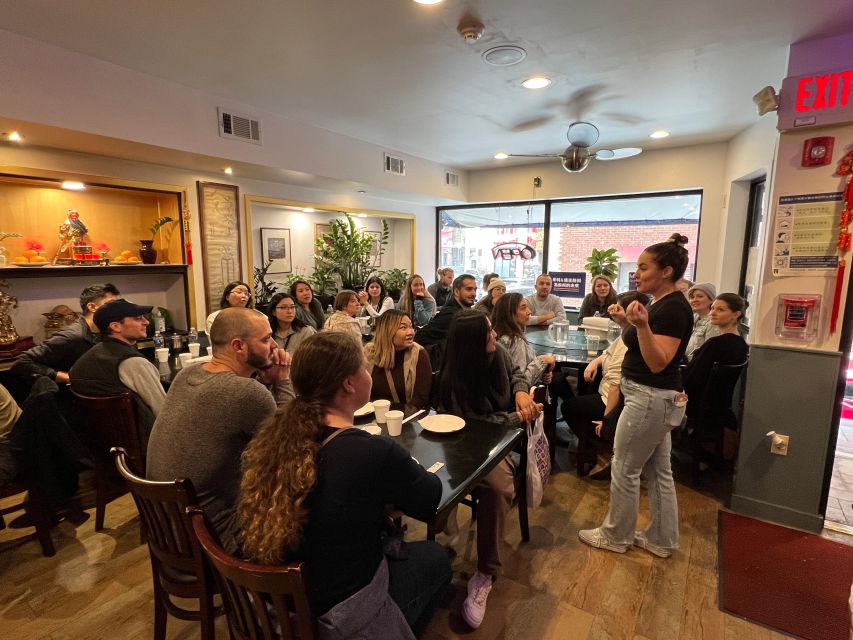
The visit to Chinatown’s oldest restaurant gives the tour a strong historical anchor. You are not just told that the area has a long restaurant tradition. You enter a business connected to that tradition and taste food in a place that has lasted through changes in the neighborhood.
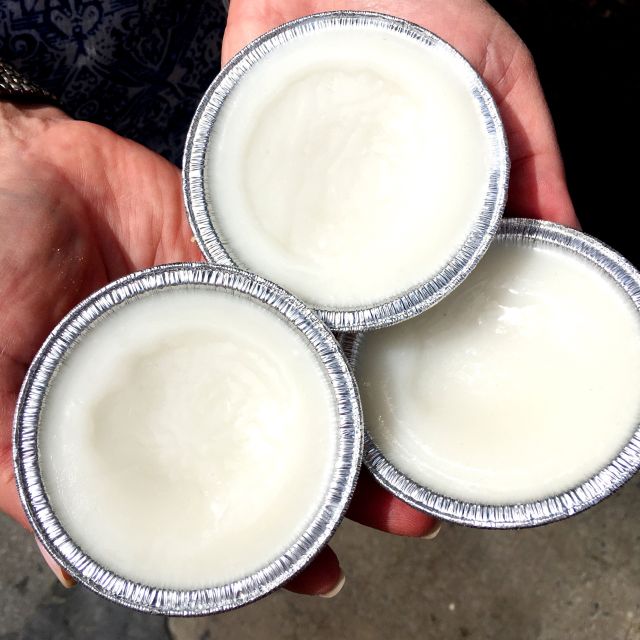
The oldest bakery provides a different angle. A sweet from the bakery shows how Chinese-American food culture includes pastries and desserts as well as savory restaurant dishes. It also breaks up the meal with a change in texture and flavor.
I like these stops because they give the tour a sense of time. You see how the neighborhood’s food businesses carry older traditions, while later stops show how owners adapt and experiment. That contrast is more useful than visiting only famous or historic sites.
The tour also visits newer establishments opened by second-generation restaurant owners. These stops matter because they show that Chinatown is not frozen in the past. The food can honor family traditions while taking a fresh approach, and the business owners bring their own ideas to a neighborhood shaped by earlier generations.
More history tours in Boston
- Boston: Freedom Trail History Small Group Walking Tour
★ 5.0 · 6,450 reviews - Tour of Historic Fenway Park, America’s Most Beloved Ballpark
★ 4.5 · 3,013 reviews - Boston: City Cruises Historical Sightseeing Cruise
★ 4.6 · 1,771 reviews - Boston: Freedom Trail History Small Group Walking Tour
★ 4.9 · 1,590 reviews
Boston’s own Chinese-American food story
One of the most interesting promises here is the focus on dishes that developed specifically in Boston. Chinese-American food is not identical in every city. Local customers, restaurant owners, available ingredients, and business history all influence what appears on the menu.
Your guide explains how Chinese cuisine changed in Boston and how that change led to local Chinese-American dishes. That is the sort of detail that makes a food tour useful beyond the afternoon. Afterward, you have a better sense of why a familiar dish may taste different in Boston than it does elsewhere.
The tour also helps explain the difference between a traditional dish, a modern interpretation, and an American adaptation. Those categories are not always strict, but they give you a way to think about what you are eating. Instead of labeling one style as more authentic and another as less important, the tour places each in its own historical setting.
That approach is a plus for curious eaters. You can enjoy the food while also understanding why it exists.
Ending with a cocktail or mocktail
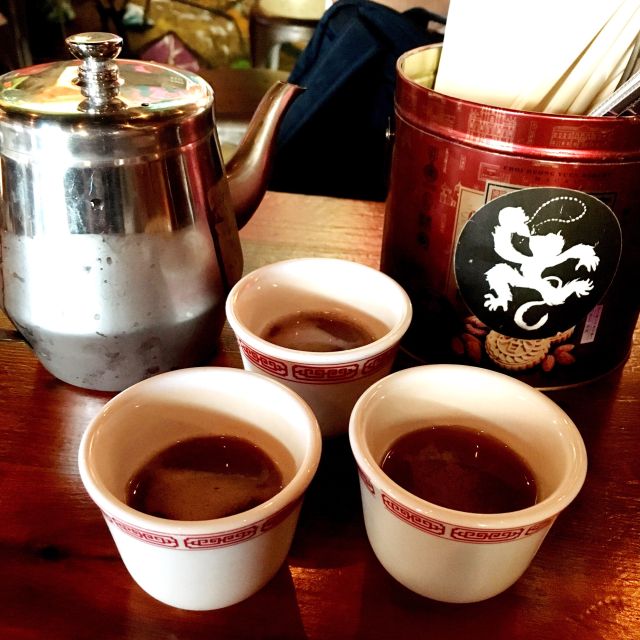
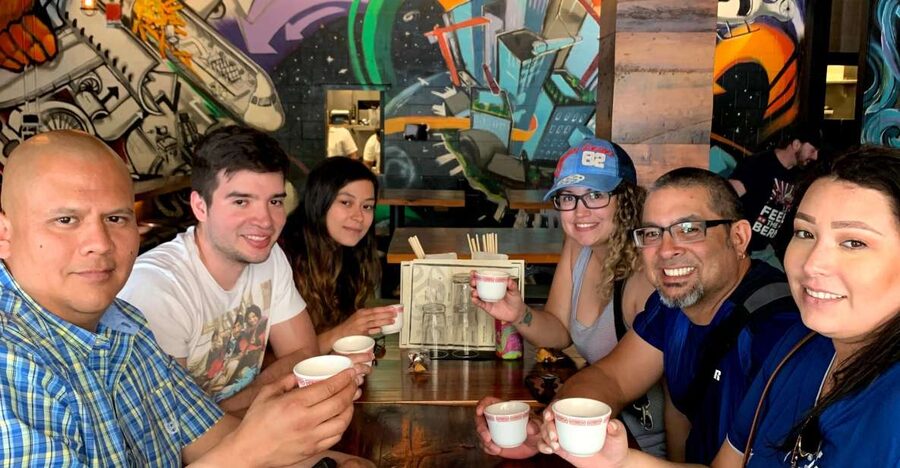
The final drink is a small feature, but it improves the rhythm of the afternoon. After several food stops and a good deal of walking, sitting down with a cocktail or mocktail gives the tour a clear ending.
The inclusion of a nonalcoholic option is helpful, though the tour description does not indicate how many mocktail choices are available. If you do not drink alcohol, you should expect one mocktail rather than a broad nonalcoholic menu.
This last stop also gives you a chance to talk with the guide and reflect on the neighborhood. A food walk can feel rushed if it ends the moment the final sample is served. Here, the drink provides a more relaxed finish.
Walking conditions, stairs, and weather
You will spend a significant part of the three hours outdoors and on foot. Wear comfortable shoes and clothing, and bring water. The route is not designed for luggage, large bags, baby strollers, or pets.
One restaurant requires a flight of stairs, and there is no elevator. If stairs are difficult for you, this is an important reason to ask questions before booking. The tour also does not appear suited to anyone seeking a fully step-free route.
Boston weather can change quickly, and the tour runs rain or shine. Bring an umbrella and rain jacket when rain is expected. There is no need to dress for a long hike, but you should treat this as an active walking experience rather than a seated tasting.
Transportation and parking are not included. You need to make your own way to Chinatown Gate, and hotel pickup and drop-off are not provided. Since the meeting point is a clear neighborhood landmark, the arrangement is simple, but you should allow enough time to arrive before the start.
Food restrictions and who should skip it
This tour has firm food limitations. Guides cannot provide alternative tastings for dietary restrictions or food allergies. That means you should not assume that a substitution will be available if you cannot eat one of the scheduled items.
Vegetarians are listed as unsuitable for the tour, so this is not a good choice if you avoid meat. The same applies to people with food allergies. Even if you think you can manage some of the tastings, the tour is built around a fixed set of stops rather than a custom menu.
The experience is also not recommended for children under 12. Older children and teenagers may enjoy the mix of food and stories, but the walking, meal format, and historical discussion are aimed more at adults and older children.
For everyone else, the main question is appetite. The tastings are described as enough for a satisfying lunch, so you may not want to schedule a large meal immediately afterward.
Is $125 a fair price?
At $125 per person, this is a premium food walk, but the price includes more than samples. You receive three hours with a live English-speaking guide, tastings at six eateries, visits to historical and architectural sites, and one cocktail or mocktail. Local taxes and fees are also included.
I would consider the price reasonable if you value context and variety. Buying six small tastings separately could become costly, and you would miss the explanations about the owners, neighborhood history, and development of Boston’s Chinese-American cuisine.
The value is weaker if you are already familiar with Chinatown and mainly want a cheap meal. In that case, you may prefer to choose one or two restaurants yourself. This tour earns its price through the combination of food, storytelling, and access to several businesses in one afternoon.
The cancellation policy also gives you some planning room. You can cancel up to two days in advance for a full refund. That is useful when your Boston schedule is still shifting.
Should you book this Chinatown food tour?
Book it if you want a guided introduction to Boston’s Chinatown that treats food and history as part of the same story. It suits curious eaters, first-time visitors to the neighborhood, and anyone who wants both traditional and newer Chinese-American food in one outing.
I would be especially inclined to book if you appreciate local family businesses and want to understand how a city shapes its own version of Chinese cuisine. The oldest restaurant, oldest bakery, first street, early restaurant site, and second-generation businesses give the walk a clear sense of continuity and change.
Skip it if you are vegetarian, have food allergies or strict dietary needs, dislike outdoor walking, or need a step-free route. Also skip it if you want a low-cost meal rather than a guided experience.
For the right eater, this is a satisfying three-hour introduction to Chinatown, with enough food to replace lunch and enough local history to make the neighborhood more meaningful after the final drink.
FAQ
Where does the Boston Chinatown food tour meet?
The guide meets you at Chinatown Gate.
How long does the tour last?
The guided walking tour lasts three hours.
How many food businesses do you visit?
You visit six local restaurants and bakeries and receive tastings at each.
Is a drink included?
Yes. One cocktail or mocktail is included at the end of the tour.
Is the tour suitable for vegetarians or people with food allergies?
No. The tour is not suitable for vegetarians or people with food allergies, and the guides cannot provide alternative tastings for dietary restrictions or allergies.
Is the route accessible by elevator?
No. One restaurant is reached by a flight of stairs, and there is no elevator at that location.
What happens if it rains?
The tour runs rain or shine. Bring an umbrella and rain jacket if rain is expected, and wear comfortable shoes and clothing for outdoor walking.
More food and drink tours in Boston
- Boston Pizza Lovers Food and History Walking Food Tour
★ 4.5 · 1,082 reviews - Boston’s North End Food and History Walking Tour
★ 5.0 · 459 reviews - Boston’s Politically Incorrect North End Food Tour
★ 5.0 · 453 reviews - Boston: North End & Little Italy Food Tour with Local Dishes
★ 4.8 · 229 reviews
Newest Boston tours we have written up
- Boston’s Freedom Trail: A Self-Guided Audio Tour★ 4.0 · 18 reviews
- Boston’s Freedom Trail: A Self-Guided Tour of All 16 Sites★ 5.0 · 14 reviews
- Washington D.C. Cherry Blossom,Baltimore 3-Day Tour from Boston★ 4.5 · 7 reviews
- Boston Self-Guided Audio Tour Bundle: Freedom Trail & More★ 4.5 · 5 reviews
- True Crime Tour of Boston★ 4.0 · 17 reviews
- Family Friendly Guided Bike Tour of Boston★ 4.5 · 22 reviews
- Freedom Trail Experience★ 5.0 · 8 reviews
- Self-Guided Audio Tour of Boston North End★ 4.5 · 3 reviews
Boston Food Tours, compared.
Boston Food & History: Pizza, North End & Freedom Trail
Read our review →
Boston North End Food Tour of 6+ Tastings, Cannoli, Lobster Roll
Read our review →
Boston’s North End Food Tour: Italian Flavors & Heritage Walk
Read our review →
Boston Pizza Lovers Food and History Walking Food Tour
Read our review →
Boston’s Politically Incorrect North End Food Tour
Read our review →
North End & Little Italy Food Tour with Local Dishes
Read our review →Browse the lists this tour appears in