
Review · BOSTON FREEDOM TRAIL TOURS
Walk the Historic Freedom Trail with Costumed Guide
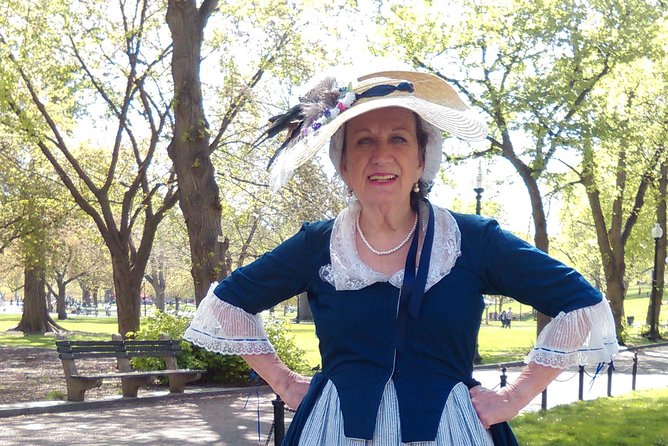
Boston’s Revolution-era story is packed into a gentle 90-minute walk from Park Street Church to Faneuil Hall. A costumed guide, sometimes James Otis, Thomas, Jeff, Steven, or another member of the team, turns churches, graveyards, and old government buildings into a connected story rather than a string of plaques.
I like the short format, which works well before lunch or after arriving in town, and I like the guide’s use of period dress and humor. The main drawback is the city noise and possible crowd size. At busy stops, or for anyone with hearing trouble, you’ll want to stay close to the guide.
Key points to know before you book
- Park Street Church begins the story: The tour opens with religion, reform, and the changing role of Puritanism in Boston.
- Granary Burying Ground gets 15 minutes: This is one of the longer stops, with graves linked to major figures of the American Revolution.
- You visit the central Freedom Trail sites: The route includes Boston Common, the State House, King’s Chapel, Old South Meeting House, the Old State House, the Boston Massacre site, and Faneuil Hall.
- Period dress adds a theatrical touch: Guides present the past with humor, facts, and character rather than a dry lecture.
- The route is less than a mile: It is easy in pace, but includes plenty of standing and street-side listening.
- The $30 price buys orientation as much as history: You get a useful first look at downtown Boston, with plenty of time left for museums, food, or further exploring.
Boston’s Revolution begins beside Park Street Church
The meeting point is at 139 Tremont Street, beside Park Street Church and Boston Common. This is a handy starting place because you are already in the historic center, close to public transportation and within easy reach of several major sights.
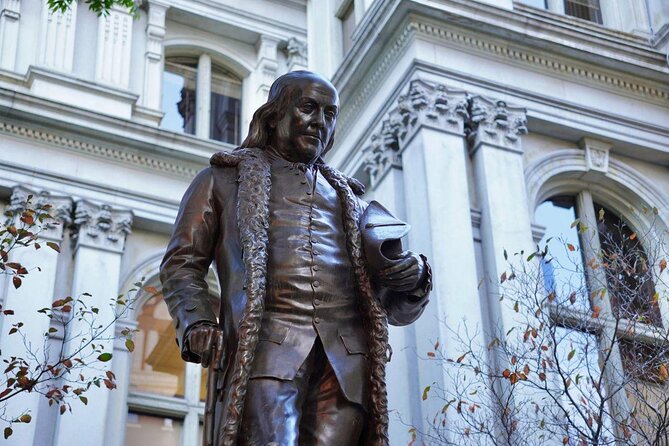
Park Street Church provides a useful opening lesson. The story here moves from early Puritan beliefs toward Protestant abolitionism, showing how religious ideas shaped public debate in Boston. You should not expect a long indoor church visit. The stop lasts about five minutes, so the guide’s explanation is the main event.
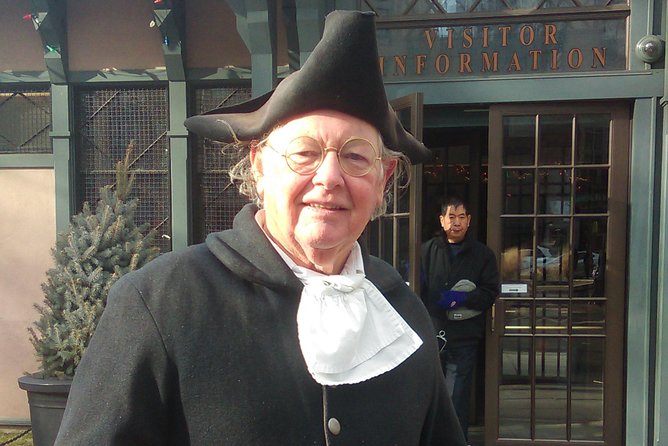
A guide in period clothing gives the walk a clear sense of occasion. It is not a full theatrical show, but the costume helps place you in the colonial setting and makes the opening feel more distinct than a standard city walk.
More ways to walk the Freedom Trail
- Boston: Freedom Trail History Small Group Walking Tour
★ 5.0 · 6,450 reviews - Boston Freedom Trail Walking Tour with Costumed Guide
★ 4.5 · 2,531 reviews - Boston Food & History: Pizza, North End & Freedom Trail
★ 5.0 · 1,772 reviews
Boston Common puts the city story in place
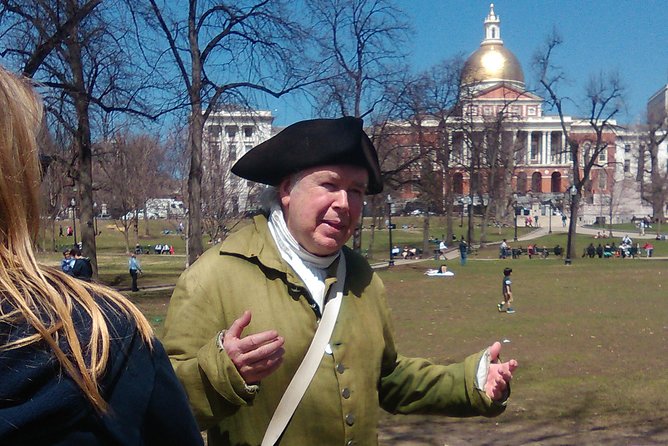
The tour then moves into Boston Common, where you spend about ten minutes. This is where the guide begins to explain Boston’s early development and gives you a wider frame for the buildings and streets ahead.
I like this part because Boston Common helps you understand the city as a whole. Instead of jumping straight to famous battles and political speeches, the tour starts with the place itself and the growth of Boston as an English settlement and colonial center.
The walk is generally easy and fairly level. Still, remember that easy walking does not mean sitting down. You will be on your feet for much of the 90 minutes, and the guide may need to compete with traffic, construction, and city activity.
The State House connects politics with public consent
The Massachusetts State House is a quick five-minute stop. The building dates from 1795 and gives the guide a chance to discuss the idea that government is not legitimate without the consent of the people.
This is a short explanation rather than a full State House visit. If you want to go inside, see the interior, or learn more about Massachusetts government, you’ll need separate time in your schedule.
That brief stop is typical of this experience. You see many important places, but you do not spend enough time at each one for a detailed architectural tour. The benefit is breadth. In one compact walk, you get a working map of downtown Boston and the major events tied to it.
Granary Burying Ground slows the pace
The longest stop is Granary Burying Ground, at about 15 minutes. This cemetery is more than 350 years old and contains the graves of major figures from Boston’s colonial and revolutionary period.
The guide uses the burial ground to put names and personalities behind the political story. The focus is not simply on dates. You hear about the people who helped shape Boston and the new United States, including figures connected with the Constitution and the Revolution.
This is also the part of the walk that may not suit everyone. One person specifically found the cemetery stop longer than preferred, while others value it as an important pause. I think the time works well if you enjoy biography and old cemeteries. If you mainly want architecture or a fast overview, the 15 minutes may feel slow.
The ground itself may also require attention underfoot. Comfortable shoes are sensible, especially since the entire route includes standing on city streets and paved areas.
More history tours in Boston
- Tour of Historic Fenway Park, America’s Most Beloved Ballpark
★ 4.5 · 3,013 reviews - Boston: City Cruises Historical Sightseeing Cruise
★ 4.6 · 1,771 reviews - Boston: Freedom Trail History Small Group Walking Tour
★ 4.9 · 1,590 reviews - City Cruises Boston Historic Sightseeing Harbor Cruise
★ 4.5 · 1,388 reviews
King’s Chapel shows Boston’s religious split
King’s Chapel is another ten-minute stop. Originally an Anglican church, it was first built around 1688, giving the guide a clear way to explain the religious divisions of colonial Boston.
This stop pairs nicely with Park Street Church. Together, the two churches show that Boston’s story was not only about rebellion against Britain. It was also about competing beliefs, institutions, and ideas within the community itself.
You should treat the stop as an outdoor history explanation unless your departure details specifically include interior access. The tour summary identifies admission as included, but the schedule remains tightly timed, so the guide’s commentary is the reliable part of the visit.
Boston Latin School adds a surprising education story
The route pauses for about five minutes at Boston Latin School, founded in 1635 and recognized as the oldest public school in the United States.
It is an easy detail to miss when thinking about the Revolution, yet it adds depth to the walk. Boston was building systems of education and civic life long before independence. The school also helps you see the Freedom Trail as more than a military route. It follows the growth of a society.
This is a quick stop, so it works best as a memorable fact rather than a full school history. You’ll have time later to read more if the subject catches your interest.
Old South Meeting House sets up the Tea Party
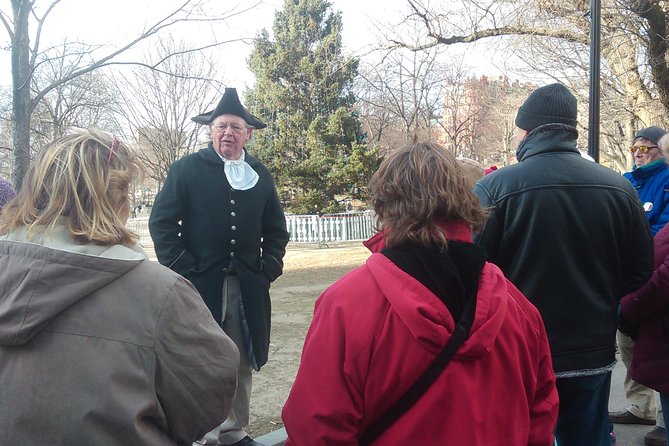
At Old South Meeting House, the guide spends about ten minutes on one of the clearest links to the Boston Tea Party. A major meeting took place here in 1773 just before the tea was dumped into Boston Harbor.
The value of this stop is the political context. The Tea Party did not happen in isolation. It followed meetings, arguments, protests, and decisions made by people who were trying to decide what action was justified.
A good guide makes this kind of event easier to follow by showing how one place connects to the next. Several guides associated with this tour, including Thomas and Steven, are described as using humor while keeping the central facts clear. That balance matters on a route with many dates and names.
The Old State House marks the transfer of power
The Old State House dates to 1713 and was first controlled by the British before Americans took it over in 1775. The stop lasts about five minutes.
This is one of the most important political locations on the route because it represents a change in authority. You are not just looking at an old building. You are looking at a place where control of government shifted during the Revolution.
The short time here means you will not get a full building tour. You’ll get the key political story, then move on. That keeps the walk moving, but it also means you should not book this experience expecting extended indoor access at each historic site.
The Boston Massacre site needs careful explanation
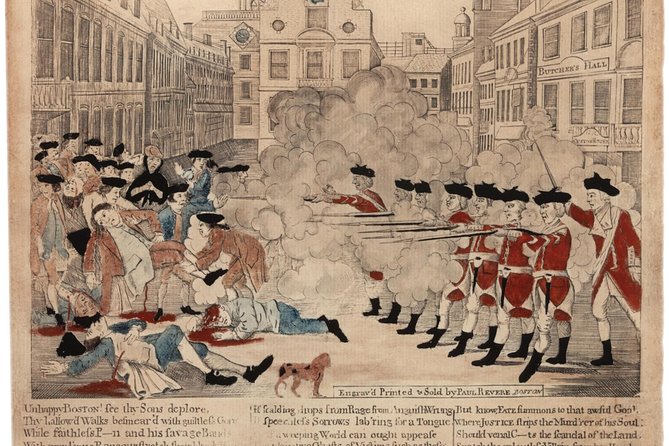
The Boston Massacre site receives about ten minutes. In 1770, British soldiers killed five Americans here, and Paul Revere later made a famous engraving of the event.
This stop is especially useful because it raises questions about memory and political messaging. The event was used to build opposition to British rule, and Revere’s engraving helped shape how people understood what had happened.
The guide’s job is to explain the event without reducing it to a simple slogan. The best moments on this walk come when the facts connect to the choices people faced at the time.
You are also standing in a busy modern city at this point. Traffic and construction can make hearing difficult. Guides use microphones, but I would still stand near the front if you have hearing issues. One participant specifically noted that the speaker helped, while street noise remained a problem.
Faneuil Hall gives the walk a useful finish
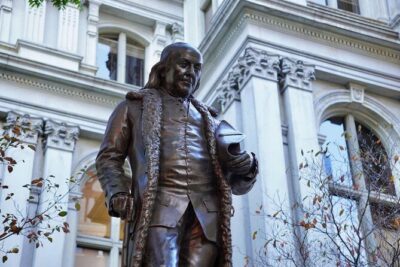
The tour ends at Faneuil Hall Marketplace, with about five minutes focused on the building and the Samuel Adams statue. This is a practical ending because you can continue straight into food, shopping, or further sightseeing.
Faneuil Hall also makes sense as the final stop. The walk begins with religion and early settlement, moves through protest and political conflict, and finishes in a place closely tied to the revolutionary story and Boston’s public life.
Do not confuse the end point with the end of your Boston history day. From here, you can continue exploring the North End or return to sites you passed too quickly. The walk gives you a map and a set of names, not a complete visit to every Freedom Trail location.
What the $30 price really buys
At $30 per person, this is fairly priced for a short guided orientation in one of the most historic parts of Boston. You are paying for a live guide, a planned route, period presentation, and the ability to ask questions as the story unfolds.
The value is strongest if you are new to Boston or have only a morning or afternoon available. The tour begins and ends in central locations, lasts about an hour and a half, and leaves room for lunch, a museum, or a longer walk afterward.
The value is weaker if you already know the Freedom Trail well or want extensive interior access. This is a highlights tour. It covers about 11 of the trail’s 16 main sites, while the named route includes ten principal stops. You get breadth and a coherent story, not long visits inside each building.
A full Freedom Trail experience takes about three hours and is available as a private option. For most first-time visitors, the shorter public walk is a sensible introduction before deciding which sites deserve more of your time.
Group size, sound, and the walking pace
The listed maximum is 45 people, although provider responses have also referred to smaller caps of 30 or 35. Group size can therefore vary, and you should be ready for a public walking tour rather than a quiet private lesson.
The route is under a mile and does not involve steep hills. The pace is gentle, and several people found the length comfortable. The challenge is standing and listening, not strenuous exercise.
The city itself is the main sound problem. Cars, construction, and other tour groups can make outdoor commentary harder to catch. Guides are miked, but you should stay close if you want every detail. A private tour may be worth considering if you prefer more control over pace, questions, and group size.
Which guide style should you expect?
The provider uses guides in period clothing and places a strong emphasis on storytelling, humor, and accurate facts. James Otis, also known as the Handsome Man, has been presenting the trail for 20 years. Other guides connected with the experience include Thomas, Jeff, Steven, Adri, and Samuel Gray.
You should not assume you will receive a particular guide unless your booking says so. What you can expect is a character-led approach, with the guide presenting Boston’s past in an entertaining way rather than reading a formal script.
That style suits adults, couples, families, and teenagers who enjoy stories with their facts. It can also work well for a family with a child who benefits from a clear pace and an engaging speaker. The walk is not designed as a specialized accessibility tour, but most people can participate, and service animals are allowed.
Timing, weather, and simple preparation
Morning and afternoon departures make this easy to fit into a Boston schedule. A morning start is useful if you want the rest of the day for the North End, museums, or a longer self-guided walk. An afternoon departure works well after arriving in town or after visiting Boston Common.
Dress for the weather. The tour requires good conditions and may be canceled for poor weather or if the minimum number of participants is not met. In either case, you are offered another date or experience, or a full refund.
Wear comfortable shoes, bring a layer, and arrive ready to stand outside. Free cancellation is available up to 24 hours before the start time. Inside 24 hours, changes are not accepted and the payment is not refunded.
Should you book this Freedom Trail walk?
Book it if you want a clear first look at Boston’s Revolution-era center without giving up half a day. The period costume, lively delivery, and short route make the tour especially useful for first-time visitors, families, history fans, and anyone fitting Boston into a tight schedule.
Think twice if street noise bothers you, if you need frequent seating, or if you want long indoor visits at the churches and government buildings. Stay near the guide, ask questions, and treat the walk as an introduction rather than the entire Freedom Trail.
For $30, I think it is a good buy for orientation and storytelling. You finish at Faneuil Hall with a better sense of where Boston’s key events happened, plus enough free time to return to the places that deserve a closer look.
FAQ
How long does the Freedom Trail tour last?
The tour lasts approximately 1 hour and 30 minutes.
How much does the tour cost?
The price is $30 per person.
Where does the tour begin?
The meeting point is 139 Tremont Street, Boston, Massachusetts 02111, near Park Street Church and Boston Common.
Where does the tour end?
The tour ends at Faneuil Hall Marketplace in Boston.
Which historic places are included?
The route includes Park Street Church, Boston Common, the Massachusetts State House, Granary Burying Ground, King’s Chapel, Boston Latin School, Old South Meeting House, the Old State House, the Boston Massacre site, and Faneuil Hall Marketplace. The tour also describes itself as covering about 11 of the 16 main Freedom Trail sites.
Is the tour offered in English?
Yes. The tour is offered in English.
Is the walk strenuous?
The route is described as a gentle 90-minute stroll of less than a mile, but it includes considerable walking and standing.
Are service animals allowed?
Yes, service animals are allowed.
Can I cancel for a refund?
You can cancel at least 24 hours before the start time for a full refund. Cancellations or changes made less than 24 hours before the tour are not refunded or accepted.
More walking tours in Boston
- Harvard University Campus Guided Walking Tour
★ 4.5 · 3,632 reviews - The Full Revolutionary Story Epic Small Group Boston Walking Tour
★ 5.0 · 2,356 reviews - Boston’s Freedom Trail: A Revolutionary Walking Tour
★ 4.9 · 1,748 reviews - Boston’s Freedom Trail: A Revolutionary Walking Tour
★ 5.0 · 1,343 reviews
Newest Boston tours we have written up
- Boston’s Freedom Trail: A Self-Guided Audio Tour★ 4.0 · 18 reviews
- Boston’s Freedom Trail: A Self-Guided Tour of All 16 Sites★ 5.0 · 14 reviews
- Washington D.C. Cherry Blossom,Baltimore 3-Day Tour from Boston★ 4.5 · 7 reviews
- Boston Self-Guided Audio Tour Bundle: Freedom Trail & More★ 4.5 · 5 reviews
- True Crime Tour of Boston★ 4.0 · 17 reviews
- Family Friendly Guided Bike Tour of Boston★ 4.5 · 22 reviews
- Freedom Trail Experience★ 5.0 · 8 reviews
- The Ghosts of Boston’s Past Haunted Self-guided Tour★ 3.5 · 4 reviews
Boston Freedom Trail Tours, compared.

Freedom Trail History Small Group Walking Tour
Read our review →
Boston Freedom Trail Walking Tour with Costumed Guide
Read our review →
Boston Food & History: Pizza, North End & Freedom Trail
Read our review →
Boston’s Freedom Trail: A Revolutionary Walking Tour
Read our review →Freedom Trail History Small Group Walking Tour
Read our review →Boston’s Freedom Trail: A Revolutionary Walking Tour
Read our review →
Boston Freedom Trail History Pub Crawl Small-Group Tour
Read our review →Browse the lists this tour appears in