
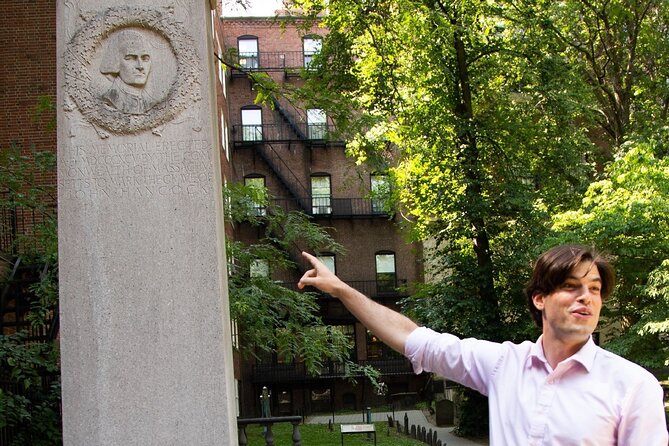
Review · BOSTON FREEDOM TRAIL TOURS
Boston’s Freedom Trail: A Revolutionary Walking Tour
Boston’s Revolution comes alive on this 2.5-hour walk through all 16 official Freedom Trail sites. You’ll move from the Golden Dome of the Massachusetts State House to the Boston Massacre Site, Faneuil Hall, Paul Revere’s home, Old North Church, the USS Constitution, and Bunker Hill Monument.
I like the way the tour adds lesser-known stories about women, African Americans, immigrants, and abolitionists instead of treating Boston’s past as a parade of famous men. I also like the lively guide style: Rob, Kenneth, Charlie R, Matthew, Alissa, and others are praised for mixing solid facts with humor and useful Boston tips. The main drawback is the pace. You cover a lot of ground, and some stops are viewed from outside because admission tickets are not included.
Key points
- See all 16 official sites in one route: The tour connects Boston Common, the Old State House, Paul Revere’s House, Old North Church, the USS Constitution, and Bunker Hill.
- Expect story-led guiding: Guides including Rob, Kenneth, Charlie R, Matthew, and Alissa use humor, questions, and personal delivery rather than a dry script.
- Look beyond the famous names: The tour includes stories about women, African Americans, immigrants, abolition, education, rebels, gangs, and the Midnight Riders.
- Start beside The Embrace: Meet at the statue next to the Boston Common Visitor Center at 139 Tremont Street, with a Boston History Company flag.
- Budget $31 for the walk, not museum entry: The price is strong for a live 2.5-hour tour, but interior visits cost extra where applicable.
- Wear proper shoes: This is a substantial city walk, even though the listed route is described as wheelchair accessible.
Why this Freedom Trail walk works
The Freedom Trail is easy to follow on your own, but a painted line on the pavement cannot explain why each building matters. A good guide turns the route into a connected story: protest, punishment, trade, war, immigration, abolition, and the long argument over who belonged in the new country.
That is the main value here. You are not simply ticking off the Boston Massacre Site and Paul Revere’s House. You are given the setting around each event and the people whose names are less familiar. The tour also reaches beyond the Revolution to Boston’s role in American education, abolition, and immigration.
At $31, I consider this fair value for a live guide and a long walk through the historic center. You are paying for interpretation and route planning, not admission to a collection of museums. If you want to go inside every building, the cost will rise, and two and a half hours will not allow much time at each interior.
The tour has earned a 4.9 rating from 1,748 reviews, with repeated praise for guides who are funny, warm, and able to answer questions. That matters on a history walk. The same route can feel flat with a rushed speaker and memorable with someone like Kenneth, Rob, Charlie R, Matthew, Alissa, Stewart, Julia, Noah, or Sam, all of whom are singled out for clear delivery, energy, or strong command of the subject.
More ways to walk the Freedom Trail
- Boston: Freedom Trail History Small Group Walking Tour
★ 5.0 · 6,450 reviews - Boston Freedom Trail Walking Tour with Costumed Guide
★ 4.5 · 2,531 reviews - Boston Food & History: Pizza, North End & Freedom Trail
★ 5.0 · 1,772 reviews
Meeting The Embrace on Boston Common

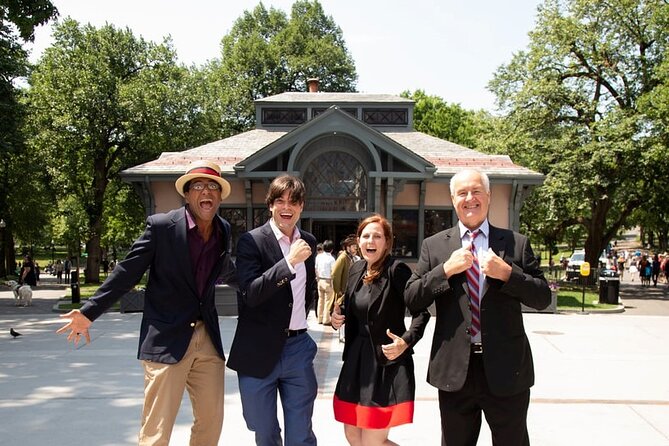
Your starting point is The Embrace statue, just beside the Boston Common Visitor Center at 139 Tremont Street. The meeting information also references Boston Common’s Visitor Center, so use 139 Tremont Street as the practical address and arrive early enough to find the statue.
Your guide will not wear period clothing. Look for the Boston History Company flag instead. That is a useful detail in a busy public space, where a costumed guide might be easier to spot but is not part of this tour.
Beginning on Boston Common gives the guide a natural place to explain Boston’s early civic life before the group heads into the older streets. The route ends back at the meeting point, which is helpful if you leave luggage, plan a meal nearby, or want to continue exploring from the center of town.
Park Street Church and the Granary Burying Ground
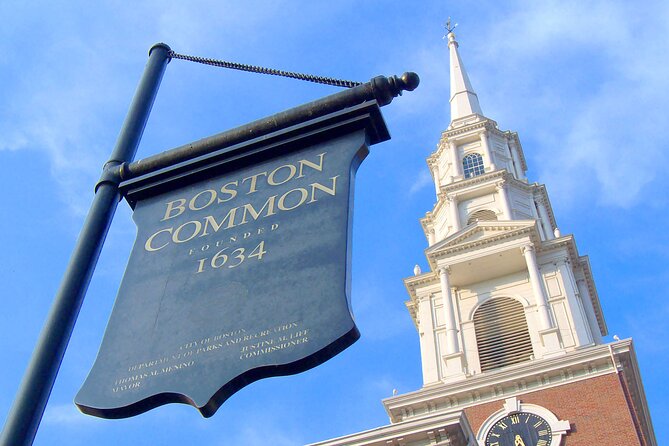
Park Street Church is one of the early stops and helps place you in the religious and civic world of old Boston. The steeple is also tied to the familiar story of the two lanterns hung as a signal to Paul Revere and the other riders.
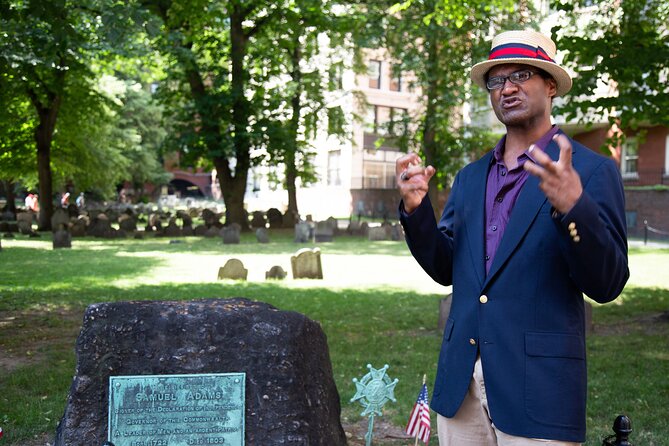
The tour then reaches Granary Burying Ground, where you can see the final resting places of John Hancock, Paul Revere, and Samuel Adams. This is one of the strongest parts of the route for anyone who wants a direct connection to the people usually presented as portraits in a textbook.
A guide adds useful human detail here. The cemetery is not just a list of names. It becomes a place to discuss public reputation, revolutionary leadership, and the way later generations chose to remember the founding era.
You should expect a stop rather than a long period of quiet reflection. With 16 official sites to cover, the guide needs to keep the group moving.
King’s Chapel and Franklin’s Boston
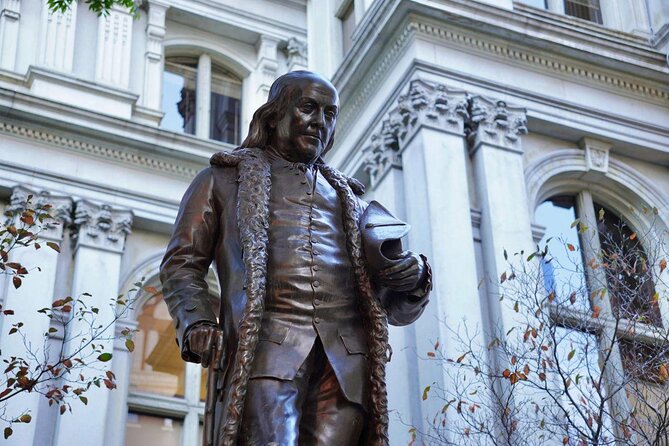
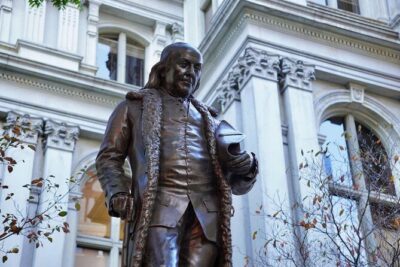
King’s Chapel brings a different side of colonial Boston into view. The route also passes the Benjamin Franklin Statue, a reminder that the city’s story includes printing, education, public debate, and civic ambition as well as armed rebellion.
The focus on Franklin helps broaden the tour beyond the most familiar battle scenes. Boston became important not only because of what happened in 1775, but also because of the arguments, institutions, and public habits that shaped American life.
The guide may connect these stops to the changing city around you. You are walking through a modern downtown, but the tour keeps directing your attention to older street lines, buildings, statues, and burial grounds. That contrast is part of the appeal.
More Revolutionary War tours in Boston
- Boston Tea Party Ships and Museum Admission
★ 4.5 · 2,512 reviews - The Full Revolutionary Story Epic Small Group Boston Walking Tour
★ 5.0 · 2,356 reviews - Boston’s Freedom Trail: A Revolutionary Walking Tour
★ 5.0 · 1,343 reviews - Entire Freedom Trail Walking Tour: Includes Bunker Hill and USS Constitution
★ 5.0 · 732 reviews
Old Corner Bookstore and the Old South Meeting House
The Old Corner Bookstore is a quick but useful stop for understanding Boston as a center of printing and publishing. Ideas moved through books, newspapers, speeches, and public meetings, and those channels helped turn local complaints into a wider political crisis.
The Old South Meeting House is more directly tied to the Revolution. It was a major gathering place, including the meeting that preceded the Boston Tea Party. Here, the guide can explain how protest depended on crowds, debate, and organized action before the famous act of throwing tea into the harbor.
I like this part of the route because it shows that revolution did not begin with a single dramatic outburst. It grew through meetings and arguments in ordinary public spaces. You see the places where people gathered before you reach the better-known scenes of confrontation.
The tradeoff is that exterior viewing may be brief. Entry tickets are not included, so you should not book this tour expecting a full interior visit to each historic building.
The Old State House and Boston Massacre Site
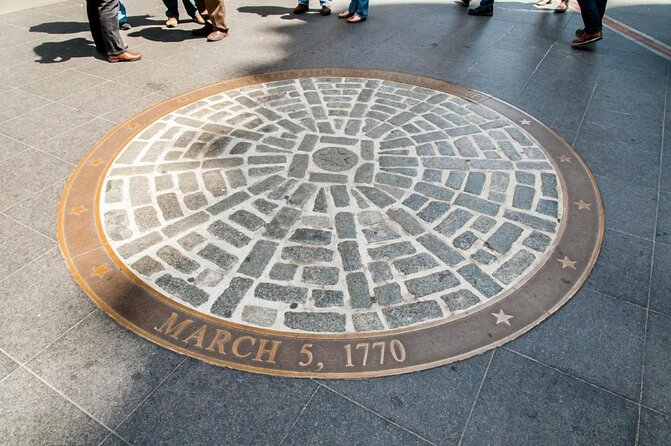
The Old State House is one of the route’s key buildings, and the Boston Massacre Site is directly in front of it. This is where the tour’s political story turns sharply toward violence.
You will hear about the events that became known as the Boston Massacre in the place where they occurred. The guide can explain how the incident was presented to the public and why it became such a powerful symbol in the push against British rule.
The site is easy to miss if you walk quickly through the center of Boston. It is marked in the middle of a modern street intersection, surrounded by traffic and office buildings. A guide helps you stop, orient yourself, and understand the location rather than simply photograph the marker.
This is also a good point to remember that historical labels can simplify complicated events. The tour presents the explosive political meaning of the massacre while keeping the physical setting in view.
Faneuil Hall and the Benjamin Franklin connection
Faneuil Hall is one of Boston’s best-known civic spaces and another important gathering place on the route. Its reputation comes from speeches, debate, and public action, not simply from its architecture.
You will learn how Boston’s halls and meeting places helped create a culture of protest. Faneuil Hall also connects to the city’s later public life, so this is not only a stop about 1770s politics.
The tour’s broader subject is Boston’s role in American history, including abolition, education, and immigration. That gives Faneuil Hall more weight than a quick photo stop. It becomes part of a longer story about who had a voice, who was excluded, and how public ideas changed.
Because this is a popular area, expect city noise and foot traffic. Stay close to the guide and keep an eye on the Boston History Company flag when the group moves.
Paul Revere’s House and the Midnight Riders
Paul Revere’s House is one of the route’s most anticipated stops. It offers a physical link to the famous rider and to Boston’s North End, where the Revolution’s story becomes more personal and local.
The guide also discusses the Midnight Riders, placing Revere among a wider network rather than treating him as a lone hero. That is useful context. The familiar lantern signal and overnight ride make for a good story, but the political crisis involved many people, messengers, organizers, and communities.
The house may be viewed as part of the walking route, but admission is not included. If you want to explore the interior, plan that as a separate activity and allow more time beyond the tour.
This section can feel especially lively because the North End has a strong neighborhood identity and plenty of places to eat. The tour itself does not include food, but guides such as Kenneth have been praised for offering suggestions about restaurants, bars, and other Boston stops.
Old North Church and the two lanterns
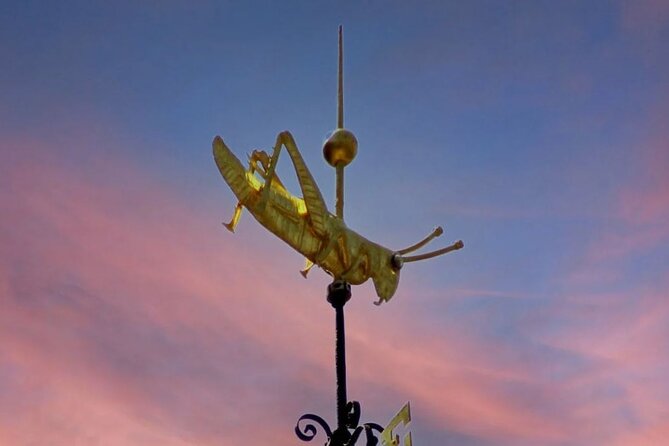
Old North Church is the steeple associated with the two lanterns that signaled the British route before the Revolutionary battles. It is one of the clearest visual moments on the entire Freedom Trail.
The guide explains what the lantern signal meant and why the church’s position mattered. You get the well-known image, but also the practical problem of communication before modern technology. A simple light in a steeple could carry urgent information across the city.
This stop is likely to be memorable even for people who know the basic story. Seeing the church in its North End setting gives the tale a physical anchor.
As elsewhere, an outside stop is not the same as a full church visit. Entry tickets are not part of the $31 price, so check separately if you want to go indoors.
Copp’s Hill, the USS Constitution, and Bunker Hill

Copp’s Hill Burying Ground takes the route farther into Boston’s military and maritime story. The cemetery helps connect the Revolution to the people who lived, worked, worshipped, and died in the city.
The walk then continues toward the USS Constitution. The ship adds a naval dimension to a route that often focuses on street protests and land battles. It reminds you that Boston’s role in American history was tied to the harbor as much as to its meeting halls and churches.
The final area includes Bunker Hill Monument, one of the major markers of the early fighting. You will see the monument as part of the all-16-site route, but do not assume that the tour includes climbing it or a separate interior visit. The supplied details specifically note that the tour covers the sights, with Bunker Hill itself being the exception in one description, so confirm the day’s exact arrangement if reaching the monument is essential to you.
This far end of the route is also where the walk can feel most demanding. The tour covers a lot of ground in 2.5 hours, and one reviewer wanted a clearer return to the starting area for practical reasons. The stated plan is to finish back at The Embrace, but allow time after the official end before scheduling a train, flight, or timed ticket.
The guide makes or breaks the experience
The repeated praise centers on the guides, and that is the right place to focus. Rob is described as engaging and funny, Kenneth as personable and ready to answer questions, Charlie R as a strong presenter, and Matthew as a guide who weaves stories into the places along the route.
Alissa is praised for keeping the group interested for the full two and a half hours. Stewart, Noah, Malcolm, Sam, Jules, Megan, Julia, and Jim are also described as energetic, entertaining, passionate, or well informed.
That list does not guarantee which guide you will receive. It does show the style to expect: history told through anecdotes, jokes, questions, and personal delivery. The tour includes a few inexpensive dad jokes, which may be just enough to keep a long walk from feeling like a lecture.
One practical warning is language speed. Matthew is described as speaking fast English, which could be difficult if English is not your first language. The tour is offered in English only, so consider that before booking.
Timing, footwear, and accessibility
Wear comfortable shoes and clothes, and bring water. This is not a short stroll between two nearby buildings. You will cross much of Boston’s historic center and continue toward the USS Constitution and Bunker Hill.
The tour is listed as wheelchair accessible, but the additional information also says it is not suitable for people with mobility impairments. Those statements do not fully agree. If you use a wheelchair, walk slowly, or need regular breaks, contact Boston History Company before booking and ask about the exact route and current conditions.
Video recording is not allowed. You can still take in the buildings and landmarks, but plan to listen rather than record the entire presentation.
Free cancellation is available up to 24 hours before the start, and you can reserve now and pay later. That is useful if your Boston schedule is still shifting, especially for a short stay or a layover.
Who should book this $31 tour?
I would choose this tour if you are visiting Boston for the first time and want the whole Freedom Trail explained in one sitting. It is also a smart choice for a short stay, since one person used a Boston layover to fit it in.
It suits adults, families with older children, history fans, and anyone who prefers stories to signboards. It is especially useful if you want context about abolition, immigration, education, and overlooked figures rather than only the standard Paul Revere story.
I would skip it if you want long, quiet visits inside historic buildings, a slow photographic walk, or a self-guided pace. The tour is broad by design. You see all 16 official sites, but you cannot linger at every one.
Should you book Boston’s Freedom Trail walking tour?
Book it if you want a strong introduction to Boston’s revolutionary past, a carefully planned route, and a guide who brings the city’s people and arguments to life. At $31, the live interpretation makes the walk a good buy, especially when you receive a guide with the energy praised in names such as Rob, Kenneth, Charlie R, Matthew, or Alissa.
Just wear good shoes, allow time for the full route, and treat the tour as an outdoor overview rather than a ticket to Boston’s interiors. If that matches your plans, this is one of the easiest ways to get your bearings and understand why the Freedom Trail matters.
FAQ
How long does the Freedom Trail tour last?
The tour lasts 2.5 hours.
How much does the tour cost?
The listed price is $31 per person.
Where does the tour begin?
Meet at The Embrace statue beside the Boston Common Visitor Center at 139 Tremont Street.
How do I identify the guide?
The guide will carry a Boston History Company flag and will not be wearing a costume.
Where does the tour end?
The activity ends back at the meeting point near The Embrace statue.
Are attraction entry tickets included?
No. The price includes the live guide and walking tour, but not entry tickets to attractions.
Is the tour offered in languages other than English?
No. The tour is conducted in English with a live English-speaking guide.
More walking tours in Boston
- Harvard University Campus Guided Walking Tour
★ 4.5 · 3,632 reviews - Boston: Freedom Trail History Small Group Walking Tour
★ 4.9 · 1,590 reviews - Boston’s North End Food Tour: Italian Flavors & Heritage Walk
★ 5.0 · 1,322 reviews - Freedom Trail Walking Tour 250
★ 4.5 · 1,118 reviews
Newest Boston tours we have written up
- Boston’s Freedom Trail: A Self-Guided Audio Tour★ 4.0 · 18 reviews
- Boston’s Freedom Trail: A Self-Guided Tour of All 16 Sites★ 5.0 · 14 reviews
- Washington D.C. Cherry Blossom,Baltimore 3-Day Tour from Boston★ 4.5 · 7 reviews
- Boston Self-Guided Audio Tour Bundle: Freedom Trail & More★ 4.5 · 5 reviews
- True Crime Tour of Boston★ 4.0 · 17 reviews
- Family Friendly Guided Bike Tour of Boston★ 4.5 · 22 reviews
- Freedom Trail Experience★ 5.0 · 8 reviews
- The Ghosts of Boston’s Past Haunted Self-guided Tour★ 3.5 · 4 reviews
Boston Freedom Trail Tours, compared.

Freedom Trail History Small Group Walking Tour
Read our review →
Boston Freedom Trail Walking Tour with Costumed Guide
Read our review →
Boston Food & History: Pizza, North End & Freedom Trail
Read our review →Freedom Trail History Small Group Walking Tour
Read our review →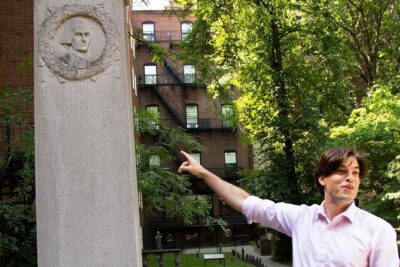
Boston’s Freedom Trail: A Revolutionary Walking Tour
Read our review →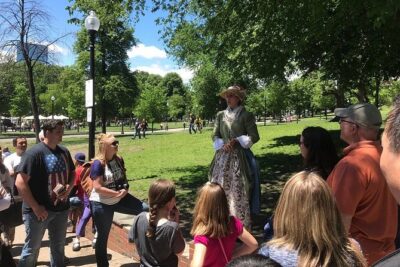
Boston Freedom Trail History Pub Crawl Small-Group Tour
Read our review →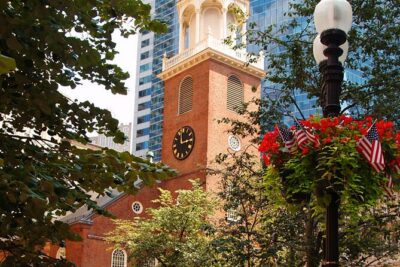
Entire Freedom Trail Walking Tour: Includes Bunker Hill and USS Constitution
Read our review →Browse the lists this tour appears in