
Review · BOSTON REVOLUTIONARY WAR TOURS
Rebels and Red Coats; Tales of the Revolution
Boston’s Revolution story comes alive through short scenes, humor, and audience-friendly storytelling on this one-hour walk from Faneuil Hall to Granary Burying Ground. The tour brings you to the Boston Massacre site, Old South Meeting House area, King’s Chapel Burying Ground, and the graves of famous colonial figures.
I like the family focus and the way the mother-and-daughter guide team turns history into a shared activity rather than a lecture. I also like the small group limit of 15, the scavenger hunt, and the $20 price for a compact introduction to the Freedom Trail. The tradeoff is clear: this is an outdoor overview, with no museum or building entry, and the route includes uneven ground and hills.
Key Points About This Boston History Walk

- A one-hour Freedom Trail route: Walk from Faneuil Hall Marketplace to Granary Burying Ground, with several major Revolution-era sites along the way.
- Family-friendly storytelling: The guides use humor, role-play, and a scavenger hunt to keep children involved, including a young guide named Kate.
- A focused $20 experience: The price is reasonable for a small-group introduction, especially if you want context before exploring Boston on your own.
- Outdoor sightseeing only: Admission to the listed stops is free, but no museums or historic buildings are entered.
- A small group of up to 15: You get a more personal setting than on a large city walk, though the tour still covers ground at a steady pace.
- A practical route through old Boston: The walk ends at Granary Burying Ground, placing you near more Freedom Trail sights in central Boston.
Starting at Faneuil Hall, Where Revolution Talk Began
Meet at 10:00 a.m. at Faneuil Hall Marketplace, at 1 Faneuil Hall Market Place. This is a useful starting point because you are already in one of Boston’s main historic districts, with plenty of activity around you before and after the walk.
Faneuil Hall is often called the birthplace of the American Revolution. That label needs a little care. The building is famous for speeches, arguments, and public meetings that helped create opposition to British rule, but its past also includes a troubling connection to slavery and colonial commerce. A good guide can hold both facts at once, and this tour is designed to introduce the site as more than a polished patriotic symbol.
The opening portion is brief, about 10 minutes at the marketplace. That is enough time to establish the setting without spending most of the tour in one place. You should expect the guide to use the location as a stage for the wider story: how ordinary arguments over taxes, representation, trade, and British authority grew into open conflict.
The family style matters here. Instead of asking children to absorb a long list of dates, the guides use humor and acted-out exchanges. The mother-and-daughter pairing is central to the tour’s appeal, and Kate, the 13-year-old guide, has a role that connects especially well with younger children. Her presence gives the program a natural peer-to-peer quality that an adult-only lecture cannot match.
More Revolutionary War tours in Boston
- Boston Tea Party Ships and Museum Admission
★ 4.5 · 2,512 reviews - The Full Revolutionary Story Epic Small Group Boston Walking Tour
★ 5.0 · 2,356 reviews - Boston’s Freedom Trail: A Revolutionary Walking Tour
★ 4.9 · 1,748 reviews
The Boston Massacre Site and the Pressure Before War
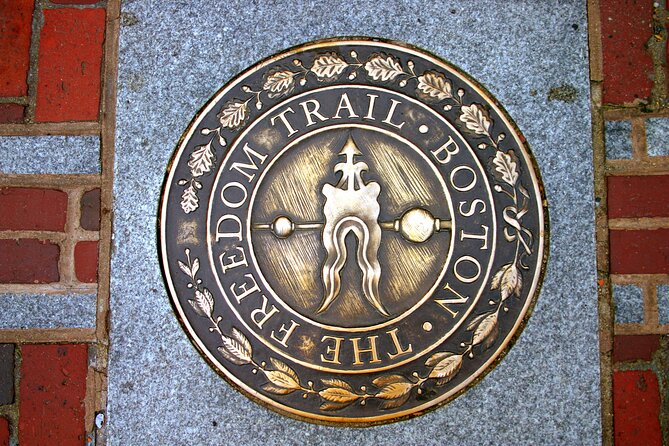
From Faneuil Hall, the walk takes you to the site of the Boston Massacre. This is one of the most important stops on the route because it shows how quickly tension between residents and British soldiers could turn deadly.
The value of this stop is not just the event itself. It helps you see how the Revolution was shaped by public reaction, printed accounts, political speeches, and competing versions of what happened. In a short tour, you will not get every detail of the legal and political aftermath, but you should come away with a better sense of why the incident became such a powerful symbol.
This is also a spot where good storytelling makes a difference. A dry explanation can feel remote. A guide who asks children to notice what different groups believed, or who acts out the conflict in a measured way, can make the question easier to grasp: how does one violent moment become a rallying point for a much larger movement?
The tour’s humor is meant to keep the mood open, not to make light of the deaths. That balance is worth noting for parents. The program is playful, but the sites themselves deal with serious subjects. Adults who want a long, detailed discussion of the massacre will probably need to continue learning elsewhere after the walk.
Meetings, Arguments, and the Boston Tea Party
Another stop focuses on places where discussions and meetings helped shape events leading up to the Revolution, including the Boston Tea Party. This part of the route connects the physical streets of Boston with the political organizing that took place there.
You will hear about spaces where colonists gathered, argued, planned, and built public support. That is useful because the Revolution did not begin with a single dramatic battle. It grew through meetings, protests, boycotts, speeches, and local disputes that spread from one community to another.
The tour does not include entry to museums or historic buildings, so you will be seeing these places from the street. That limitation keeps the tour moving and helps hold the price at $20, but it also means you should not book it expecting an indoor visit to every important site.
I see this as a good first look at Boston’s political story. You get the setting and the basic sequence, then you can decide which buildings deserve a longer visit. If you want a detailed presentation inside a historic meeting hall, add a separate museum or building visit to your day.
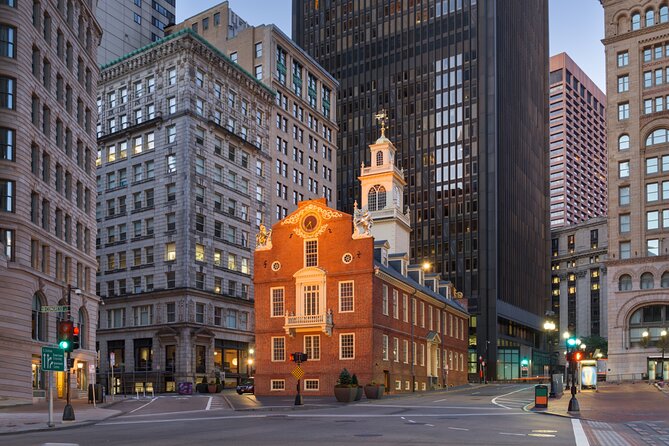
Boston’s Oldest Commercial Building
The walk also points out the oldest commercial building in downtown Boston. The building is presented as part of the city’s working past, not just as a backdrop for political events.
This stop adds useful variety. The story is not only about famous patriots and dramatic protests. It is also about shops, commerce, buildings, and the everyday city in which revolutionary ideas took shape. Seeing an old commercial structure in the middle of modern Boston helps you notice how much of the historic route is woven into ordinary downtown streets.
Because the stop is viewed from outside, you should keep your expectations modest. The interest comes from the age and story of the building, along with its place in the route, rather than from an interior tour. It is a quick but worthwhile reminder that Boston’s past survives in small pieces between modern businesses and busy roads.
A few more Boston tours and tickets worth a look
- Boston Duck Boat Sightseeing City Tour with Cruise Along Charles River
★ 4.5 · 9,378 reviews - Boston: Freedom Trail History Small Group Walking Tour
★ 5.0 · 6,450 reviews - Boston Hop-On Hop-Off Trolley Tour with 13 Stops
★ 4.5 · 5,576 reviews - Boston: City Cruises Whale Watching Cruise
★ 4.5 · 4,710 reviews
Boston Latin School and an Unequal Colonial Education
The route includes the site of the first public school in America, Boston Latin School. The wording matters: it was a school for boys. Girls were excluded.
That makes this a helpful stop for families because it opens a conversation about who benefited from colonial institutions and who did not. The site is not presented as a simple feel-good milestone. It also shows the limits of early ideas about public education.
Children may remember this stop because the unfairness is easy to understand. Adults can connect it to the wider questions raised by the tour: who had a voice, who could attend public meetings, who owned property, and whose version of events became part of the national story.
The visit is brief, but that is appropriate for a one-hour route. You will get a clear point to discuss rather than an extended school-history lesson. Families can keep the conversation going as they walk to the next site.
King’s Chapel Burying Ground and Early Boston

King’s Chapel Burying Ground is the first cemetery stop. The visit lasts about five minutes and introduces a Puritan-era cemetery that contains some of Boston’s earliest colonial residents.
A cemetery changes the rhythm of the tour. After the political speeches and public conflict, you are looking at the final resting places of people who lived through the city’s early colonial period. The worn stones and compact burial ground offer a quieter way to think about how old Boston really is.
The short stop also tells you what this tour is and is not. You will receive a guided introduction rather than a detailed grave-by-grave examination. Access to cemeteries depends on availability, so the route may not always unfold in exactly the same way.
The ground may be uneven, and you should expect to remain on your feet. Anyone with mobility concerns should take the physical demands seriously. This is not a smooth, step-free sightseeing loop.
Granary Burying Ground and Revolutionary Names

The final stop is Granary Burying Ground, where the tour ends on Tremont Street. This is Boston’s third-oldest burying ground and the resting place of Revolutionary figures as well as well-known literary names.
Ending here works well. After hearing about protest, public meetings, and the road to war, you finish among the people tied to that era. The cemetery gives the hour a definite endpoint instead of leaving you in the middle of the Freedom Trail.
The stop lasts about 10 minutes. That is enough for an introduction to key graves and the cemetery’s place in Boston’s story, but not enough for a full survey. You may want to stay afterward if you have more time, since the end point puts you in central Boston near other historic sights.
This is also a practical place to continue your day. You can use the tour as an orientation, then walk on to more Freedom Trail locations at your own pace. Since the tour does not include entry to buildings, planning an additional stop can turn the one-hour experience into part of a fuller history day.
Why the Family Format Works
The strongest feature is the way the guides involve children. The presentation includes acting, humor, and a scavenger hunt, so children are given something to do rather than being asked to listen quietly for an hour.
That makes a real difference with mixed-age groups. A six-year-old may not follow every political point, but a scavenger hunt or a funny exchange can hold attention long enough for the broader story to land. Older children can connect the scenes to school lessons, while adults still pick up details they may have missed.
The guide Kate, age 13, is especially useful for this format. Her role gives children someone close to their own age to watch and listen to. The mother-and-daughter interplay also creates a light back-and-forth that keeps the information moving.
The approach is not only for families. Adults who do not usually enjoy history may prefer this kind of presentation to a formal lecture. Still, if you want an academic treatment, extended political analysis, or a long list of dates, this is probably too light and too short.
What $20 Gets You
At $20 per person, the tour offers solid value if you want a guided introduction to several central Freedom Trail sights. You are paying for about an hour of live interpretation, a small group capped at 15, and a route that links major locations in a logical order.
You are not paying for museum admission, building entry, food, transportation, or a full-day program. All listed stops have free admission, and the tour uses public streets and cemeteries as its setting. The value comes from the guide’s storytelling and the time saved figuring out how the sites connect.
I would book it early if the date matters to you. The experience is often reserved about 62 days ahead, which suggests that the small-group family format can fill well before a Boston visit. Confirmation is provided when you book, and gratuities are not included, though they are welcome.
The group size is a strong point. Fifteen people is small enough for children to hear the guide more easily and for the scavenger hunt to feel manageable. It is not a private tour, so you should still expect to share the experience with other families and adults.
Timing, Walking, and What to Bring
The tour starts at 10:00 a.m. and lasts about one hour. That makes it easy to fit into a morning schedule, especially if you want to explore Faneuil Hall Marketplace first or continue along the Freedom Trail after reaching Granary Burying Ground.
You should wear comfortable shoes and be ready for uneven terrain and hills. The program is not recommended for people with mobility concerns. Service animals are allowed, and the starting point is near public transportation.
Because this is an outdoor activity, weather matters. If poor weather causes cancellation, you are offered another date or a full refund. If the minimum number of participants is not met, you receive the same kind of choice.
Free cancellation is available up to 24 hours before the start time. Cancellations made less than 24 hours ahead are not refunded, and changes inside that window are not accepted. The cut-off uses Boston local time, so check the time carefully if you are booking from another time zone.
Who Should Book Rebels and Red Coats
I would choose this tour for families with children, especially ages six through the early teens. The humor, acted scenes, scavenger hunt, and Kate’s involvement give younger participants a reason to pay attention. It is also a good pick for adults who want a lively overview rather than a long formal talk.
The tour suits first-time visitors who want the basic layout of the Freedom Trail. In one hour, you see several major sites and learn how they connect to the Revolution. You also finish in a useful location for continuing your own sightseeing.
I would look elsewhere if you want interior access, a lengthy cemetery tour, or detailed military history. You should also think twice if hills and uneven streets will be difficult. The short format is a strength for busy families, but it limits how much detail the guides can cover.
Should You Book This Tour?
Book it if you want an affordable, upbeat introduction to Boston’s Revolution story and need children to stay involved. The small group, family-centered presentation, and clear route offer more than simply following the red line on the sidewalk.
Skip it if your main goal is museum entry, private guiding, or a deep study of colonial politics. For most families, though, this $20 walk is a sensible first step: it gives you the key sites, keeps the pace manageable, and leaves you with plenty of time to explore Boston on your own.
FAQ
How long is the Rebels and Red Coats tour?
The tour lasts approximately one hour.
Where does the tour begin?
It begins at Faneuil Hall Marketplace, at 1 Faneuil Hall Market Place, Boston, Massachusetts 02109.
Where does the tour end?
The tour ends at Granary Burying Ground on Tremont Street, Boston, Massachusetts 02108.
What time does the tour start?
The stated start time is 10:00 a.m.
How much does the tour cost?
The price is $20 per person.
Is museum or building admission included?
No. The experience includes an outdoor walking tour of Freedom Trail highlights, but it does not include museum or building access.
Is this tour suitable for children?
Yes. The presentation includes humor, acted storytelling, and a scavenger hunt. The tour has also been designed to engage children, including younger children.
How many people can join the tour?
The maximum group size is 15 people.
Can I cancel for a full refund?
Yes, if you cancel at least 24 hours before the experience start time. Cancellations made less than 24 hours ahead are not refunded.
Newest Boston tours we have written up
- Boston’s Freedom Trail: A Self-Guided Audio Tour★ 4.0 · 18 reviews
- Boston’s Freedom Trail: A Self-Guided Tour of All 16 Sites★ 5.0 · 14 reviews
- Washington D.C. Cherry Blossom,Baltimore 3-Day Tour from Boston★ 4.5 · 7 reviews
- Boston Self-Guided Audio Tour Bundle: Freedom Trail & More★ 4.5 · 5 reviews
- True Crime Tour of Boston★ 4.0 · 17 reviews
- Family Friendly Guided Bike Tour of Boston★ 4.5 · 22 reviews
- Freedom Trail Experience★ 5.0 · 8 reviews
- Self-Guided Audio Tour of Boston North End★ 4.5 · 3 reviews
Boston Revolutionary War Tours, compared.

The Full Revolutionary Story Epic Small Group Boston Walking Tour
Read our review →
Boston’s Freedom Trail: A Revolutionary Walking Tour
Read our review →Boston’s Freedom Trail: A Revolutionary Walking Tour
Read our review →
Entire Freedom Trail Walking Tour: Includes Bunker Hill and USS Constitution
Read our review →
Boston’s Revolutionary and Drunken Past with Ye Olde Tavern Tours
Read our review →
Boston History & Highlights Tour: From Revolution to Today
Read our review →
Freedom Trail, Bunker Hill, & USS Constitution Tour
Read our review →Browse the lists this tour appears in