
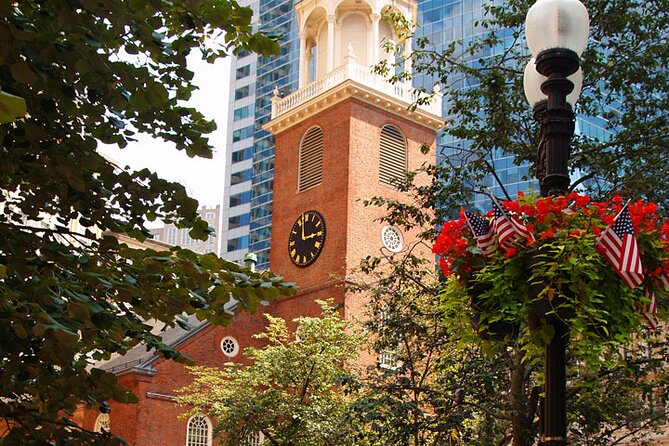
Review · BOSTON FREEDOM TRAIL TOURS
Entire Freedom Trail Walking Tour: Includes Bunker Hill and USS Constitution
Boston’s Freedom Trail makes the American Revolution feel wonderfully close. In four hours, you walk from the Massachusetts State House through graveyards, meeting halls, churches, North End streets, and Charlestown, ending aboard the USS Constitution area after seeing the Bunker Hill Monument.
I like the full point-to-point route, since many shorter tours stop downtown and leave out Bunker Hill and Old Ironsides. I also like Mark’s cause-and-effect approach, which links small disputes over land and taxes to the larger break with Britain. The tradeoff is simple: this is a serious walk of about 2.8 miles and roughly four hours, not a quick orientation stroll.
Key points
- The complete 2.8-mile route: Begin near Park Street and finish at the USS Constitution in Charlestown.
- Mark’s personal teaching style: Expect stories, maps, humor, questions, and extra details beyond the marked trail.
- Fourteen meaningful stops: The route covers major sites from the State House to Bunker Hill.
- A small maximum group of 16: This makes it easier to hear the guide and ask questions.
- A history lesson with real walking: The pace is generally manageable, but comfortable shoes matter.
- A strong family option for teens: Younger children may need a strong interest in history to stay engaged for four hours.
Why this Freedom Trail route tells the whole Boston story
The Freedom Trail is often treated as a string of red bricks and famous names. This tour gives it a clear storyline. You begin with colonial government and religious tension, move through protests and violent confrontations, then follow the path toward the North End, Charlestown, Bunker Hill, and the Navy Yard.
That order matters. The Old State House makes more sense after you understand the arguments over British authority. Paul Revere becomes more than a familiar name after you see the streets, churches, and warning network around the North End. Bunker Hill becomes easier to picture after Copp’s Hill gives you a view of the ground where the battle unfolded.
Mark is the guide named most often in the supplied material, and his approach is not built around theatrical performance. You can expect a direct, conversational presentation, with maps and plenty of explanation. He also brings in people often left out of a basic schoolbook account, including women who shaped the period.
The group is capped at 16 people. That is a useful middle ground. You get the feel of a personal walk without paying for a private guide, and the guide can keep an eye on the pace and answer questions.
More ways to walk the Freedom Trail
- Boston: Freedom Trail History Small Group Walking Tour
★ 5.0 · 6,450 reviews - Boston Freedom Trail Walking Tour with Costumed Guide
★ 4.5 · 2,531 reviews - Boston Food & History: Pizza, North End & Freedom Trail
★ 5.0 · 1,772 reviews
Starting at the State House and Park Street

The tour begins at 10:00 a.m. near Beacon Street and Park Street. The first stop is the Massachusetts State House, designed by Charles Bulfinch, one of the key figures in early American Federal architecture.
You see the current seat of Massachusetts government along with the earlier buildings that served the same purpose. The stop is brief, about ten minutes, and the interior admission fee is not included. The value here is less about entering the building and more about placing Boston’s political power at the start of the walk.
Park Street Church follows. When it was built, it was the tallest building in the country. Its story also reaches into the abolition movement, and the nickname Brimstone Corner comes with an unusual cellar story that Mark uses to make the place memorable.
You spend only about five minutes here. That is typical of the tour. You are not lingering inside every landmark. Instead, you receive a focused explanation, then keep moving before the walk becomes too slow.
Meeting the revolutionaries at Granary Burying Ground
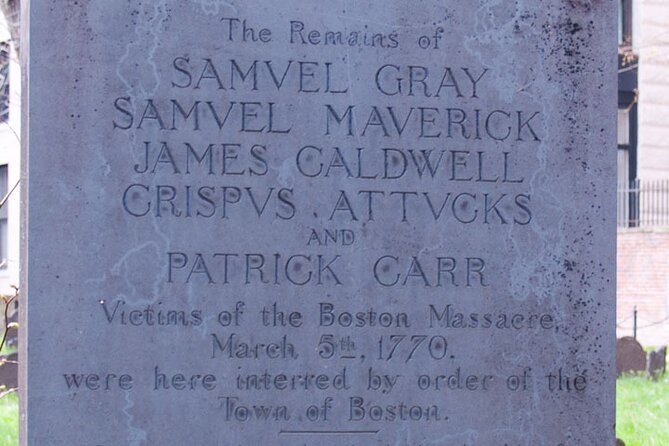
Granary Burying Ground is one of the strongest early stops. It is the final resting place of Samuel Adams, Paul Revere, John Hancock, and the victims of the Boston Massacre.
The appeal is not just the age of the graveyard. This is where the people in the opening chapter of the Revolution become more than names on a plaque. You get a quick introduction to who they were and what part they played.
The stop lasts about ten minutes and is free. You should expect uneven ground and the need to stay close enough to hear the guide. It is a compact visit, but it gives the tour emotional weight before you move into the buildings and streets where arguments turned into open resistance.
Kings Chapel, Old City Hall, and the power of public meetings
King’s Chapel brings the story back to religious and political conflict. The 1749 Anglican church was connected to an earlier dispute in which the Crown took land for an unwanted church in Puritan Boston.
That small piece of background helps explain why religion and government were so tightly linked in colonial life. Admission to the interior is not included, so the tour focuses on the exterior and the story around it.
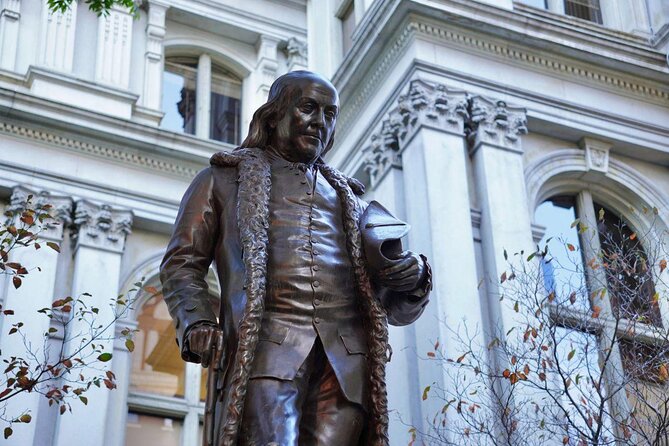
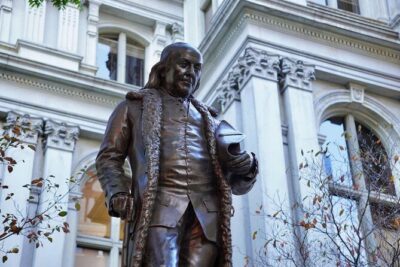
At Old City Hall, you see a statue of Benjamin Franklin and a marker for the oldest continuously operating school in the colony. This is a shorter stop, but it adds useful context. Boston’s revolutionary story was not only about soldiers and politicians. It was also about education, public institutions, and the civic life of the town.
Old South Meeting House is one of the tour’s major turning points. Large meeting halls were central to colonial public life, and this Puritan building hosted preachers, political speakers, and angry citizens.
Samuel Adams used Old South Meeting House as the setting from which he helped launch the Boston Tea Party. Mark connects that event to the hardening conflict that followed. The admission fee is not included, so you should not expect a full indoor visit as part of the $79 price.
More Revolutionary War tours in Boston
- Boston Tea Party Ships and Museum Admission
★ 4.5 · 2,512 reviews - The Full Revolutionary Story Epic Small Group Boston Walking Tour
★ 5.0 · 2,356 reviews - Boston’s Freedom Trail: A Revolutionary Walking Tour
★ 4.9 · 1,748 reviews - Boston’s Freedom Trail: A Revolutionary Walking Tour
★ 5.0 · 1,343 reviews
The Boston Massacre and the road to rebellion
The Old State House is one of the most important stops on the route. It once housed the British colonial government, making it a physical symbol of authority that many Bostonians resented.
The building was also the scene of a major 1761 court battle over colonial rights. Then came the 1770 Boston Massacre. The familiar version of the event says innocent citizens were simply gunned down. The actual circumstances are more complicated, and the tour gives you room to examine that tension instead of flattening it into a simple slogan.
That is one of the best features of this walk. Mark’s explanations aim to connect cause and effect rather than recite a list of dates. You are encouraged to think about who held power, how public anger grew, and how each confrontation made compromise harder.
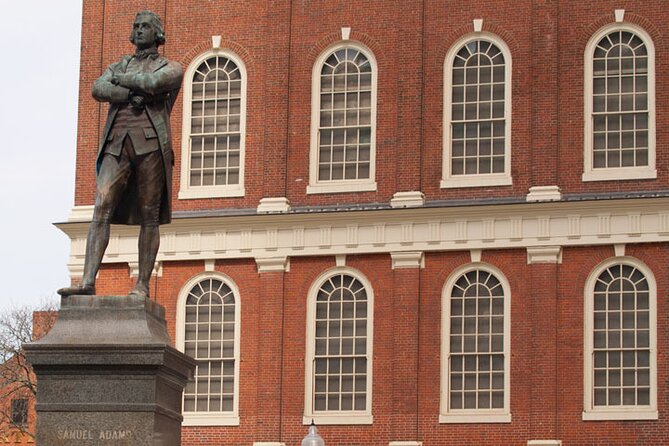
Faneuil Hall Marketplace follows. Samuel Adams spoke here against taxation without representation, and Frederick Douglass later used the same public setting as an escaped slave and abolitionist. The site shows how Boston’s tradition of public speech continued beyond the Revolution.
The surrounding marketplace can be busy, so staying with the group matters. The stop is free, and the guide’s explanation gives the commercial area more meaning than it might have if you simply passed through for a snack.
The Blackstone Block and Paul Revere’s neighborhood
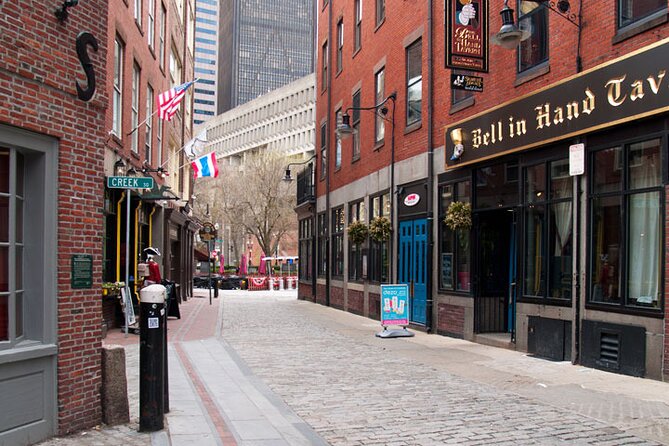
The Blackstone Block adds several smaller stories to the route. You learn about the Massachusetts Spy newspaper, a revolutionary headquarters that was also a bar, and the Ebenezer Hancock House.
Ebenezer Hancock was John Hancock’s brother, and his home was used to store money sent by the French to support the Revolution. Details like this are exactly why a guided walk can be more useful than following the red line alone. The street itself may not look as famous as the Old State House, but the events connected to it help explain how the rebellion was organized and funded.
The Paul Revere House comes next. Revere bought the 1680 Post-Medieval house in 1770 and raised a large family there, fathering 16 children with two wives.
The building is one of Boston’s oldest surviving homes. Interior admission is not included, and the scheduled visit is short. Still, seeing the house in its North End setting helps you picture Revere as a working tradesman and family man, not only as the rider from a famous midnight warning.
Old North Church and the walk toward Charlestown

Old North Church carries one of the most familiar stories on the Freedom Trail. Patriots used the church to send a warning across the water to Charlestown about the movement of British regulars toward Cambridge, Lexington, and Concord.
The important point is not just the lantern signal. The church shows how geography, communication, and local networks shaped the opening moments of the war. The narrow water crossing and nearby streets helped turn a warning into action.
The North End section also gives the tour a change of pace. You are still following the revolutionary story, but now through a neighborhood of old buildings and tighter streets rather than grand civic landmarks.
Copp’s Hill Burying Ground is the bridge to the final part of the tour. The guide uses the graveyard to explain the geography of the Battle of Bunker Hill and points out a grave marker with its own story.
This stop is free and brief. It is worth paying attention to the geography because the battle was fought on Breed’s Hill, not Bunker Hill. That distinction often gets lost in the name, and seeing the ground helps correct the common shorthand.
Bunker Hill and the costly British victory
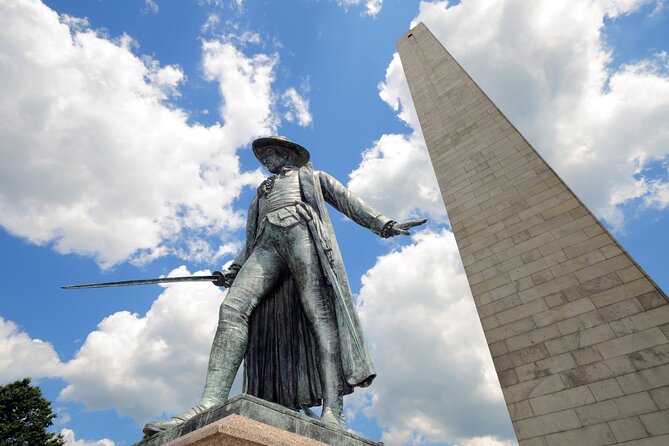
At the Bunker Hill Monument, Mark explains the battle that took place on Breed’s Hill. The British won, but their losses were about three times those of the Patriots.
That fact gives the battle its importance. A battlefield victory for Britain could still be a serious warning that colonial forces could inflict heavy damage. The monument is a fitting place to discuss military tactics, confidence, and the growing cost of the conflict.
The stop is free, and the monument is the farthest point from the tour’s starting area before the final visit to the Navy Yard. You should expect the walk to feel more demanding by this stage, especially in warm weather or if you are not used to city walking.
Finishing with USS Constitution
The tour concludes at the USS Constitution in the Charlestown Navy Yard. Known as Old Ironsides, it is the world’s oldest commissioned warship and served the United States in both American and foreign waters.
This is a strong ending because it carries the story beyond the street protests and first battles. The Revolution created a country that then had to defend its independence and build institutions of its own.
The experience ends at the USS Constitution Museum area, Building 22. The tour includes the narrated walk and the guide’s gratuity, but admission to interiors is not included. The tour data identifies the ship as the final stop, so check the exact access arrangements if stepping aboard or entering the museum is essential to your plans.
Is $79 a fair price?
At $79 per person, this is not the cheapest way to walk the Freedom Trail. You can follow the route independently, and many sites can be seen from outside without paying admission.
The value comes from the structure. You cover the entire 2.8-mile trail in one organized outing, continue to Bunker Hill, finish at USS Constitution, and receive four hours of explanation. You also avoid spending time piecing together what happened at each stop.
Guide gratuity is included, and the guide does not expect or accept an additional tip. That makes the final cost easier to judge. You are paying primarily for the guide’s preparation, the small group, and the connected story rather than for a collection of interior admissions.
I think the price works best for a first visit, especially if American history is a major reason you came to Boston. If you already know the Freedom Trail well and mainly want to enter the buildings, you may get better value by choosing a shorter guided walk and buying individual admissions on your own.
Who should book this four-hour walk?
I would choose this tour if you want the whole story in one morning or afternoon and prefer explanations to simply checking off landmarks. Families with teenagers are a particularly good match. Several comments describe the pace as manageable for older adults, but you still need to be ready for a long city walk.
The tour is offered in English and allows service animals. It is near public transportation, begins at Park Street, and ends in Charlestown, so plan for a one-way route rather than a return to the starting point.
Comfortable shoes are essential. One person estimated the walk at about 10,000 steps, while the guide places the route at roughly 2.75 miles. The official distance is 2.8 miles, and the difference is not important: you will walk a lot.
The material is detailed. Children under 12 may lose interest unless they already enjoy history. The guide uses humor and questions to keep the group involved, but four hours of revolutionary politics, churches, graveyards, and military history is still a large serving.
The tour requires decent weather. You can cancel for a full refund up to 24 hours before the start time. If bad weather forces cancellation, you will be offered another date or a full refund.
Should you book the Entire Freedom Trail Walking Tour?
Book it if you want one well-connected history lesson that covers the State House, Granary Burying Ground, Old South Meeting House, Old State House, Paul Revere House, Old North Church, Bunker Hill, and USS Constitution.
I would be especially inclined to book if Mark is leading your departure. His strengths are clear: careful research, an easy pace, maps, humor, extra stops, and an ability to explain overlooked people and events without turning the walk into a stage show.
Skip it if you dislike long walks, need a fully indoor activity, or mainly want time inside each historic building. For everyone else, this is a strong first-day Boston activity. You finish with a clear sense of how the city’s arguments, streets, people, and military sites fit together.
FAQ
How long is the Entire Freedom Trail Walking Tour?
The tour lasts approximately four hours and covers the full 2.8-mile, or 4-kilometer, Freedom Trail route, continuing to Bunker Hill and the USS Constitution.
Where does the tour begin?
The meeting point is near Beacon Street and Park Street in Boston, Massachusetts.
Where does the tour end?
The tour ends at the USS Constitution in the Charlestown Navy Yard, near the USS Constitution Museum at Building 22.
What time does the tour start?
The scheduled start time is 10:00 a.m.
Is admission to the historic buildings included?
No. Admission to interiors is not included. The tour includes the narrated walking route and the guide’s gratuity.
Is the guide’s tip included?
Yes. Guide gratuity is included, and the guide does not expect or accept additional gratuities.
How large is the group?
The tour has a maximum of 16 participants.
Is the tour suitable for children?
It can work well for families with teenagers. The material is detailed, and children under 12 may need a strong interest in history to remain engaged for the full four hours.
What happens if the weather is poor?
This experience requires good weather. If it is canceled because of poor weather, you will be offered a different date or a full refund. You can also cancel up to 24 hours before the start time for a full refund.
More walking tours in Boston
- Harvard University Campus Guided Walking Tour
★ 4.5 · 3,632 reviews - Boston: Freedom Trail History Small Group Walking Tour
★ 4.9 · 1,590 reviews - Boston’s North End Food Tour: Italian Flavors & Heritage Walk
★ 5.0 · 1,322 reviews - Freedom Trail Walking Tour 250
★ 4.5 · 1,118 reviews
Newest Boston tours we have written up
- Boston’s Freedom Trail: A Self-Guided Audio Tour★ 4.0 · 18 reviews
- Boston’s Freedom Trail: A Self-Guided Tour of All 16 Sites★ 5.0 · 14 reviews
- Washington D.C. Cherry Blossom,Baltimore 3-Day Tour from Boston★ 4.5 · 7 reviews
- Boston Self-Guided Audio Tour Bundle: Freedom Trail & More★ 4.5 · 5 reviews
- True Crime Tour of Boston★ 4.0 · 17 reviews
- Family Friendly Guided Bike Tour of Boston★ 4.5 · 22 reviews
- Freedom Trail Experience★ 5.0 · 8 reviews
- The Ghosts of Boston’s Past Haunted Self-guided Tour★ 3.5 · 4 reviews
Boston Freedom Trail Tours, compared.

Freedom Trail History Small Group Walking Tour
Read our review →
Boston Freedom Trail Walking Tour with Costumed Guide
Read our review →
Boston Food & History: Pizza, North End & Freedom Trail
Read our review →
Boston’s Freedom Trail: A Revolutionary Walking Tour
Read our review →Freedom Trail History Small Group Walking Tour
Read our review →Boston’s Freedom Trail: A Revolutionary Walking Tour
Read our review →
Boston Freedom Trail History Pub Crawl Small-Group Tour
Read our review →Browse the lists this tour appears in