
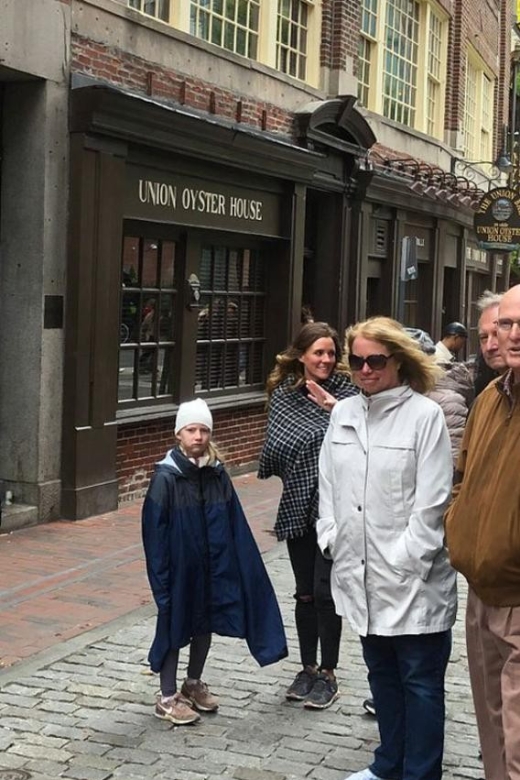
Review · BOSTON FREEDOM TRAIL TOURS
Boston: Freedom Trail, Bunker Hill, & USS Constitution Tour
Boston’s Revolutionary story makes far more sense when you follow it across the city, from the Massachusetts State House to Bunker Hill and the USS Constitution. This four-hour walk covers every major Freedom Trail stop, then keeps going to the places many shorter tours only point toward.
I like the way guide Mark links famous figures such as Paul Revere, Samuel Adams, John Hancock, and George Washington with less familiar people such as Margaret Kemble Gage, Dr. Joseph Warren, and James Otis. I also like the small-group format, clear storytelling, and regular chances to sit or find shade. The tradeoff is simple: you need to walk about three miles, and the tour ends well away from its starting point.
Key Points
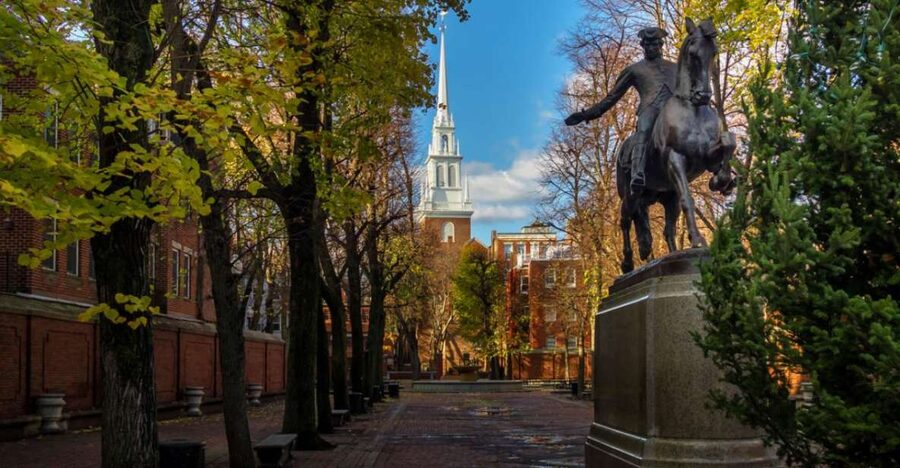
- The full Freedom Trail: Visit all sixteen official sites, from Boston Common to the North End.
- Bunker Hill and USS Constitution: The route goes to both instead of treating them as distant landmarks.
- Story-first guiding: Mark explains motives, arguments, personalities, and consequences, not just dates.
- Small groups: Groups are limited, with room for questions and a better chance of hearing the guide.
- Built-in care: Expect rest stops, shade when possible, bathroom pauses, and a steady walking pace.
- A long finish: The tour ends at USS Constitution, so plan how you will get back afterward.
Why This Four-Hour Walk Tells Boston’s Story Better

The Freedom Trail is easy to follow on the pavement, but the story is harder to piece together on your own. Sixteen sites spread across Boston can feel like a string of unrelated churches, graveyards, meeting halls, and monuments.
This tour gives those places a common thread. You begin with Boston under British control, follow the growing anger over taxation and military occupation, then watch protests turn into violence, resistance, and war. By the time you reach Bunker Hill, the earlier stops have supplied the names, grudges, and political arguments that made the battle possible.
That approach suits me. You are not simply told that the Boston Massacre happened, or that the Boston Tea Party took place. You hear who was involved, what each side wanted, and what happened afterward.
Mark is the guide named throughout the experience. His style is energetic and conversational, with a clear voice that helps in busy streets. He welcomes questions and uses maps to explain why events unfolded where they did. He also connects smaller details at the start of the walk with the larger story at the end, which helps the four hours feel like one unfolding account instead of a collection of stops.
The small groups matter here. The listed group size is kept low, and past departures have had roughly fourteen to sixteen people. That is a useful limit in crowded parts of Boston. You can hear the guide, ask a question without holding up a huge crowd, and stay connected when the route crosses busy streets.
More ways to walk the Freedom Trail
- Boston: Freedom Trail History Small Group Walking Tour
★ 5.0 · 6,450 reviews - Boston Freedom Trail Walking Tour with Costumed Guide
★ 4.5 · 2,531 reviews - Boston Food & History: Pizza, North End & Freedom Trail
★ 5.0 · 1,772 reviews
From Beacon Hill to the Boston Common
Meet across from the Massachusetts State House at the Robert Gould Shaw Memorial, in front of the main steps. The guide wears a white baseball cap with the Walk & Talk Boston logo and carries a green sign. Arrive about ten minutes early.
The State House makes a fitting starting point. You are standing near the center of modern Massachusetts government before turning back to the period when political power was controlled by Britain. That contrast gives the walk a useful frame from the first minute.
The route then moves through Boston Common, the country’s oldest public park. Here, the setting helps you picture Boston as a compact colonial town rather than the modern city around you. The stop is also a gentle beginning, with open views and room for the group to gather before the tighter streets ahead.
At Park Street Church, the tour continues into Boston’s religious and civic world. The church itself is a familiar city landmark, but the useful part is how the guide places it within the route. You begin to see how public spaces, churches, meeting halls, and burial grounds all served as parts of political life.
Granary and King’s Chapel Burying Grounds
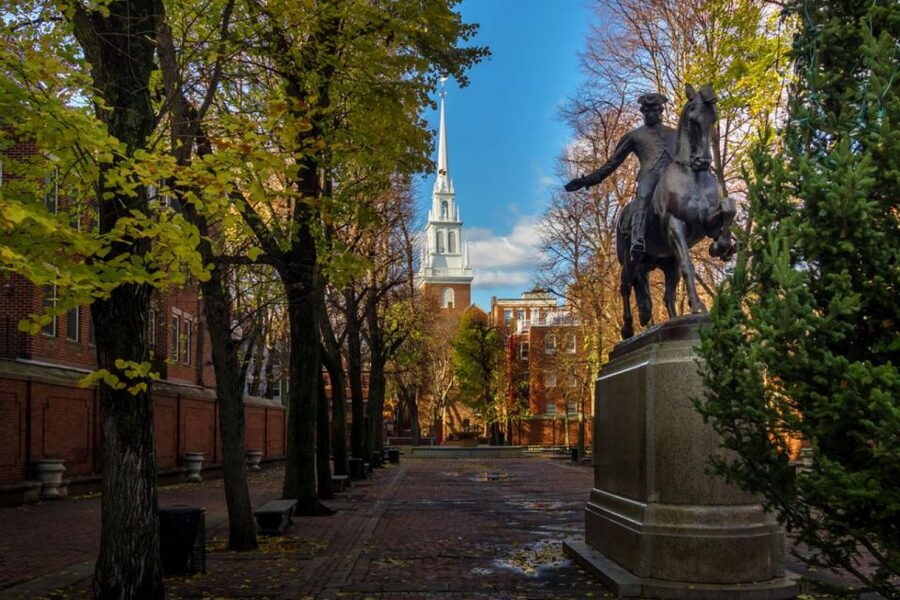
The Granary Burying Ground is one of the most important early stops. Its stones connect the physical city to the people who shaped the Revolution. The visit gives Mark a chance to introduce better-known names and explain why memorials and graves matter in a story built around public figures.
King’s Chapel Burying Ground adds a different tone. Old burial grounds can be easy to rush through, especially on a busy walking route, but here the stop helps show Boston’s age and the many loyalties that existed before independence. The route is not presenting the Revolution as a simple fight between two tidy groups. It leaves room for competing interests, uncertainty, and people who did not all want the same outcome.
That is one of the tour’s strengths. You get familiar names, but you also meet people who are often skipped in basic schoolbook accounts. Margaret Kemble Gage, the wife of British General Thomas Gage, and Dr. Joseph Warren help make the period less predictable. James Otis, a lawyer known for his forceful opposition to British policies, adds another voice to the political buildup.
The stops are guided rather than rushed photo breaks. Still, you should expect outdoor interpretation, walking, and standing. If you need frequent seating, tell Mark early. He has been attentive about finding places to rest, but Boston’s historic core does not offer a chair at every corner.
Old South Meeting House and the Boston Massacre
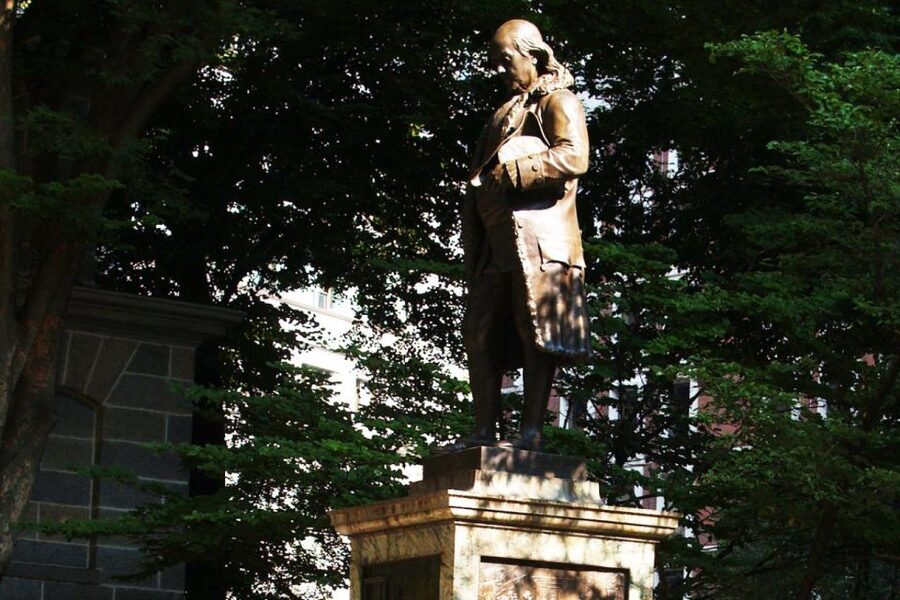
Old South Meeting House is where the tour’s political drama gathers force. This was the setting for large public meetings, including the gathering that helped lead to the Boston Tea Party. The useful question here is not only what was dumped into the harbor, but why the action carried such risk and what it was meant to accomplish.
Mark’s focus on people and consequences makes this stop more useful than a quick retelling of the tea protest. You consider the pressure on Boston’s residents, the response from British authorities, and the way each decision narrowed the room for compromise.
The Boston Massacre site is marked in the street, so do not expect a grand structure surrounding the event. That is part of its value. You are standing in an ordinary-looking part of modern Boston while hearing how a confrontation between soldiers and townspeople became a powerful political weapon.
The stop works best when the guide explains the competing versions of what happened. The point is not to flatten the event into a slogan. It is to understand how the incident was presented, how public anger grew, and how people such as John Adams responded. This is one place where a guide who can explain motives and outcomes adds real value.
More Revolutionary War tours in Boston
- Boston Tea Party Ships and Museum Admission
★ 4.5 · 2,512 reviews - The Full Revolutionary Story Epic Small Group Boston Walking Tour
★ 5.0 · 2,356 reviews - Boston’s Freedom Trail: A Revolutionary Walking Tour
★ 4.9 · 1,748 reviews - Boston’s Freedom Trail: A Revolutionary Walking Tour
★ 5.0 · 1,343 reviews
Faneuil Hall and the North End
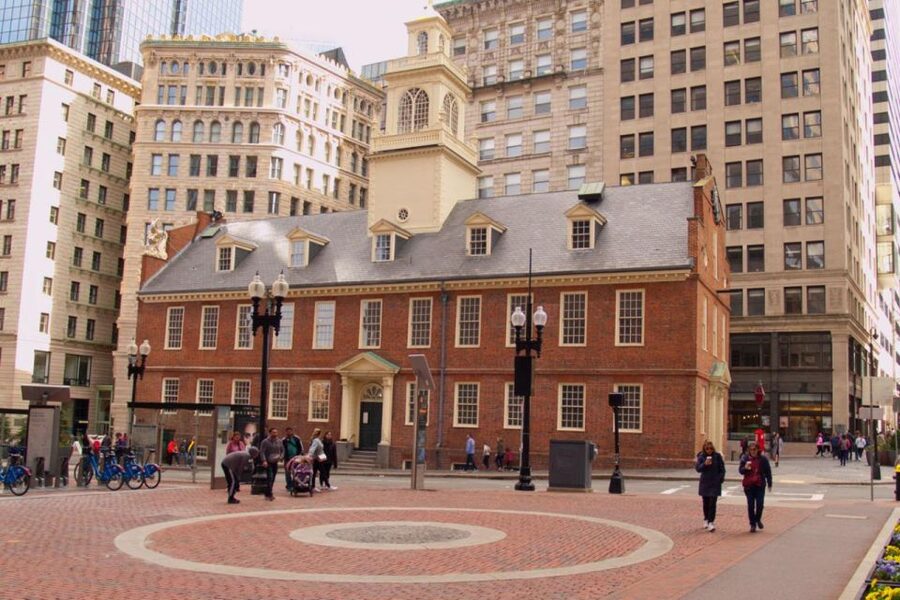
Faneuil Hall brings the group into one of Boston’s most recognizable public spaces. It is often called the Cradle of Liberty, and the tour uses it to show how speeches, gatherings, and public pressure shaped the colonial response.
This is a good point to ask questions. By now you will have heard several names and arguments, and Faneuil Hall helps connect them. The walk is not merely moving from one attraction to the next. It is showing how political ideas spread through a crowded town.
The route then heads into the North End for the Paul Revere House. Revere is often reduced to a single midnight ride, but the stop lets Mark place him in a wider setting. You hear more about his work, connections, and role in the events leading to war.
The house itself is an important physical link to colonial Boston. It is much smaller and more domestic than many visitors expect, which makes the stop a useful reminder that the Revolution was carried by people living ordinary lives as well as by famous leaders.
At Old North Church, the familiar lantern signal becomes part of a larger chain of decisions. The church is attractive, but the historical point matters more than the photo. The guide explains how information moved, why the signal mattered, and how the actions of a few people affected the next stage of the crisis.
Copp’s Hill and the Walk to Charlestown
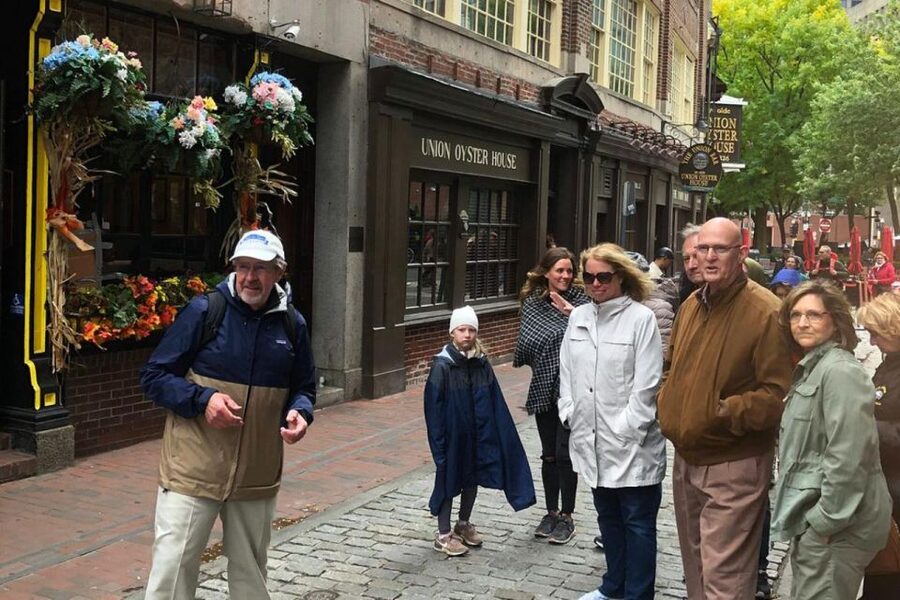
Copp’s Hill Burying Ground takes you farther into the North End and closer to the route’s military chapter. The elevated position helps with the geography of the coming battle, though the most important benefit is hearing how Boston and Charlestown fit together.
At this stage, the walking begins to feel like part of the lesson. The distance between sites shows that colonial Boston was compact but not tiny, and the movement toward Charlestown makes the shift from political protest to armed conflict more tangible.
This is also where the practical side of the tour matters. Four hours on foot is a serious outing, especially in summer. Mark has been careful about shade, hydration, sunscreen, bathroom pauses, and rest stops. Bring your own water, wear comfortable shoes, and carry snacks if you need them. He may have extra water or rain ponchos, but you should not rely on that.
The route is not suitable for wheelchair users, and anyone joining needs to manage about three miles of walking. The pace is described as steady rather than hurried, but this remains an active tour. People who enjoy seeing a city on foot will get more from it than anyone looking for a mostly seated history talk.
Bunker Hill, Where the Story Turns

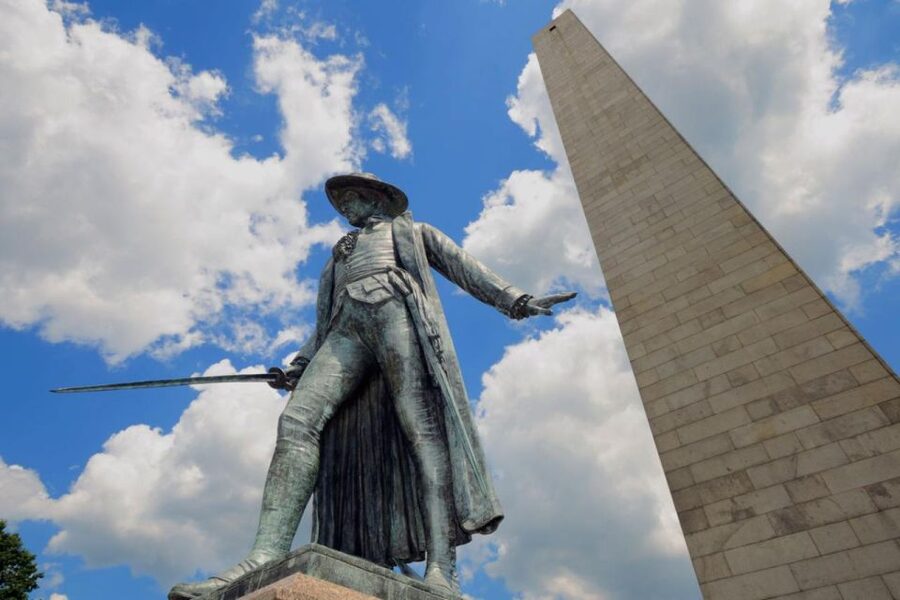
Bunker Hill is the major reason to choose this tour over a shorter Freedom Trail walk. Many city tours explain the battle from a distance or stop at the edge of Charlestown. This route actually takes you to Bunker Hill Monument and the surrounding historic area.
The monument is an imposing finish to the military portion of the story. Here, Mark can explain the battle’s place in the early Revolution, the fighting itself, and what the outcome meant even though the British captured the ground.
This is a good example of why the tour’s story-first method works. Bunker Hill is not presented as an isolated clash. The earlier stops have introduced the people and tensions that brought the armies there. You can better understand why Dr. Joseph Warren mattered, how British and colonial leaders assessed the fight, and why the battle became so important to both sides.
The monument area also gives the group a chance to pause after the long walk. You should expect a guided visit and historical explanation, not a promise of climbing or a detailed interior tour of every site. The supplied details do not say that all buildings are entered, so plan for a primarily outdoor walking experience with guided stops.
Ending at the USS Constitution
The tour finishes at the USS Constitution, the historic warship in the Charlestown Navy Yard. Ending here gives the Revolution a fitting maritime close. Boston’s resistance was tied to trade, shipping, customs enforcement, and Britain’s use of naval power, so the ship adds a wider military and economic view.
The finish is also the tour’s main logistical drawback. You start at the State House and end at USS Constitution, so you are not returned to Beacon Hill. Mark provides directions for getting back, and one past route suggestion involved taking a ferry for under three dollars per person toward the transit system near South Station. Treat that as a useful idea, not a guaranteed transfer arrangement, and allow extra time to make your own way onward.
The end location can work in your favor if you plan to continue exploring Charlestown or the Navy Yard. If you have a dinner reservation near the State House, build in time for the return journey.
What the $79 Price Buys You
At $79 per person, this is not the cheapest way to see a few Freedom Trail markers. It is a reasonable price if you want the entire route, live interpretation, Bunker Hill, and USS Constitution in one outing.
You are paying for four hours of a guide’s time, a small group, and a route that links sites other operators may treat separately. The included guide tip also removes one common end-of-tour question. Mark does not accept gratuity, according to the tour information, so the advertised price is closer to your final cost than it would be on a tour where a tip is expected.
Value depends on your interests. If you only want a quick introduction to Paul Revere and the Boston Tea Party, this walk may be too long. If you want context, lesser-known figures, maps, questions, and all the major stops, the longer format earns its keep.
Free cancellation up to 24 hours ahead and the reserve-now, pay-later option make it easier to fit into a changing Boston schedule. The tour is in English only.
Who Should Book This Boston Walking Tour?
I would choose this for a first visit when the Revolution is a main reason for coming to Boston. It also suits history fans who already know the basic names and want a fuller account of the arguments, personalities, and events behind them.
Families can make it work, especially with older children and teenagers who enjoy stories more than museum labels. One seventeen-year-old was reported to have found Mark’s presentation engaging, but three miles and four hours will still test younger children.
This is also a good choice for visitors who dislike large walking groups. The smaller format makes it easier to hear and ask questions, while Mark’s attention to slower walkers helps keep the group together.
I would skip it if you want a short, flexible outing, have limited mobility, or need to finish back at the State House. You should also think twice on a very hot day unless you are ready with water, sunscreen, and comfortable shoes.
Should You Book It?
Book this tour if you want the full Freedom Trail in one connected story, with Bunker Hill and USS Constitution included rather than left for another day. The best reasons are Mark’s detailed storytelling, the small group, the focus on lesser-known figures, and the practical care given to pacing and rest.
Do not book it simply because you have four free hours. This is a long walk with a one-way route and a finish in Charlestown. For the right visitor, though, $79 buys more than a list of landmarks. It gives you a clear way to understand why Boston became the starting ground for a revolution.
FAQ
How long is the Boston Freedom Trail tour?
The tour lasts four hours.
How much walking is required?
You need to be able to walk about three miles. The route includes regular walking between historic sites, along with guided stops and rest pauses.
Where does the tour begin?
Meet at the Massachusetts State House, 24 Beacon Street, across from the main steps at the Robert Gould Shaw Memorial.
How will I recognize the guide?
The guide wears a white baseball cap with the Walk & Talk Boston logo and holds a green sign.
Where does the tour finish?
The tour ends at the USS Constitution in Charlestown.
Does the tour visit Bunker Hill and the USS Constitution?
Yes. The route includes Bunker Hill Monument, Bunker Hill, and the USS Constitution.
Is the tour suitable for wheelchair users?
No. The activity is not suitable for wheelchair users.
What language is the tour offered in?
The live guided tour is offered in English.
Newest Boston tours we have written up
- Boston’s Freedom Trail: A Self-Guided Audio Tour★ 4.0 · 18 reviews
- Boston’s Freedom Trail: A Self-Guided Tour of All 16 Sites★ 5.0 · 14 reviews
- Washington D.C. Cherry Blossom,Baltimore 3-Day Tour from Boston★ 4.5 · 7 reviews
- Boston Self-Guided Audio Tour Bundle: Freedom Trail & More★ 4.5 · 5 reviews
- True Crime Tour of Boston★ 4.0 · 17 reviews
- Family Friendly Guided Bike Tour of Boston★ 4.5 · 22 reviews
- Freedom Trail Experience★ 5.0 · 8 reviews
- Self-Guided Audio Tour of Boston North End★ 4.5 · 3 reviews
Boston Freedom Trail Tours, compared.

Freedom Trail History Small Group Walking Tour
Read our review →
Boston Freedom Trail Walking Tour with Costumed Guide
Read our review →
Boston Food & History: Pizza, North End & Freedom Trail
Read our review →
Boston’s Freedom Trail: A Revolutionary Walking Tour
Read our review →Freedom Trail History Small Group Walking Tour
Read our review →Boston’s Freedom Trail: A Revolutionary Walking Tour
Read our review →
Boston Freedom Trail History Pub Crawl Small-Group Tour
Read our review →Browse the lists this tour appears in