
Review · BOSTON REVOLUTIONARY WAR TOURS
Small Group Revolutionary Tour of Lexington, Concord, and Boston
The most useful feature of this tour is its full Revolutionary timeline. You begin with Paul Revere in Boston, follow his ride to Lexington and Concord, then return to Cambridge and Charlestown to trace the war’s early command and first major battle.
I like the small maximum of nine people, which should make it easier to ask questions and hear the guide. I also like that two key museum admissions, parking, fuel, and bottled water are included. The tradeoff is the length: seven to nine hours is a serious day, and much of it takes place outdoors.
Key points at a glance
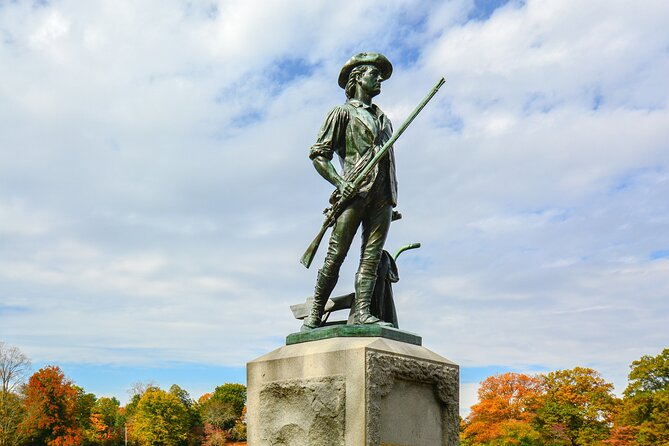
- Paul Revere’s route comes first: Start at the Paul Revere statue and Old North Church before following the route toward Lexington.
- The tour connects places to events: Lexington Green, the capture site, North Bridge, and Battle Road make the opening shots easier to understand.
- Small group size matters: With no more than nine people, the outing has a more personal feel than a large coach tour.
- Museum time is built in: Old North Church and Concord Museum admissions are included.
- Lunch is on your own: You get about 75 minutes in Concord, but food and snacks are not included.
- The day ends with major military sites: Cambridge Common, Washington’s Harvard connection, and Bunker Hill round out the story.
Why this Revolutionary War tour works as a complete story
Many Boston history outings focus on a short Freedom Trail walk or a single battlefield. This one gives you a broader sequence. You see the warning system in Boston, the alarm spreading west, the opening clash in Lexington, the fight at Concord, the British retreat, and the later organization of the Continental Army.
That sequence is the main reason I find the tour useful. Revolutionary sites can feel scattered on a map. Here, the driving time links them into a story, and the guide can explain how one event led to the next.
The day begins at 10 a.m. at the Paul Revere statue in Paul Revere Mall, in Boston’s North End. The tour then returns to the North End at the end, with drop-off there or at a hotel within 1.5 miles of the neighborhood.
This is not a casual hop-on, hop-off excursion. You will move between city streets, village greens, museum galleries, taverns, cemeteries, and sections of the Battle Road Trail. A moderate level of physical fitness is recommended, and comfortable walking shoes are a smart choice.
More Revolutionary War tours in Boston
- Boston Tea Party Ships and Museum Admission
★ 4.5 · 2,512 reviews - The Full Revolutionary Story Epic Small Group Boston Walking Tour
★ 5.0 · 2,356 reviews - Boston’s Freedom Trail: A Revolutionary Walking Tour
★ 4.9 · 1,748 reviews
Paul Revere Mall and Old North Church set the stage
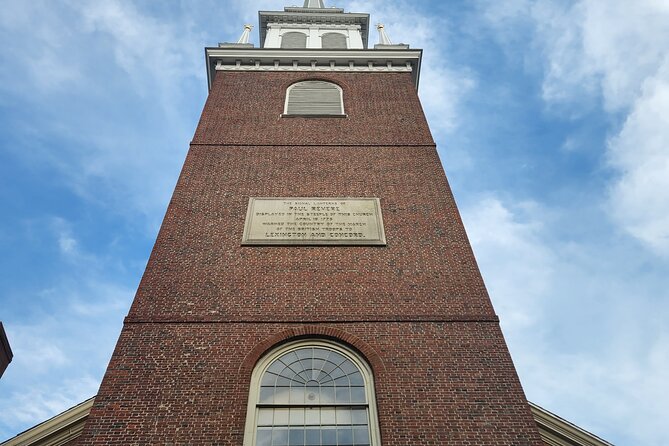
The opening stop at Paul Revere Mall lasts about 15 minutes. The bronze statue gives you an immediate starting point, while the Old North Church rises behind it as a reminder that this story began with a warning sent across Boston Harbor and the surrounding countryside.
The North End setting adds useful context. You are not just looking at a famous statue. You are hearing about colonial life in the neighborhood on the eve of the Revolution, before following Revere’s role in the events of April 1775.
The next 25 minutes are spent inside Old North Church and its historic site. Admission is included. This is one of the tour’s strongest early stops because the building gives a physical home to the lantern signal used to alert the countryside that British troops were moving by sea.
The church visit also helps separate legend from action. The familiar signal is only one piece of the story, and the guide can place it within the larger emergency that sent riders toward Lexington. If church interiors are not your main interest, the visit is still short enough to keep the day moving.
Lexington Green turns the story into a real place
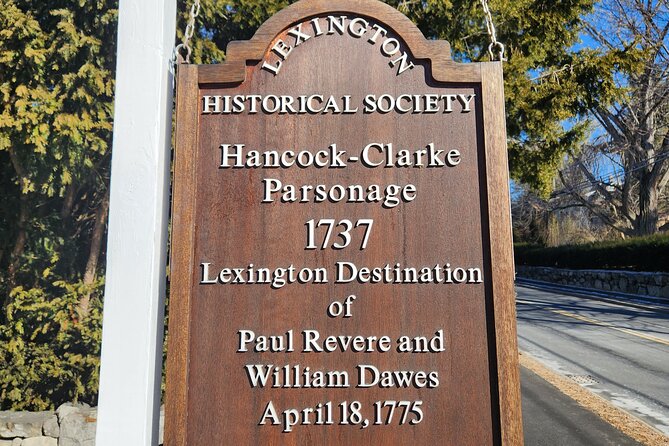
From Boston, the tour follows the route associated with Paul Revere’s ride toward Lexington. At Hancock-Clarke House, you spend about 40 minutes learning about the house where Revere warned John Hancock and Samuel Adams that British troops were approaching.
This stop matters because it shifts the story from a general account of alarm to a specific room, house, and decision. The tour also makes clear that Revere’s ride did not end with a triumphant arrival. His night became more complicated as the British patrols moved through the area.
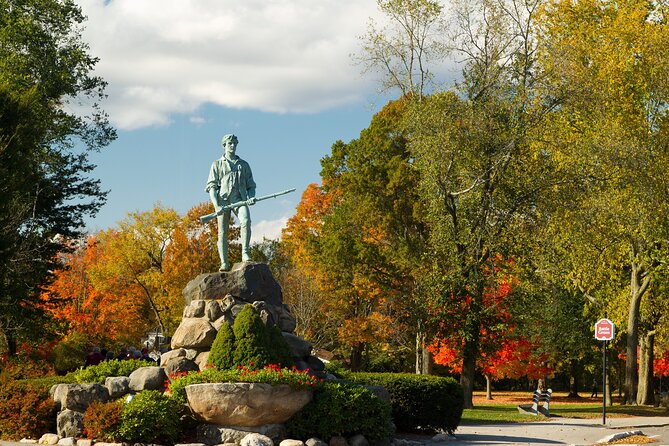
Lexington Battle Green is next, with about 25 minutes to examine the site of the first armed clash of the Revolution. The green is open and easy to picture, which makes it a good place to pause over the confusion of that April morning.
The phrase first shot can sound neat and tidy in a textbook. On the ground, the questions are less neat: who arrived first, who gave orders, and how a tense confrontation turned into gunfire. Your guide will explain what happened on April 19, 1775, rather than leaving you with a slogan alone.
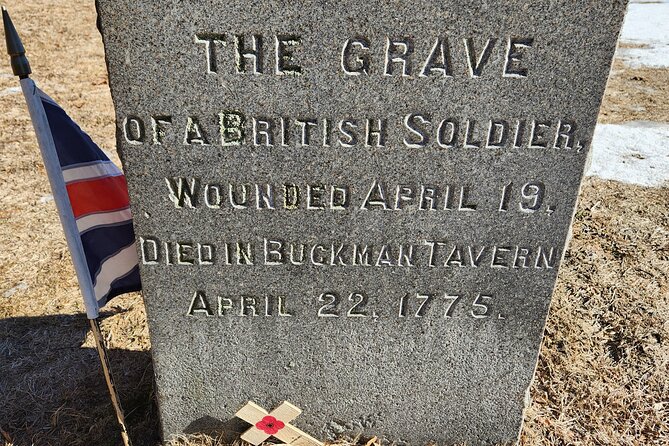
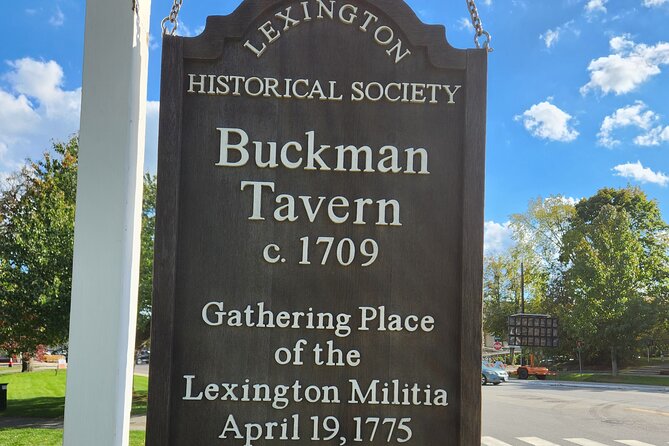
Buckman Tavern gets a shorter 10-minute stop. It served as a meeting place for local colonists waiting for the British. Because the visit is brief, think of it as a focused exterior or orientation stop rather than a long tavern tour.
The capture site shows the limits of the Midnight Ride
The Paul Revere capture site is given about 20 minutes. This is a useful correction to the popular version of the ride, which often ends with Revere reaching Lexington and warning everyone in time.
The real route included danger, uncertainty, and interruption. At the capture site, you learn how British troops stopped Revere and what that meant for the night’s warning effort. The point is not to diminish Revere’s role. It is to put his actions in their proper setting, alongside William Dawes, Samuel Prescott, and the local network that carried the alarm onward.
The stop also gives the day a human scale. Instead of treating the Revolution as a series of grand speeches and battlefield maps, you see how quickly an ordinary road could become a military checkpoint.
More Lexington and Concord day trips
- 90-Min Narrated Trolley Tour of Lexington and Concord, MA
★ 4.5 · 358 reviews - From Boston: Full-Day Historical Lexington & Concord Tour
★ 4.8 · 111 reviews - Lexington & Concord 250th Birthday Tour with Concord Museum Entry
★ 4.5 · 83 reviews - Lexington, MA Battle Green Walking Tour with Costumed Guide
★ 5.0 · 59 reviews
Concord and the North Bridge explain the first fighting
The Old North Bridge is one of the day’s central stops. You have about 20 minutes to stand at the bridge associated with the phrase the shot heard around the world and to hear why that phrase became attached to the event.
This is a place where the setting does much of the teaching. The bridge, river, and surrounding open ground help you understand why both sides cared about the position. The event was not simply a dramatic exchange of fire. British troops were searching for colonial military supplies, and local militia members were gathering in response.
At Old Hill Burying Ground, the guide presents Concord from the point of view of the British officers. The stop lasts about 15 minutes and adds an entertaining human detail: local residents hid war supplies in clever ways to keep them from being found.
That lighter material is welcome during a long day. It shows that resistance was not always a formal battle. Sometimes it meant concealment, local knowledge, and quick thinking.
You then get about 75 minutes of free time in Concord for lunch and shopping. Lunch is not included, so plan to buy your meal during this break. The pause is important because the tour has already covered several stops, and you will want time to eat, use the facilities, and reset before the afternoon portion.
Concord Museum brings the artifacts indoors
The 45-minute visit to Concord Museum is included in the price. For many people, this will be the tour’s best indoor stop because it contains original objects connected with the opening of the Revolution.
One especially notable item is the lantern associated with the Old North Church signal on the night of April 19, 1775. Seeing an actual object linked to the opening warning gives more weight to the morning’s visit in Boston.
The museum also holds preserved Revolutionary-era artifacts. I appreciate this change of pace. Outdoor sites help you understand distance and terrain, while museum objects show what people actually used, carried, and saved.
The time is long enough for a focused visit, but not so long that the museum takes over the whole day. If you want to read every label slowly, you may feel pressed. The guide’s explanations should help you identify the objects that matter most.
Battle Road shows the cost of the British retreat
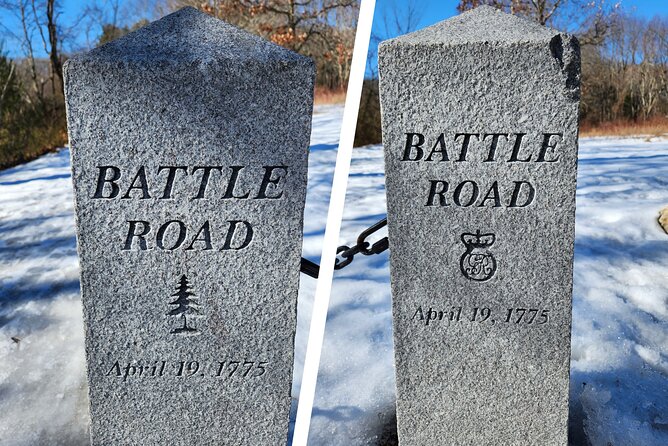
Hartwell Tavern and the Battle Road Trail provide one of the most physical parts of the excursion. The stop lasts about 20 minutes and includes the best-preserved stretch of the trail, along with the historic tavern.
Here the story changes from the opening encounter to the British retreat from Concord. The road helps you picture how exposed the troops became as colonial militia gathered along the route. This was not one tidy battle at one fixed point. It was a long, damaging journey back toward Boston.
You will walk at least a portion of the trail, so this is where sturdy shoes and a reasonable level of fitness matter most. The tour includes several short walks rather than one long hike, but the day’s total time on your feet can add up.
The Thomas Nelson Jr. House site receives about 15 minutes. It marks a wooded area connected with the colonists’ response to earlier casualties on Lexington Battle Green. The trees and terrain help you think about concealment, movement, and how fighting spread beyond the famous green.
Munroe Tavern is a 10-minute drive-by stop. The British used it as a field hospital and headquarters on April 19, 1775. George Washington later stayed there during a commemorative visit to Lexington.
Since this is a drive-by, you should not expect a full interior visit. Still, the stop adds another layer to the day: the same buildings could serve military needs during the conflict and later become places of public memory.
Cambridge connects battlefield events to Washington
At Cambridge Common, you spend about 20 minutes at the location where George Washington first took command of the Continental Army. This stop moves the story beyond the first day of fighting and toward the creation of an organized colonial force.
The change is significant. Lexington and Concord show local militia responding to a crisis. Cambridge shows the colonies trying to turn that response into a sustained army under central command.
The tour also drives by Wadsworth House, where Washington lived for six months while commanding the newly formed army from Harvard University. The visit lasts about 15 minutes, but it is a drive-by rather than a full house tour.
I find this part useful because it places Washington in Cambridge, not just in distant portraits and later legends. You see how Boston’s surroundings became a command center during the early months of the war.
Bunker Hill closes the day with a major battle
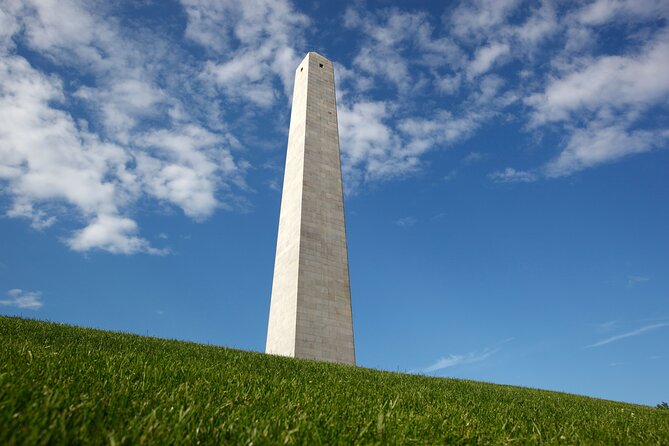
The final major stop is Bunker Hill Monument, with about 45 minutes to see the monument and discuss the first official battle of the American Revolution.
The site gives the day a strong closing point. You have followed a chain of alarms and local clashes, then watched the colonial side organize. Bunker Hill shows that the conflict had become a larger military contest.
Your guide will explain the story behind the order often paraphrased as waiting until you can see the whites of their eyes. The saying is memorable, but the surrounding battle details are what make the stop worthwhile.
The monument is also a fitting final view because it connects the local geography to Boston’s wider wartime role. After the stop, the tour returns toward the North End, with the option of being dropped at your hotel within 1.5 miles of the neighborhood.
What the $225 price includes
At $225 per person, this is not a budget sightseeing ride. Its value depends on how much you want from a full day of Revolutionary War interpretation rather than simple transportation between sites.
Two admissions are included: Old North Church and Concord Museum. Parking fees, fuel surcharge, bottled water, and an air-conditioned vehicle are also covered. Those practical inclusions matter on a day that crosses several communities and includes limited parking near popular historic areas.
You still pay for lunch and snacks. The Concord break gives you time to choose your own meal, but you should budget for it and bring any extra food you may need. The start time is 10 a.m., so breakfast before pickup is sensible.
The small group size is a major part of the value. With a maximum of nine people, you are more likely to hear explanations clearly and ask about details that interest you. A guide such as Jenny can make the connected timeline easier to follow, and her strong command of the subject was specifically highlighted in the available feedback.
The main cost question is simple: if you only want to see the Freedom Trail, you can spend far less in Boston. If you want one organized day linking Boston, Lexington, Concord, Cambridge, and Bunker Hill, the price is easier to justify.
Who should book this full-day outing
I would recommend this tour to you if the American Revolution is a main reason for visiting Boston. It suits first-time visitors who want the big picture, families with older children who can handle a long day, and anyone who prefers a guide to explain the sites instead of reading plaques alone.
It is also a good fit if you want to avoid arranging separate transportation to Lexington and Concord. The air-conditioned vehicle, parking coverage, and small group remove several planning chores.
I would think twice if you dislike structured days or want long, quiet visits at each site. Sixteen stops create variety, but several are short, drive-bys, or brief roadside explanations. The tour favors coverage and connection over a slow look at every building.
The activity is offered in English, includes mobile ticketing, and allows service animals. Confirmation is provided at booking. Free cancellation is available up to 24 hours before the start time, while changes or cancellations inside that window are not accepted.
Should you book the Lexington and Concord Revolutionary tour?
Book it if you want the Revolution explained as a sequence rather than a pile of famous names. The strongest parts are the small group, the route from Paul Revere’s Boston to the opening battles, the Concord Museum, and the chance to see the actual ground where the story unfolded.
Skip it if you want a relaxed museum day or a short Boston walk. This is a long, active outing with a fixed 10 a.m. start, limited time at some stops, and lunch on your own. For history-minded visitors who value clear guidance and efficient transportation, it offers a solid way to connect Boston’s most important Revolutionary War sites in one day.
FAQ
How long is the tour?
The experience lasts approximately seven to nine hours.
Where does the tour start?
It begins at 10 a.m. at the Paul Revere statue in Paul Revere Mall, Boston, Massachusetts.
Where does the tour end?
The tour ends at 600 Commercial Street in Boston’s North End. Your guide can also drop you in the North End or at a hotel within 1.5 miles of the North End.
How many people can join the tour?
The group has a maximum of nine people.
Are admissions included?
Admission to Old North Church and Concord Museum is included. The other listed stops have no admission charge as part of the tour.
Is lunch included?
No. You receive about 75 minutes of free time for lunch and shopping in Concord, but lunch and snacks are not included.
What is included in the $225 price?
The price includes bottled water, an air-conditioned vehicle, the fuel surcharge, parking fees, and the two listed museum admissions.
Can I cancel for a full refund?
Yes. You can cancel at least 24 hours before the experience starts for a full refund. Changes or cancellations made less than 24 hours before the start time are not accepted.
Newest Boston tours we have written up
- Boston’s Freedom Trail: A Self-Guided Audio Tour★ 4.0 · 18 reviews
- Boston’s Freedom Trail: A Self-Guided Tour of All 16 Sites★ 5.0 · 14 reviews
- Washington D.C. Cherry Blossom,Baltimore 3-Day Tour from Boston★ 4.5 · 7 reviews
- Boston Self-Guided Audio Tour Bundle: Freedom Trail & More★ 4.5 · 5 reviews
- True Crime Tour of Boston★ 4.0 · 17 reviews
- Family Friendly Guided Bike Tour of Boston★ 4.5 · 22 reviews
- Freedom Trail Experience★ 5.0 · 8 reviews
- The Ghosts of Boston’s Past Haunted Self-guided Tour★ 3.5 · 4 reviews
Boston Revolutionary War Tours, compared.

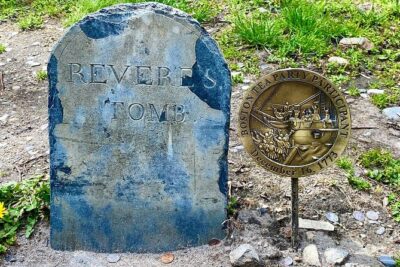
The Full Revolutionary Story Epic Small Group Boston Walking Tour
Read our review →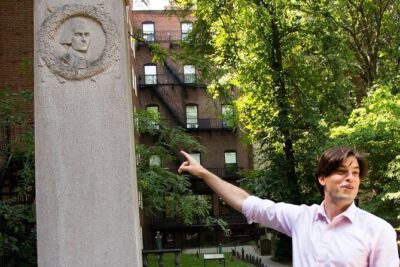
Boston’s Freedom Trail: A Revolutionary Walking Tour
Read our review →Boston’s Freedom Trail: A Revolutionary Walking Tour
Read our review →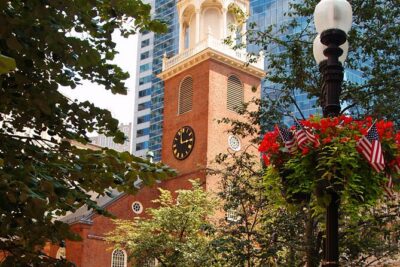
Entire Freedom Trail Walking Tour: Includes Bunker Hill and USS Constitution
Read our review →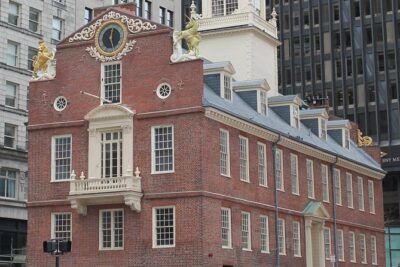
Boston’s Revolutionary and Drunken Past with Ye Olde Tavern Tours
Read our review →
Boston History & Highlights Tour: From Revolution to Today
Read our review →
Freedom Trail, Bunker Hill, & USS Constitution Tour
Read our review →Browse the lists this tour appears in