
Review · BOSTON FREEDOM TRAIL TOURS
Private Walking tour of Boston’s Freedom Trail and more!
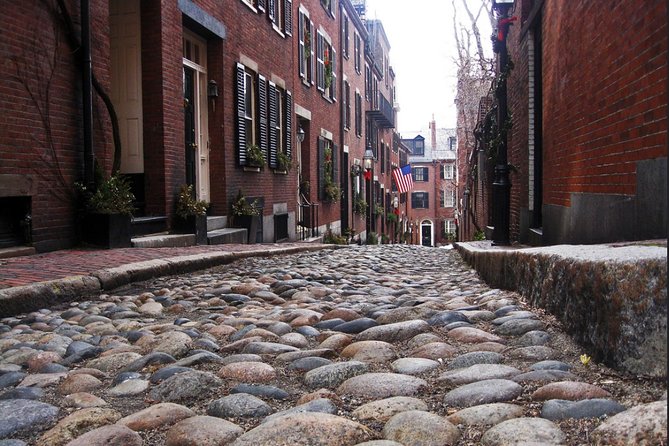
Boston’s Freedom Trail is best understood on foot, one short block and one old brick building at a time. This private three-hour walk connects Boston Common, Faneuil Hall, the North End, and the churches and burial grounds that gave the American Revolution its cast of characters.
I like the flexible pace, especially for families or anyone who wants time for questions. I also like the chance to step beyond the standard trail, with guides such as Neil taking groups to places like Pi Alley, the Spite House, and the Holocaust Memorial. The main drawback is that admissions to Paul Revere’s House and Old North Church cost extra, and three hours can feel brisk if you want to go inside everything.
Key points to know before you book
- Private from start to finish: Only your group participates, so your guide can adjust the pace, answer questions, and make extra stops.
- A strong North End finish: The walk ends near 282 Hanover Street, close to Italian restaurants, pastries, snacks, and lunch options.
- Solid family potential: Guides Manny and Neil have kept children and teens involved with stories, humor, and questions rather than costume theatrics.
- Many major landmarks are free to view: Boston Common, Granary Burying Ground, Faneuil Hall Marketplace, and Copp’s Hill Burial Ground do not require admission.
- Optional indoor visits cost extra: Paul Revere’s House and Old North Church are not included, though a special low rate is offered.
- Plan for a real walk: The route covers central Boston and the North End, with a moderate fitness level recommended.
Why a private Freedom Trail walk works well
A large group can make Boston’s narrow historic streets awkward. You may hear only half the guide’s story, wait for people at every corner, or lose time gathering outside a church. This tour avoids that problem. Your guide speaks to your group alone, and the schedule can respond to your interests.
That matters most when your group includes children, older family members, or people with different walking speeds. Ellen adjusted the pace for a group member who could not walk as quickly, while Ernie and Tracy were praised for stopping when the group wanted a closer look. You get a more useful morning when the guide can pause rather than push everyone along.
The tour is conducted in English and begins at 10 a.m. at 139 Tremont Street, beside Boston Common. It ends in the North End near 282 Hanover Street. That is a sensible design: you begin with the city’s oldest public park and finish where you can choose lunch or a pastry.
The advertised duration is about three hours. That gives you enough time for a clear overview, but not enough for lengthy interior visits at every paid site. I would treat the walk as an orientation with selected entrances, not as a full museum day.
More ways to walk the Freedom Trail
- Boston: Freedom Trail History Small Group Walking Tour
★ 5.0 · 6,450 reviews - Boston Freedom Trail Walking Tour with Costumed Guide
★ 4.5 · 2,531 reviews - Boston Food & History: Pizza, North End & Freedom Trail
★ 5.0 · 1,772 reviews
Boston Common and the State House set the scene
Boston Common is the natural opening chapter. Established in 1634, it is America’s oldest public park, created when Puritan colonists purchased rights to the land from William Blackstone, the first European settler in the area.
Your guide spends about 20 minutes here. That is enough time to understand the Common as more than a pleasant patch of green. It was part of Boston’s early civic life, and it still gives you a sense of how the old city grew around a shared public space.
Next comes the Massachusetts State House, designed by Charles Bulfinch and opened in 1798. It houses both the executive and legislative branches of Massachusetts government and occupies land beside the former Hancock mansion.
The tour allows about 10 minutes here, with admission not included. The stop is mainly an exterior look at the building and its place in Boston’s political center. If you hoped for an extended interior visit, you should ask your guide what can fit into the schedule.
Granary Burial Ground brings names to life
Granary Burying Ground is one of the strongest stops on this route. Established in 1660, it contains about 2,300 markers and the graves of major figures from the colonial and revolutionary period.
The name comes from the 12,000-bushel grain storage building that once stood nearby. Inside the compact cemetery, the guide can connect names on the stones to the political arguments and street events you will see later.
You have about 25 minutes here, and the stop is free. That is a good use of time. Burial grounds can seem like a quick photo stop when visited alone, but with a guide they become a record of Boston’s early power structure, religious life, and public memory.
The ground is uneven in places, so wear shoes that can handle old paving and a steady walk. You do not need special equipment, but the tour does call for moderate physical fitness.
Boston Latin School and the Old Corner Bookstore
Near the Granary is a small but telling marker for Boston Latin School, founded in 1635. It is the oldest public school in America. The school offered free education to boys, while girls generally received private instruction at home.
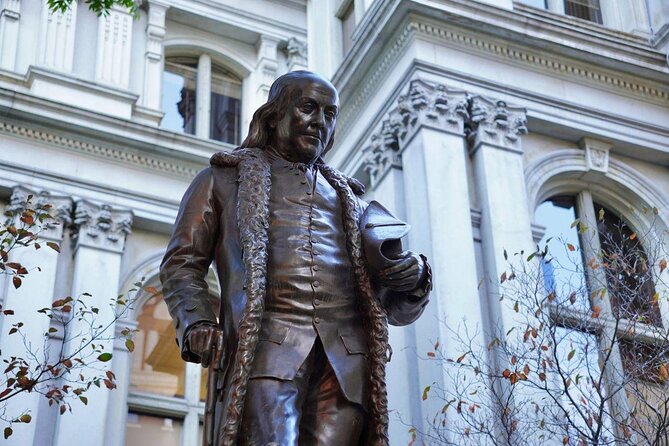
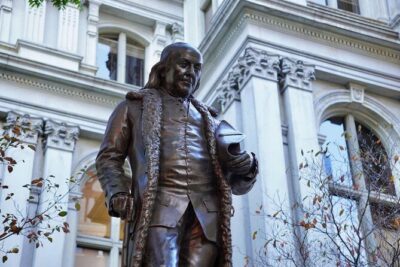
A mosaic and statue of Benjamin Franklin mark the site of the original schoolhouse. Franklin was a former student, and the stop takes only about five minutes. It is a quick pause, but it helps explain how education and public life were organized in early Boston.
The Old Corner Bookstore follows with another brief stop. Built in 1718, it is downtown Boston’s oldest commercial building. In the 19th century, it housed Ticknor and Fields, the publisher associated with works such as Thoreau’s Walden, Hawthorne’s The Scarlet Letter, Longfellow’s Midnight Ride of Paul Revere, and the Atlantic Monthly.
You spend roughly five minutes here. The building is not a major interior attraction on this tour, but its publishing story adds a welcome literary note to a route usually dominated by battles, taxes, and revolution. It also survived a demolition threat in 1960, and its leases now help support preservation projects in Boston neighborhoods.
More walking tours in Boston
- Harvard University Campus Guided Walking Tour
★ 4.5 · 3,632 reviews - The Full Revolutionary Story Epic Small Group Boston Walking Tour
★ 5.0 · 2,356 reviews - Boston’s Freedom Trail: A Revolutionary Walking Tour
★ 4.9 · 1,748 reviews - Boston: Freedom Trail History Small Group Walking Tour
★ 4.9 · 1,590 reviews
Faneuil Hall and Quincy Market explain public Boston
Faneuil Hall is one of the essential Freedom Trail stops. It became known as the Cradle of Liberty and the home of free speech, though its original purpose was not to become a revolutionary meeting place.
The hall hosted America’s first town meeting and later rang with sermons, public arguments, and debate over the tea tax. This is where political ideas moved from private complaints to public action. Your guide can help connect the building to the Boston Tea Party story without turning the stop into a simple list of famous names.
About 25 minutes are set aside for Faneuil Hall Marketplace. The area is free to enter and includes shops and places to eat. Quincy Market is adjacent, so you may be tempted to stop for food, but a full meal would cut into the rest of the walk.
This is also a useful place to ask about the route ahead. The tour later moves toward the North End, where the streets become narrower and the historic houses more intimate. If you need a short pause, Faneuil Hall is a practical point to take one.
Small surprises near the market
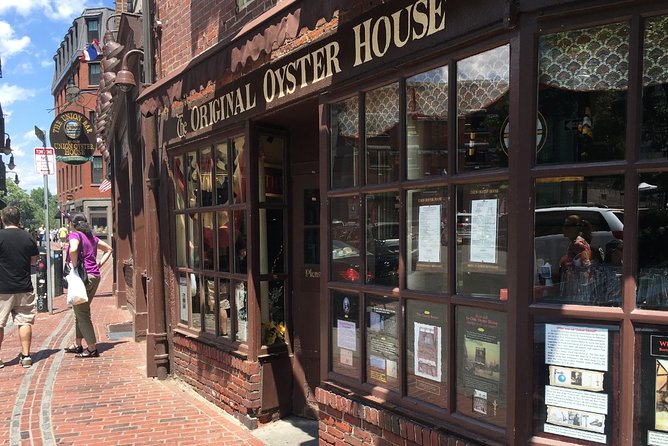
The Boston Stone is a five-minute stop with an odd little story. It is a round rock set into the wall of an 18th-century building. Your guide explains why it is there, turning an easy-to-miss object into a quick lesson in Boston’s older street life.
The walk also passes the Union Oyster House and other sites around Marshall Street. The Union Oyster House is known as the oldest continuously operating restaurant in America. You do not need to dine there to appreciate the setting, but the area makes a good transition from formal revolutionary landmarks to the working streets of the North End.
This is where a private guide can add real value. Neil’s route included Pi Alley, the Spite House, and the Holocaust Memorial, showing how the best version of the walk need not follow every turn of the painted Freedom Trail line. Ask about extra stops if your group prefers local oddities and modern history along with the famous colonial sites.
Paul Revere’s House gives the Revolution a human scale
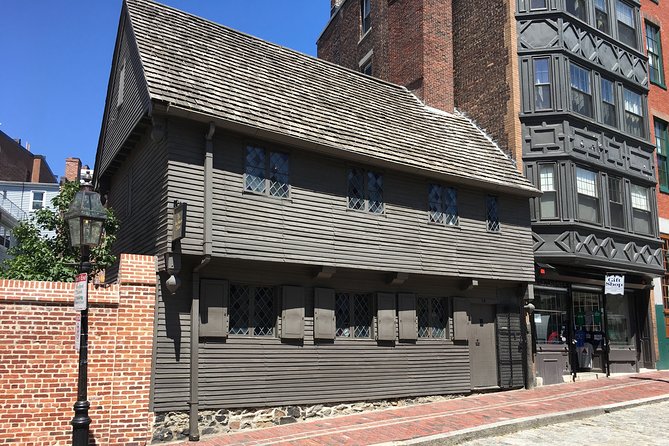
The route continues into the North End to Paul Revere’s House at 19 North Square. Revere left this small wooden home on the night of April 18, 1775, beginning the ride that made his name famous.
The house is Boston’s oldest building and one of the few surviving 17th-century dwellings in a large American city. That makes it more interesting than a grand public monument. You are looking at a modest home in a crowded neighborhood, not a palace built to celebrate a national hero.
The scheduled stop lasts about 25 minutes. Admission is not included, although the tour offers a special low rate. If you want to enter, allow for the extra cost and remember that the guide may need to keep the group moving to reach Old North Church and Copp’s Hill on time.
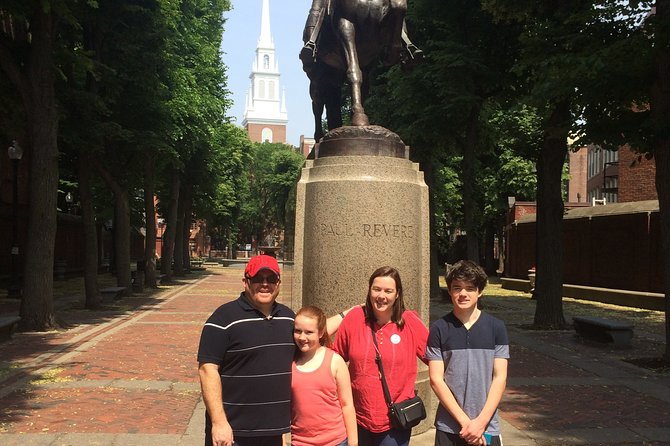
Paul Revere’s story is often simplified into a single midnight ride. A good private guide can place him back into his wider setting as a silversmith, neighbor, and participant in Boston’s tense political life. That kind of explanation is one reason a small private group is preferable here. You can ask questions without holding up a large crowd.
Old North Church and the two-lantern signal

Old North Church is another paid stop and receives about 25 minutes. Built in 1723, it is Boston’s oldest surviving church building and one of the city’s most visited historic sites.
Its famous moment came on April 18, 1775, when sexton Robert Newman climbed the steeple and held two lanterns aloft. The signal told Paul Revere that British troops were moving by sea across the Charles River rather than by land toward Lexington and Concord.
The church is worth considering as your main optional admission. The building itself adds a physical setting to the story, while the lantern signal gives the Freedom Trail one of its clearest dramatic scenes. Still, the extra visit may not suit every group, especially if you have already spent time inside another historic site or need a slower pace.
The tour provider offers a special low admission rate, but the exact amount is not given here. Confirm the current charge when booking or with your guide on the day.
Copp’s Hill ends the walk among working Bostonians
Copp’s Hill Burial Ground is the final scheduled stop. Named for shoemaker William Copp, it became the burial place of merchants, artisans, and craftspeople from the North End.
The cemetery receives about 20 minutes and is free to enter. Its importance is different from Granary Burying Ground. Granary is closely tied to famous public figures, while Copp’s Hill gives more attention to ordinary working people who formed the neighborhood.
Ending here makes sense. You have moved from Boston’s public park and government buildings through meeting halls, shops, homes, churches, and burial grounds. The route finishes with a quieter look at the people who lived and worked in the North End.
Once the walk ends, you are already near Hanover Street, with many Italian restaurants and snack options. The endpoint is practical if you want lunch right away, though the tour does not include a meal.
The guides make the biggest difference
The strongest part of this experience is not simply the list of buildings. It is the guide’s ability to make the walk fit your group.
Tracy was flexible about extra stops. Manny kept four children, ages 8 to 13, engaged throughout the morning. Neil used stories and side trips to keep the route from becoming a dry recital of dates. Cindy answered questions, corrected common misunderstandings, and offered suggestions for what to see after the tour.
That flexibility also carries a warning. The experience depends heavily on who leads your group. One family found its guide too quiet and lacking energy, with the children losing interest. In a private setting, a guide who speaks clearly and includes younger members matters a great deal.
When you meet your guide, tell them what your group wants. Mention children’s ages, walking limits, interest in architecture or politics, and whether you want to enter the paid sites. A private tour gives you the chance to shape the morning, but you need to speak up early.
Value, timing, and practical limits
A private walk normally costs more than joining a large shared group, and the exact tour price is not provided here. The value improves as your group grows because the guide fee is shared among your party. For a couple, the premium may feel high. For a family or group of friends, the control, private questions, and quieter listening can justify the extra expense.
The 10 a.m. start gives you a useful first half of the day. Three hours is long enough to learn the city’s basic story without turning the morning into an endurance test. It is also short enough that you can add lunch in the North End afterward.
You should expect outdoor walking in changing weather. The experience requires good weather, and poor conditions may lead to a new date or a full refund. However, the booking is otherwise non-refundable and cannot be changed for personal reasons, so choose your date carefully.
Service animals are allowed, and the meeting point is near public transportation. Only your group participates, which is the central advantage of the format.
Who should book this Boston walk?
I would choose this tour if you want a first look at Boston’s historic core and prefer conversation to a fixed script. It suits families, multigenerational groups, first-time visitors, and anyone who wants to ask questions without competing with 20 other people.
It is also a good choice if you want more than the headline landmarks. Ask about side stops such as Pi Alley, the Spite House, and the Holocaust Memorial, since the itinerary can be adjusted to your interests.
I would choose something else if your main goal is a long visit inside every museum and church. The route covers a lot of ground in three hours, and optional admissions take time and cost extra. You will get the best value by treating the walk as a well-guided introduction, then returning on your own to the one or two sites that deserve more time.
FAQ
How long is the private Boston walking tour?
The tour lasts approximately three hours.
Where does the tour begin?
It begins at 139 Tremont Street, Boston, Massachusetts 02111, at 10 a.m.
Where does the tour end?
It ends near 282 Hanover Street in Boston’s North End Italian District, close to restaurants and snack options.
Is this a private tour?
Yes. Only your group participates in the activity.
What language is the tour offered in?
The tour is offered in English.
Is a guide included?
Yes. A private tour guide is included.
Are admissions to Paul Revere’s House included?
No. Admission to Paul Revere’s House is optional and not included, though a special low rate is offered.
Are admissions to Old North Church included?
No. Admission to Old North Church is optional and not included, though a special low rate is offered.
Is the tour suitable for children?
Yes, families can take part, and guides have adapted the pace and stories for children and teens. The tour requires a moderate level of physical fitness.
What happens if the weather is poor?
The tour requires good weather. If it is canceled because of poor weather, you will be offered another date or a full refund.
Newest Boston tours we have written up
- Boston’s Freedom Trail: A Self-Guided Audio Tour★ 4.0 · 18 reviews
- Boston’s Freedom Trail: A Self-Guided Tour of All 16 Sites★ 5.0 · 14 reviews
- Washington D.C. Cherry Blossom,Baltimore 3-Day Tour from Boston★ 4.5 · 7 reviews
- Boston Self-Guided Audio Tour Bundle: Freedom Trail & More★ 4.5 · 5 reviews
- True Crime Tour of Boston★ 4.0 · 17 reviews
- Family Friendly Guided Bike Tour of Boston★ 4.5 · 22 reviews
- Freedom Trail Experience★ 5.0 · 8 reviews
- The Ghosts of Boston’s Past Haunted Self-guided Tour★ 3.5 · 4 reviews
Boston Freedom Trail Tours, compared.
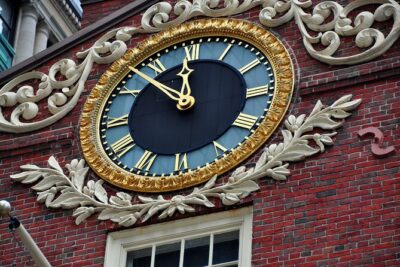
Freedom Trail History Small Group Walking Tour
Read our review →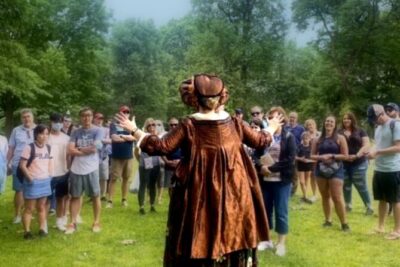
Boston Freedom Trail Walking Tour with Costumed Guide
Read our review →
Boston Food & History: Pizza, North End & Freedom Trail
Read our review →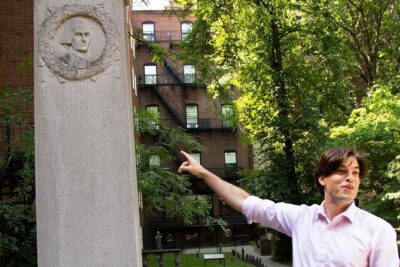
Boston’s Freedom Trail: A Revolutionary Walking Tour
Read our review →Freedom Trail History Small Group Walking Tour
Read our review →Boston’s Freedom Trail: A Revolutionary Walking Tour
Read our review →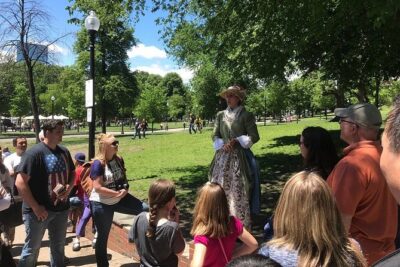
Boston Freedom Trail History Pub Crawl Small-Group Tour
Read our review →Browse the lists this tour appears in