
Review · HISTORICAL TOURS
Boston: 2-Hour Historic Walking Tour
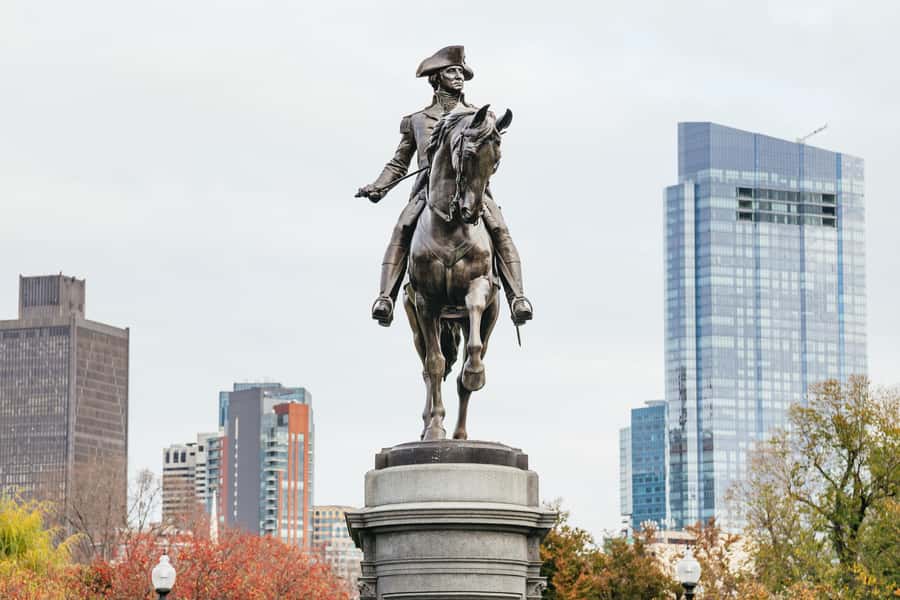
Boston’s past comes alive on foot, one old meetinghouse, burial ground, gaslit lane, and grand square at a time. This two-hour walk links the Freedom Trail, Beacon Hill, Back Bay, and Copley Square, giving you a useful first look at the city rather than confining you to one historic block.
I like the route’s mix of Revolution-era landmarks and 19th-century architecture. I also like the small-group format, which makes it easier to hear the guide and ask questions. Alan, also spelled Allan in one account, is praised for his humor, patience, and ability to connect facts with stories.
The main consideration is pace. Two hours covers a lot of ground, and you will see many sites from the outside rather than entering them. Wear comfortable shoes, and remember that rain, heat, or winter cold can change the feel of the walk.
Key points
- A four-part Boston overview: Connect the Freedom Trail, Beacon Hill, Back Bay, and Copley Square in one walk.
- A guide-led history lesson: Hear stories, lesser-known facts, and humor from guides such as Alan.
- Architecture beyond the Revolution: Compare colonial landmarks with Beacon Hill townhouses and Back Bay’s grand 19th-century streets.
- A practical first morning: Use the tour to get your bearings, then return to the places you want to explore inside.
- A small-group advantage: Hear the guide more clearly and receive a more personal walk.
- Good value at $45: You pay for two hours of focused guidance across several central Boston districts.
Starting across from the Old State House
The meeting point is at the corner of State and Congress Streets, outside 28 State Street and across from the Old State House. This puts you right in the middle of Boston’s old civic center, not at a remote pickup point.
That location matters. You begin surrounded by the city’s colonial story, with the Old State House close by and the Freedom Trail underfoot. It is a practical place to start if you are staying in central Boston or arriving by public transportation, though the tour information does not include a transportation service or hotel pickup.
The guide leads the walk in English. Since the route begins in a busy part of downtown, arrive with enough time to locate the exact corner. You will want your phone charged for maps and photos, but the main tool here is your attention. Boston’s streets can be visually crowded, and a good guide helps you notice the details above storefronts, around doorways, and along the pavement.
More history tours in Boston
- Boston: Freedom Trail History Small Group Walking Tour
★ 5.0 · 6,450 reviews - Tour of Historic Fenway Park, America’s Most Beloved Ballpark
★ 4.5 · 3,013 reviews - Boston Food & History: Pizza, North End & Freedom Trail
★ 5.0 · 1,772 reviews
Following the Freedom Trail from Faneuil Hall toward Boston Common
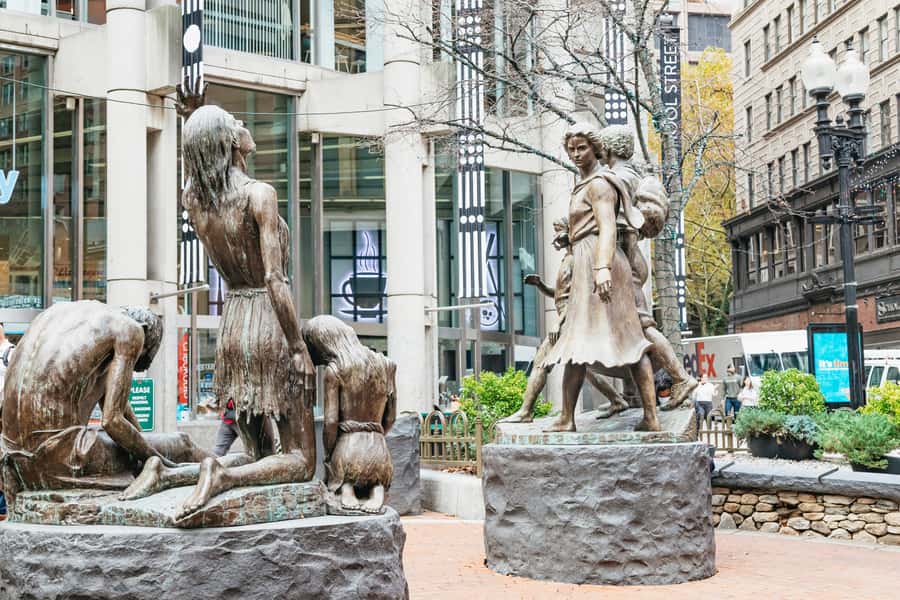
The Freedom Trail is the historical backbone of the walk. The route includes important sites between Faneuil Hall and Boston Common, with stops connected to Boston’s role in the American Revolution and the city’s early civic life.
Faneuil Hall is one of the key landmarks. Its name carries plenty of weight, but the value of seeing it with a guide is the surrounding context. You learn how public meeting places helped shape Boston’s political life, rather than simply taking a photograph of an old building.
The Old and New State Houses show two different chapters of Boston government. The Old State House is closely tied to the colonial period and the events that pushed Boston toward revolution. The newer State House reflects the city’s later political development. Seeing both helps you understand that Boston’s story is not frozen in 1776. The city changed as its government, population, and ambitions grew.
The walk also passes the Old South Meeting House. This is one of the places where the tension before the American Revolution becomes easier to picture. The building is linked to public debate and protest, giving the guide a natural place to explain how arguments, speeches, and crowd action shaped events.
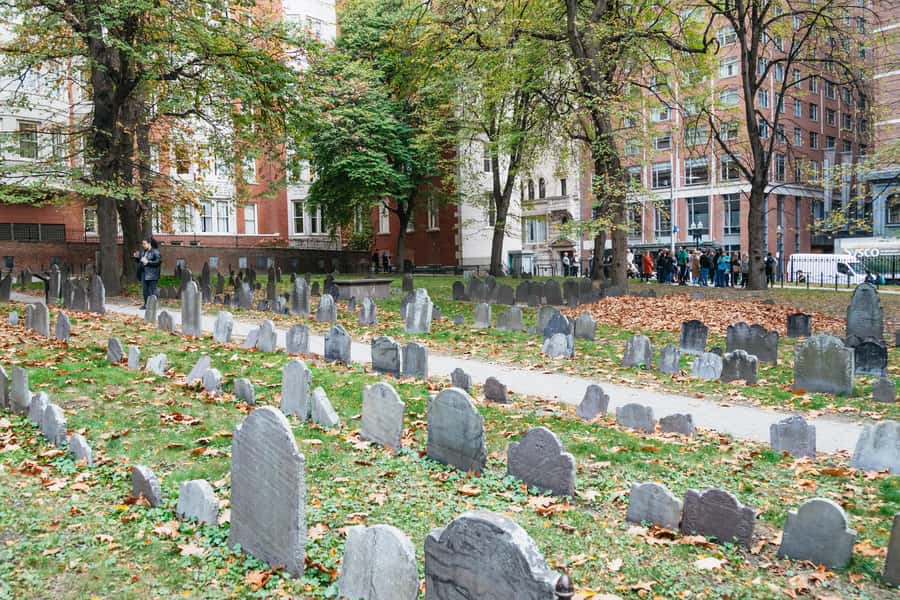
You will see the Old Corner Bookstore as well. The stop adds a literary note to the political story and reminds you that Boston’s old center was a working city, not simply a collection of monuments. King’s Chapel and the Old Granary Burial Ground add religious and personal dimensions to the route.
The burial ground can be especially useful for visitors who want more than a list of dates. Old graves connect national events to individual lives, though a two-hour tour cannot provide a full explanation of every marker. The guide’s skill matters here. Alan is praised for putting Boston history into context and sharing lesser-known facts, which helps these stops feel connected rather than random.
Beacon Hill’s cobblestones and gaslights
From the Freedom Trail area, the tour moves toward Beacon Hill, where the mood changes quickly. The streets become quieter and more residential, with brick homes, narrow lanes, cobblestones, and gaslights.
Beacon Hill is known for its aristocratic past, and the walk includes Louisburg Square. Here, the appeal is architectural and social. You see how Boston’s wealthy residents created a polished residential district close to the old city center. The square also helps explain why Beacon Hill feels different from the commercial streets near Faneuil Hall.
The gaslights and uneven paving give the neighborhood much of its character, but they also create the tour’s most obvious walking concern. Cobblestones can be tiring or awkward, especially in poor weather. Good shoes are not a minor suggestion here. If you have limited mobility, ask the operator for current route details before booking, since the supplied information does not describe accessibility arrangements.
I like Beacon Hill as part of this tour because it keeps Boston from becoming only a Revolutionary War lesson. You see how the city looked and lived in a later period, when established families shaped streets, homes, and public spaces. The guide can also point out small architectural details that are easy to miss when you walk alone.
The area is residential, so the best approach is respectful observation. You are seeing a lived-in neighborhood, not a stage set. The guide’s stories and humor add interest without requiring you to enter private buildings.
Back Bay and the grand 19th-century city
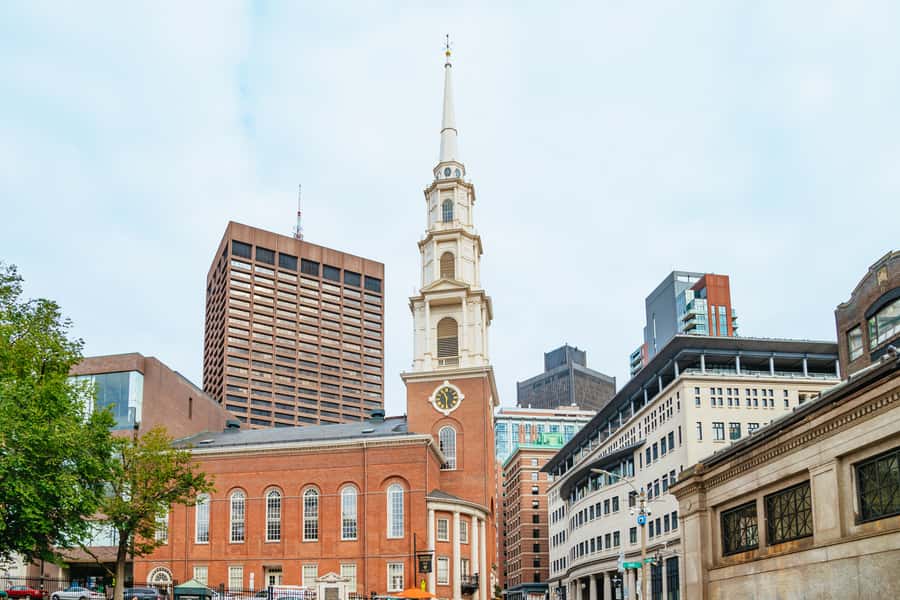
The route then reaches Back Bay, one of the clearest changes in Boston’s urban story. Here the streets are broader and the architecture is more formal than in the old center or Beacon Hill.
Back Bay offers a strong lesson in 19th-century city planning and style. You will see grand facades, orderly streets, and a very different sense of scale. Newbury Street adds a fashionable commercial layer, while the John Hancock Tower brings the skyline into the picture.
This contrast is one of the tour’s best features. In a single morning, you move from colonial meetinghouses to gaslit residential lanes and then to a more modern urban district. The route shows Boston as a city that kept rebuilding and expanding, not one that simply preserved its oldest buildings.
The John Hancock Tower is especially useful as a visual marker. Its height and glassy modern appearance contrast sharply with the masonry churches and older buildings nearby. You may not spend long at each stop, but the guide can help you read the city through these contrasts.
Back Bay is also where the tour may feel most like a general city walk rather than a focused Freedom Trail tour. If your main goal is to study Revolutionary War sites in detail, an official Freedom Trail tour may give you more time in the historic core. If you want a wider view of Boston, this broader route offers more variety for the same two hours.
More walking tours in Boston
- Harvard University Campus Guided Walking Tour
★ 4.5 · 3,632 reviews - Boston Freedom Trail Walking Tour with Costumed Guide
★ 4.5 · 2,531 reviews - The Full Revolutionary Story Epic Small Group Boston Walking Tour
★ 5.0 · 2,356 reviews - Boston’s Freedom Trail: A Revolutionary Walking Tour
★ 4.9 · 1,748 reviews
The Public Garden, Copley Square, and the finish line
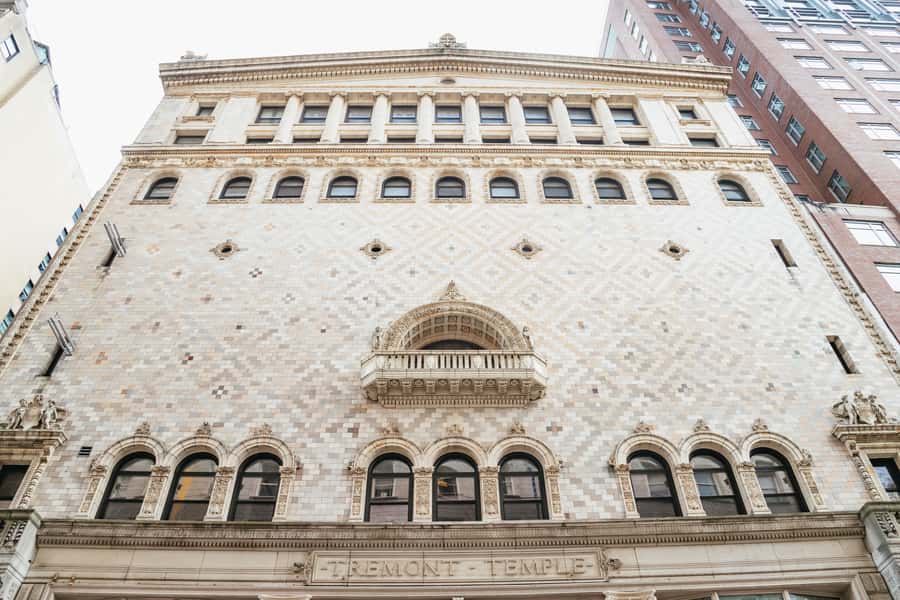
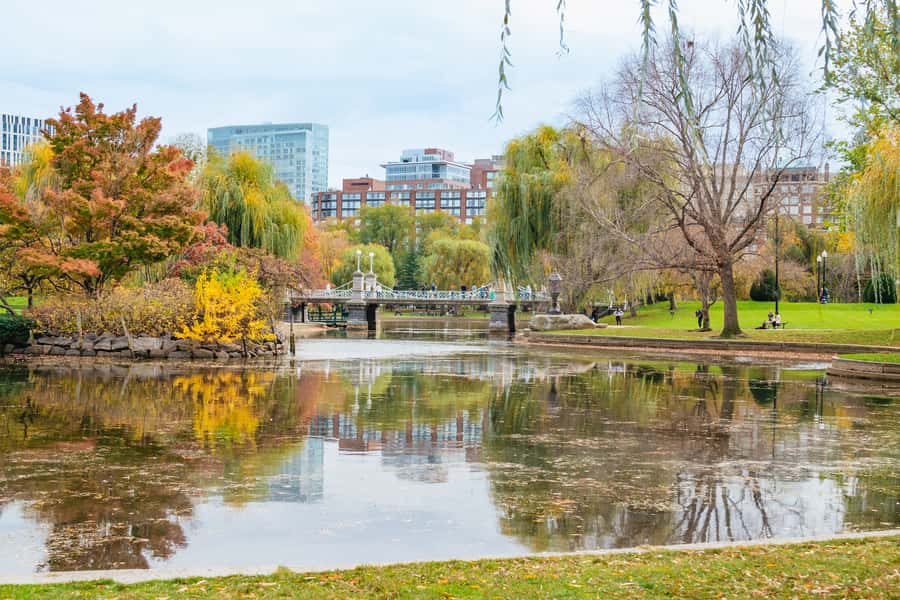
The Public Garden supplies a calmer change of scene. It is one of the city’s most recognizable public spaces and gives the tour room to shift from architecture and politics to everyday Boston life.
The walk continues to Copley Square, where Trinity Church and the surrounding buildings create one of Boston’s most graceful urban settings. The square shows the city at its most formal, with religious, civic, and commercial buildings arranged around a broad public space.
Trinity Church is an important architectural stop, and its setting makes the point clearly. The church is not viewed in isolation. You see it as part of a larger district, alongside later buildings and the skyline of Back Bay.
The Boston Marathon Finish Line adds a modern cultural note. It connects the walking route to an event known far beyond Boston’s historic center. That stop may be more meaningful if you already follow the marathon, but it also shows how the city’s identity continues beyond colonial landmarks.
The final part of the route gives you a useful sense of place. You have seen Boston’s political beginnings, old residential wealth, 19th-century expansion, public gardens, churches, and modern civic traditions. It is a lot to cover, so do not expect an in-depth interior tour of each building.
Why the guide makes the difference
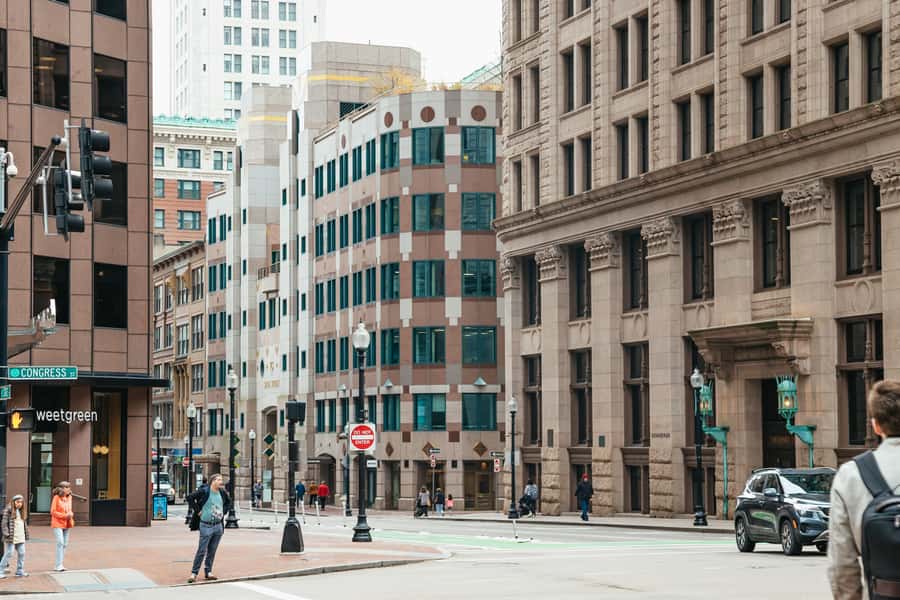
A route like this can be satisfying or flat depending on how it is explained. The stops are important, but you can read their names in a guidebook. The real value is hearing why they matter and how the pieces connect.
Alan is repeatedly described as funny, friendly, patient, and well informed. One account says he adjusted to the different needs of the group, asked questions about what people already knew, and spent more time than scheduled. Another describes him leading the full route cheerfully in heavy rain.
That does not guarantee the same guide or the same conditions on your date. Still, it tells you what kind of tour this aims to be: conversational, story-led, and flexible rather than a rapid list of dates.
The humor is useful here. Boston history includes famous names and familiar events, but a dry recitation can make two hours feel long. Stories about lesser-known details and the city’s quirky character help hold your attention as you move between districts.
The small-group setting also matters. You are more likely to hear explanations clearly than on a large group walk, and the guide can respond to questions. The exact group size is not provided, so do not assume it will feel private. It is simply described as small-group.
Is $45 a fair price for two hours?
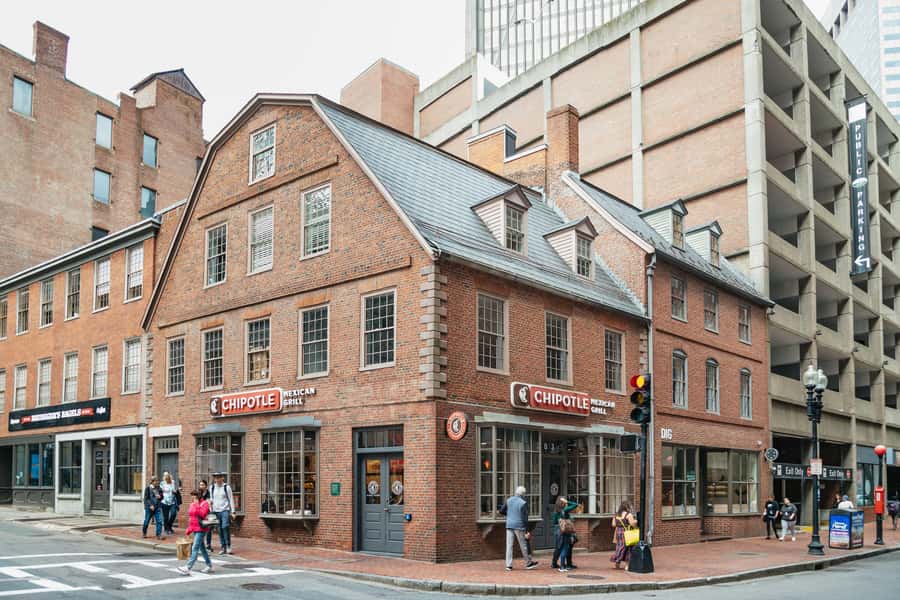
At $45 per person, this tour is not the cheapest way to walk through Boston. You can follow parts of the Freedom Trail independently at no cost, and many of the streets and public spaces are open to everyone.
The fee makes sense if you want structure and context. In two hours, the guide links several areas that are easy to visit separately but harder to understand as one city story. You are paying for route planning, live explanation, local stories, and the chance to ask questions.
The value is strongest for a first visit. You get a map in your head, a list of places worth revisiting, and enough background to make later museum or building visits more meaningful. One person used the tour on the first morning and then returned to selected sights afterward. That is a smart way to use it.
The value is less clear if you already know Boston well or want extended time inside historic buildings. This is a walking overview, not an admissions package. Gratuity is optional and not included.
Weather, shoes, and the real walking conditions
Wear comfortable shoes and dress for the season. The route includes cobblestones, sidewalks, old streets, and several districts, so this is not a casual stroll around one square.
In warm weather, bring bottled water. Water is generally available along the route, but having your own is simpler. In rain, the experience can still go ahead, and the guide has led the full walk in heavy rain, but you should bring suitable clothing and protect anything you need to keep dry.
Morning departures are usually available. That timing works well because you can use the afternoon to return to the Old State House, King’s Chapel, Copley Square, or another place that caught your interest. It also makes the tour a useful orientation before you spend money on other attractions.
The tour lasts two hours, but the amount of standing and walking may feel greater than the clock suggests. Plan your day with a little breathing room afterward, especially if you want lunch or a museum visit.
Who should book this Boston walking tour?

I would recommend it to first-time visitors who want a clear introduction to Boston without spending a full day on one subject. It also suits history fans who enjoy hearing stories tied to real streets and buildings, not just reading labels indoors.
Families and mixed-age groups may like the short length and the guide’s use of humor, though the operator does not provide a specific age recommendation. The interactive approach can help keep the walk from feeling like a school lecture.
It is also a good fit if architecture interests you. The route gives you colonial landmarks, Beacon Hill homes, Back Bay buildings, Trinity Church, Copley Square, and the John Hancock Tower in one outing.
I would hesitate if you dislike walking outdoors in uncertain weather, need a fully step-free route, or want to enter every major landmark. The available information does not promise interior access or accessibility features.
Should you book it?
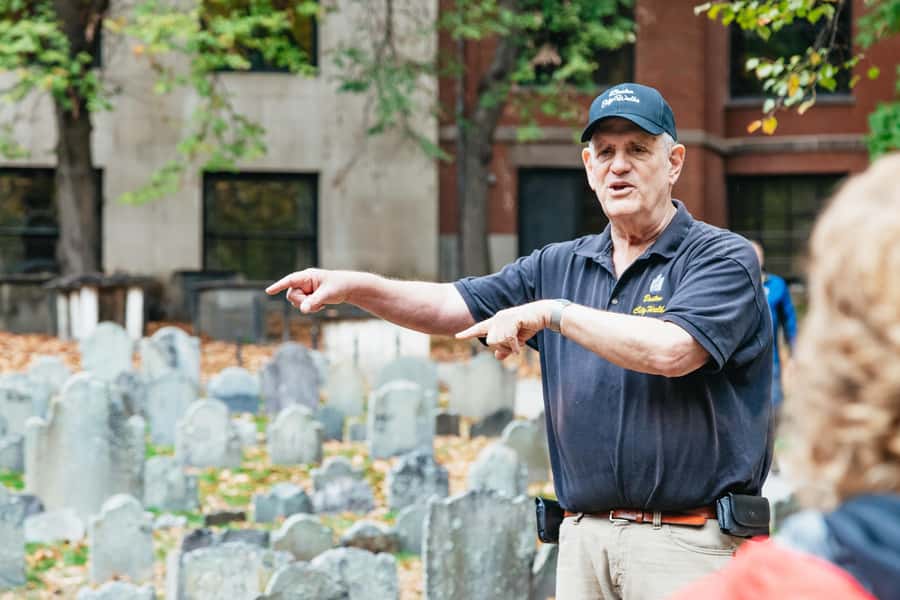
Book this tour if you want Boston’s main historic districts explained by a lively English-speaking guide, especially at the start of your visit. The strongest reasons are the varied route, the small-group format, and the chance to hear Alan’s engaging style when he is leading the walk.
Skip it if you prefer exploring alone, already know the Freedom Trail, or want a slower tour focused only on Revolutionary War sites. For $45, the tour offers good value as a city orientation, but its success depends on your comfort with outdoor walking and a fairly full two-hour route.
FAQ
Where does the Boston historic walking tour meet?
The meeting point is at the corner of State and Congress Streets, across from the Old State House, outside 28 State Street.
How long does the tour last?
The walking tour lasts two hours.
Which Boston neighborhoods and districts does the route visit?
The route covers the Freedom Trail area, Beacon Hill, Back Bay, the Public Garden, and Copley Square.
What landmarks can I see on the tour?
Stops and sights include Faneuil Hall, the Old and New State Houses, the Old South Meeting House, the Old Corner Bookstore, King’s Chapel, the Old Granary Burial Ground, Louisburg Square, Newbury Street, the John Hancock Tower, Trinity Church, and the Boston Marathon Finish Line.
Is the tour offered in English?
Yes. The live tour guide speaks English, and English is the listed tour language.
What should I wear or bring?
Wear comfortable shoes and dress for the season. In warm weather, bring bottled water. Water is generally available along the route.
Is gratuity included in the price?
No. Gratuity is optional and is not included.
Can I cancel the tour for a refund?
Yes. You can cancel up to 24 hours in advance for a full refund. You can also reserve now and pay later, which keeps your plans flexible.
More 2-Hour Experiences in Boston
- 2-Hour Beacon Hill True Crime Expert Guided Tour
★ 5.0 · 182 reviews - 2 Hour North End ‘Little Italy’ Walking Tour
★ 4.5 · 125 reviews - 2 Hour Boston Segway Tour
★ 5.0 · 77 reviews - 2 Hour Boston Historical and Heritage Walking Tour
★ 4.5 · 70 reviews
Newest Boston tours we have written up
- Boston’s Freedom Trail: A Self-Guided Audio Tour★ 4.0 · 18 reviews
- Boston’s Freedom Trail: A Self-Guided Tour of All 16 Sites★ 5.0 · 14 reviews
- Washington D.C. Cherry Blossom,Baltimore 3-Day Tour from Boston★ 4.5 · 7 reviews
- Boston Self-Guided Audio Tour Bundle: Freedom Trail & More★ 4.5 · 5 reviews
- True Crime Tour of Boston★ 4.0 · 17 reviews
- Family Friendly Guided Bike Tour of Boston★ 4.5 · 22 reviews
- Freedom Trail Experience★ 5.0 · 8 reviews
- Self-Guided Audio Tour of Boston North End★ 4.5 · 3 reviews
Historical Tours, compared.
History and Hauntings of Salem Guided Walking Tour
Read our review →
Freedom Trail History Small Group Walking Tour
Read our review →
Tour of Historic Fenway Park, America’s Most Beloved Ballpark
Read our review →
Boston Food & History: Pizza, North End & Freedom Trail
Read our review →Freedom Trail History Small Group Walking Tour
Read our review →
City Cruises Boston Historic Sightseeing Harbor Cruise
Read our review →
Boston’s North End Food Tour: Italian Flavors & Heritage Walk
Read our review →
Boston Pizza Lovers Food and History Walking Food Tour
Read our review →Browse the lists this tour appears in