
Review · HISTORICAL TOURS
Boston History Tour: Scenic Walk Through Time & Landmarks
Boston’s story comes at you quickly on this walk: rebellion at Faneuil Hall, the Boston Massacre at the Old State House, famous graves at Granary Burying Ground, and the polished streets of Beacon Hill. It is a useful way to get your bearings on a first visit, especially with a local guide such as Bob, Nabil, Lexie, or Tim leading the way.
I like the small maximum of 16 people, which gives you a better chance to hear the stories and ask questions. I also like the route’s range, from the waterfront and Quincy Market to Boston Common and the Public Garden. The main drawback is pace: 4 km in about two hours leaves little time inside buildings, and one indoor stretch through busy shopping areas may feel less historic than expected.
Key points to know before you book
- A compact route with a big sweep: Walk from the Greenway Carousel to the Public Garden, passing Boston’s best-known historic sights.
- Strong guide presence: Past guides including Bob, Nabil, Lexie, Alivia, Allison, Molly, and Tim have been praised for humor, local knowledge, and easy conversation.
- A useful first-day tour: The route gives you a clear map of central Boston and tips for eating, relaxing, and exploring later.
- Four kilometers on foot: The walk is suitable for all ages and fitness levels, but expect cobbles, city streets, and weather exposure.
- A surprise local treat: A small food or drink stop is included, and alcohol may be served with proper identification required.
- Good family terms: Children under six join free, while children aged six to eleven pay the adult rate.
Why this two-hour Boston walk works
At $39.80 per person, this is priced as an orientation tour rather than a full museum visit. You are paying for a local guide, a carefully linked route, stories at major sites, a treat, and practical advice you can use for the rest of your stay.
I see the value most clearly if you are new to Boston. Instead of trying to connect the Freedom Trail, Boston Common, Beacon Hill, and the Public Garden on your own, you get a quick framework for the city. You can then return to the places that catch your interest.
The tour is offered in English and usually runs with no more than 16 people. A private upgrade is available if you want more control over the pace and a more personal conversation. For a first morning or afternoon in Boston, that smaller setting should feel more useful than a large group gathered around a flag.
The tour is also carbon-neutral and operated by a B Corp-certified company. That will not change what you see on the street, but it may matter if you want your sightseeing choices to support a company with environmental and social goals.
More history tours in Boston
- Boston: Freedom Trail History Small Group Walking Tour
★ 5.0 · 6,450 reviews - Tour of Historic Fenway Park, America’s Most Beloved Ballpark
★ 4.5 · 3,013 reviews - Boston Food & History: Pizza, North End & Freedom Trail
★ 5.0 · 1,772 reviews
Starting at the Greenway Carousel and Faneuil Hall
Meet at the Greenway Carousel, at 191 Atlantic Avenue. This puts you near the Rose Kennedy Greenway and the waterfront, a handy starting point if you are arriving by public transport or already exploring downtown.
The opening stop helps gather the group and set the tone. You should expect a short introduction before walking toward Faneuil Hall Marketplace. The nearby Custom House Tower also comes into view. It was Boston’s first skyscraper and once served the city’s incoming trade.
Faneuil Hall is where the political story begins. Your guide explains how local opposition to British rule took shape here and why this market and meeting hall became tied to the movement for independence.
You will also pass Quincy Market and the surrounding marketplace. This is one of the route’s most useful orientation points, since you can return later for food and browsing. It is also one of the route’s least quiet sections. On a busy day, you may spend some time moving through crowded retail areas rather than standing in an empty historic square.
That tradeoff is worth knowing in advance. The tour uses real city streets and active public places, not a closed historic park.
Old South Meeting House and Boston’s literary past
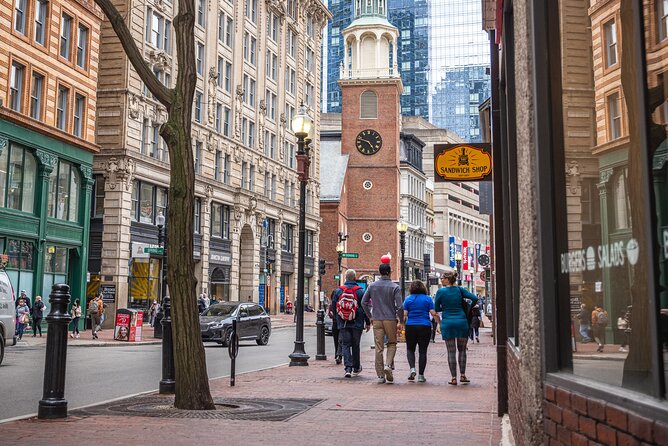
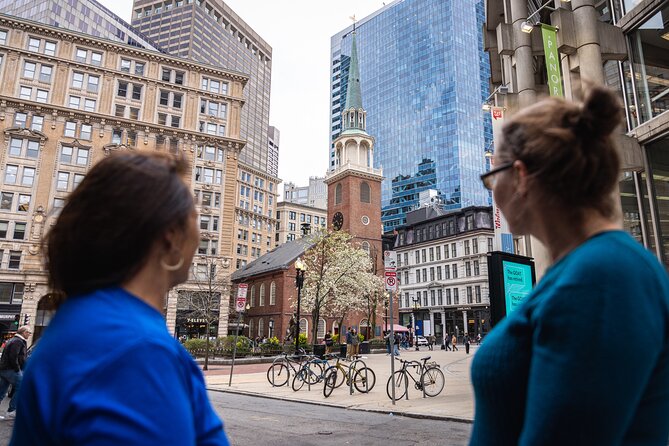
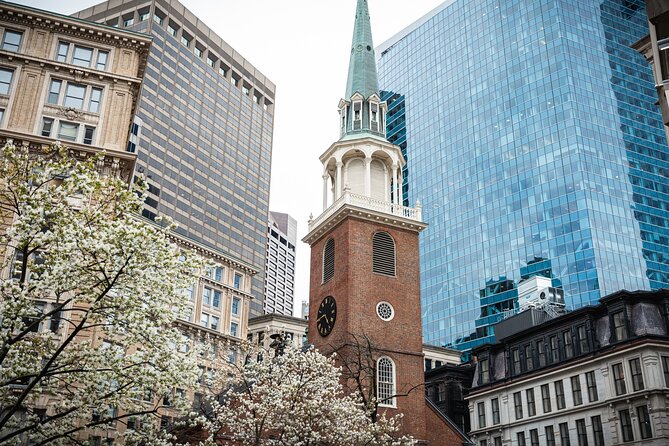
The walk continues to Old South Meeting House, the former church linked to the Boston Tea Party. This is where the group learns how Bostonians gathered and planned their 1773 protest against British taxation.
The stop is brief, about five minutes, so expect an outdoor explanation rather than a long interior visit. If you want to see the building in greater depth, you will need to return on your own.
The route then passes the site of Boston’s first bookstore. It is a small detail, but a good one. The place was connected with publishers of works including Thoreau’s Walden, Hawthorne’s The Scarlet Letter, and Longfellow’s Midnight Ride of Paul Revere.
I like this shift from political history to publishing. It reminds you that Boston’s identity was shaped not only by protests and battles, but also by books, schools, churches, and public debate.
Old City Hall, King’s Chapel, and Downtown Crossing
At Old City Hall, you get a look at French architecture and the Bronze Donkey, a popular photo stop. The building once housed Boston’s city council and America’s first public school.
The stop lasts about ten minutes. Your guide will focus on the building’s role and appearance, but this is not presented as a long architectural tour. You will have time for a quick look and a photograph before moving on.
The route passes through Downtown Crossing and by King’s Chapel. If timing allows, you might hear the organist playing the oldest church organ in the United States. The wording matters: this is a possibility, not a scheduled performance.
Downtown Crossing also shows you present-day Boston. You move from older civic buildings into a busy retail district, where modern city life sits right beside the colonial core. Some people will enjoy that contrast. Others may feel that the walk spends too much time indoors or among shops. If your main goal is concentrated Revolutionary history, this is the portion most likely to feel like a compromise.
More walking tours in Boston
- Harvard University Campus Guided Walking Tour
★ 4.5 · 3,632 reviews - Boston Freedom Trail Walking Tour with Costumed Guide
★ 4.5 · 2,531 reviews - The Full Revolutionary Story Epic Small Group Boston Walking Tour
★ 5.0 · 2,356 reviews - Boston’s Freedom Trail: A Revolutionary Walking Tour
★ 4.9 · 1,748 reviews
Old State House and the Boston Massacre
The Old State House brings the political story into sharper focus. The Declaration of Independence was announced here in 1776, and the building is also tied to the Boston Massacre.
Your guide covers both the excitement of the independence announcement and the human cost of the earlier conflict. At around 15 minutes, this is one of the fuller stops on the route.
This is where a strong guide makes a real difference. The facts are familiar, but the value comes from connecting the site to the choices, fears, and public arguments of the people who gathered here. Guides such as Nabil, Alivia, Tim, and Allison have been praised for keeping the history conversational, answering questions, and adding humor without losing the main thread.
You should not expect a full museum visit at the Old State House. The experience is about seeing the location and hearing the story in place.
Boston Common and the African American memorial
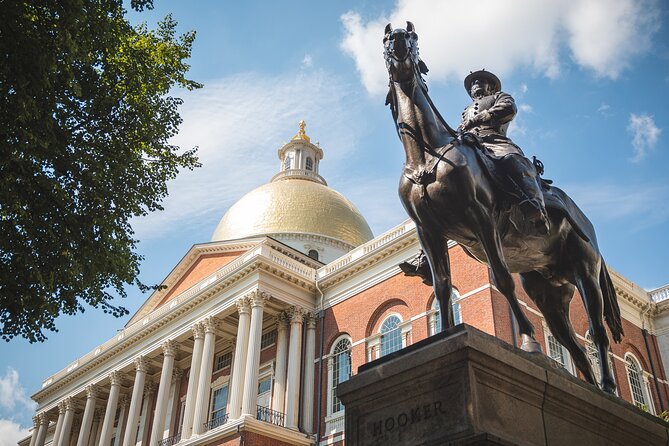
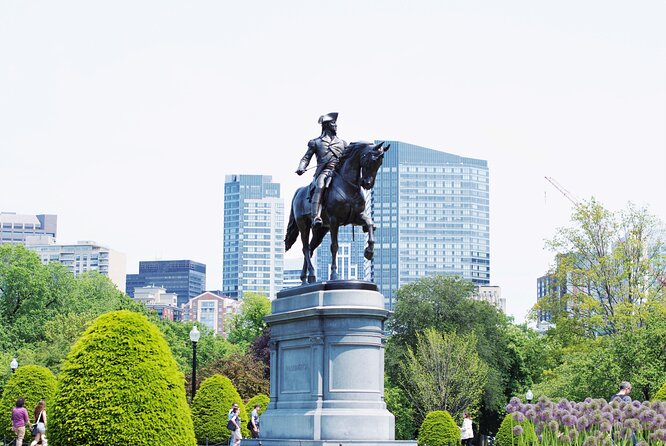
Boston Common is the oldest city park in the United States, with public use dating to 1634. The walk takes about ten minutes through the park, passing memorials, fountains, and recreation areas.
This is a welcome change after the hard surfaces and tight streets downtown. You get room to spread out, and you see the park as both a historic site and a place Bostonians still use for walks and exercise.
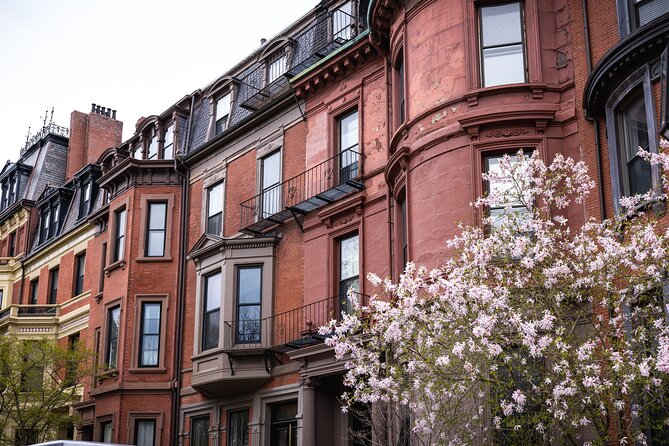
The route also touches a popular neighborhood with cobbled streets and a past shaped by sailors and British soldiers. The description points toward Beacon Hill, where the history includes decline, renewal, and the creation of the polished neighborhood you see today.
You also pass a lesser-known memorial to one of the first African American regiments in the Civil War and its colonel, Robert Gould Shaw. This is an important addition to a route that could otherwise focus too narrowly on white revolutionary leaders. The memorial gives the walk a broader view of Boston’s past.
The exact order of these stops can change. The provider reserves the right to adjust the route and places visited, so treat the sequence as a guide rather than a promise.
Massachusetts State House and Granary Burying Ground
The Massachusetts State House is easy to recognize by its glittering dome. Your guide connects the building with John Hancock, the original landowner, and Paul Revere, who presided over the 1795 cornerstone ceremony.
This stop also helps you see that Boston’s political story did not end with independence. The State House remains central to Massachusetts government, so the building links the eighteenth century with the state’s present civic life.
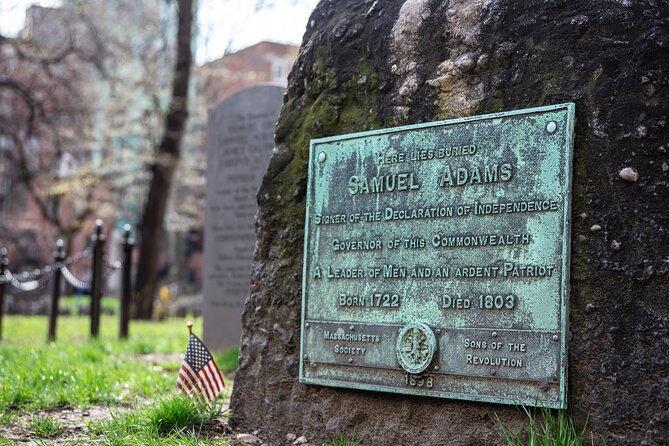
At Granary Burying Ground, the walk turns personal. The cemetery dates to 1660 and was once part of Boston Common. You pass the graves of figures including John Hancock, Paul Revere, and Sam Adams.
Allow yourself a little patience here. A city cemetery can be busy and compact, and the group may need to stay together rather than wander freely. One practical point is especially important: access or timing can affect what you see. If the cemetery is closed by the time the group arrives, your guide may need to explain it from outside or adjust the route.
Some tour guides may also include a local pub or drink stop. One person preferred more cemetery time over a drink, while another enjoyed lingering afterward with the guide over local beer. That tells you something useful about the experience: the social side can be part of the appeal, but it may not be your priority.
Ending in the Public Garden
The final stop is the Boston Public Garden, the first public park in America. The garden is a relaxed finish after two hours of streets, stories, and memorials.
Your guide explains how the area was used during the Revolution and how it later became a place for walks, exercise, and rest. The route ends near 4 Charles Street, by the Public Garden.
This is a good ending point because you are not left in an isolated part of the city. From here, you can keep walking through Beacon Hill, rest in the garden, or use your new sense of downtown geography to choose your next stop.
The ending also makes the tour easy to pair with the rest of a day. You could start with the walk, eat near the marketplace afterward, or continue toward Beacon Hill and the Charles River area. The guide also provides tips on places to eat, explore, and relax.
What the guide can add
The guide is the heart of this experience. The route itself is easy to follow on a map, but the connections between buildings are what make the walk worthwhile.
The guide roster changes, but several names appear in the tour feedback: Bob is praised for friendly storytelling and wit; Nabil for patience, warmth, and answering questions; Lexie for research and enthusiasm; Alivia for her energy as a Boston native; and Tim for a professional, humorous approach.
You may also meet guides such as Allison, Molly, Alex, Clio, or Conner. The common thread is an emphasis on conversation, local perspective, and stories rather than a dry list of dates.
Your best strategy is to ask questions. The group size makes that realistic, and the guides are described as willing to pause, explain, and include quieter members of the group. A private upgrade makes even more sense if you want to focus on architecture, African American history, Revolutionary politics, or food recommendations.
Walking conditions, weather, and families
The tour covers about 4 km, or 2.5 miles, in roughly two hours. The pace is described as suitable for all ages and fitness levels, but that does not mean it is effortless. You will walk on city pavement, cross active streets, and encounter cobbled areas.
Wear comfortable shoes. Boston weather can change, and the tour runs in rain, snow, or sunshine. Bring clothing that matches the forecast rather than assuming the tour will be canceled for bad weather.
Children under six can join free, but you need to mention them when booking. Children aged six to eleven pay the adult rate, and their ages should also be supplied in the booking notes.
The maximum group size is 16. That is small enough for a more personal experience, but the group still needs to move at a city pace. If your family needs frequent stops, a private option may be easier.
The tour is near public transport, and most people can take part. No special museum admission is included, so you are mainly paying for walking, guiding, stories, and the included treat.
The surprise treat and overall value
A surprise local treat is included. It may involve alcohol, so bring proper identification if you are old enough and want to take part. Additional food and drink are not included.
I would treat the snack or drink as a pleasant extra, not a reason to book the tour. The real value is the route and the guide’s ability to make the city’s sites connect.
At $39.80, the price is fair for a two-hour small-group walk with a local guide and a treat. It becomes less appealing if you expect entry to several historic buildings, a long cemetery visit, or a full food tour. None of those are the main product here.
Tips for the guide are not included. A gratuity is worth considering if the guide keeps the group engaged, handles questions well, and gives you useful advice for the rest of your visit.
Who should book this Boston walk?
I would choose this tour for a first visit, a short stay, or a first full day when you want a clear introduction before exploring alone. It also suits solo visitors and couples who prefer a social walk without committing to a half-day outing.
Families can benefit from the short stops and open-air route, though younger children may tire over 4 km. History fans will appreciate the number of sites, but anyone seeking long interior visits should choose a museum-focused experience instead.
I would be cautious if crowded retail areas bother you or if you want every minute devoted to the Freedom Trail. The route includes important landmarks, but it also includes modern Downtown Crossing, short explanations, and possible changes caused by access or timing.
Should you book it?
Book it if you want a lively first look at central Boston, a guide who can connect Revolutionary events with modern city life, and practical tips for the rest of your stay. The small group, strong guide focus, and broad route make it a sensible use of two hours.
Skip it if you want extended time inside historic buildings, a slow photography walk, or a detailed visit to every cemetery and memorial. In that case, use this route as a map and explore selected sites on your own.
Free cancellation is available up to 24 hours before the start time. Inside that window, changes and refunds are not accepted.
FAQ
How long is the Boston History Tour?
The tour lasts about two hours and covers approximately 4 km, or 2.5 miles, on foot.
Where does the tour begin?
It begins at the Greenway Carousel, 191 Atlantic Avenue, Boston, Massachusetts 02111.
Where does the tour end?
It ends at or near the Boston Public Garden, at 4 Charles Street, Boston, Massachusetts 02116.
What language is the tour offered in?
The tour is offered in English.
How many people can join the group?
The maximum group size is 16 people.
Is a private tour available?
Yes. You can upgrade to a private tour for a more personal experience.
Are children allowed to join?
Yes. Children under six can join free when noted at booking. Children aged six to eleven join at the adult rate, and their ages should be provided when booking.
What sights are included?
The route includes the Rose Kennedy Greenway, Faneuil Hall, Quincy Market, Custom House Tower, Old South Meeting House, Old City Hall, King’s Chapel, the Old State House, Boston Common, the Massachusetts State House, Granary Burying Ground, and the Boston Public Garden. The route and stops may change.
Is food or drink included?
A surprise local treat is included. Alcohol may be served, and proper identification is required. Additional food and drink are not included.
What happens in bad weather?
The tour operates in rain, sunshine, or snow. You should dress for the conditions and wear comfortable walking shoes.
Can I cancel for a refund?
Yes. You can cancel at least 24 hours before the start time for a full refund. Cancellations or changes made less than 24 hours before the start time are not accepted and are not refunded.
Newest Boston tours we have written up
- Boston’s Freedom Trail: A Self-Guided Audio Tour★ 4.0 · 18 reviews
- Boston’s Freedom Trail: A Self-Guided Tour of All 16 Sites★ 5.0 · 14 reviews
- Washington D.C. Cherry Blossom,Baltimore 3-Day Tour from Boston★ 4.5 · 7 reviews
- Boston Self-Guided Audio Tour Bundle: Freedom Trail & More★ 4.5 · 5 reviews
- True Crime Tour of Boston★ 4.0 · 17 reviews
- Family Friendly Guided Bike Tour of Boston★ 4.5 · 22 reviews
- Freedom Trail Experience★ 5.0 · 8 reviews
- Self-Guided Audio Tour of Boston North End★ 4.5 · 3 reviews
Historical Tours, compared.
History and Hauntings of Salem Guided Walking Tour
Read our review →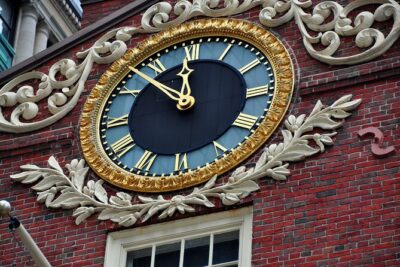
Freedom Trail History Small Group Walking Tour
Read our review →
Tour of Historic Fenway Park, America’s Most Beloved Ballpark
Read our review →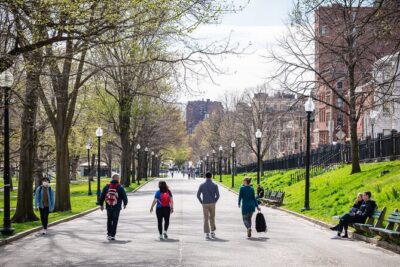
Boston Food & History: Pizza, North End & Freedom Trail
Read our review →Freedom Trail History Small Group Walking Tour
Read our review →
City Cruises Boston Historic Sightseeing Harbor Cruise
Read our review →
Boston’s North End Food Tour: Italian Flavors & Heritage Walk
Read our review →
Boston Pizza Lovers Food and History Walking Food Tour
Read our review →Browse the lists this tour appears in