
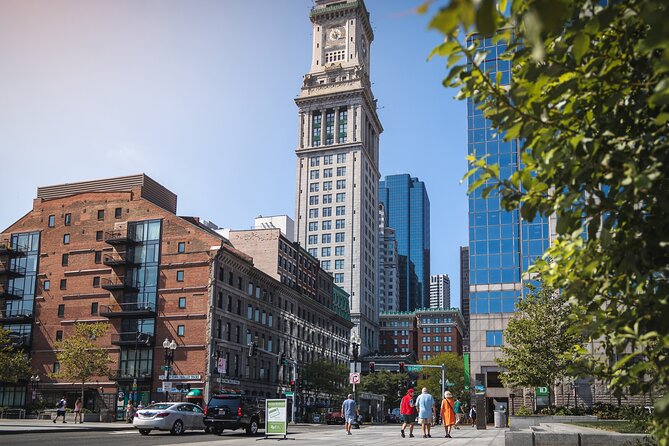
Review · BOSTON FREEDOM TRAIL TOURS
Boston Seafood to Freedom Trail Highlights Private Tour
Boston’s best history lesson comes with a meal. This five-hour private walk links the Freedom Trail with the seafood that defines New England, taking you from Samuel Adams and Faneuil Hall to the Old South Meeting House, Boston Common, and Union Oyster House.
I like the mix of serious history and tasty stops, especially the chance to try clam chowder, lobster rolls, and fried clams in one outing. I also like the small private format, with no more than 12 people and a guide who can keep the pace personal. The tradeoff is clear: this is a long walk, and the $39 price does not cover extra food, drinks, tips, or souvenirs.
Key points to know before booking
- Seafood makes the history easier to remember: Chowder, lobster rolls, and fried clams break up the walking and form a full lunch.
- The route covers major Boston landmarks: You see Faneuil Hall, the Old State House, Old South Meeting House, King’s Chapel, Granary Burying Ground, and Boston Common.
- The group stays small: Only your private group participates, with a stated limit of 12 people.
- The walk reaches Boston’s waterfront: Independence Wharf and the Seaport District add views of Fort Point, the harbor, and the Boston Tea Party site.
- Guides bring personality as well as facts: Past outings have been led by Tim and Nabeal, both praised for clear explanations and an engaging manner.
- The tour runs in the afternoon: It starts at 1:00 pm and finishes around Boston, with the seafood portion following the first half of the walk.
Why this tour works for first-time Boston visitors
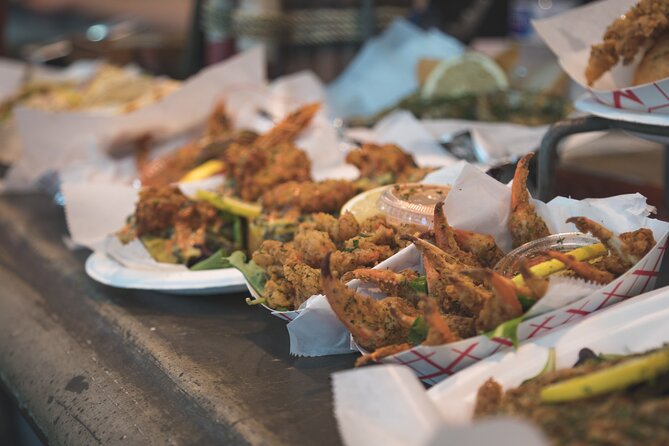
Boston can feel like several cities packed into one. There is the colonial town of meeting houses and burying grounds, the modern financial center, the waterfront shaped by trade, and the leafy public park at the center of it all.
This tour ties those pieces together on foot. You get the standard Revolutionary landmarks, but you also hear how Boston’s waterfront supported the city and why seafood became such a natural part of local life. That combination gives you more than a string of old buildings and plaques.
The private format is useful here. A guide can adjust the explanations for your group, spend more time on a question, or keep moving if younger members lose interest. The experience is not a private car tour, though. You still cover the route by walking, so good shoes matter.
At $39, the tour offers good value if the included food samples amount to your lunch. You are paying for the guide, the historical commentary, and several seafood tastings, not just transportation between sights. Since extra drinks and additional food cost more, you should treat the included samples as the meal rather than plan on a large restaurant lunch afterward.
More ways to walk the Freedom Trail
- Boston: Freedom Trail History Small Group Walking Tour
★ 5.0 · 6,450 reviews - Boston Freedom Trail Walking Tour with Costumed Guide
★ 4.5 · 2,531 reviews - Boston Food & History: Pizza, North End & Freedom Trail
★ 5.0 · 1,772 reviews
Starting with Samuel Adams and Faneuil Hall
The walk begins at 470 Atlantic Avenue at 1:00 pm, near Boston’s central historic area. The first stop is the statue of Samuel Adams, a Founding Father, political thinker, and major figure in the movement for American independence.
This is a useful opening because the tour starts with a person rather than a building. Your guide can place Adams within the larger conflict with Britain before you begin following the streets where that conflict unfolded.
From there, you reach Faneuil Hall Marketplace. Faneuil Hall has served as a place for public debate since the years before independence, when prominent Americans argued against British rule. The marketplace is lively today, but the key point is its earlier role as a meeting place for political ideas.
You should expect some activity here. Faneuil Hall Marketplace is not a quiet museum setting. It is a working public destination with shops, food stalls, and crowds, so your guide’s commentary helps separate the modern commercial scene from the building’s political importance.
The Old State House and the Boston Massacre
The route continues to the Old State House, one of Boston’s most important early public buildings. You stop outside and hear about its role in civic life, as well as the nearby site of the Boston Massacre.
This part of the walk shows how close Boston’s major events are to one another. The Old State House sits in the middle of modern downtown, surrounded by office buildings and busy streets. That contrast helps you picture how a confrontation in one small part of the city could become a powerful political event across the colonies.
The stop lasts about 15 minutes, enough for an explanation and photographs. If you want to tour the interior of the Old State House, note that admission is not part of this experience. The tour focuses on the exterior and the stories connected to it.
Old South Meeting House and the start of the Tea Party story
Old South Meeting House is a church, but it also played a major role in the Boston Tea Party story. In 1773, it was the largest building in Boston, making it a natural place for a large public gathering.
Your guide explains how debate inside the meeting house led to the events that followed at the harbor. This is one of the strongest history stops because it links a physical building with a decision that changed the political temperature of the colonies.
The tour does not list admission to Old South Meeting House as part of the visit, so expect to view and discuss it from the route rather than enter for a separate museum visit. That keeps the walk moving, but history fans who want interiors and exhibits may want to return on their own.
You also pass the site of Boston’s first bookstore. The location is linked with publishers of Thoreau’s Walden, Hawthorne’s The Scarlet Letter, and Longfellow’s work, including the famous tale of Paul Revere’s midnight ride. It is a small detail, but it adds literary depth to a route often told only through war and politics.
More seafood and lobster tours in Boston
- Boston North End Food Tour of 6+ Tastings, Cannoli, Lobster Roll
★ 5.0 · 1,404 reviews - Boston Seafood Tour: Behind the Scenes at the Historic Fish Pier
★ 5.0 · 267 reviews - Boston Seafood Lovers Food and History Walking Tour
★ 5.0 · 208 reviews - Boston Private Food Tour of 6+ Tastings, Cannoli, Lobster Roll
★ 5.0 · 165 reviews
Old City Hall, King’s Chapel, and the Bronze Donkey
Old City Hall gives the route a change of style. Its French architecture is a sharp contrast to the plain brick and wood buildings associated with colonial Boston. The building once housed the city council, and the site also connects with the first public school in America.
You have time for photographs, including one with the Bronze Donkey. This is a lighter stop in the middle of a serious historical route, and families may especially enjoy it.
Next comes King’s Chapel, described as the first Anglican church in New England. The guide explains how the church changed through the centuries, helping you see that Boston’s religious story was not fixed at the moment of independence.
If conditions are right, you might hear an organist practicing on the church’s oldest organ in the United States. This is not guaranteed, so treat it as a pleasant possibility rather than a planned performance.
Granary Burying Ground and Boston Common
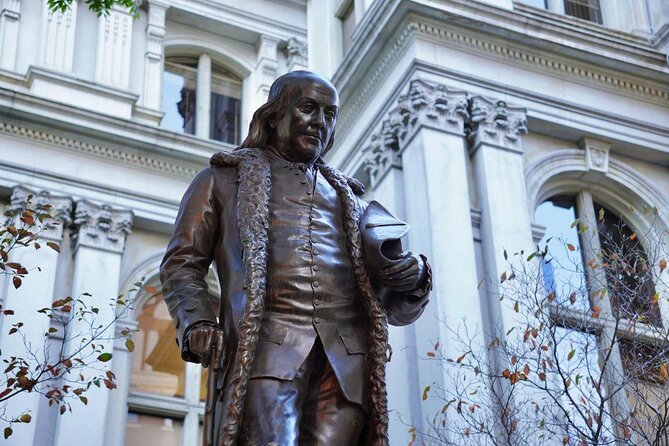
Granary Burying Ground dates to 1660 and contains the graves of major figures from the Revolutionary period, including John Hancock, Paul Revere, and Samuel Adams. It is a compact, atmospheric stop, but the names make the visit especially meaningful.
I like this part of the route because it shifts the focus from speeches and public buildings to the people who shaped Boston’s story. The cemetery also gives you a quiet break from downtown traffic.
From there, you walk through Boston Common, the oldest city park in the United States. It has served as public open space since 1634, and today you see memorials, fountains, and recreation areas used by locals and visitors.
The walk through Boston Common helps pace the tour. After several dense history stops, you get open space and a chance to reset before reaching Boston Public Garden. The park is not a single dramatic monument, but it shows how old civic spaces remain part of daily city life.
The State House and Boston Public Garden
The Massachusetts State House is easy to recognize by its glittering dome. Designed by Charles Bulfinch and built in 1798, it connects the early republic with the government of modern Massachusetts.
From outside, your guide points out the changing face of Boston, including downtown skyscrapers, the Financial District, and the John Hancock Tower, the tallest building in New England. This view is a good reminder that Boston’s past does not sit apart from its present.
The first half of the tour ends at Boston Public Garden. This formal garden is a popular place for walks, exercise, leisure, and quiet time. Its greenery and paths offer a calm pause before the food-focused part begins.
The timing matters. Since the tour starts at 1:00 pm, you are reaching the garden in the middle of the afternoon, when a seafood meal makes sense. You should not expect a long sit-down break here. The garden marks the shift from the main history route to the waterfront and tasting stops.
Independence Wharf and the Seaport waterfront
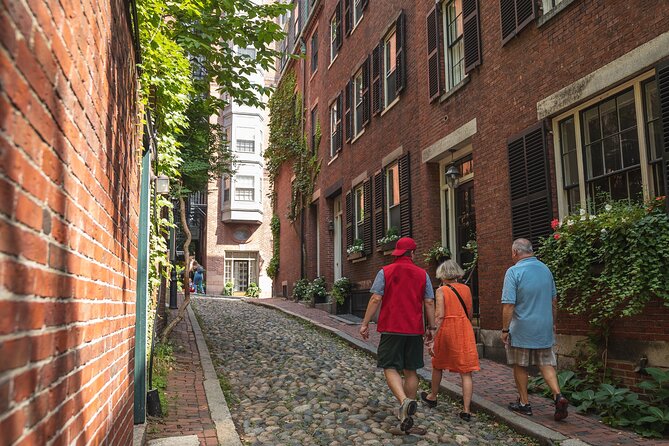
After Boston Common and the Public Garden, the route turns toward the harbor. At Independence Wharf, you get views toward Fort Point and the Seaport District, areas closely tied to Boston’s fishing and shipping life.
This stop gives the seafood tasting some context. Lobster rolls and fried clams are not random local snacks placed into a walking tour. They connect with the waterfront, where generations of fishermen brought in their catch.
You also see the area associated with the Boston Tea Party. The tour does not treat the harbor only as a scenic backdrop. It explains how trade, taxation, protest, and food all met here.
The Seaport District and South Boston Waterfront add modern city views, commercial activity, and open water. You can expect a different feel from the tight streets around the Old State House. The walk is still urban, but the harbor gives you more space and a clear view of Boston’s working and recreational shoreline.
Seafood stops: chowder, lobster rolls, and fried clams
The included lunch consists of food samples intended to equal a full meal. The planned specialties include New England clam chowder, a lobster roll, and fried clams, with a suitable substitute or another creative choice if needed.
These are useful tastings because they cover different sides of New England seafood. Chowder is warm and filling. A lobster roll lets you try the region’s signature shellfish in a simple sandwich. Fried clams add crunch and a more casual coastal style.
The exact mix can vary, so do not assume every person will receive identical portions or that every named dish is guaranteed. Culinary substitutions may be used. Extra food and drinks are not included, which is worth remembering if you have a large appetite or specific dietary needs.
The food breaks also keep the five-hour walk from becoming a history marathon. You get a chance to stop, taste, and talk with your guide before moving on. The balance is one of the tour’s strongest features.
The Rose Kennedy Greenway and Union Oyster House
The Rose Fitzgerald Kennedy Greenway forms another link between the waterfront and downtown. This series of connected parks includes public art, gardens, event spaces, and recreation areas.
It is a pleasant route between food stops, with a modern public design that contrasts with the colonial landmarks earlier in the day. Your guide can show how Boston’s older streets and newer public spaces fit together.
The final named food stop is Union Oyster House, a long-running Boston restaurant serving New England standards since the early 1800s. This gives the seafood portion a historic setting rather than treating it as a quick snack stop with no local connection.
The tour ends in central Boston. The exact ending point is given broadly as Boston rather than a single detailed address, so you should be ready to confirm the final location with your guide. From there, you can continue exploring on foot or make your own way to your next stop.
What the guides add to the experience
A food and history tour depends heavily on the guide. The best guide does not just recite dates. The guide explains why a site mattered, answers questions, and keeps the group moving without making the day feel rushed.
Tim and Nabeal are two guides associated with especially strong outings. Tim is described as interesting and clear while leading people to several seafood stops. Nabeal is noted for combining food knowledge with broad city and American history, and for holding children’s attention during the tastings.
That family appeal matters. Kids who might tire of meeting houses and burial grounds have food stops to anticipate. Adults get a fuller history lesson than they would on a snack crawl alone.
A specific guide is not guaranteed, so book this for the format and subject rather than for Tim or Nabeal by name. The private group size still gives you a better chance to ask questions and keep the pace comfortable.
Who should book this Boston walk
I would choose this tour for a first Boston visit, a family group, or anyone who wants history without giving up the pleasures of lunch. It also works well for people who want a quick introduction to the Freedom Trail before exploring individual sites in greater detail.
The tour suits you best if you are comfortable walking for about five hours and eating seafood. Service animals are allowed, the route is near public transportation, and most people can participate, but no special walking details are provided. If you have mobility concerns or food restrictions, ask before booking.
It is less suited to someone who wants a slow museum day, a formal sit-down meal, or a tour devoted only to Revolutionary history. Several locations are covered from outside, and the seafood portions are samples rather than an extended restaurant experience.
The mobile ticket makes entry simple. Free cancellation is available until 24 hours before the 1:00 pm start time. Inside that window, the payment is not refunded, so keep the cutoff in mind if your plans may change.
Should you book it?
Book this tour if you want Boston’s major Revolutionary landmarks tied to the city’s seafood culture. The combination of Faneuil Hall, Old South Meeting House, King’s Chapel, Granary Burying Ground, Boston Common, the harbor, and a full seafood tasting gives you a useful first look at the city.
The main question is stamina. Five hours on foot is a serious outing, even with food breaks. If that sounds manageable, the $39 price is a solid deal for a private group experience with a local English-speaking guide and enough food to serve as lunch.
FAQ
How long does the Boston Seafood to Freedom Trail Highlights Private Tour last?
The tour lasts approximately five hours.
What time does the tour begin?
The tour starts at 1:00 pm.
Where does the tour begin?
It begins at 470 Atlantic Avenue, Boston, Massachusetts 02210.
Is the tour private?
Yes. Only your group participates, and the stated group limit is 12 people.
What seafood is included?
The included food samples may include New England clam chowder, a lobster roll, fried clams, or a suitable substitute. The samples are intended to equal a full meal.
Are drinks and extra food included?
No. Additional food and drinks are not included. Tips, gratuities, and souvenirs are also separate.
Does the tour include admission to the historic sites?
The listed stops include free admission, and the experience focuses on walking, outdoor viewing, and guide commentary. Separate admission to paid interiors is not included.
Can I cancel for a refund?
You can cancel at least 24 hours before the start time for a full refund. Cancellations or changes made less than 24 hours before the start time are not refunded or accepted.
Newest Boston tours we have written up
- Boston’s Freedom Trail: A Self-Guided Audio Tour★ 4.0 · 18 reviews
- Boston’s Freedom Trail: A Self-Guided Tour of All 16 Sites★ 5.0 · 14 reviews
- Washington D.C. Cherry Blossom,Baltimore 3-Day Tour from Boston★ 4.5 · 7 reviews
- Boston Self-Guided Audio Tour Bundle: Freedom Trail & More★ 4.5 · 5 reviews
- True Crime Tour of Boston★ 4.0 · 17 reviews
- Family Friendly Guided Bike Tour of Boston★ 4.5 · 22 reviews
- Freedom Trail Experience★ 5.0 · 8 reviews
- Self-Guided Audio Tour of Boston North End★ 4.5 · 3 reviews
Boston Freedom Trail Tours, compared.
Freedom Trail History Small Group Walking Tour
Read our review →
Boston Freedom Trail Walking Tour with Costumed Guide
Read our review →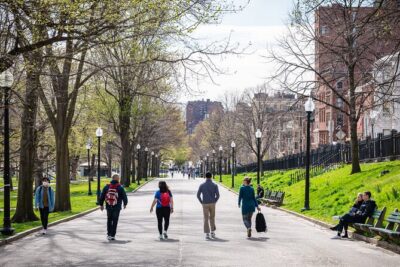
Boston Food & History: Pizza, North End & Freedom Trail
Read our review →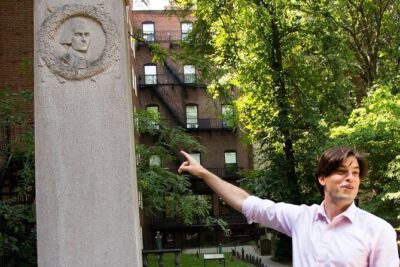
Boston’s Freedom Trail: A Revolutionary Walking Tour
Read our review →Freedom Trail History Small Group Walking Tour
Read our review →Boston’s Freedom Trail: A Revolutionary Walking Tour
Read our review →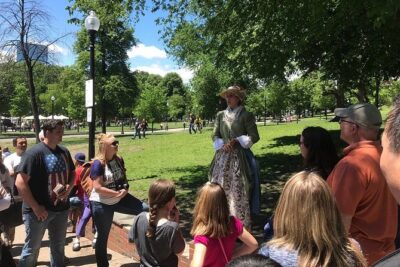
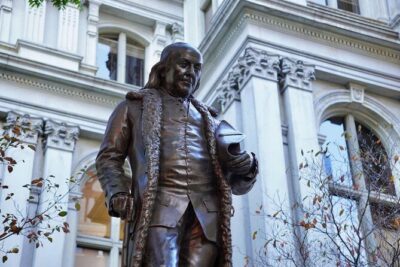
Boston Freedom Trail History Pub Crawl Small-Group Tour
Read our review →Browse the lists this tour appears in