
Review · HISTORICAL TOURS
Boston Untold History Walking Tour
Boston’s best stories are not all on the Freedom Trail. This small-group walking tour follows a different route, linking the city’s first subway, Charles Ponzi’s office, Whitey Bulger’s political family connection, the Big Dig, artificial land, Paul Revere, and the Great Molasses Flood. It is Boston with the polished surface peeled back.
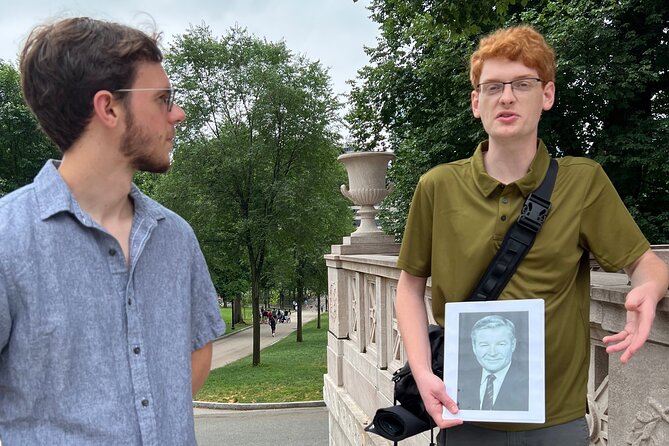
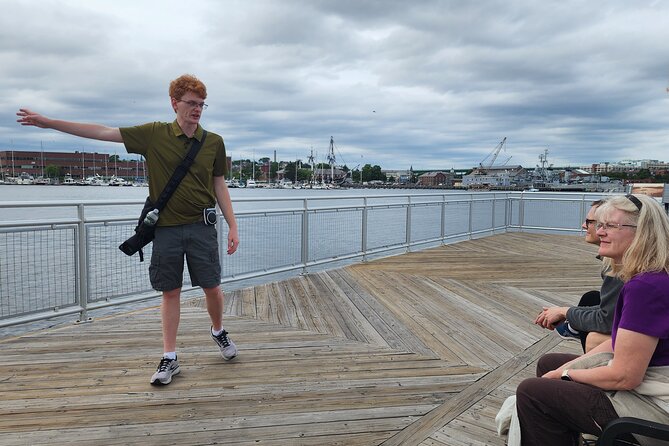
I like the way the tour uses real characters and odd events to explain the city. I also like the local scale: a maximum of 15 people and a guide such as Sam, a lifelong Bostonian who tells these stories with clear enthusiasm. The main drawback is the pace. You cover a lot of ground in about two and a half hours, so this is not a slow architectural stroll or a full stop-by-stop visit inside every building.
Key things to know before booking
- Boston beyond the standard Freedom Trail: The route focuses on less familiar stories rather than the city’s usual colonial highlights.
- Small group with local storytelling: The maximum group size is 15, and guide Sam is a lifelong local.
- A city built and rebuilt: You learn how Boston added artificial land, endured the Big Dig, and changed its waterfront.
- Odd stories with serious consequences: The tour covers Charles Ponzi, the Great Molasses Flood, Whitey Bulger, and Paul Revere.
- A one-way route: You start near Boston Common and finish at the Boston Harborwalk in the North End.
- Outdoor walking in changing weather: The experience requires good weather and calls for moderate physical fitness.
Why this Boston tour takes a different route
This experience is made for you if the standard Freedom Trail has already claimed your attention, or if you want Boston explained through its stranger turns. The route does not simply point out old brick buildings and recite dates. It asks how the city was shaped by burial grounds, transit, politics, crime, engineering, commerce, immigration, and disaster.
That makes the tour useful for a first visit, but especially good for a return visit. You still see major places such as Boston Common, Faneuil Hall, the North End, and Paul Revere’s statue. The difference is the angle. Instead of treating these places as isolated sights, your guide connects them to the city’s larger problems and personalities.
The small group matters here. With no more than 15 people, you have a better chance to hear the guide clearly and ask questions than you would on a large city walk. Sam is identified as a lifelong local, and his storytelling is central to the experience. He has a knack for the less familiar Boston stories, including moments that rarely make it into a basic sightseeing script.
The tour lasts about two hours and 30 minutes. That is long enough to cover a broad section of central Boston and the waterfront, but short enough to fit around a museum visit or an afternoon meal. You should still expect steady outdoor walking, with no promise of extended indoor breaks.
More history tours in Boston
- Boston: Freedom Trail History Small Group Walking Tour
★ 5.0 · 6,450 reviews - Tour of Historic Fenway Park, America’s Most Beloved Ballpark
★ 4.5 · 3,013 reviews - Boston Food & History: Pizza, North End & Freedom Trail
★ 5.0 · 1,772 reviews
From Central Burying Ground to Boston Common
The tour starts at 75 Boylston Street, close to Boston Common and the Central Burying Ground. The cemetery contains graves from the earliest periods of Boston’s past, giving the walk an immediate reminder that the modern city was built over generations of people, conflicts, and change.
The stop is brief, about 10 minutes, so think of it as an introduction rather than a cemetery tour. Your guide uses the site to place you in the older city and to show how much history can sit in plain view among busy streets.
From there, the group moves into Boston Common. The familiar park gets an unusual treatment: beneath it lies what the tour describes as America’s first subway. You hear how it was built and how the system shaped Boston culture.
This is one of the tour’s strongest ideas because it connects a green public park with the city below it. Boston Common is not only a place for paths and lawns. It also reflects the pressure of a growing city that needed new ways to move people. The stop lasts about 10 minutes, so the focus is on the story and setting rather than a technical transport lesson.
You also see Boston’s statue honoring Dr. Martin Luther King Jr. The tour points out that King spent many years in Boston and earned his PhD there. This adds a modern civil rights chapter to a route otherwise filled with colonial and industrial stories.
The pairing works well. You move from old burial grounds to public transit, then to a memorial for one of the most important figures in American history. It gives Boston Common more depth than a quick photo stop.
Politics, crime, and Charles Ponzi near the State House
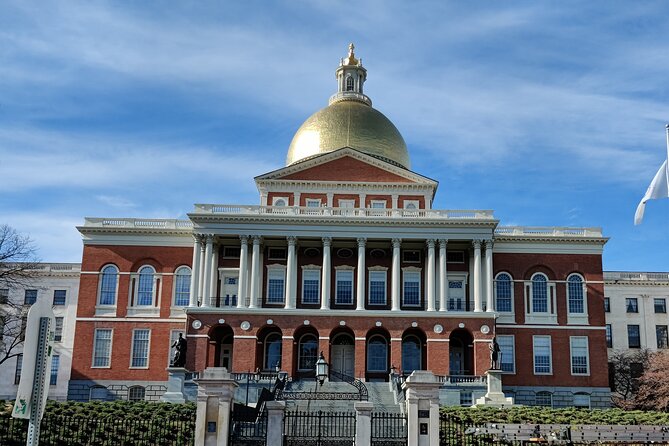
At the Massachusetts State House, the subject shifts from architecture to Boston power. Your guide tells the story of Billy Bulger, the State Senate president, and his complicated relationship with his brother, Whitey Bulger, the infamous Irish mobster.
This is a distinctly Boston story, where politics, neighborhood loyalties, family ties, and organized crime can overlap in uncomfortable ways. The stop takes about 15 minutes. It is a good example of the tour’s approach: use a recognizable building as the setting for a complicated human story.
You do not need to be a politics expert to follow it. The value is in seeing the State House as a working center of power, not just a handsome landmark. Admission is not included, and the experience is presented as an outdoor stop, so you should not expect a full interior visit.
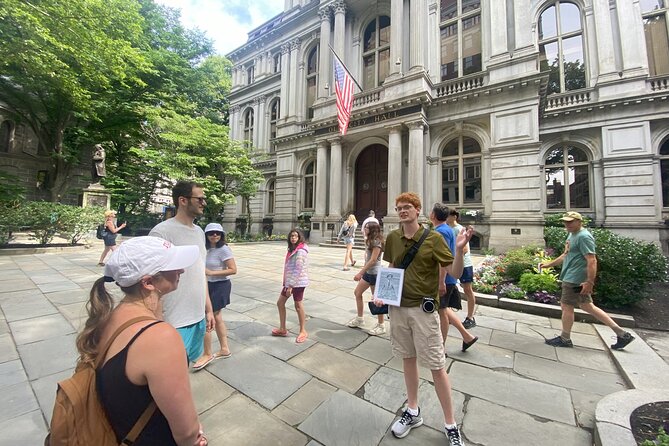
Next comes Old City Hall, where the tour looks at Charles Ponzi. His office was located nearby, and his fraud became so famous that the entire type of financial scam took his name.
This is a compact stop with about 20 minutes devoted to it. The subject is easy to remember, but the setting gives it more weight. Ponzi is not just a name used in financial news. He was connected to this part of Boston, and the tour places the story back on an actual street.
I like this kind of stop because it makes history practical. You walk past a building, hear how a con man operated nearby, and leave with a better sense of how famous scandals grow from ordinary city blocks. Admission is not included, and the focus is again on the story outside rather than an interior attraction.
Boston City Hall and the changing face of Faneuil Hall
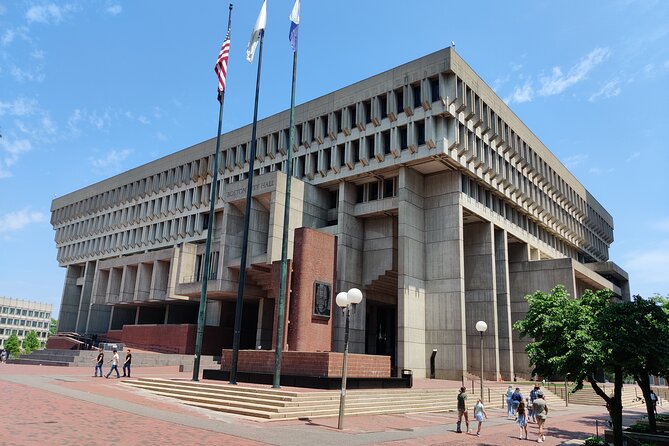
Boston City Hall brings you into a debate about architecture and public opinion. Your guide explains why the building is disliked by many Bostonians but admired by architects.
That contrast is the point. A building can be hard for the public to love while still being important to architecture. The stop lasts about 10 minutes, giving you a quick way to consider how cities judge large public buildings. You are not simply told that the building is good or bad. You hear why different people see it so differently.
From there, the group continues to Faneuil Hall Marketplace. The tour explains the history of Faneuil Hall and how the area changed over time. The marketplace began as a historic commercial center and now serves as a food hall and shopping area.
You should expect a busy urban setting here. The stop lasts about 15 minutes, which is enough for context but not enough for a full meal or extended browsing. Food and drinks are not included, though Sam can offer recommendations for after the tour.
That arrangement is sensible. It keeps the walk moving and lets you choose your own meal rather than paying for food you may not want. If you plan to eat in the North End, you may prefer to wait until the tour ends, since the route finishes nearby.
More walking tours in Boston
- Harvard University Campus Guided Walking Tour
★ 4.5 · 3,632 reviews - Boston Freedom Trail Walking Tour with Costumed Guide
★ 4.5 · 2,531 reviews - The Full Revolutionary Story Epic Small Group Boston Walking Tour
★ 5.0 · 2,356 reviews - Boston’s Freedom Trail: A Revolutionary Walking Tour
★ 4.9 · 1,748 reviews
The Big Dig and Boston’s repaired waterfront
The Rose Fitzgerald Kennedy Greenway offers one of the clearest explanations of how Boston changed in recent decades. You hear how the old raised highway tore through the city and how the Big Dig helped stitch those areas back together.
The stop lasts about 10 minutes. It is short, but the subject is large. The Greenway is not simply a pleasant strip of public space. It reflects a major effort to repair damage caused by urban road planning and reconnect parts of Boston that had been cut apart.
This is a useful stop for anyone interested in how cities evolve. You get a basic explanation of the problem, the construction project, and the new public space that followed. The tour does not pretend that rebuilding a city is simple, but it gives you a clear framework for understanding what you see.
The route then reaches the Boston Harborwalk. Here, the subject is land itself. Your guide explains how Boston expanded its footprint and why about one-sixth of the city’s land is artificial.
That fact changes the way you read the waterfront. The shoreline is not just a natural edge. It is also the result of filling, construction, trade, and long-term efforts to make more room for a growing city. The stop lasts about 20 minutes, giving this idea more time than some of the earlier landmarks.
For me, this is one of the most useful parts of the walk because it explains Boston’s shape. You are not only looking at the harbor. You are learning why the city reaches where it does and how much of it was made rather than simply found.
The North End, Paul Revere, and the story behind the ride
The route continues into the North End, Boston’s historic Italian neighborhood. This is one of the city’s best areas for food, and the guide can point you toward choices for after the walk.
The North End also gives the tour a shift in mood. After stories about roads, political power, and engineered land, you are in a neighborhood known for its food and local character. Since food and drinks are not included, plan to treat the end of the tour as a chance to choose your own meal.
At the Paul Revere statue, the guide tells the true story of Revere’s ride and explains why his name became so famous. The stop takes about 20 minutes, longer than the statue might seem to require. That extra time is useful because the familiar schoolbook version is often simplified.
The tour’s point is not to remove Paul Revere from the story. It is to place him in better context and explain how memory, publicity, and later retelling shaped his fame. This is a good example of the experience’s broader method: start with a famous name, then show you the less tidy story behind it.
You also get to consider why some historical figures become symbols while others fade from public memory. A statue can look simple, but the story attached to it is not.
The Great Molasses Flood and an unforgettable finish
The final major stop is the Great Molasses Flood plaque. Your guide explains how the flood happened and the consequences it caused for Boston.
It is an unusual ending, but a powerful one. The story combines industry, poor judgment, physical force, and public fallout. The stop lasts about 20 minutes, enough time to explain both the event and what followed.
This is the sort of story that stays with you because it sounds unbelievable until you place it in the city’s industrial past. The plaque gives you a fixed point, while the guide supplies the larger account. You leave with more than a strange anecdote. You gain a clearer sense of how business decisions can affect an entire neighborhood.
The tour finishes at 521 Commercial Street in the North End, near the Boston Harborwalk. That end point is practical. You are close to food, the waterfront, and the neighborhood’s restaurants, so you can continue exploring without returning to the starting point.
Remember that this is a one-way walk. If you have a car, the start and finish are not the same place. Boston’s public transportation is nearby, but the supplied details do not specify a particular station or return arrangement, so plan your route back before you begin.
Who gets the best value from this two-and-a-half-hour walk
You should consider this tour if you:
- Want Boston stories beyond the usual Freedom Trail route
- Like unusual historical characters and surprising city facts
- Prefer a local guide over a recorded audio walk
- Enjoy connecting architecture, politics, engineering, and neighborhood life
- Have moderate physical fitness for an outdoor walk
- Want food suggestions for the North End after the tour
It may be less suitable if you want a slow tour with lots of time inside buildings. Several stops last only 10 or 15 minutes, and admission is not included at the State House, Old City Hall, Boston City Hall, or Faneuil Hall Marketplace. The main product is the guide’s interpretation, not entry to a collection of paid attractions.
The tour also depends on good weather. Boston can be cold, windy, or wet, and the walk has limited shelter. Dress for the forecast and wear comfortable shoes. One past February outing was described as cold, so winter visitors should take the outdoor format seriously.
With only seven ratings currently recorded and a perfect five-star average, the early response is strongly positive, especially for the guide’s unusual material, clear structure, and storytelling. I would treat that as encouraging rather than final proof of perfection. The route is ambitious, and your enjoyment will depend heavily on how much you like listening while walking.
Should you book the Boston Untold History Walking Tour?
Book it if you want Boston explained through its stranger, sharper stories. The first subway under Boston Common, Charles Ponzi’s nearby office, the Bulger family connection, artificial land, the Big Dig, and the Molasses Flood give you plenty that a standard colonial walk may skip.
I would choose this tour for a return visit, a history-minded first visit, or an afternoon when you want a strong local introduction before eating in the North End. I would skip it only if you need indoor sightseeing, dislike a brisk urban walk, or want a tour focused strictly on the American Revolution.
The value comes from the guide, the small group, and the range of subjects. Sam’s local background and unusual stories are the draw. If that sounds better than another pass through the standard Freedom Trail script, this is a smart way to see a less predictable Boston.
FAQ
How long does the Boston Untold History Walking Tour last?
The tour lasts approximately two hours and 30 minutes.
Where does the tour begin?
It begins at 75 Boylston Street, Boston, Massachusetts 02116, near Boston Common.
Where does the tour end?
The walk ends at 521 Commercial Street in Boston’s North End, near the Boston Harborwalk.
How large is the group?
The tour has a maximum of 15 participants and includes a small-group guide.
Is food included?
No. Food and drinks are not included, but the guide can provide recommendations for eating after the tour.
What happens if bad weather cancels the tour?
The experience requires good weather. If poor weather causes cancellation, you can receive a different date or a full refund. You can also cancel at least 24 hours before the start time for a full refund.
Newest Boston tours we have written up
- Boston’s Freedom Trail: A Self-Guided Audio Tour★ 4.0 · 18 reviews
- Boston’s Freedom Trail: A Self-Guided Tour of All 16 Sites★ 5.0 · 14 reviews
- Washington D.C. Cherry Blossom,Baltimore 3-Day Tour from Boston★ 4.5 · 7 reviews
- Boston Self-Guided Audio Tour Bundle: Freedom Trail & More★ 4.5 · 5 reviews
- True Crime Tour of Boston★ 4.0 · 17 reviews
- Family Friendly Guided Bike Tour of Boston★ 4.5 · 22 reviews
- Freedom Trail Experience★ 5.0 · 8 reviews
- The Ghosts of Boston’s Past Haunted Self-guided Tour★ 3.5 · 4 reviews
Historical Tours, compared.
History and Hauntings of Salem Guided Walking Tour
Read our review →
Freedom Trail History Small Group Walking Tour
Read our review →
Tour of Historic Fenway Park, America’s Most Beloved Ballpark
Read our review →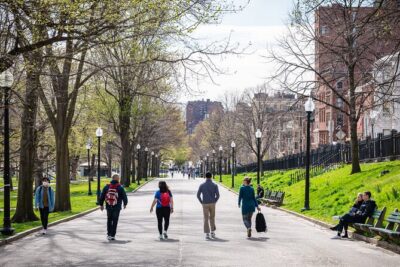
Boston Food & History: Pizza, North End & Freedom Trail
Read our review →Freedom Trail History Small Group Walking Tour
Read our review →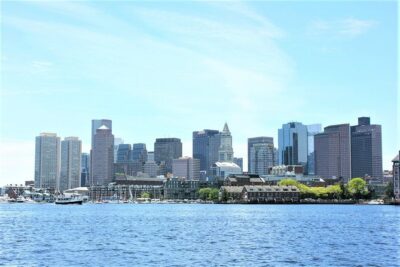
City Cruises Boston Historic Sightseeing Harbor Cruise
Read our review →
Boston’s North End Food Tour: Italian Flavors & Heritage Walk
Read our review →
Boston Pizza Lovers Food and History Walking Food Tour
Read our review →Browse the lists this tour appears in