
Review · BOSTON FREEDOM TRAIL TOURS
Freedom Trail: Boston Common, Old State House, Faneuil Hall
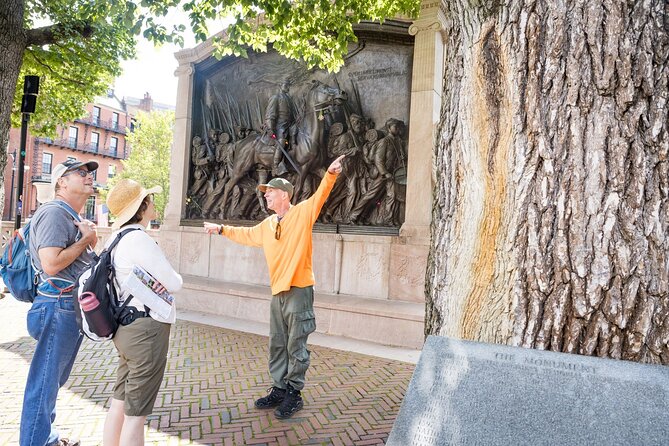
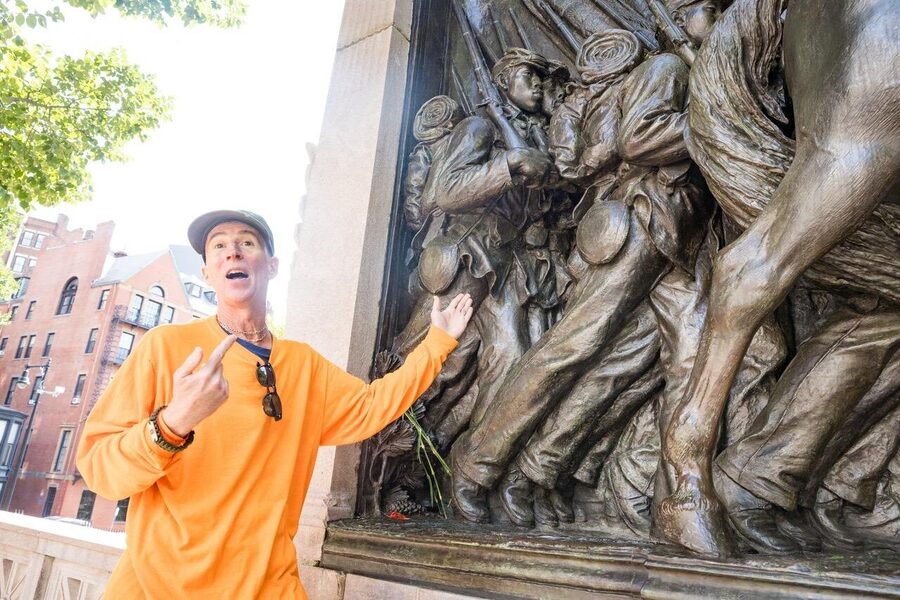
Boston’s Freedom Trail makes the most sense when someone connects the buildings, graveyards, protests, and street corners into one story. This two-hour walk follows that story from Boston Common to Faneuil Hall, stopping at eight important sites along the way. Guides such as Brian add side details, including the 54th Regiment Memorial and facts about Benjamin Franklin’s memorial, that can easily slip past you on a self-guided stroll.
I like the small group limit of 15 because you can ask questions without shouting over a crowd. I also like the balance of famous landmarks and human stories, from Crispus Attucks at Granary Burying Ground to the colonists gathering at the Old South Meeting House. The main drawback is the sheer amount of information. Brian’s fast, high-energy style has impressed many people, but some may find it hard to follow, especially younger children.
Key points at a glance
- Boston Common begins the story: Start in America’s oldest public park, a calm place with a long record of troop movements, protests, and public gatherings.
- Eight stops cover the core trail: The route includes the Massachusetts State House, Park Street Church, Granary Burying Ground, King’s Chapel, Old South Meeting House, Old State House, and Faneuil Hall.
- Brian brings strong personality: His lively delivery and local knowledge can make the walk memorable, though you may need to ask him to slow down.
- The group stays intimate: A maximum of 15 people makes it easier to hear the guide and ask questions.
- You see more than buildings: The walk brings attention to Paul Revere, Samuel Adams, John Hancock, Crispus Attucks, the Boston Tea Party, and the Declaration of Independence.
- The finish is convenient: The tour ends at Faneuil Hall Marketplace, a useful spot for continuing your day in central Boston.
Why this short Freedom Trail walk works
The Freedom Trail is easy to walk on your own, but easy does not mean easy to understand. You can follow the red line through Boston and still miss why one church mattered, why a graveyard contains so many revolutionary names, or why the Old State House balcony became a stage for independence.
This tour gives you a basic timeline and a human connection to the route. You begin in Boston Common, move through churches and burial grounds, then reach the meeting halls where arguments about taxation, representation, slavery, and independence grew sharper. That order helps you see Boston as a place where political change happened in public.
The two-hour length is useful if you want a focused introduction rather than a full-day history program. Each listed stop is given about 15 minutes, although the actual pace includes walking between sites. You get enough time to look around and hear the central story, but not enough for long interior visits or a slow museum-style examination of every landmark.
The tour is offered in English, with live commentary from a local Boston guide and historian. The group size is capped at 15, which matters on narrow sidewalks and busy public streets. You are not listening to a guide shouting through a megaphone, and you have a better chance of getting a direct answer when something catches your attention.
More ways to walk the Freedom Trail
- Boston: Freedom Trail History Small Group Walking Tour
★ 5.0 · 6,450 reviews - Boston Freedom Trail Walking Tour with Costumed Guide
★ 4.5 · 2,531 reviews - Boston Food & History: Pizza, North End & Freedom Trail
★ 5.0 · 1,772 reviews
Boston Common: a calm start with a complicated past
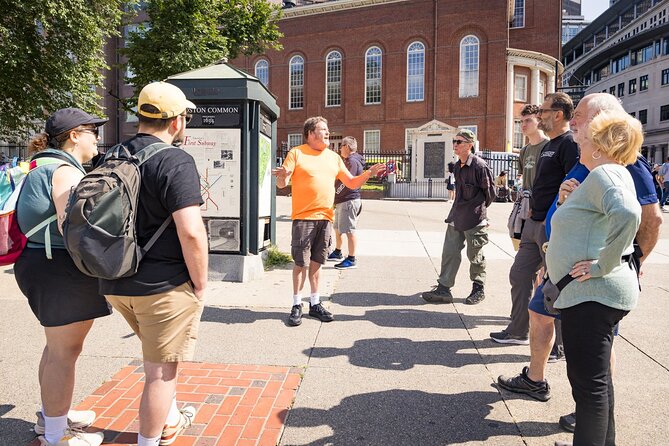
Boston Common was founded in 1634 and is recognized as America’s oldest public park. It makes a good opening point because it does not feel like a museum. It is an open public space, yet the ground has witnessed British troops encamped during the Revolutionary War and civil rights rallies many years later.
You begin at Tremont Street and Park Street, near Winter Street, at 10:30 a.m. The location is near public transportation, which makes the start fairly practical if you are staying elsewhere in Boston.
I like beginning here because the park gives you room to get oriented before the route moves into denser streets. Listen for the way your guide connects ordinary public space with major events. Boston Common is not just a green patch before the serious sights begin. It sets up the idea that the city’s history happened in places people still use.
The stop is listed as about 15 minutes, with no admission charge. You should expect an outdoor explanation rather than a long walk through the park.
The State House and Park Street Church
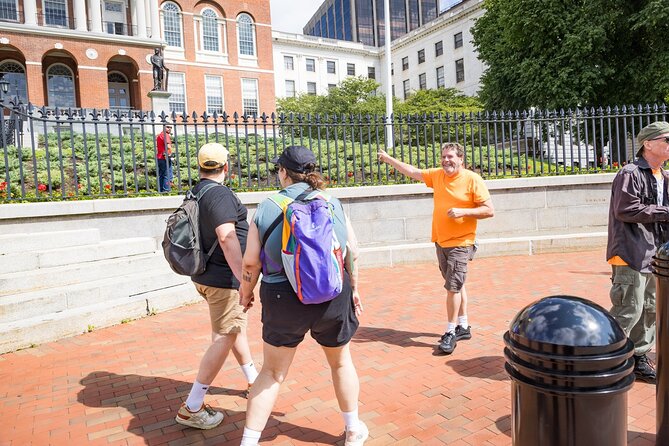
The Massachusetts State House comes next as a symbol of the city and the state government. Completed in 1798, the building is known for its golden dome and remains the seat of Massachusetts government.
The value here is not simply the dome. Your guide explains how the building relates to the state’s legislative process and how Boston’s civic life continued after the Revolution. The stop also gives you a chance to connect the dramatic events of the colonial period with the functioning government that followed.
Park Street Church, erected in 1809, shifts the story toward reform. Its tall steeple is easy to recognize, but the most important detail is its connection to the first public anti-slavery address in the United States.
That makes this stop more than an architectural pause. It reminds you that Boston’s arguments about freedom did not end when independence was declared. The city continued to wrestle with who could claim liberty and who was excluded from it.
Both stops are free to view from the route, and each is planned for roughly 15 minutes. You may find the information comes quickly, particularly if your guide adds extra facts beyond the basic route.
Granary Burying Ground: names that make the Revolution personal
Granary Burying Ground is one of the most meaningful stops on the walk. It is the final resting place of Paul Revere, Samuel Adams, and John Hancock, three names that can feel distant when you encounter them only in textbooks.
The cemetery also includes the grave of Crispus Attucks, who was the first casualty of the Boston Massacre. His place in the story is especially important because it brings race and representation into a route often presented mainly as a tale of colonial rebellion.
You are not just looking at old stones here. You are being asked to consider whose death became a political symbol and whose role has sometimes been pushed to the edge of the standard story. That is one reason a guide can add real value at this stop.
The tour includes admission to Granary Burying Ground, while the other listed stops are free. Plan for about 15 minutes. The cemetery is a somber place, and the best approach is to listen, look closely at the names, and allow the setting to slow the pace for a moment.
A guide may also point out an easily misunderstood detail involving Benjamin Franklin. The Franklin memorial at Granary does not mark his burial place, since he is buried in Philadelphia. Small corrections like this are useful because they keep the famous names from blending together.
A few more Boston tours and tickets worth a look
- Boston Duck Boat Sightseeing City Tour with Cruise Along Charles River
★ 4.5 · 9,378 reviews - Boston Hop-On Hop-Off Trolley Tour with 13 Stops
★ 4.5 · 5,576 reviews - Boston: City Cruises Whale Watching Cruise
★ 4.5 · 4,710 reviews - Boston Duck Tour: The Original and World-Famous
★ 4.6 · 3,935 reviews
King’s Chapel and the Old South Meeting House
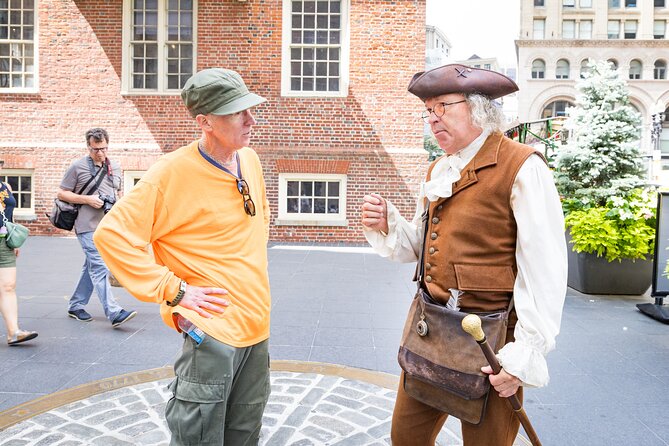
King’s Chapel was built in 1754 and is one of Boston’s oldest churches. Its Georgian design gives the route a different visual tone, but its political story is just as important as its architecture.
The church had ties to loyalist congregants during the Revolution. That detail helps you see that Boston was not united in one neat opinion. Some people pushed for independence, while others remained loyal to Britain or faced difficult choices as conflict grew.
That tension is worth keeping in mind as you walk. Revolutionary Boston was not a stage filled with heroes on one side and villains on the other. It was a real city with divided families, competing interests, and people trying to decide what came next.
The Old South Meeting House takes you closer to the events surrounding the Boston Tea Party. Built in 1729, it served as a major meeting place for colonists arguing about freedom and justice. Plans connected to the Tea Party were set in motion here.
I find this stop useful because it explains that the Tea Party was not a random act of destruction. It came after public debate, anger over taxation, and organized resistance. The meeting house gives that famous event a physical setting and shows how large public meetings could turn political frustration into action.
Both stops are listed as free, with about 15 minutes at each. The guide’s storytelling matters here because the buildings themselves may not tell you why they mattered. If you prefer quiet sightseeing with little narration, the steady flow of facts may feel intense.
The Old State House and the balcony that carried news
The Old State House dates to 1713 and was the seat of colonial government. It is one of the strongest stops on the route because the building connects government, protest, and public communication in one place.
The balcony is associated with the reading of the Declaration of Independence. That image is easy to picture: a message of separation announced to people gathered below. Your guide places the scene within the larger struggle over colonial rule and explains how the building became tied to the push for liberty.
This is also a good point to notice how close the major sites are to one another. Boston’s revolutionary story was not spread across a huge area. Meeting halls, churches, burial grounds, government buildings, and markets were packed into a walkable part of the city. That closeness helped news and arguments move quickly.
The stop is planned for about 15 minutes and does not include a separate admission charge. You should not expect a long indoor visit as part of this experience. The emphasis is on seeing the building and hearing the story from outside or along the route.
Faneuil Hall: ending at the Cradle of Liberty
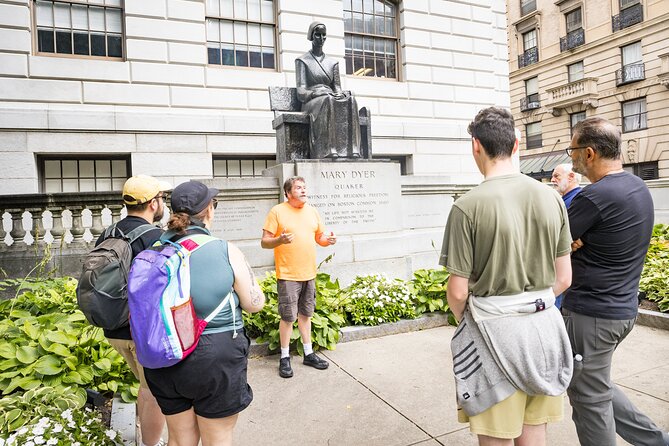
Faneuil Hall has served as a marketplace and meeting hall since 1742. Its nickname, the Cradle of Liberty, reflects the speeches and debates held here in support of independence.
Ending at Faneuil Hall gives the tour a logical finish. You have moved from an open public park through religious buildings, a cemetery, political meeting places, and the colonial government. Here, the route concludes in a place where public debate and commerce shared the same address.
The tour ends at Faneuil Hall Marketplace, Boston, Massachusetts 02109. That is useful for planning because you can continue with food, shopping, or more sightseeing without retracing your steps to the starting point.
Faneuil Hall can also be busy, so do not expect the same quiet atmosphere you may find at Granary Burying Ground. The payoff is convenience and a final connection to the public arguments that shaped Boston’s revolutionary identity.
Brian’s style and the amount of information
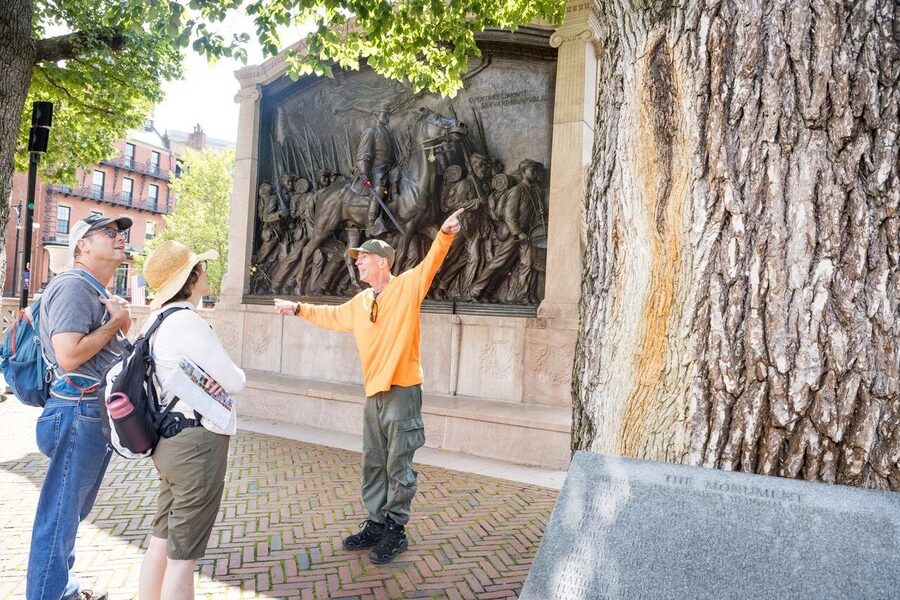
Brian receives the strongest praise for making the walk lively and personal. His energy can attract the attention of people passing by, and his storytelling includes details beyond the main route. He has also been praised for keeping children engaged on some tours.
That same energy can be a weakness. One person found the presentation too fast and felt overwhelmed by the amount of information. If you prefer a slower, carefully edited lecture, you may need to ask for a pause or clarification. A good guide can tell you many things, but you will remember more if you stop to ask questions and connect each fact to the place in front of you.
The small group helps here. With no more than 15 people, the experience feels more like a guided conversation than a speech to a crowd. You can ask about a name, a building, or a point that seems unclear.
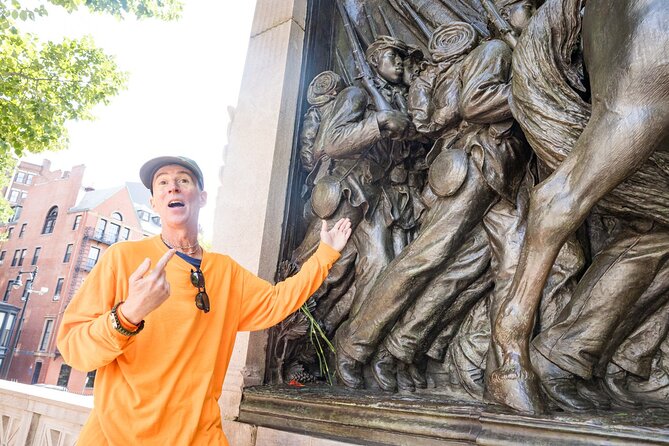
The tour may also include nearby historical details beyond the main Freedom Trail. Examples mentioned during the experience include the 54th Regiment Memorial and the fact that the sword on the memorial is rubber. These additions can make the walk feel more local and less like a recital of the standard guidebook text.
Still, the route is built around looking at buildings and listening. It may not hold the attention of younger children for the full two hours, especially if they need frequent activity or hands-on exhibits.
Is $39 a fair price?
At $39 per person, this is not the cheapest way to walk Boston’s Freedom Trail. The red line is public, and you can follow it without paying for a guide. The question is what you want from your time in Boston.
I think the price is reasonable if you want a clear introduction, enjoy asking questions, and do not want to research every stop yourself. The guide supplies context at places where a simple plaque may leave you with names but no connection between them.
The value is strongest for a first visit. You can use the walk to get your bearings, learn which sites deserve a longer return visit, and understand the basic sequence of Boston’s revolutionary story. It is less valuable if you already know the trail well or plan to spend hours inside individual historic buildings.
The price includes the guided walk, live commentary, and the listed admission to Granary Burying Ground. Gratuity is not included. A full refund is available if you cancel at least 24 hours before the 10:30 a.m. start time. Changes or cancellations made later are not accepted for a refund.
Who should book this Boston walk?
I would choose this tour for first-time Boston visitors, history fans, and anyone who wants more than a photo beside each red-brick landmark. It also suits people who enjoy a guide with personality and who are willing to ask questions when the pace becomes quick.
The tour works well for couples, friends, solo visitors, and families with older children. Younger children may lose interest because much of the experience involves looking at buildings and listening to historical explanations.
You should also be comfortable walking outdoors for about two hours. The route is near public transportation, service animals are allowed, and most people can participate. The group may reach 15 people, so it is small enough to feel personal but not private.
Should you book the Freedom Trail tour?
Book it if you want the Freedom Trail explained rather than simply followed. The strongest parts are the small group, the human stories at Granary Burying Ground, the connection between the meeting houses and the Boston Tea Party, and Brian’s ability to add details beyond the obvious sights.
Skip it if you prefer to move at your own pace, spend significant time inside each building, or avoid a fast and highly animated guide. You can walk the trail independently for less money, but you will need to supply the historical connections yourself.
For most first visits, the tour offers a useful two-hour introduction. Go ready to listen, ask for clarification when needed, and treat the extra details as part of the experience rather than trying to memorize every name.
FAQ
How long is the Freedom Trail tour?
The tour lasts approximately two hours.
Where does the tour start?
It starts at Tremont Street and Park Street, near Winter Street, in Boston, Massachusetts 02108.
What time does the tour begin?
The scheduled start time is 10:30 a.m.
Where does the tour end?
The walk ends at Faneuil Hall Marketplace in Boston, Massachusetts 02109.
How many people can join the group?
The tour has a maximum group size of 15 people.
Is the tour offered in English?
Yes. The tour is offered in English with live commentary from a local Boston guide and historian.
Can I cancel for a full refund?
Yes. You can cancel at least 24 hours before the start time for a full refund. Cancellations or changes made less than 24 hours before the experience are not refunded.
Newest Boston tours we have written up
- Boston’s Freedom Trail: A Self-Guided Audio Tour★ 4.0 · 18 reviews
- Boston’s Freedom Trail: A Self-Guided Tour of All 16 Sites★ 5.0 · 14 reviews
- Washington D.C. Cherry Blossom,Baltimore 3-Day Tour from Boston★ 4.5 · 7 reviews
- Boston Self-Guided Audio Tour Bundle: Freedom Trail & More★ 4.5 · 5 reviews
- True Crime Tour of Boston★ 4.0 · 17 reviews
- Family Friendly Guided Bike Tour of Boston★ 4.5 · 22 reviews
- Freedom Trail Experience★ 5.0 · 8 reviews
- The Ghosts of Boston’s Past Haunted Self-guided Tour★ 3.5 · 4 reviews
Boston Freedom Trail Tours, compared.

Freedom Trail History Small Group Walking Tour
Read our review →
Boston Freedom Trail Walking Tour with Costumed Guide
Read our review →
Boston Food & History: Pizza, North End & Freedom Trail
Read our review →
Boston’s Freedom Trail: A Revolutionary Walking Tour
Read our review →Freedom Trail History Small Group Walking Tour
Read our review →Boston’s Freedom Trail: A Revolutionary Walking Tour
Read our review →
Boston Freedom Trail History Pub Crawl Small-Group Tour
Read our review →Browse the lists this tour appears in