
Review · BOSTON REVOLUTIONARY WAR TOURS
The Full Revolutionary Story Epic Small Group Boston Walking Tour
Boston’s Revolutionary story makes far more sense when you hear it in the order it happened. This small-group walking tour begins at City Hall Plaza, then winds through burying grounds, churches, meeting houses, political landmarks, the North End, and Boston Harbor instead of simply marching down the Freedom Trail from one end to the other.
I like the way the route connects familiar names such as Paul Revere, John Hancock, Sam Adams, and Benjamin Franklin with the streets and buildings where their world took shape. I also like the teaching style: guides including Tyler, Mike, Chris, and Tom use maps, character cards, visual aids, and even Lego soldiers to make battles and political disputes easier to follow.
The trade-off is simple: this is a long outdoor walk, lasting about three to three and a half hours. Cold, rain, wind, or mobility limits can make it harder, and it is not a short children’s tour or a costumed reenactment.
Key points to know before booking
- The story runs in chronological order: You follow the events leading to the Revolution instead of only tracing the Freedom Trail geographically.
- The group is limited to 15 people: That gives you a better chance to hear the guide and ask questions.
- You see more than the official trail: The route includes Post Office Square, the Financial District, the Greenway, North Square, and the Harborwalk.
- The teaching is active and visual: Maps, props, historic character cards, and battle demonstrations help put names and events in place.
- The North End is the finish line: You end near Lewis Wharf, close to Italian food, seafood, cannoli, public transportation, and Boston Harbor.
- Plan for serious walking: Wear good shoes and prepare for an entirely outdoor experience, except for the built-in access to Faneuil Hall and Quincy Market.
Why the chronological route matters
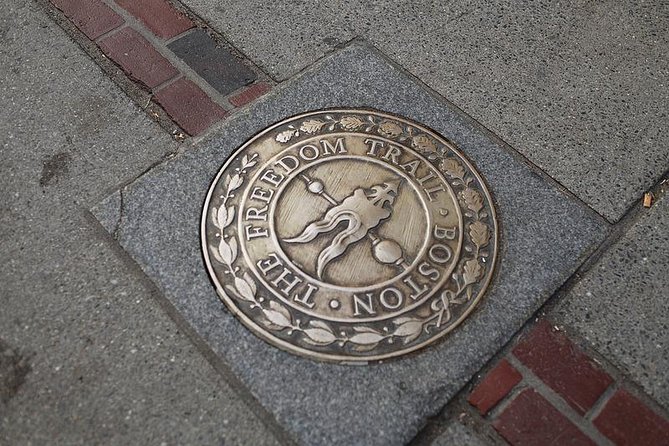
Most Freedom Trail walks follow the red brick path from one landmark to the next. That is easy to navigate, but it can scramble the story. This tour takes a different approach, moving through Boston in the order that tensions developed.
That choice gives you a clearer sense of cause and effect. You begin with the people who settled Massachusetts Bay, then move through religious conflict, British authority, colonial protest, the Boston Massacre, the Boston Tea Party, and the first fighting of the Revolution.
I find this especially useful if your American history is a little rusty. You do not need to arrive with a list of dates in your head. The guide builds the story step by step, showing how political arguments became street protests and how protests became open rebellion.
The route also includes modern Boston. Office towers, the Financial District, public gardens, markets, restaurants, and waterfront parks are not treated as distractions from the past. Instead, you see how a working city grew around its colonial core.
More Revolutionary War tours in Boston
- Boston Tea Party Ships and Museum Admission
★ 4.5 · 2,512 reviews - Boston’s Freedom Trail: A Revolutionary Walking Tour
★ 4.9 · 1,748 reviews - Boston’s Freedom Trail: A Revolutionary Walking Tour
★ 5.0 · 1,343 reviews
Starting at City Hall Plaza
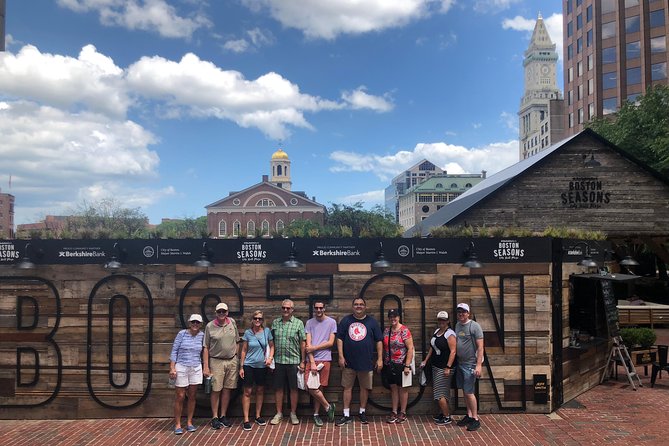
Meet your guide at City Hall Plaza, between Five Iron Golf and Boston City Hall, near the seasonal beer garden and the large Boston sign. Faneuil Hall forms the backdrop, making this a handy place for an opening photograph.
The plaza is pedestrian-only and directly across from Faneuil Hall, so it is easy to reach from central Boston. The opening stop lasts about 10 minutes, followed by a brief look at Boston City Hall and its famously unusual architecture.
This is a good beginning because it places old and new Boston side by side. The city government building is modern and striking, while Faneuil Hall across the way recalls the political arguments of the colonial era. Your guide uses that contrast to begin talking about democracy, authority, and the difficult work of governing.
Burying grounds, Puritans, and the people behind the story
King’s Chapel Burying Ground is the first major historical stop. Here, the focus is on the people who settled Massachusetts Bay and the strange, complicated world of the Puritans.
This is more than a quick cemetery visit. The guide uses the site to explain the social and religious forces that shaped early Boston. You also pass Boston’s first Anglican church before reaching Granary Burying Ground.
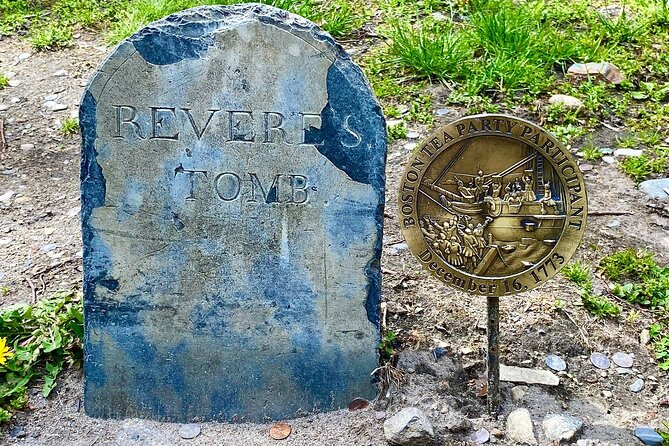
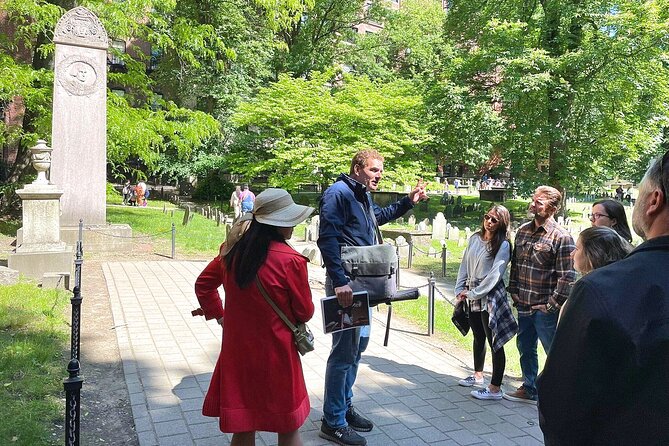
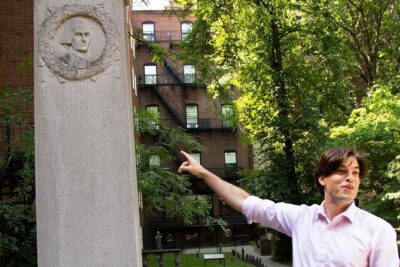
Granary is one of the tour’s strongest stops. The graves of Paul Revere, John Hancock, and Sam Adams give you a direct connection to the men most often associated with the Revolution. The useful part is not simply seeing their names on stones. You learn who the Sons of Liberty were, what they wanted, and how their public image was shaped.
The stop lasts about 15 minutes. Expect stories, not just dates. That approach helps separate the people from the legends and shows that the Revolution was driven by arguments, alliances, business interests, fear, and ambition as much as by heroic speeches.
Old City Hall and the debate over democracy
At Old City Hall, the architecture becomes part of the lesson. The guide uses the building as a setting for discussing the obstacles and tensions built into democratic government.
This part of the walk is useful because it moves beyond the familiar list of revolutionary heroes. You begin to think about who had power, who was left out, and why the language of liberty did not apply equally to everyone.
A nearby stop at the Benjamin Franklin statue introduces the first public school in Boston and Franklin’s place in that story. The stop lasts about 10 minutes and adds a personal angle to the political narrative.
You then reach the Old State House, the oldest public building in the country according to the tour description. It was the center of Massachusetts politics, where British authority and American rights collided in public debate.
More walking tours in Boston
- Boston: Freedom Trail History Small Group Walking Tour
★ 5.0 · 6,450 reviews - Harvard University Campus Guided Walking Tour
★ 4.5 · 3,632 reviews - Boston Freedom Trail Walking Tour with Costumed Guide
★ 4.5 · 2,531 reviews - Boston: Freedom Trail History Small Group Walking Tour
★ 4.9 · 1,590 reviews
The Boston Massacre and the road to open conflict

The Boston Massacre site is one of the places where political disagreement turned deadly. Here, you hear about soldiers, civilians, loyalists, and patriot leaders caught in rising tension.
The value of this stop is the chance to see the event from more than one side. Revolutionary history is often presented as a clean struggle between good colonists and bad British officials. The guide instead explains the competing pressures that made Boston so unstable.
You also pass a former publishing house connected with Ralph Waldo Emerson, Henry Wadsworth Longfellow, Nathaniel Hawthorne, and other American literary figures. It is not the central focus of the walk, but it widens the picture of Boston beyond 1770s politics.
At Brimstone Corner, the guide discusses fiery sermons and William Lloyd Garrison’s first public address against slavery in 1829. This stop shows how Boston’s tradition of public protest continued after independence and connects the revolutionary period with later arguments over freedom.
Old South Meeting House and Faneuil Hall
Old South Meeting House is where the Boston Tea Party story begins. The meeting house became a gathering place for colonists opposed to British taxes and policies, and the guide explains why the tea protest was such a major turning point.
The stop takes about 15 minutes. You learn how a public meeting moved toward direct action, and why there was no easy return to normal relations after the tea was destroyed.
From there, the route passes Post Office Square and the Financial District. This section is one of the tour’s best reminders that Boston is not an open-air museum. The modern city, with its finance, education, and health-care institutions, operates around the sites of colonial conflict.
Faneuil Hall comes next, known as the Cradle of Liberty. The building is tied to public debate, protest, and the transformation of colonial resistance into revolution. The tour includes a built-in break for entrance into Faneuil Hall and Quincy Market.
Quincy Market is worth seeing, but you should heed the warning that tourist traps abound. Use the stop as a chance to look around, take a short break, or grab something if needed, but do not assume every food option there offers the best value in Boston.
The Greenway and Paul Revere’s North End
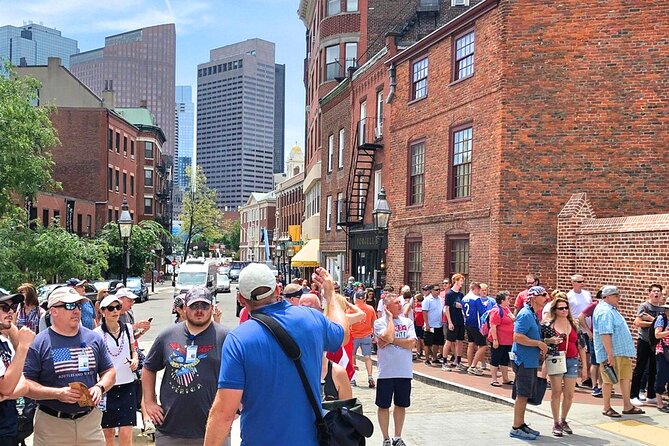
The Rose Fitzgerald Kennedy Greenway provides a welcome change from streets and stone buildings. This long public garden runs through downtown and shows how Boston has reused land in the modern era.
Then the route heads toward the North End. At the Paul Revere House, you see the oldest surviving house in downtown Boston, set in North Square among narrow streets and restaurants.
The guide treats Revere as a person rather than only a midnight rider. That matters because the legend can overshadow his work, family, business, and place in Boston society.
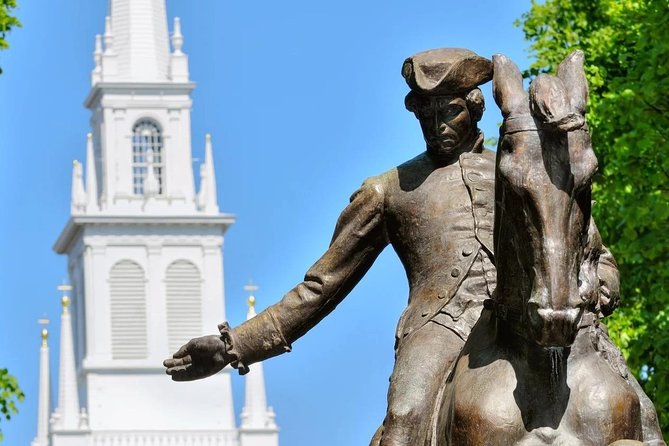
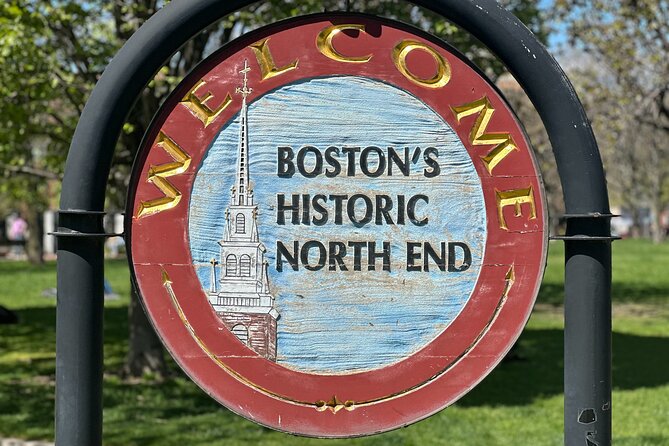
North Square Park is presented as the oldest residential square in America. The nearby Paul Revere statue offers a classic photo stop, but the surrounding neighborhood is just as important. The North End is one of the best places on the route to connect history with present-day Boston life.
Expect talk of Italian food, seafood, pizza, and cannoli. You are not simply passing through a historic district. You are learning how an old residential quarter remains part of the city’s daily life.
Old North Church, Bunker Hill, and the harbor
At Old North Church, the guide explains the famous one-if-by-land, two-if-by-sea signal and Paul Revere’s ride. The story continues through Lexington and Concord and reaches the fighting that followed.
The tour also covers the second-oldest burial ground in Boston from the outside. You do not enter this cemetery, but the terrace across the street provides views toward Charlestown and Boston Harbor.
Bunker Hill Monument receives a full explanation of the battle, described as the largest battle of the American Revolution. This is another place where visual aids are useful. One guide, Tyler, has used Lego soldiers to show how the battle unfolded, while other guides have used maps and props.
That kind of demonstration can help families and visual learners. It also gives adults a clearer sense of the battlefield than a short speech beside a monument usually can.
You can see USS Constitution, known as Old Ironsides, from across Boston Harbor. The ship was not part of the American Revolution, so it is not treated as a revolutionary site. Instead, the guide gives you a brief account of its history and advice on how to visit it later.
Finishing beside Boston Harbor
The final stretch takes you through the North End and along the Harborwalk. You get views of the water, piers, wharves, parks, and the Boston skyline.
This ending works well because it shifts the mood from political conflict to the city’s present-day waterfront. The guide also frames the harbor as the place where British forces were finally driven out of Boston.
The tour ends at Lewis Wharf, in the heart of the North End. You are within a short walk of Italian restaurants, seafood, pizza, clam chowder, and cannoli. Public restrooms, parking, bicycles, and public transportation are nearby, and the Aquarium station is less than five minutes away.
You can return to the original meeting point in under 10 minutes on foot. Restaurant suggestions are included, which is useful because the North End offers plenty of choice but can be crowded and expensive in its most famous spots.
The guides and teaching style
The guides named in the tour’s recent feedback include Tyler, Mike, Chris, and Tom. Tyler is described as holding a master’s degree in American history and having worked as a curriculum coordinator. Mike is also presented as having advanced history degrees.
The strongest feature of the guiding is the teaching. The guides use humor, maps, character badges, visual cards, and props to give shape to complex events. You are encouraged to participate rather than simply stand and listen.
That style suits people who want more than a basic photo tour. It also helps families with older children and teenagers. The tour is suitable for all ages, but it is not presented as a simplified children’s program. Younger children may find three and a half hours of historical discussion demanding.
Price, pace, and practical value
At $55 per person, this is not the cheapest way to see the Freedom Trail. It is also not a standard short walk. You are paying for a maximum group size of 15, a trained history guide, a three-hour-plus route, and a narrative that links 14 official landmarks with additional city sights.
I think the price is fair for visitors who would otherwise book several separate walks or spend time trying to assemble the story on their own. You also get a built-in break around Faneuil Hall and Quincy Market, plus local suggestions for the North End.
The main cost is your time and energy. The route is almost entirely outdoors, and you should wear walking shoes. Several people describe it as a lot of walking, even while finding the pace worthwhile. Cold weather, rain, and strong wind can affect the experience, so dress for the forecast.
The group size is a real advantage. With no more than 15 people, you should have a better view of visual aids and a better chance to ask a question than on a large coach-style tour.
Free cancellation is available up to 24 hours before the start time. The experience can be canceled for poor weather or if the minimum number of participants is not reached, with another date or a full refund offered.
Who should book this Boston walk
I would choose this tour if you want a serious introduction to Boston’s Revolution and prefer a guide who explains how events connect. It is particularly good for history fans, first-time visitors, solo visitors, couples, and families with older children.
You should think twice if you dislike long walks, need frequent indoor stops, or want to enter every major historic building. Museum admission is not included apart from the access connected with Faneuil Hall and Quincy Market, and the route does not use transportation.
If you want only a quick overview and a few photographs, a shorter Freedom Trail walk may suit you better. If you want to understand why the Revolution happened, how Boston’s people argued about it, and how the modern city grew around those events, this longer route earns its time.
Should you book it?
Book this tour if you want Boston’s revolutionary story told as one connected lesson rather than as a string of famous buildings. The chronological route, small group, visual teaching tools, and finish in the North End give it more substance than a simple trail-following walk.
Skip it if three to three and a half hours on foot sounds tiring or if your main goal is indoor museum time. For everyone else, bring good shoes, dress for the weather, and leave room afterward for lunch in the North End. The history may finish at Lewis Wharf, but Boston’s food story is just getting started.
FAQ
How long does the tour last?
The tour lasts approximately three to three and a half hours.
How much does the tour cost?
The price is $55 per person.
Where does the tour begin?
It begins at City Hall Plaza, at 1 City Hall Square in Boston. The meeting point is between Five Iron Golf and City Hall, near the seasonal beer garden and the large Boston sign.
Where does the tour end?
The tour ends at Lewis Wharf in Boston’s North End, near Boston Harbor.
How many people can join the tour?
The maximum group size is 15 people.
Is the tour offered in English?
Yes. The experience is offered in English and uses a mobile ticket.
Does the tour follow the Freedom Trail?
Yes, but it does not simply follow the trail from one end to the other. It connects many Freedom Trail sites in chronological order and adds other parts of Boston.
Are museum admissions included?
Museum entry is not included, except for the built-in access to Faneuil Hall and Quincy Market described as part of the experience.
Is the tour suitable for children?
Children are welcome, but they must be accompanied by an adult. The tour is suitable for all ages, though it is not designed as a special children’s version.
What happens if the weather is poor?
The experience requires good weather. If it is canceled because of poor weather, you will be offered another date or a full refund.
Newest Boston tours we have written up
- Boston’s Freedom Trail: A Self-Guided Audio Tour★ 4.0 · 18 reviews
- Boston’s Freedom Trail: A Self-Guided Tour of All 16 Sites★ 5.0 · 14 reviews
- Washington D.C. Cherry Blossom,Baltimore 3-Day Tour from Boston★ 4.5 · 7 reviews
- Boston Self-Guided Audio Tour Bundle: Freedom Trail & More★ 4.5 · 5 reviews
- True Crime Tour of Boston★ 4.0 · 17 reviews
- Family Friendly Guided Bike Tour of Boston★ 4.5 · 22 reviews
- Freedom Trail Experience★ 5.0 · 8 reviews
- The Ghosts of Boston’s Past Haunted Self-guided Tour★ 3.5 · 4 reviews
Boston Revolutionary War Tours, compared.

Boston’s Freedom Trail: A Revolutionary Walking Tour
Read our review →Boston’s Freedom Trail: A Revolutionary Walking Tour
Read our review →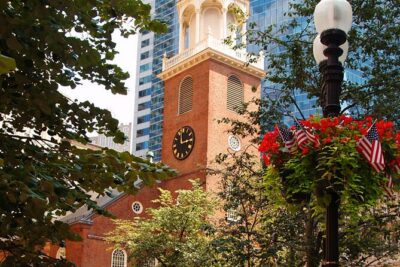
Entire Freedom Trail Walking Tour: Includes Bunker Hill and USS Constitution
Read our review →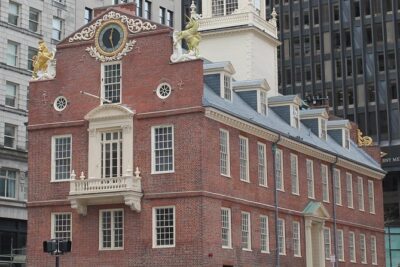
Boston’s Revolutionary and Drunken Past with Ye Olde Tavern Tours
Read our review →
Boston History & Highlights Tour: From Revolution to Today
Read our review →
Freedom Trail, Bunker Hill, & USS Constitution Tour
Read our review →
Full Revolution Story Epic Small Group Walking Tour
Read our review →Browse the lists this tour appears in