

Review · BOSTON REVOLUTIONARY WAR TOURS
Boston: Full Revolution Story Epic Small Group Walking Tour
Boston’s Revolution story makes much more sense when the events are told in the order they happened, not in the order that the Freedom Trail happens to pass its landmarks. This small-group walk links Boston’s original neighborhoods into one long story, from the city’s founding through the Boston Massacre, Tea Party, Lexington and Concord, Bunker Hill, and the Declaration of Independence.
I like the chronological storytelling and the use of maps, photographs, Lego pieces, battle figures, and name tags to make complicated events easier to follow. I also like the small group, usually around 16 people, and the finish in the North End and along the harbor, where your guide can point you toward lunch and dinner spots.
The main drawback is the length and pace. At 210 minutes, with roughly 2.5 miles of walking and one uphill stretch plus stairs near the end, this is not a gentle stroll. The content also suits adults and serious teens better than young children.
Key points to know before you book
- Chronological route: The tour tells the Revolution as a connected story instead of treating each Freedom Trail stop as a separate fact.
- Small group of about 16: You get a better chance to hear the guide and ask questions than on a large city walk.
- Guides with different strengths: Mike, Tyler, Rob, Chris, and Tom have all led this experience, with Mike and Tyler especially noted for lively storytelling and visual aids.
- Boston beyond the Freedom Trail: The route reaches the North End, USS Constitution, Bunker Hill, the Harborwalk, and Lewis Wharf.
- Useful visual tools: Maps, photographs, role cards, and small props help explain troop movements, personalities, and cause and effect.
- Good first-day tour: It covers enough of central Boston that you can return later to the places that catch your interest.
Why the story-first route works
Many Boston walks simply follow the red-brick Freedom Trail from one end to the other. That is easy to navigate, but it can scramble the history. A church may come before a meeting house, a burial ground may appear before the person buried there has entered the story, and major events can feel like isolated episodes.
This tour takes a different approach. Your guide builds the plot as you move through the city. You meet the people, learn what they wanted, see the pressures building, and then reach the familiar events with more context. Ben Franklin, Paul Revere, Samuel Adams, John Hancock, and John Adams become part of an unfolding argument rather than a list of famous names.
That distinction matters. The strongest part of the experience is not simply seeing more landmarks. It is hearing why Boston’s political anger grew, how local disputes connected to larger British policies, and how individual choices pushed events forward.
The teaching style is active without relying on costumes or staged reenactments. Guides use maps and visual material, and they may give members of the group historical roles. That does not turn the walk into theater. Instead, it gives you a simple way to keep track of the many people involved.
More Revolutionary War tours in Boston
- Boston Tea Party Ships and Museum Admission
★ 4.5 · 2,512 reviews - The Full Revolutionary Story Epic Small Group Boston Walking Tour
★ 5.0 · 2,356 reviews - Boston’s Freedom Trail: A Revolutionary Walking Tour
★ 4.9 · 1,748 reviews
Starting at City Hall Plaza and entering the old city
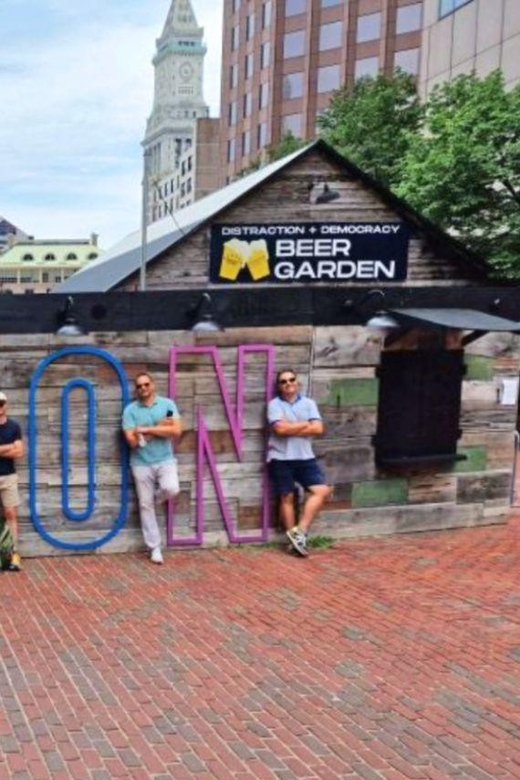
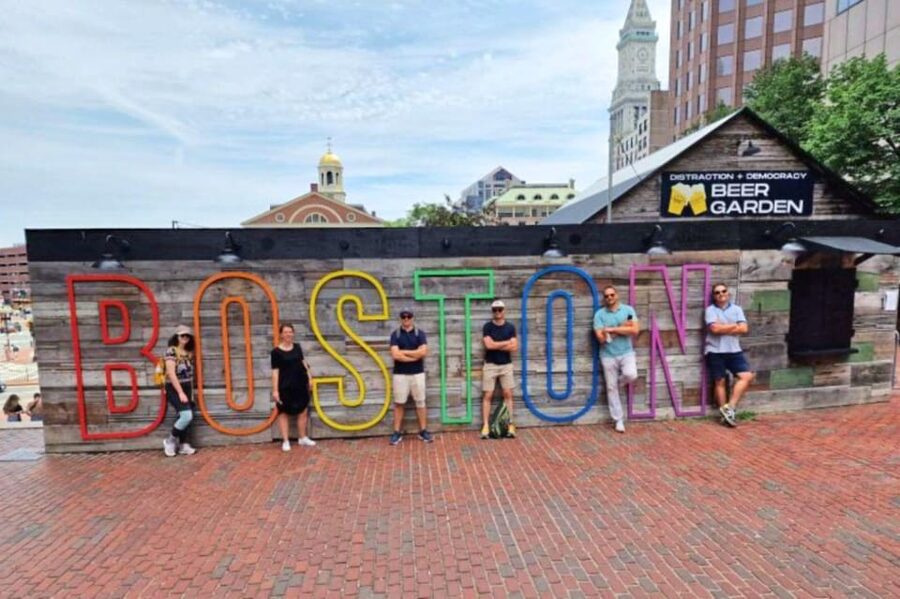
Meet at City Hall Plaza, directly across from Faneuil Hall. The guide waits near Five Iron Golf, between Staples Connect and City Hall, close to the Bill Russell statue and seasonal beer garden. Green Line riders should use Government Center, while Orange and Blue Line riders can use State Street.
The opening section introduces Boston’s old town and sets up the larger story. You begin near the Freedom Trail, but this is not a basic trail-following exercise. The guide explains how Boston’s neighborhoods, meeting places, churches, markets, and public spaces shaped political life.
The route soon reaches King’s Chapel Burying Ground. This stop helps place early Boston in its social and religious setting. You then continue to Granary Burying Ground, where names connected with the Revolution bring the era closer to life. The guide uses these sites to introduce people and institutions rather than treating the cemeteries as quick photo stops.
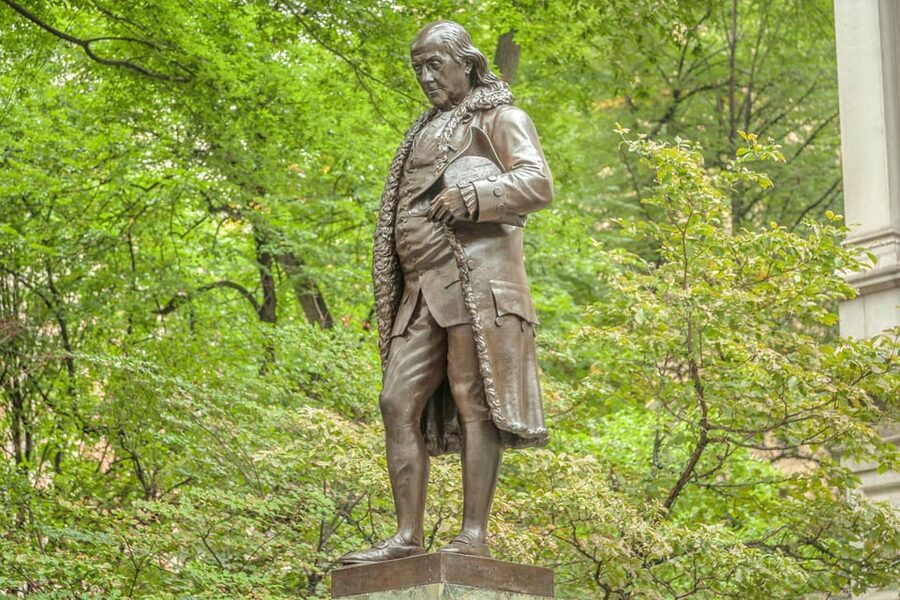
You pass Park Street Church and visit Old City Hall before reaching Boston Latin School and the Benjamin Franklin statue. These stops broaden the story beyond battles and dramatic protests. Education, civic life, religion, and public debate all helped form the world in which the Revolution took shape.
Old State House, the Massacre site, and the pressure building

The Old State House is one of the central stops. Here the guide can explain how Boston’s government worked and why the building became such a powerful symbol of authority. The nearby Boston Massacre site then brings the political conflict into a single, sharply remembered event.
The value of this part of the tour is the explanation around the event. You are not simply told who stood where and what happened. The guide addresses the competing pressures, the presence of British troops, the local mood, and the way the incident was presented to the public.
That focus on cause and effect is what makes the walk useful for anyone who already knows the broad outline. The emphasis is on the why behind the dates. One of the strongest reported guide styles is to explain how events snowballed, rather than treating the Revolution as a series of inevitable steps.
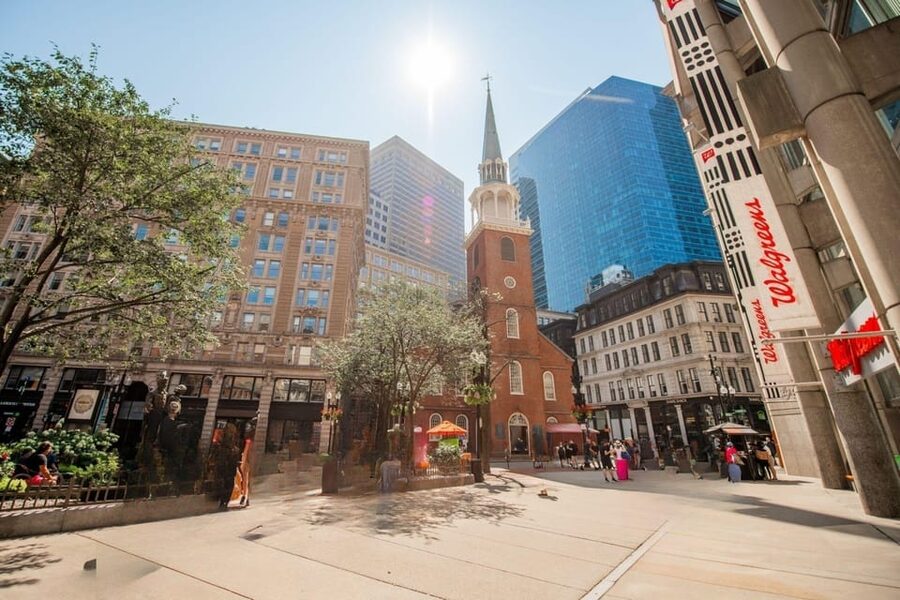
The route continues by the Old Corner Book Store and to the Old South Meeting House. The meeting house is especially important because it connects public gathering, protest, and the decisions that led to the Boston Tea Party. You see how a building used for worship and public discussion could become a political crossroads.
Post Office Square and Liberty Square add more city context before the group reaches Faneuil Hall. These shorter passages help you see Boston as a working city, not just a collection of preserved monuments.
Faneuil Hall and Quincy Market provide the useful pause
Faneuil Hall is one of the most recognizable places in Boston, but its importance comes from public speech and public argument. When the building is open, entry is included. Your guide explains its role in civic life and links it to the meetings and debates that shaped local resistance.
The stop at Quincy Market includes a 15-minute break for the restroom and a quick look around. This is a practical feature in a long walking tour. You can get water or a snack, but do not treat it as a full meal break. The schedule is tight, and the group continues afterward.
I like this pause because it arrives at a sensible point in the route. By then, you have covered the early city and the first major flash points. A short reset helps before the tour crosses into the North End and Charlestown side of the story.
The walk continues along the Rose Kennedy Greenway. This gives you a change of scenery and a glimpse of modern Boston while the guide keeps the historical thread going. The contrast is useful: the city is not a museum frozen in 1775, and the tour does a good job of connecting old landmarks with the living city around them.
More walking tours in Boston
- Boston: Freedom Trail History Small Group Walking Tour
★ 5.0 · 6,450 reviews - Harvard University Campus Guided Walking Tour
★ 4.5 · 3,632 reviews - Boston Freedom Trail Walking Tour with Costumed Guide
★ 4.5 · 2,531 reviews - Boston: Freedom Trail History Small Group Walking Tour
★ 4.9 · 1,590 reviews
Paul Revere, the North End, and the Old North Church
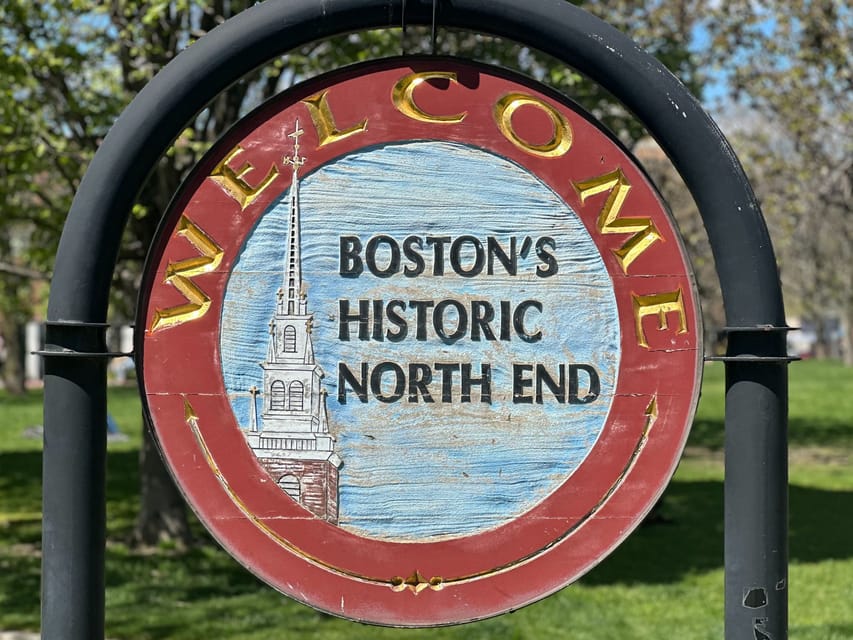
The North End section is one of the most atmospheric parts of the route. You visit the Paul Revere House, walk through the neighborhood, stop at Paul Revere Mall, and reach Old North Church.
Paul Revere’s place in the story is often reduced to one famous ride. A good guide gives you more than the familiar slogan and places Revere among the people, networks, and urgent communications that made the warning system work. The visual aids help here, especially when the group is trying to understand distances, roads, and troop movements.
Old North Church brings the story to another memorable landmark. The guide can connect the church to the warning signals and the events leading toward Lexington and Concord. Because the tour has already introduced the political tension, this section feels like a payoff rather than a disconnected anecdote.
The North End is also where the experience becomes especially useful for the rest of your Boston visit. You finish nearby later in the day, and the guide provides food suggestions. If you plan to eat in the neighborhood, keep a list of recommendations handy. The tour does not include lunch, but the location makes it easy to continue your day with Italian food, coffee, or pastries.
Copps Hill, Charlestown, and the Bunker Hill finish
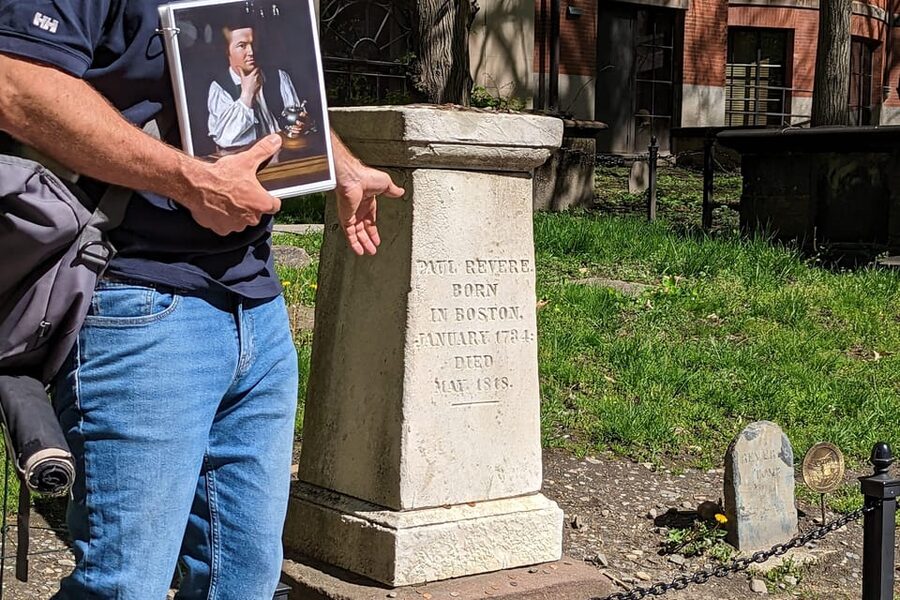
After Old North Church, the route goes to Copps Hill. The cemetery and its elevated position provide another useful setting for discussing Boston’s military situation and the movement of people around the harbor.
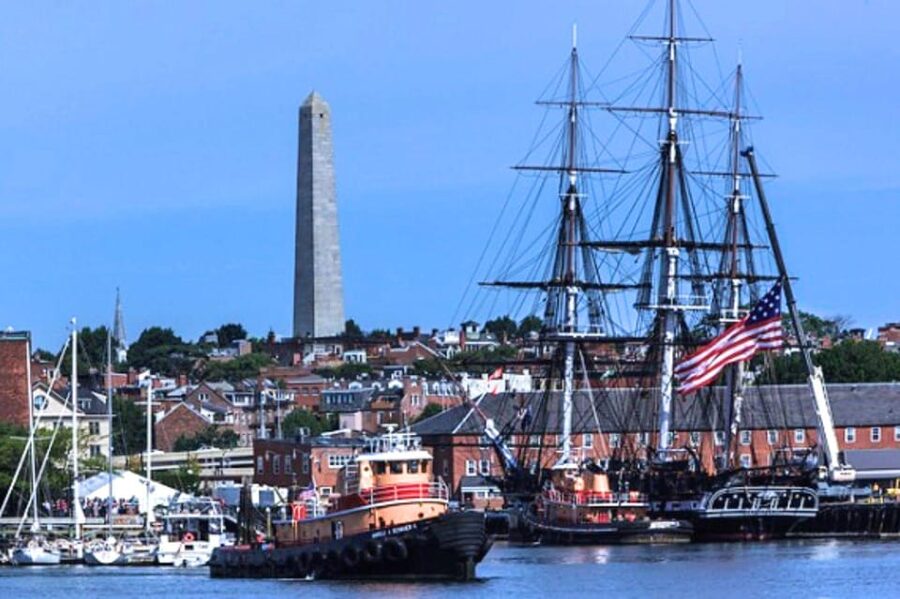
You then pass the USS Constitution before continuing toward Bunker Hill Monument. The ship is a pass-by rather than a full museum visit, so set your expectations correctly. You will hear about the site and see it as part of the route, but the $57 price does not include a ship tour or a full museum entry.
Bunker Hill Monument is one of the final major points. The guide explains the battle and its place in the larger revolutionary story. The uphill portion here is manageable for many people, but it is one reason this tour requires a moderate level of fitness. The walk also includes a flight of stairs going down toward the end.
The route then moves through Charter Street Park, along the Harborwalk, and past Pilot House Park before finishing at Lewis Wharf. This ending gives you a pleasant change from the crowded central landmarks. It also leaves you near the waterfront and North End rather than sending you back to the starting point.
Because the tour is point to point, plan your next move before you start. Hotel pickup and drop-off are not included, and the finish is not at City Hall Plaza.
The guides and the teaching style
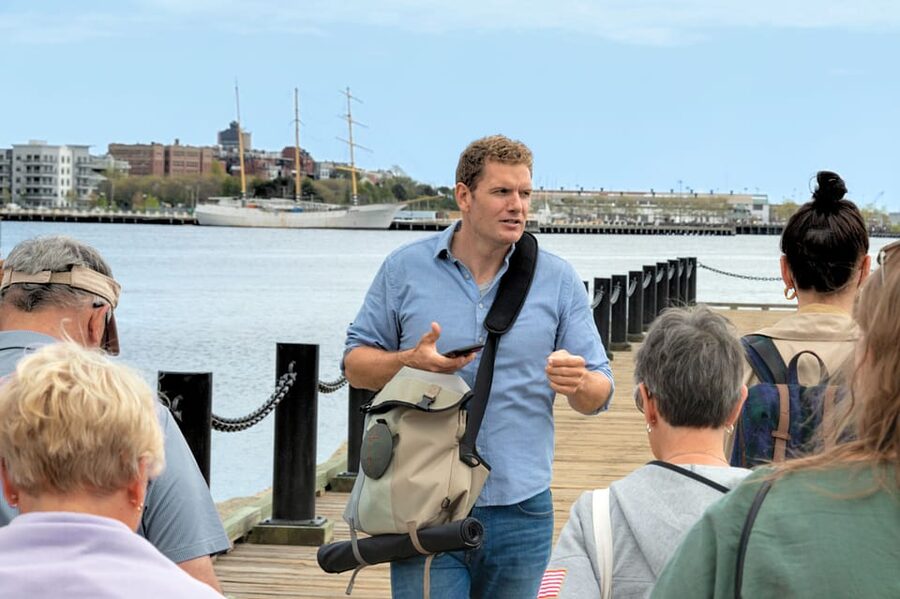
The provider uses a small team, so your guide may be Mike, Tyler, Rob, Chris, or Tom. The exact guide matters less than the common approach: substantial preparation, a clear narrative, humor, and regular effort to keep the group involved.
Mike is especially associated with maps, photographs, name tags, and lively explanations. Tyler is known for bringing the personalities and events to life, often using volunteers in small historical roles. Rob has been praised for making everyone part of the story, while Tom has been noted for adding less familiar figures and events.
This is an English-only experience, and the subject matter is detailed. International visitors can follow the structure without having grown up with American history, but you need comfortable English and a real interest in the topic. If you want a short introduction with a few photo stops, choose something simpler.
The role-playing is low-pressure. You may be given a character or asked to help illustrate a point, but the activity is meant to clarify the story, not force you into a performance. That makes it more accessible than a costume-based reenactment.
Is $57 a fair price?
At $57, this costs more than a short, basic Freedom Trail walk. I think the price is fair if you want a serious history experience that lasts 3.5 hours and covers a wide section of the city.
You are paying for a live guide, a small group, a carefully ordered narrative, visual materials, and a route that reaches well beyond the usual trail. The tour also saves you from trying to connect the sites yourself. If you visited the Old State House, Old South Meeting House, Paul Revere House, Old North Church, Bunker Hill, and the harborfront separately, you would spend more time planning and still might not understand how they fit together.
The value is lower if your main goal is to enter every building or take a relaxed sightseeing walk. Several stops are viewed from outside or passed briefly, including the USS Constitution. This is a guided history walk, not an all-inclusive admission ticket.
Practical advice for a better walk
Wear comfortable shoes. The route includes several hours on city streets, steady movement between stops, one hill, and stairs near the finish. People with mobility impairments should not book this tour.
Arrive early at City Hall Plaza so you are not searching for the meeting point at the last minute. Bring water, and dress for changing weather. The tour is outdoors for most of its duration, with only the noted entry into Faneuil Hall and the short break at Quincy Market.
I would book it near the start of your Boston stay. The route introduces many areas you may want to revisit, especially the North End, Old State House, Old South Meeting House, Old North Church, and Bunker Hill. The guide’s restaurant and city suggestions can also help shape the rest of your visit.
The group moves at a purposeful pace. That keeps the story moving and prevents long waits, but it may challenge slower walkers. If your party includes older adults, allow extra care with footwear and pacing. One past participant specifically found the walk hard on elderly legs, while another noted that the guide moved quickly between stops.
Free cancellation is available up to 24 hours before the start, and you can reserve while paying later. Starting times vary, so check availability before planning meals or other timed visits.
Who should book this Boston tour?
I recommend it to adults who want context, not just landmark photos. It is also a strong choice for older teens, history students, first-time visitors, and anyone who likes understanding motives, arguments, and consequences.
You may not enjoy it if you want a casual stroll, a short introduction, or a tour built around costumes and reenactment. Young children could lose interest during the longer explanations, even though the maps and props make the material easier to follow.
For the right audience, this is a valuable way to see Boston. You walk through famous places, but you also learn how the places connect. The final harborfront stretch and North End finish add a welcome sense of the modern city.
FAQ
How long does the Boston Revolution walking tour last?
The tour lasts 210 minutes, or about 3.5 hours.
How large is the group?
The group is small, with about 16 participants.
Where does the tour begin?
It begins at City Hall Plaza, directly across from Faneuil Hall. Meet in front of Five Iron Golf, between Staples Connect and City Hall, near the Bill Russell statue and seasonal beer garden.
Where does the tour finish?
The walk finishes at Lewis Wharf, after visiting the harborfront and Pilot House Park. Hotel transportation is not included.
Is the tour suitable for people with mobility impairments?
No. The tour requires moderate physical activity, includes one uphill section, and has a flight of stairs near the end.
Is the tour offered in languages other than English?
No. The live tour is conducted in English.
Can I cancel or pay later?
You can cancel up to 24 hours before the tour for a full refund. Reserve now and pay later is also available.
Should you book it?
Book this tour if you want Boston’s revolutionary story explained as one connected narrative. The small group, strong guides, maps, visual aids, and citywide route make it more useful than a quick walk from one Freedom Trail marker to the next.
Skip it if you need a slow pace, full interior access at every landmark, or a light sightseeing outing. For history-minded adults who can handle several hours on foot, the $57 cost buys a substantial introduction to Boston and leaves you with a much clearer idea of where to explore next.
Newest Boston tours we have written up
- Boston’s Freedom Trail: A Self-Guided Audio Tour★ 4.0 · 18 reviews
- Boston’s Freedom Trail: A Self-Guided Tour of All 16 Sites★ 5.0 · 14 reviews
- Boston Self-Guided Audio Tour Bundle: Freedom Trail & More★ 4.5 · 5 reviews
- Washington D.C. Cherry Blossom,Baltimore 3-Day Tour from Boston★ 4.5 · 7 reviews
- True Crime Tour of Boston★ 4.0 · 17 reviews
- Family Friendly Guided Bike Tour of Boston★ 4.5 · 22 reviews
- Freedom Trail Experience★ 5.0 · 8 reviews
- Self-Guided Audio Tour of Boston North End★ 4.5 · 3 reviews
Boston Revolutionary War Tours, compared.

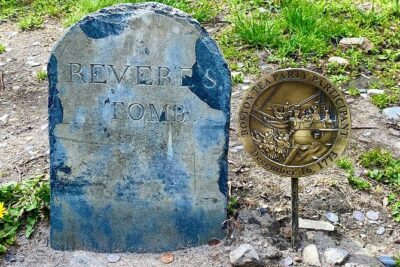
The Full Revolutionary Story Epic Small Group Boston Walking Tour
Read our review →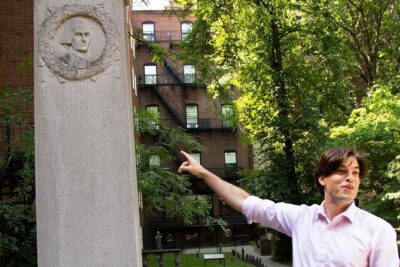
Boston’s Freedom Trail: A Revolutionary Walking Tour
Read our review →Boston’s Freedom Trail: A Revolutionary Walking Tour
Read our review →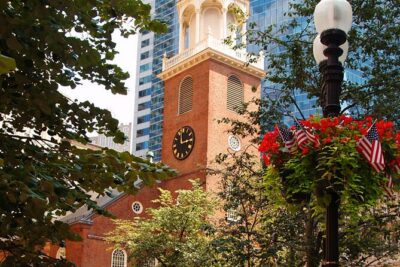
Entire Freedom Trail Walking Tour: Includes Bunker Hill and USS Constitution
Read our review →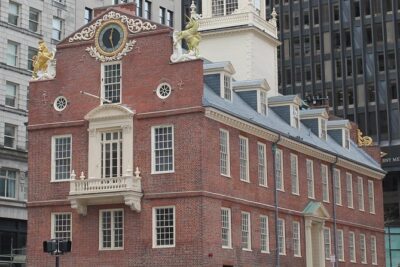
Boston’s Revolutionary and Drunken Past with Ye Olde Tavern Tours
Read our review →
Boston History & Highlights Tour: From Revolution to Today
Read our review →
Freedom Trail, Bunker Hill, & USS Constitution Tour
Read our review →Browse the lists this tour appears in